
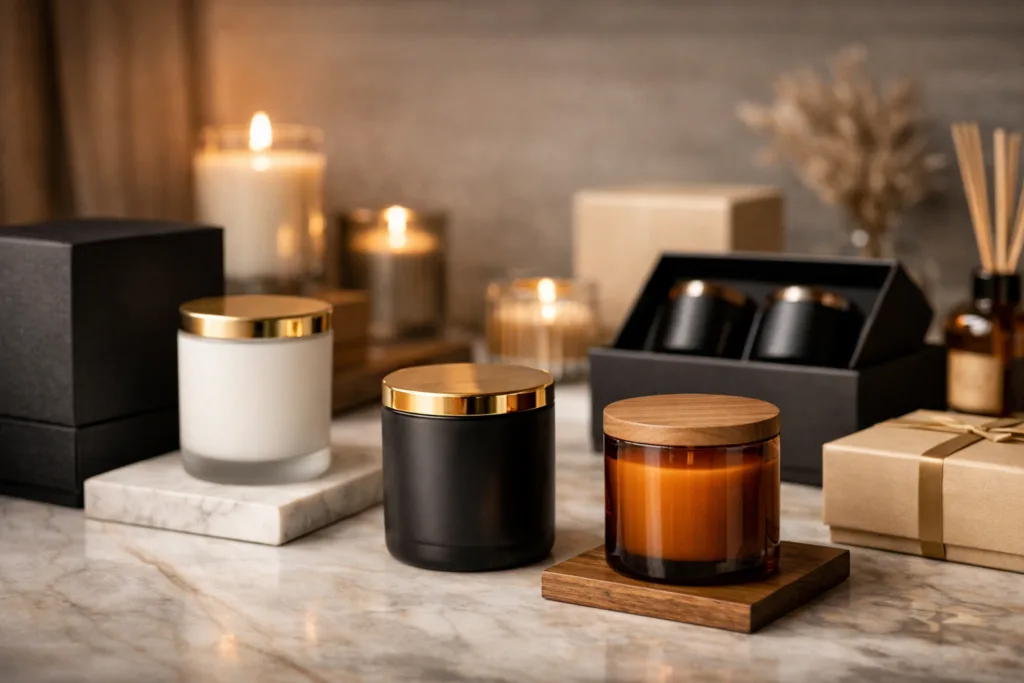
 For experienced buyers, sourcing custom scented candles with logo wholesale is not about finding the cheapest jar and putting a label on it. It is about finding a product line that can carry your brand, protect your margin, and scale without turning operations into chaos.
That distinction matters.
The candle market looks crowded from a distance, but professional buyers know the real gap is not product availability. It is supplier reliability. Plenty of factories can make a candle. Far fewer can support a serious branded program with stable quality, practical customization, packaging consistency, and export-ready documentation. Even fewer understand the difference between a start-up testing a mood board and a mature buyer planning a repeatable commercial line.
If you are a retailer, importer, distributor, subscription-box operator, gifting company, hotel group, or private label brand with real commercial intent, you are not buying wax alone. You are buying presentation, fragrance performance, lead-time predictability, and the confidence that your next reorder will not feel like starting from zero.
That is exactly where custom scented candles with logo wholesale becomes valuable.
A well-built wholesale candle program allows you to create a branded collection with your own logo, vessel style, fragrance direction, packaging identity, and market positioning. Done properly, it gives you a product that feels proprietary without forcing you to build manufacturing from scratch. It also gives you room to test hero SKUs, build seasonal launches, enter corporate gifting, or expand into home fragrance collections with less friction.
This guide is written for mature buyers and professional sourcing teams who want more than surface-level inspiration. It explains what custom logo candles really include, how wholesale pricing works, which customization choices actually matter, what to expect from sampling and production, and how to separate a presentation-friendly supplier from a manufacturing partner that can support repeat business.
What “Custom Scented Candles with Logo Wholesale” Really Means
At its core, custom scented candles with logo wholesale refers to bulk candle production tailored to a brand’s identity. The product is made for resale, gifting, hospitality use, or branded distribution, and includes some level of customization tied to the buyer’s visual and commercial requirements.
That customization can range from simple to fully developed.
At the lighter end, a buyer may choose an existing candle vessel, select from a fragrance library, apply a branded label, and use a standard carton with custom printing. This route is often suitable for faster launches, controlled budgets, and buyers who want to validate a concept before investing in more complicated development.
At the deeper end, the buyer may specify custom jar color, custom lid finish, wax formula direction, fragrance profile, wick structure, box design, insert layout, shipping protection, and logo decoration methods such as silk screen printing, foil stamping, embossing, or engraved metal plates. This route is more aligned with premium retail lines, luxury gifting programs, and brands that need strong shelf differentiation.
In practice, wholesale logo candle projects usually fall into three models:
1. White Label
You choose from a ready-made base product and add your branding.
This is faster and simpler, but the product architecture is less exclusive. It works well for buyers who value speed, lower risk, and easier MOQ management.
2. Private Label
You use a supplier’s production capabilities to build a branded collection with selected custom elements.
This is often the most balanced path for commercial buyers. It combines manufacturing efficiency with enough brand control to create a distinct market identity.
3. OEM / Full Custom Development
You build the product in a more tailored way, often including custom vessel development, exclusive packaging structures, and tighter spec control.
This route suits larger programs, stronger budgets, and brands that require higher differentiation or category ownership.
For mature buyers, private label and OEM are typically the most relevant. The decision is less about terminology and more about commercial reality: how fast you need to move, how much exclusivity you need, and whether your forecast supports more specialized development.
Why Mature Buyers Choose Logo Customization Instead of Generic Candles
Experienced buyers rarely win by selling generic products for long. The moment a candle becomes interchangeable, the conversation shifts to price, and price pressure eventually erodes margin.
Logo customization helps solve that.
A branded candle does more than carry a name. It creates recognition, repeatability, and perceived value. It signals that the product belongs to a wider brand world rather than sitting on the shelf as a random commodity. That shift affects how customers shop, how retailers merchandise, and how buyers calculate margin.
Brand recognition
A custom logo on the vessel, lid, label, or outer packaging turns the candle into a brand asset. Even a restrained branding treatment can improve memorability when the product appears in stores, social content, hotel rooms, gift sets, or unboxing moments.
Better pricing power
Unbranded candles compete on cost. Branded candles compete on identity, mood, design language, and trust. That gives room for healthier retail pricing, especially when the packaging and scent architecture are aligned with the intended market.
More cohesive merchandising
Mature buyers often think in collections, not individual SKUs. A logo-customized candle line can sit alongside diffusers, room sprays, bath products, towels, wellness accessories, or seasonal gift boxes with visual consistency.
Stronger repeat business
A generic candle may generate one sale. A branded candle collection can create repeat fragrance purchases, holiday reorders, gifting demand, and customer familiarity over time.
More control over channel positioning
Different channels require different presentations. A boutique retail line, a hospitality amenity, and a corporate gifting set may all use candles, but the branding approach changes. Custom logo programs allow the buyer to tailor presentation to each channel without rebuilding manufacturing fundamentals every time.
For serious buyers, this is the real value proposition: not decoration for its own sake, but the ability to protect brand equity and support a scalable commercial strategy.
Who This Sourcing Model Is Best For
Not every buyer needs the same structure. The best custom scented candles with logo wholesale programs are designed around the buyer’s channel, sales cycle, and brand maturity.
This sourcing model is especially relevant for:
Retail brands and concept stores
Independent chains, online-first retailers, and design-led stores often need private label candles that feel intentional, premium, and retail-ready. They care about packaging appeal, fragrance storytelling, and margin discipline.
Importers and distributors
Distributors value consistency, production discipline, and simplified SKU planning. They often prefer proven vessel formats, dependable lead times, and packaging choices that reduce damage risk.
Hotels, spas, and hospitality groups
These buyers need candles that support brand atmosphere and guest experience. The focus is usually on quiet luxury, scent consistency, and packaging that aligns with interior identity.
Corporate gifting and promotional buyers
These projects need logo visibility, polished presentation, and dependable delivery schedules. Seasonal deadlines matter, and packaging quality can be just as important as the fragrance itself.
Subscription boxes and curated kits
These buyers often work with strict budget architecture, fixed dimensions, and shipping limitations. Practicality matters: vessel weight, box size, protection, and visual impact all affect unit economics.
Established private label brands
More advanced buyers need manufacturing partners who can maintain standards across repeat orders, new launches, and SKU expansions. Their questions go deeper into wick behavior, wax finish, carton consistency, fill accuracy, and supply continuity.
If your business already thinks in reorder cycles, sell-through logic, launch calendars, and packaging standards, you are exactly the kind of buyer this model is built for.
The Most Important Customization Options That Actually Affect Commercial Performance
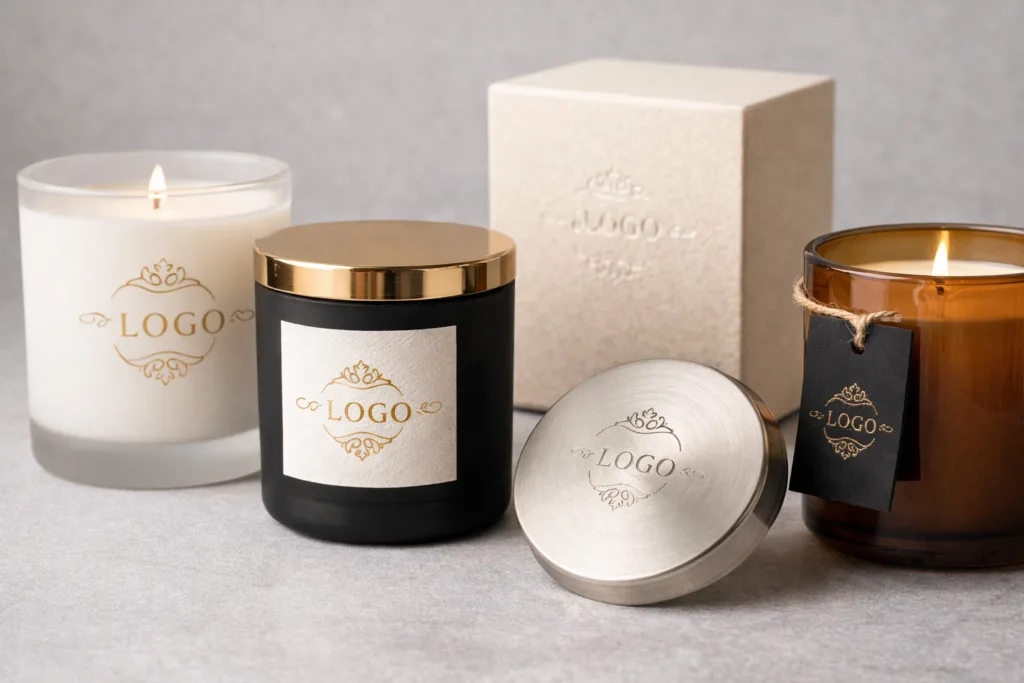 One common sourcing mistake is to treat customization as a list of decorative upgrades. In reality, not all customization choices carry equal business value.
Experienced buyers focus on the elements that change customer perception, operational efficiency, and long-term repeatability.
Vessel selection
The vessel is the first major decision because it affects price, style, shipping weight, breakage risk, and brand positioning.
Common wholesale options include:
- Clear glass jars for versatile mass-market or modern retail positioning
- Frosted or sprayed glass for a softer premium look
- Heavy-base glass for a more substantial luxury feel
- Ceramic vessels for elevated aesthetics and design differentiation
- Tins for travel, gifting, or cost-sensitive formats
For mature buyers, vessel choice should reflect the sales channel, not personal taste alone. A hotel line may prioritize understated elegance and refill consistency. A boutique retailer may prefer a more tactile, photogenic format. An importer serving value-driven channels may prioritize stable cost and safe transit.
Logo application method
How the logo appears matters just as much as whether it appears.
Common options include:
- Printed adhesive labels
- Direct silk screen printing on the jar
- Foil-stamped labels
- Embossed or debossed cartons
- Printed lids or engraved lids
- Hang tags, belly bands, or wrap seals
Labels remain the most flexible route for many buyers because they simplify artwork changes and reduce setup complexity. Direct printing creates a more integrated look, especially for higher-end lines, but can involve higher setup considerations and stricter artwork discipline. The right choice depends on order scale, visual goals, and reorder strategy.
Fragrance strategy
 Fragrance is not just a creative decision. It is one of the biggest drivers of commercial performance.
Mature buyers usually perform better with a clear fragrance structure rather than an unfocused assortment. That often means:
- 3 to 6 core fragrances for launch
- One clean/fresh profile
- One warm/woody profile
- One floral or soft profile
- One statement scent for branding
- Optional seasonal or limited editions
A tighter fragrance architecture improves packaging planning, sampling efficiency, content creation, and customer recall. It also reduces the operational drag that comes from carrying too many low-performing scent variations.
Wax system and burn profile
Buyers increasingly ask about wax type, and rightly so. The wax system affects surface finish, scent throw, seasonal performance, and positioning.
Popular directions include:
- Soy blends for a familiar plant-forward positioning
- Coconut-soy blends for smoother finish and premium appeal
- Paraffin blends for stronger hot throw and cost efficiency in some programs
- Beeswax blends for selected niche positioning
- Gel or specialty waxes for novelty or decorative products in specific applications
The right wax choice depends on the desired burn behavior, fragrance compatibility, appearance expectations, and target market. What matters commercially is not marketing language alone, but stability and consistency.
Packaging structure
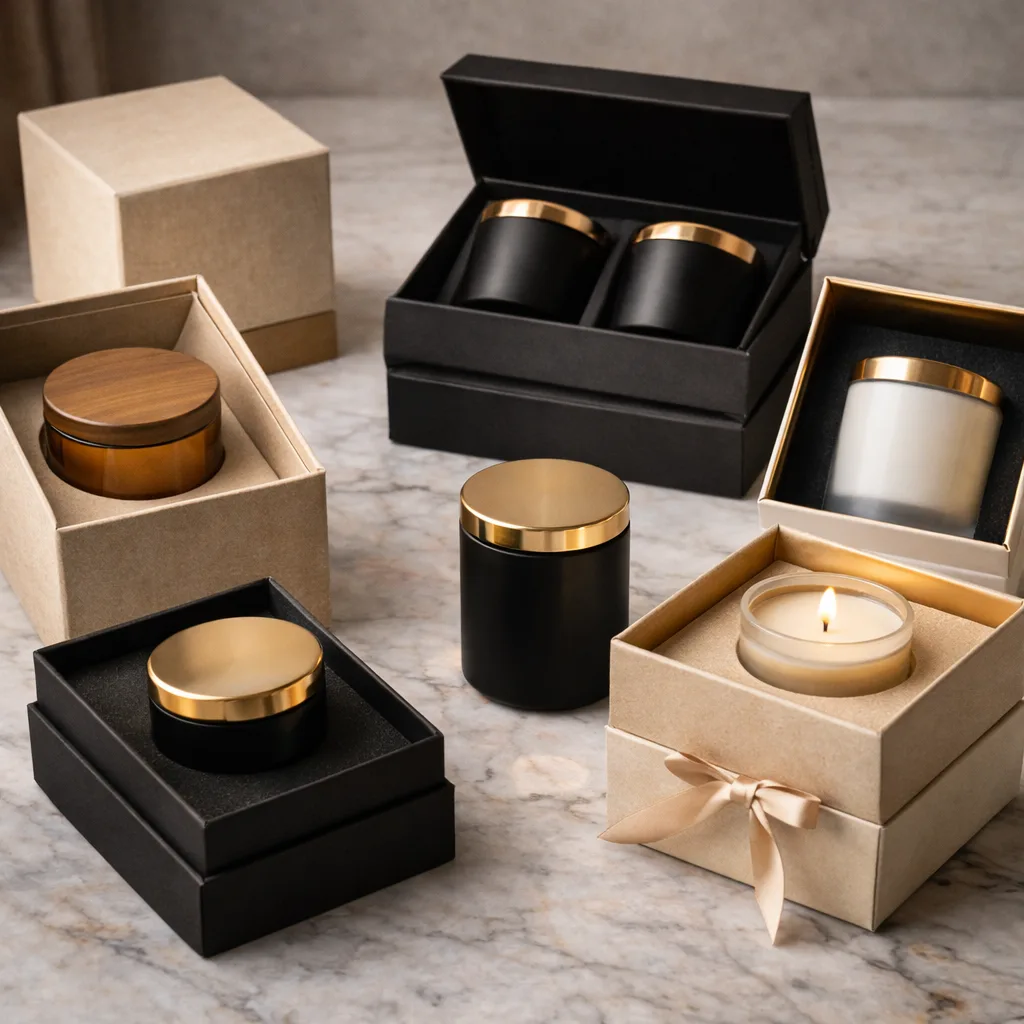 Outer packaging often decides whether a candle feels giftable, premium, or ordinary.
Practical wholesale packaging options include:
- Folding cartons for cost-conscious retail lines
- Rigid boxes for premium collections and gifting
- Lid-and-base gift boxes with inserts
- Magnetic closure boxes for elevated presentation
- E-commerce protective packaging for direct-to-consumer channels
Good packaging does three jobs at once: it protects the candle, carries the brand story, and supports the intended price point.
Safety and transit considerations
Mature buyers know the most beautiful packaging means very little if damage rates destroy margin. Insert design, carton board strength, master carton logic, labeling compliance, and drop-risk management all belong inside the customization discussion.
The more serious the buyer, the more these operational details matter.
How Wholesale Pricing Actually Works
The question many buyers ask first is simple: what is the price?
The better question is: what is driving the price?
In custom scented candles with logo wholesale, price is shaped by a combination of factors rather than one master number. Understanding those factors helps buyers compare quotations intelligently and avoid false savings.
The main cost drivers include:
- Vessel material and weight
- Vessel decoration complexity
- Wax type and fill volume
- Fragrance oil quality and dosage
- Wick structure
- Packaging type and print complexity
- Insert requirements
- Order quantity
- Sampling and testing requirements
- Freight method and destination
A simple branded candle in a standard glass jar with label application and folding carton will usually price very differently from a ceramic vessel with custom color, premium fragrance loading, direct logo print, and rigid gift packaging.
That difference is normal. The problem comes when buyers compare unlike-with-unlike.
Why MOQ changes the price so much
MOQ is not an arbitrary factory habit. It is tied to production efficiency and material economics.
Higher volumes spread setup costs across more units. They also improve purchasing leverage for components like jars, lids, labels, cartons, and inserts. When buyers ask for deep customization at very low quantities, the per-unit price often stops making commercial sense for both sides.
That is why mature buyers usually perform best when they separate “test-market logic” from “scale logic.” They might start with more standardized structures for validation, then upgrade presentation or component exclusivity once volume proves out.
Why cheap pricing can be expensive later
A low quotation can hide expensive problems:
- Inconsistent fragrance performance
- Weak packaging protection
- Inaccurate fill weights
- Shade variation across batches
- Labeling defects
- Delayed production
- Poor communication during revisions
- Higher damage rates in transit
For professional buyers, the real measure is not unit cost alone. It is total commercial viability.
Sampling: Necessary, Valuable, and Not Free
For serious private label projects, sampling is not a courtesy add-on. It is part of product development.
That is why it should be handled seriously.
A common misunderstanding in the market is that samples should be free. For low-value standardized products, some suppliers may offer that. But for branded candle programs—especially those involving custom fragrance selection, vessel coordination, decoration tests, label fit checks, packaging review, and burn evaluation—sampling consumes real labor, materials, and time.
Professional buyers usually understand this.
Paid samples create a healthier process because they align expectations. They encourage focused decision-making, reduce casual development requests, and allow the supplier to build proper prototypes rather than rushed placeholders.
A structured sample stage may include:
- Base vessel confirmation
- Fragrance shortlist testing
- Wax and wick pairing review
- Logo placement or print method check
- Label sizing confirmation
- Packaging mock-up or printed sample
- Burn and cold-throw evaluation
- Shipping fit test where needed
For mature buyers, the sample fee is not the problem. The bigger issue is whether the sample stage answers the right questions.
A good sample should reduce risk before bulk production. It should help confirm whether the product meets the brand’s visual, olfactory, and commercial requirements. It should also expose issues early, when they are still cheap to fix.
The smartest buyers use sampling to narrow decisions, not prolong them. They test with purpose, lock a direction, and move into production with a cleaner execution path.
Lead Time, Reorders, and Why Process Discipline Matters More Than Promises
 Many suppliers claim fast delivery. Mature buyers know speed without process control is dangerous.
What matters is not the most optimistic lead time in a sales message, but whether the supplier can move from approved sample to bulk production with predictable execution.
A professional candle sourcing workflow usually looks like this:
- Requirement alignment
- Quotation and commercial review
- Artwork and component confirmation
- Paid sample development
- Sample approval or revision
- Deposit and production booking
- Bulk manufacturing
- Inspection and packing
- Shipment arrangement
- Reorder planning
Each stage affects the final timeline.
Lead times are influenced by component availability, print setup, vessel sourcing, fragrance preparation, packaging complexity, and seasonal production pressure. Holiday and gifting cycles can tighten schedules further.
For established buyers, reorder potential matters just as much as first-order delivery. Ask whether the supplier can maintain the same vessel, carton finish, fragrance style, and decoration standard across future batches. An attractive first run means little if every reorder becomes a negotiation over changed materials or unstable availability.
Repeatability is one of the strongest signs that you are dealing with a true manufacturing partner rather than a one-order opportunist.
Compliance, Documentation, and Export Readiness
The more advanced the buyer, the less likely they are to treat documentation as an afterthought.
For international wholesale business, especially into North America, Europe, and Oceania, documentation and compliance are part of the product package. Serious buyers need suppliers that understand export expectations and can support the commercial paperwork attached to the order.
Depending on the project and destination market, buyers may need:
- Fragrance-related documentation
- Material information sheets
- Safety data support where applicable
- Labeling guidance for destination requirements
- Carton marking consistency
- Shipping pack compliance awareness
- Product specification sheets
Even when the buyer manages final compliance through their own team or local partner, supplier readiness still matters. It speeds communication, reduces avoidable errors, and makes scaling smoother.
This is especially important for mature brands entering multiple channels or countries. They cannot afford sourcing decisions that work beautifully in a showroom but fail under operational review.
How Serious Buyers Choose the Right Supplier
The wrong way to choose a candle supplier is to ask only three questions: what is the MOQ, what is the unit price, and can you add a logo?
The right way is to evaluate whether the supplier can support the commercial life of the product.
Look for clarity, not just enthusiasm
Strong suppliers explain what is realistic. They do not say yes to every request without considering cost, timing, and production logic.
Assess whether the recommendation matches your stage
A useful partner helps you avoid over-customizing too early. They know when to suggest a standard vessel with stronger branding instead of pushing unnecessary development.
Check whether communication is operationally useful
Good communication is not about fast replies alone. It is about clear options, practical trade-offs, and accurate follow-through.
Review packaging intelligence
Many candle issues are packaging issues in disguise. A supplier that understands insert design, transit risk, and presentation hierarchy is often worth more than one offering a slightly lower price.
Ask about repeatability
Can they support future orders with consistency? Can they maintain the same component family? Can they handle a collection extension if your first launch succeeds?
Watch how they handle samples
A supplier that treats sampling as a structured development step is usually more reliable than one that throws together a casual mock-up and calls it approved.
Serious buyers are not looking for a miracle. They are looking for a partner that understands the commercial mechanics of branded product manufacturing.
A Smarter Launch Strategy for Mature Buyers
The most profitable candle programs are rarely the most complicated at launch.
Professional buyers often start with a commercially disciplined range rather than a giant assortment. That could mean:
- One proven vessel family
- Three to five core fragrances
- One packaging structure
- Clean logo integration
- A launch quantity that supports pricing without overextending inventory
This approach simplifies photography, merchandising, production control, and customer education. It also creates a clearer read on which fragrances or formats deserve deeper investment.
Once performance becomes visible, the line can expand into:
- Seasonal scent drops
- Gift sets
- Hospitality editions
- Corporate gifting packs
- Larger format candles
- Matching diffusers or wax melts
- Premium box upgrades
The goal is not to launch small for the sake of caution. It is to launch in a way that makes the first reorder easier rather than harder.
Why Mature Buyers Often Prefer a Ready-to-Scale Framework Over Endless Custom Development
There is a difference between meaningful customization and decorative complexity.
Mature buyers usually understand that customers do not purchase a candle because the internal engineering was difficult. They purchase because the product looks right, smells right, fits the brand, and arrives consistently.
That is why many experienced sourcing teams prefer a ready-to-scale framework:
- Proven jars rather than risky one-off vessel molds
- Strong label and logo execution rather than excessive structural novelty
- Premium standard packaging upgraded through design rather than overbuilt box formats
- Focused fragrance architecture rather than a scattered scent list
This strategy often delivers better margins, fewer delays, and cleaner reorders.
Customization still matters. It just needs to be applied where it creates the most commercial leverage.
What a Strong Conversion-Focused Wholesale Candle Program Looks Like
For the right buyer, an effective custom scented candles with logo wholesale program should feel commercially coherent from the beginning.
That means:
- Brand identity is visible without overcomplication
- The scent range is curated rather than bloated
- Packaging supports the intended channel and price point
- Sample development is structured and paid
- MOQ aligns with realistic production economics
- Production planning allows repeatability
- Documentation and export readiness are taken seriously
- The supplier communicates trade-offs clearly
When those elements are in place, the candle stops being a one-time sourcing task and becomes a scalable product category.
That is the outcome serious buyers should pursue.
Because in wholesale, the goal is not just to launch a candle. The goal is to launch a line that can be reordered, expanded, and trusted.
Final Thoughts
The search for custom scented candles with logo wholesale should not begin with aesthetics alone, and it should definitely not end with the lowest quotation.
For mature buyers, the right product is the one that balances branding, fragrance quality, packaging discipline, MOQ realism, and operational repeatability. That is what protects margin. That is what supports reorders. And that is what gives a private label candle line a real chance to survive beyond its first production run.
If you are sourcing for an established retail concept, gifting program, import business, hospitality line, or private label collection, treat the process as category building rather than decorative purchasing. Be deliberate about vessel choice. Be selective about fragrance architecture. Use paid samples to reduce risk. Prioritize packaging intelligence. Ask how the second order will work before you commit to the first.
That is how serious buyers source with confidence.
And that is how a branded candle line becomes commercially useful instead of merely visually attractive.
FAQ
1. What is the difference between private label and custom scented candles with logo wholesale?
Private label usually means using a supplier’s existing production framework and adding brand-specific elements such as logo, labels, fragrance selection, and packaging. Custom scented candles with logo wholesale can include private label, but it may also extend into deeper OEM-style development such as custom vessel colors, direct printing, or more specialized packaging.
2. Are samples free for custom logo candle projects?
In professional wholesale development, samples are typically not free. Paid samples cover materials, labor, fragrance testing, decoration setup, and development time. For serious buyers, this is a normal and practical step because it reduces risk before bulk production.
3. What is the best way for mature buyers to launch a wholesale logo candle line?
The strongest approach is usually to begin with a focused range: one proven vessel family, a curated fragrance selection, clear logo integration, and packaging that fits the intended channel. This makes sampling, production, merchandising, and future reorders easier to manage.