
 The candle industry is not flashy. It is not driven by technology. It does not explode overnight.
And yet, it keeps growing.
In 2026, the global candle market continues steady expansion, especially in North America and Europe. But growth is not coming from basic white candles. It is coming from structure, positioning, and brand strategy.
If you are a brand owner, retailer, hotel buyer, or private label distributor, the real question is not whether candles are trending.
The question is:
Where is the profit moving?
Below are the top 10 candle trends shaping 2026 — not from a consumer hobby view, but from a private label and B2B manufacturing perspective.
1. Refillable Candle Systems (True Sustainability)
 “Sustainable” is no longer a marketing word. Buyers now expect structure.
In 2026, serious brands are shifting from single-use candle jars to refill systems.
This model works like this:
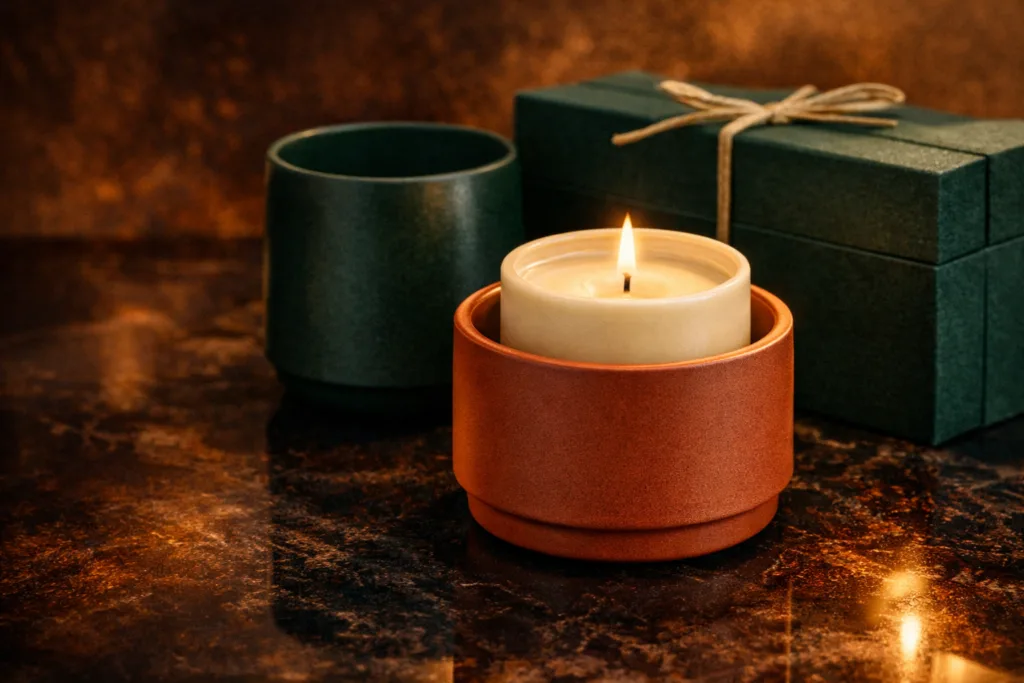
- One premium vessel (ceramic, glass, metal, stone)
- Replaceable wax refills
- Minimal outer packaging
- Subscription or repeat purchase options
Why it matters for B2B buyers:
- Higher lifetime value per customer
- Stronger brand retention
- Clear sustainability positioning
- Easier bulk refill shipping
Refillable systems also reduce packaging waste and shipping cost over time.
For private label brands, this is not a small tweak. It is a product architecture decision.
If you are developing a candle line in 2026, consider designing around a refill core instead of single-SKU jars.
2. Hospitality & Hotel Signature Candle Lines
 Hotels, spas, and wellness retreats are no longer using generic candles.
They are building signature scent programs.
This includes:
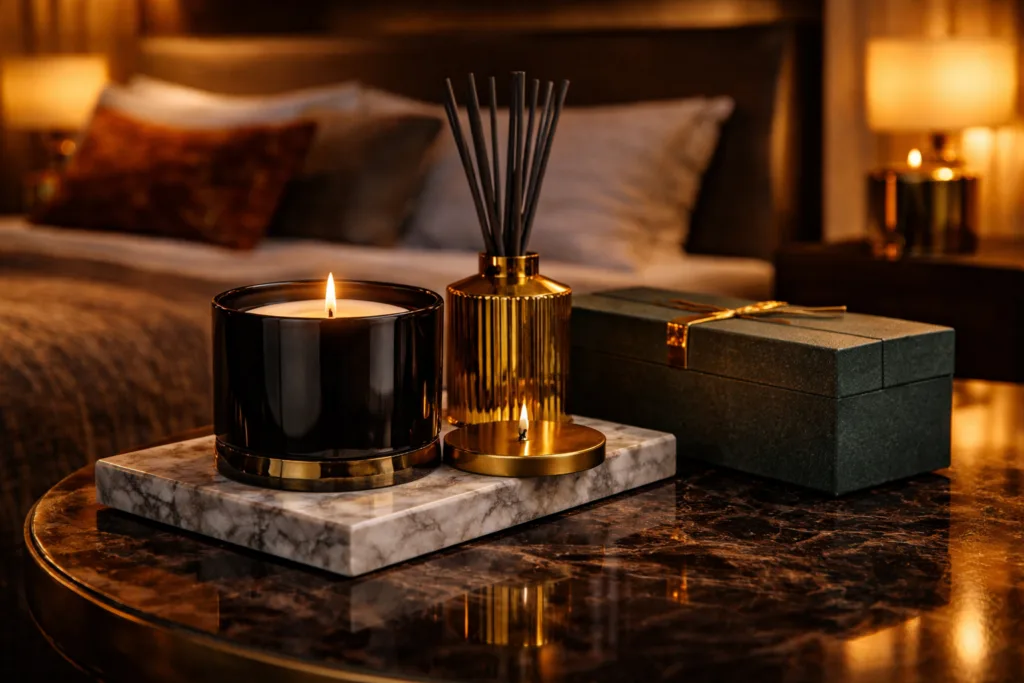
- Custom fragrance development
- Matching room sprays and diffusers
- Branded candle vessels
- Welcome gift candles
For B2B buyers, hospitality candles offer:
- Repeat wholesale orders
- Long-term supply agreements
- Stable reorder volume
Hotels do not change fragrance every month. They build consistency.
If you are a retailer supplying hospitality, this is one of the most stable segments in the industry.
3. Entry Luxury Positioning ($25–$45 Range)
The fastest growing candle segment is not ultra-luxury $100 candles.
It is entry luxury.
Price range:
- $25–$45 retail
Features:
- Clean vessel design
- Elevated packaging
- Strong scent throw
- Clear brand story
This segment performs well because:
- It feels premium but accessible
- It works as a gift
- It fits lifestyle retail
Private label brands entering 2026 should not compete with mass-market discount candles. Nor should they jump into ultra niche territory immediately.
Entry luxury gives room for margin while staying scalable.
4. Ritual & Intention-Based Candle Collections
 Ritual candles are growing quietly but steadily.
This does not mean mystical or cheap spiritual products.
Modern ritual collections focus on:
- Color psychology
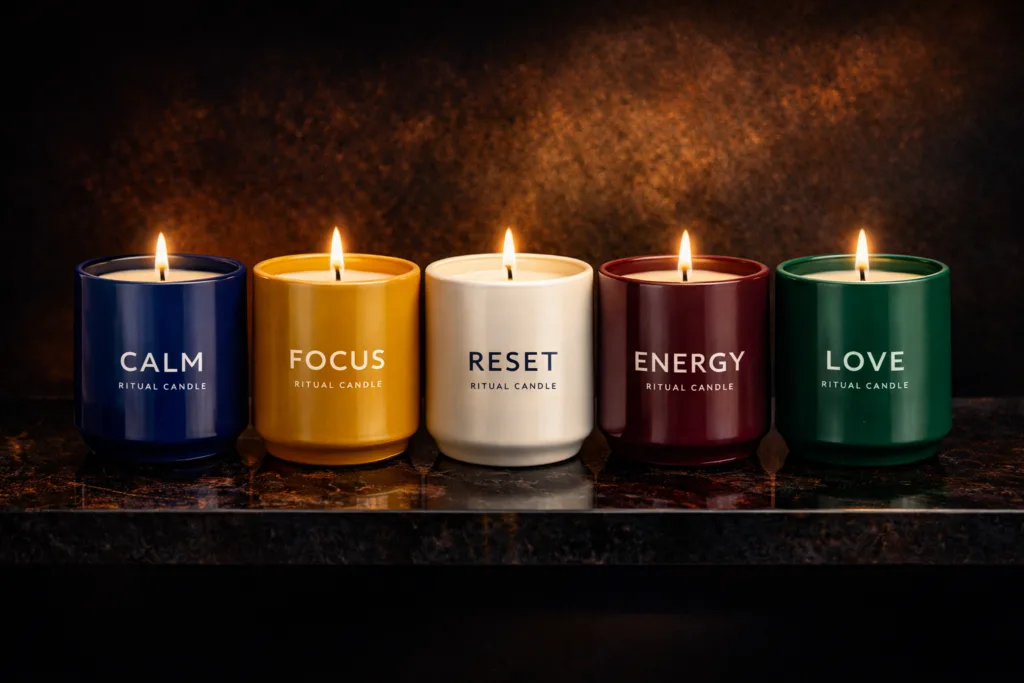
- Intention themes (Calm, Focus, Reset, Love, Confidence)
- Clean typography
- Structured packaging
For B2B brands, ritual positioning allows:
- Series development (5–8 SKUs minimum)
- Higher emotional engagement
- Strong gift set opportunities
Ritual collections perform well in:
- Wellness boutiques
- Yoga studios
- Lifestyle retailers
- Subscription boxes
The key is modern design. Avoid cluttered “mystic shop” aesthetics.
Minimal, structured, intentional design wins.
5. Color-Coded Candle Systems
In 2026, visual systems sell.
Color-coded collections create shelf impact.
Instead of random scents, brands are designing:
- Blue for Calm
- Yellow for Energy
- Green for Balance
- White for Reset
- Burgundy for Passion
Color systems:
- Improve retail merchandising
- Encourage multi-SKU purchases
- Strengthen visual brand identity
For wholesale buyers, color structure means easier display planning.
It also increases average order value.
6. Modular Candle Collections (Mix & Match Models)
Modular design is emerging in premium candle development.
Examples include:
- Base vessel + refill pods
- Decorative outer sleeves
- Seasonal lid variations
- Limited edition fragrance capsules
This approach allows brands to:
- Expand SKU count without new molds
- Introduce seasonal updates
- Maintain core inventory efficiency
For B2B buyers, modular systems reduce risk while keeping product lines fresh.
7. High-Impact Gift Set Engineering
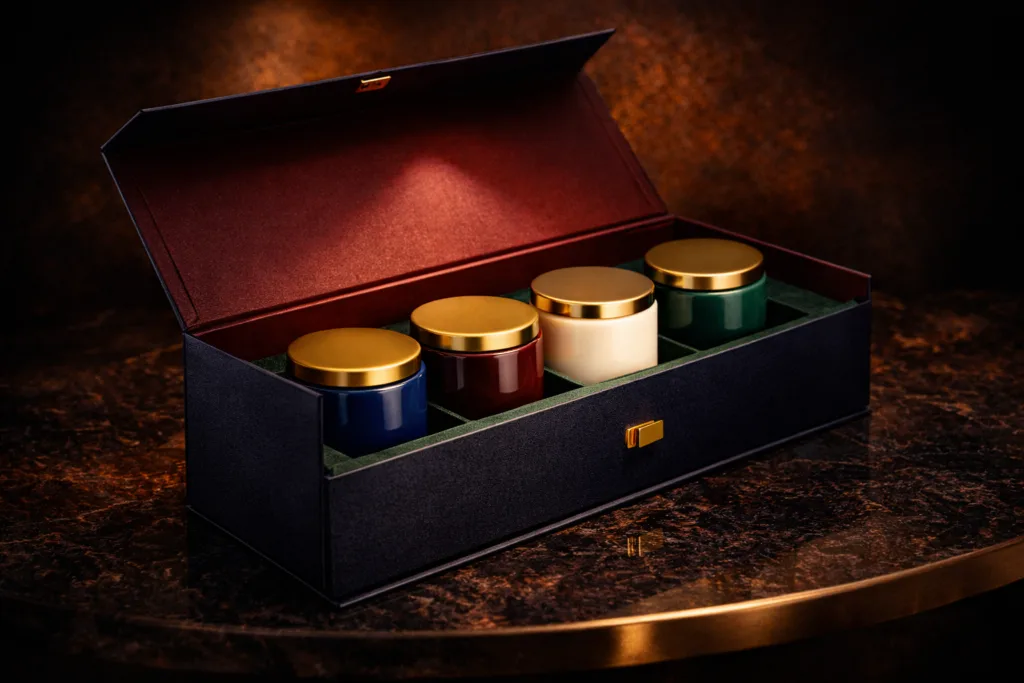 Gift sets are no longer holiday-only products.
In 2026, candle gift sets are used for:
- Corporate gifting
- Client appreciation programs
- Subscription boxes
- Seasonal retail campaigns
Strong gift sets include:
- Structured rigid boxes
- Magnetic closures
- Custom inserts
- Branded storytelling cards
From a manufacturing perspective, gift engineering requires careful planning:
- Carton size optimization
- Insert design
- Freight efficiency
- Certification compliance
Brands that treat gift sets as strategic SKUs — not add-ons — gain stronger margins.
8. Ingredient-Led Differentiation
Consumers are more ingredient-aware.
But from a B2B standpoint, ingredient differentiation must be meaningful.
Growing material trends include:
- Coconut wax blends
- Beeswax blends
- Low-smoke formulas
- Gel candle innovations
Ingredient-led positioning works best when tied to a clear use case:
- Clean burning for hospitality
- Low smoke for indoor events
- Allergy-sensitive environments
Do not market materials alone. Tie them to performance benefits.
9. Performance & Safety-Driven Applications
This is a less visible but important segment.
Event planners, restaurants, and hotels care about:
- Burn time consistency
- Safety compliance
- Low smoke output
- Stable vessel structure
Candle development in 2026 increasingly considers:
- International safety standards
- IFRA compliance
- CLP labeling
- Export regulations
For wholesale distributors, working with a manufacturer that understands global certification is no longer optional.
It is required.
10. Design-Forward & Architectural Vessels
Design remains a powerful driver.
Trends include:
- Matte ceramic finishes
- Thick-base glass
- Deep jewel tones
- Stone or marble-inspired textures
Vessel reuse is also critical.
Buyers appreciate candles that transform into:
- Storage containers
- Decorative objects
- Planters
This adds perceived value and supports sustainability positioning.
What Is Not a Trend
To make smart decisions, it is also important to know what is not happening.
The candle industry will not:
- Become a high-tech sector
- Grow explosively overnight
- Replace core fragrance categories
It remains a lifestyle product.
The opportunity lies in structure, branding, and B2B positioning — not sudden market shifts.
Strategic Guidance for Private Label Brands
If you are planning a candle collection for 2026–2027, consider this framework:
- Choose a structural direction (Refill, Hospitality, Ritual, Gift System).
- Develop at least 4–6 coordinated SKUs.
- Design packaging early.
- Align with safety and export compliance.
- Plan for scalability from day one.
Avoid random product launches.
Think system.
Why Manufacturing Strategy Matters
Behind every successful candle brand is production discipline.
Key considerations include:
- MOQ planning
- Vessel sourcing
- Mold investment
- Lead time management
- Global shipping coordination
A manufacturer is not just a factory.
It should act as a product development partner.
Build Your 2026 Candle Collection with Confidence
The candle market is stable. It rewards brands that think long-term.
Whether you are launching a ritual line, designing a refill system, or building a hotel signature collection, the foundation is strong product architecture.
At Circe Home, we specialize in private label candle manufacturing for brands, retailers, and hospitality buyers.
We support:
- Custom fragrance development
- Glass and ceramic vessel sourcing
- Refillable system engineering
- Luxury rigid gift packaging
- International certification support
- Global warehousing coordination
If you are planning your 2026 candle collection, now is the time to define structure — not just scent.
Contact Circe Home to begin developing your private label candle line.
The opportunity is steady.
The structure is what creates profit.
And 2026 belongs to brands that build intelligently.
Frequently Asked Questions (FAQ)
1. What is the MOQ for developing a private label candle collection?
MOQ depends on vessel type and customization level. Standard glass jars with simple logo applications usually allow lower minimums, while custom ceramic molds, colored glass, or fully engineered refill systems require higher volumes to be commercially viable. For structured collections (4–6 SKUs), planning production scale from the beginning ensures better unit pricing and long-term stability.
2. How long does it take to develop a custom candle line?
A typical private label candle development timeline includes 7–14 days for sampling (depending on vessel and fragrance complexity), followed by 15–30 days for bulk production. Custom mold development or rigid gift box engineering may extend the timeline slightly. Early packaging confirmation significantly reduces delays.
3. What certifications are required for exporting candles to North America and Europe?
For international markets, compliance is critical. This often includes IFRA-compliant fragrance documentation, CLP labeling for EU markets, and proper safety testing for vessels and burn performance. Working with a manufacturer familiar with global export standards reduces risk and ensures smooth customs clearance.