
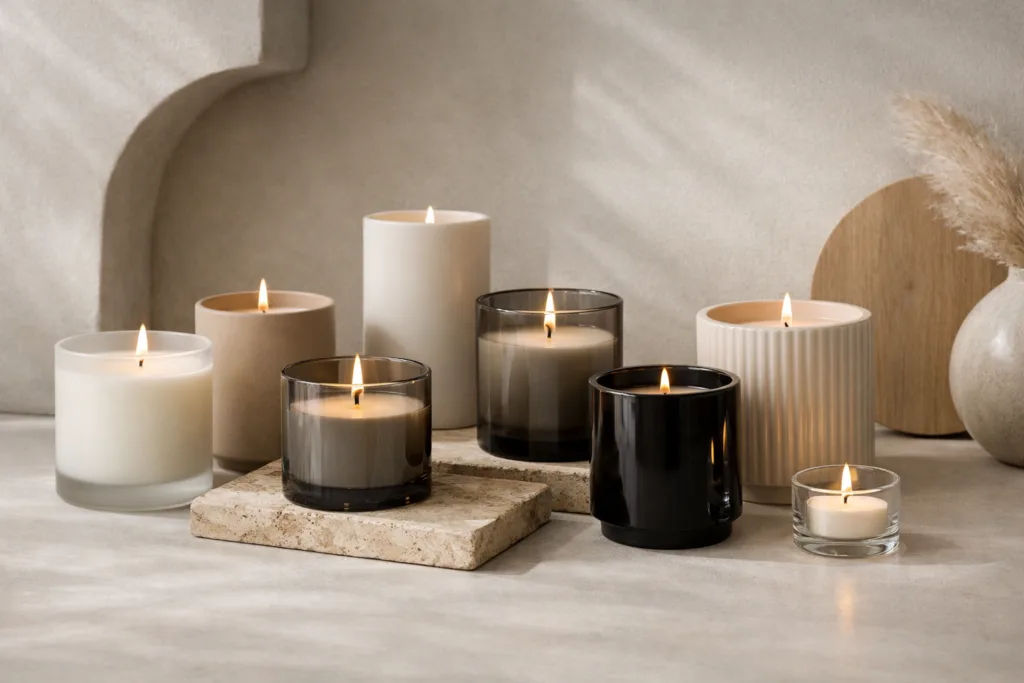
 Luxury scented candles are no longer niche lifestyle accessories. In 2026, they sit at the intersection of interior design, fragrance culture, gifting economics, and brand signaling. For mature buyers—boutique retailers, concept stores, hospitality groups, and established lifestyle brands—the question is no longer whether luxury candles sell, but which ones justify their price, scale reliably, and perform commercially over time.
This guide is written for buyers who already understand the category. Not hobbyists. Not impulse shoppers. But decision-makers who evaluate candles as products with margin, repeatability, and brand value.
Below, we break down what truly defines a high-end scented candle in 2026, why some command premium pricing while others quietly fail, and which types of luxury candles are genuinely worth the investment.
What Defines a True Luxury Scented Candle in 2026?
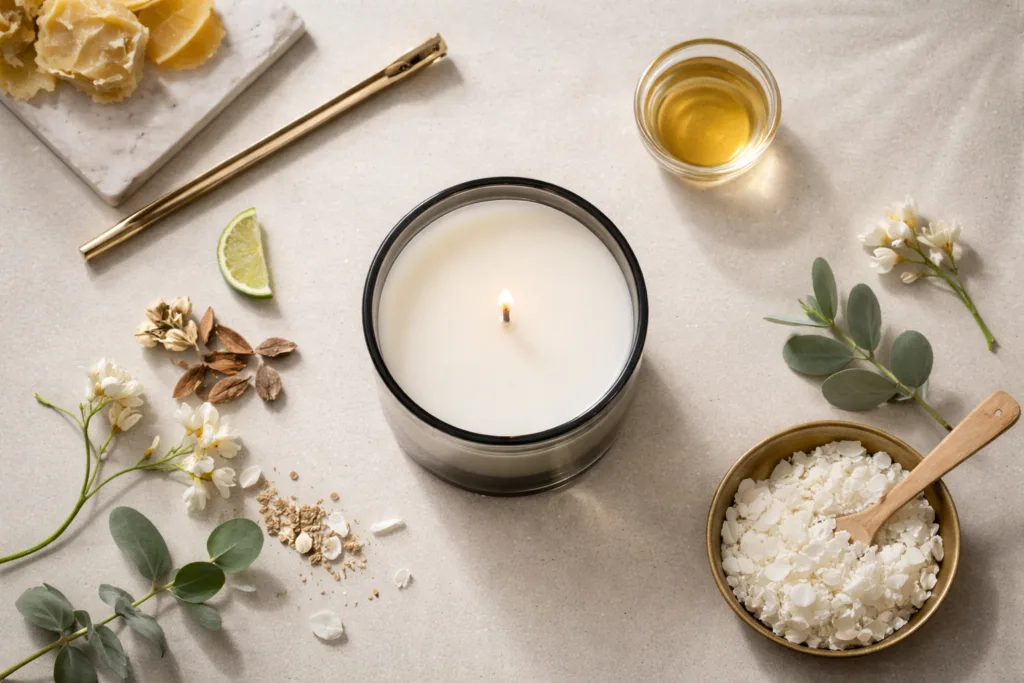 The definition of “luxury” in candles has matured. Packaging alone is no longer convincing. In 2026, high-end buyers look for systems, not surface aesthetics.
A true luxury scented candle today is built on five non-negotiable pillars:
1. Material Integrity (Wax, Fragrance, Wick)
Luxury candles are no longer defined by a single material (e.g., “soy candle” or “beeswax candle”). Instead, they rely on engineered wax blends designed for:
- Stable melt pools
- Clean burn with minimal soot
- Consistent fragrance diffusion
- Compatibility with higher fragrance loads
Premium brands increasingly use hybrid plant-based wax systems rather than pure soy, as these offer better hot throw control and visual stability.
Fragrance quality matters just as much. High-end candles use fine fragrance compositions, not simplified aroma oils. These formulas are structured in top, heart, and base phases, ensuring the scent evolves throughout the burn rather than collapsing after the first hour.
Wick selection is often overlooked but critical. Luxury candles rarely rely on generic cotton wicks. Instead, wick size, braid, and treatment are matched precisely to:
- Vessel diameter
- Wax viscosity
- Fragrance concentration
This is one of the clearest separators between true premium candles and visually expensive but technically weak products.
2. Fragrance Performance, Not Just Scent Profile
In mature markets, buyers no longer ask, “Does it smell good?” The real questions are:
- Does the scent throw evenly in real spaces?
- Does it remain stable across multiple burns?
- Does it feel refined rather than aggressive?
Luxury candles in 2026 favor controlled diffusion over overpowering intensity. Sophisticated consumers associate subtle, room-filling fragrance with quality, not weakness.
High-end candles are evaluated across:
- Cold throw consistency
- Hot throw diffusion radius
- Scent persistence after extinguishing
- Absence of burnt or off-notes
Candles that pass these criteria feel intentional and calm—qualities that align strongly with modern luxury interiors.
3. Vessel Design That Ages Well
Luxury buyers increasingly avoid trend-driven containers. In 2026, successful high-end candles favor:
- Timeless proportions
- Neutral or muted finishes
- Materials that photograph well and age gracefully
Glass, ceramic, and composite vessels dominate—not because they are flashy, but because they integrate seamlessly into long-term interior environments.
For retailers and hospitality clients, this matters commercially: candles that visually age well are easier to reorder, restock, and merchandise across seasons.
4. Scalability Without Quality Loss
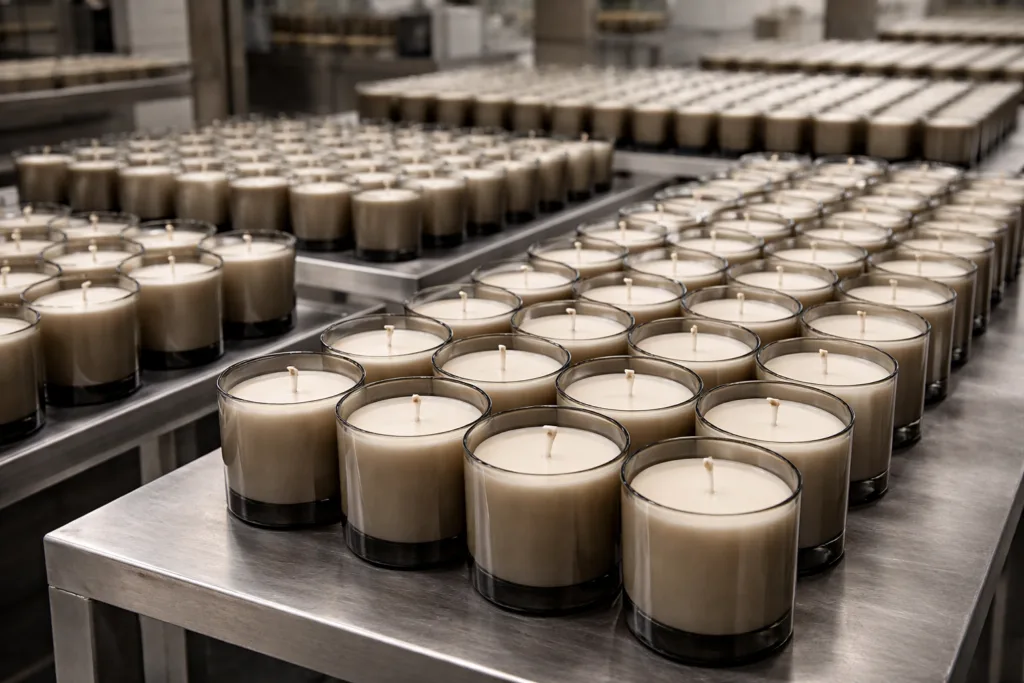 One of the biggest red flags for mature buyers is a candle that looks premium at 100 units but collapses at 5,000.
True luxury candles are designed for controlled scaling, meaning:
- Raw materials are commercially available at volume
- Production tolerances are realistic
- Quality control systems are repeatable
This is especially critical for buyers planning multi-location rollouts, private label programs, or long-term supply contracts.
5. Commercial Logic Behind the Price
In 2026, luxury buyers no longer accept vague storytelling as justification for high pricing.
A candle is considered “worth the price” when:
- Its cost structure supports healthy wholesale margins
- Retail pricing aligns with perceived value
- Reorder friction is low
- The product supports long-term brand positioning
Luxury candles that fail commercially often over-invest in decorative elements while under-investing in performance and supply stability.
Why High-End Candles Cost More (And When They’re Worth It)
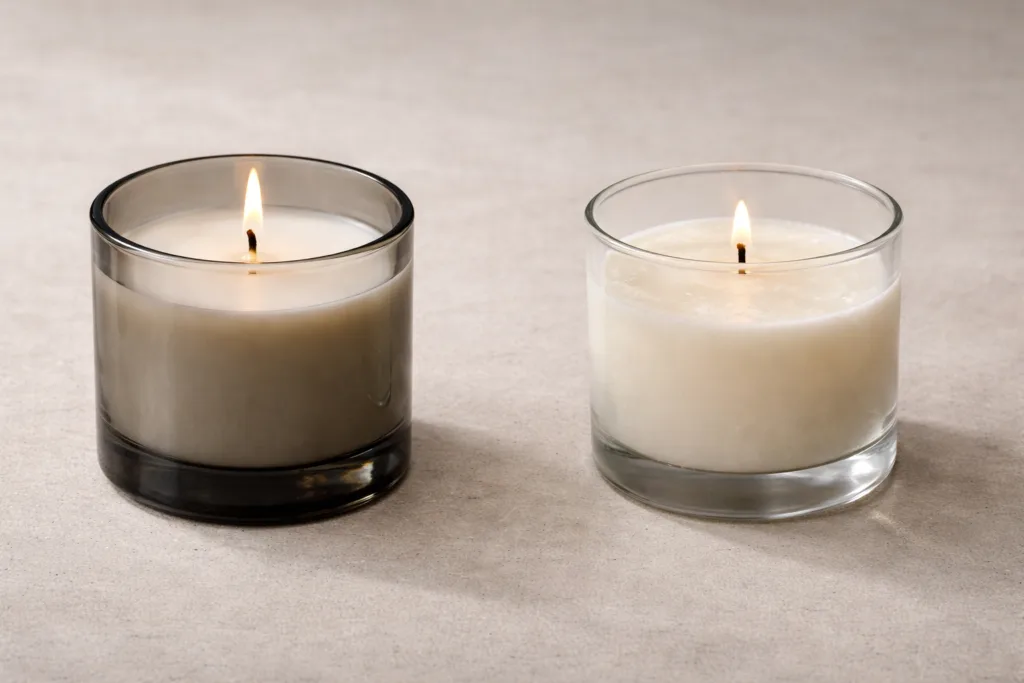 Premium pricing in candles is not arbitrary. When done correctly, it reflects structural cost differences, not branding theatrics.
Here’s where the money actually goes:
Higher-Grade Fragrance Inputs
Fine fragrance compounds cost significantly more than commodity aroma oils. They are formulated for balance, longevity, and regulatory compliance across multiple markets.
Precision Manufacturing
Luxury candles often require slower pour cycles, tighter temperature control, and extended curing times. These processes increase labor and production costs but deliver consistent results.
Quality Control and Compliance
High-end candles are typically produced under stricter quality protocols and meet international safety standards—critical for EU, UK, and North American markets.
Packaging That Protects, Not Just Decorates
Rigid boxes, inserts, and protective structures add cost but reduce damage, returns, and brand risk—especially in wholesale and gifting channels.
When Is the Price Not Worth It?
Luxury pricing fails when:
- The fragrance performance is average
- The vessel is trend-driven and short-lived
- Scaling leads to inconsistency
- The product lacks reorder logic
Mature buyers increasingly cut these products early.
Best Luxury Scented Candles of 2026: High-End Picks by Category
Rather than ranking individual brands, serious buyers evaluate candles by use case and performance role. Below are the most commercially relevant luxury candle categories in 2026.
Best Luxury Candles for Sophisticated Interiors
These candles prioritize neutrality, restraint, and material harmony. Common traits include:
- Soft mineral, woody, or musky profiles
- Matte or frosted vessels
- Medium scent projection
They perform exceptionally well in:
- Design-focused retail
- Boutique hotels
- Residential interior projects
These candles sell steadily, not explosively—making them ideal for long-term programs.
Best High-End Candles for Gifting
Gift-driven luxury candles succeed when they are:
- Instantly understandable
- Securely packaged
- Visually premium without being polarizing
Successful gifting candles avoid niche scent profiles and instead focus on universally elegant compositions. Reorder rates are typically high when packaging remains consistent year-round.
Best Minimalist Luxury Candles
Minimalism remains dominant in 2026, but buyers now distinguish between empty minimalism and intentional restraint.
True minimalist luxury candles rely on:
- Perfect proportions
- Subtle material finishes
- Quiet but distinctive fragrance structures
They appeal strongly to concept stores and brands aligned with quiet luxury aesthetics.
Best Modern Fragrance-Forward Luxury Candles
This category attracts buyers seeking differentiation without excess.
Key features include:
- Unexpected but balanced scent pairings
- Layered compositions
- Strong but controlled hot throw
These candles perform well in flagship retail and limited seasonal programs.
Best Long-Lasting Premium Candles
Burn time and stability are increasingly important to value-conscious luxury buyers.
Top-performing candles in this category:
- Maintain scent integrity across the full burn
- Resist tunneling and sooting
- Offer consistent visual appeal
They are particularly attractive to hospitality and corporate clients.
Are Luxury Candles Really Worth the Price?
The answer depends on the buyer’s objectives.
Luxury candles are worth the price when:
- They reinforce brand positioning
- They deliver reliable margin
- They support repeat purchasing
They are not worth the price when purchased purely for novelty or visual trend appeal.
Experienced buyers increasingly treat candles as long-term SKUs, not seasonal experiments.
Luxury Candle Trends Shaping 2026
Several structural trends are reshaping the high-end candle market:
Fragrance Direction
- Reduced sweetness
- Increased use of woods, musks, resins
- Gender-neutral profiles
Material Choices
- Plant-based wax blends
- Clean burn emphasis
- Fewer additives
Design Language
- Quiet luxury
- Architectural forms
- Neutral palettes
Commercial Strategy
- Fewer SKUs, higher volume
- Longer product lifecycles
- Focus on reorderability
These trends favor manufacturers and brands with operational discipline.
Final Thoughts: Choosing Luxury Candles That Truly Perform
In 2026, luxury scented candles succeed not because they are expensive, but because they are thoughtfully built.
For mature buyers, the strongest candles are those that:
- Perform technically
- Scale operationally
- Align with long-term brand values
Luxury, today, is not excess. It is precision.
Frequently Asked Questions
1. What makes a luxury scented candle different from a regular candle?
Luxury candles use higher-grade fragrance materials, engineered wax systems, precise wick selection, and controlled manufacturing processes that result in better scent performance, cleaner burns, and long-term consistency.
2. Are luxury candles worth the higher price for retailers?
Yes—when they are designed for reorderability, stable margins, and consistent quality. Luxury candles with strong performance often outperform cheaper alternatives in lifetime value.
3. What fragrance types dominate luxury candles in 2026?
Woody, musky, resinous, and softly floral compositions dominate, with an emphasis on gender-neutral, interior-friendly scent profiles.