
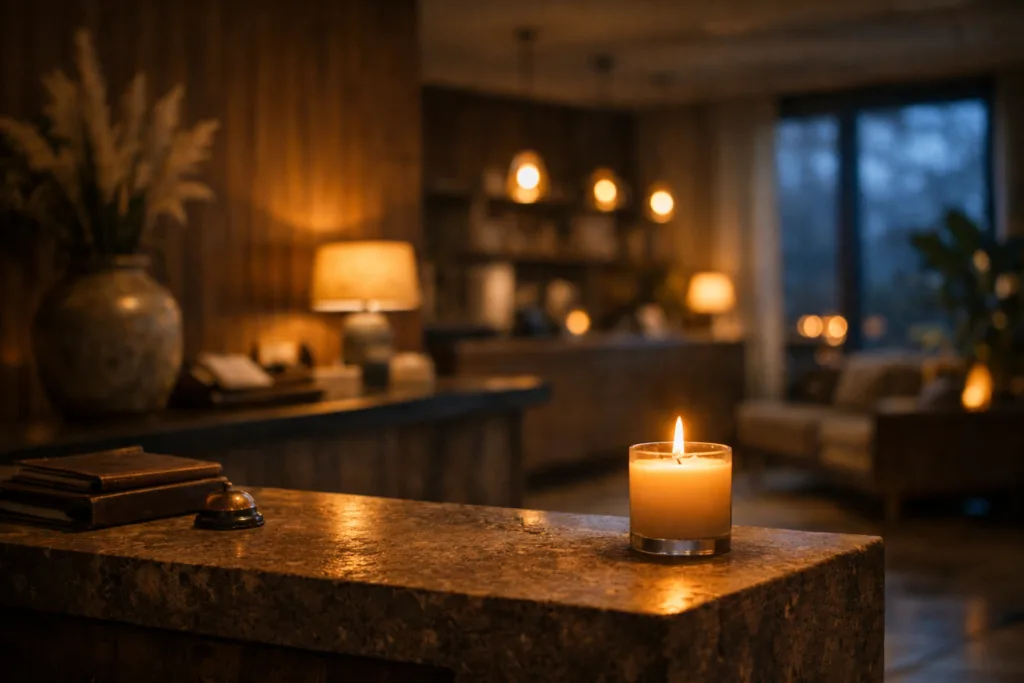
 Introduction: Why Guests Remember the Scent Before the Sheets
Most hotel owners invest heavily in what guests see: architecture, furniture, lighting, and materials. Fewer invest with the same intention in what guests smell — yet scent is often the very first thing a guest notices and the last thing they remember.
Think back to the boutique hotels that stayed with you long after checkout. You may not recall the exact armchair in the lobby, but you probably remember how the space felt. Calm. Warm. Collected. Inviting. Or, sometimes, strangely overwhelming.
That feeling is rarely accidental. In many memorable hotels, it begins with scent.
Candles, in particular, play a unique role in boutique hotels. Unlike large-scale commercial diffusers, candles feel intimate and human. A candle flame suggests care, presence, and intention. It signals that someone thought about the atmosphere — not just the logistics — of hospitality.
This article explores the top candle scents for boutique hotels, but more importantly, why certain scents work, where they belong, and how hoteliers can use candle fragrance to build emotional memory, brand identity, and guest loyalty.
The Psychology of Scent in Boutique Hospitality
Scent is processed in the limbic system — the part of the brain associated with emotion, memory, and instinct. This is why smell bypasses rational analysis and triggers immediate emotional response.
In boutique hotels, where emotional connection matters more than scale, scent becomes a silent storyteller.
A well-chosen candle scent can:
- Reduce travel stress and anxiety
- Signal cleanliness without harshness
- Create a sense of arrival and belonging
- Reinforce brand values subconsciously
- Anchor memories to a physical place
Unlike visual branding, scent does not demand attention. It works quietly, persistently, and emotionally.
Candles add another layer: time. A candle burns slowly, changing the space gradually. This subtle evolution mirrors the guest’s own transition — from arrival to relaxation.
Why Candles (Not Just Diffusers) Matter in Boutique Hotels
Large hotels often rely on centralized scenting systems designed for consistency and scale. Boutique hotels operate differently.
Candles offer:
- Human scale: A candle suggests presence, not automation
- Visual warmth: Flame adds movement and softness
- Localized control: Different rooms, moods, and times
- Emotional authenticity: Candles feel intentional, not imposed
For guests, candles signal care rather than corporate polish. They feel chosen, not programmed.
Best Candle Scents by Boutique Hotel Space
Lobby & Reception: The Scent of First Impression
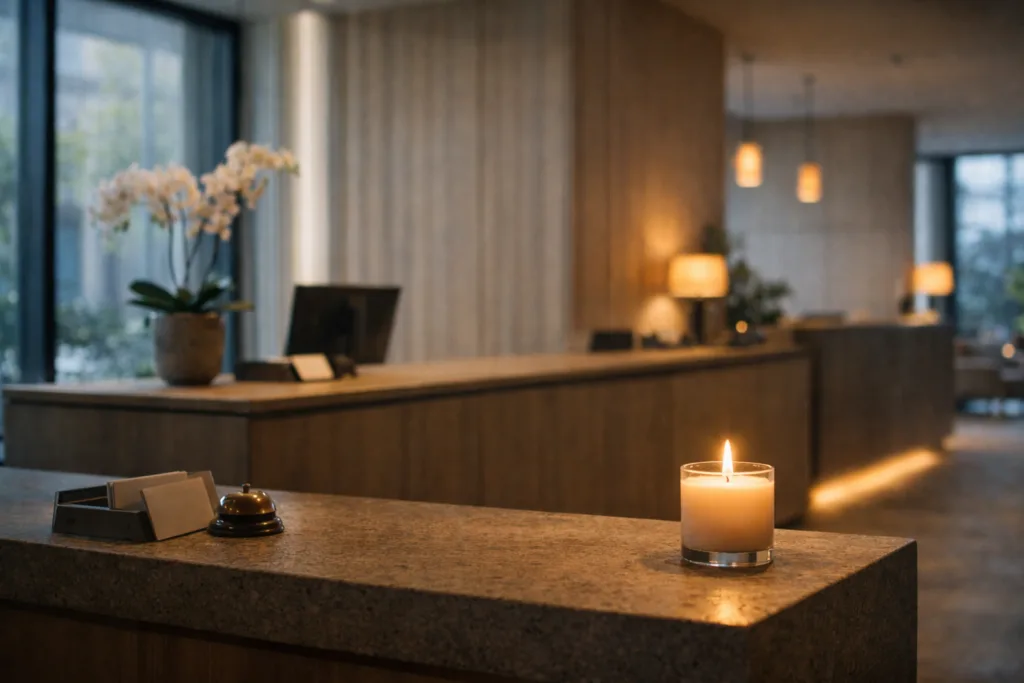 The lobby is where scent does the heaviest emotional lifting. Guests arrive tired, overstimulated, and alert. The goal here is reassurance, not seduction.
What works best:
- Clean but not sharp
- Elegant but not loud
- Memorable without being distracting
Recommended scent families:
- White tea & soft florals
- Bergamot with light woods
- Green tea with citrus peel
These scents communicate calm competence. They say: You are safe here. You can exhale.
Avoid overly sweet or spicy notes in reception areas. A lobby scent should feel inclusive, neutral, and refined — never polarizing.
Guest Rooms: Private Comfort and Emotional Safety
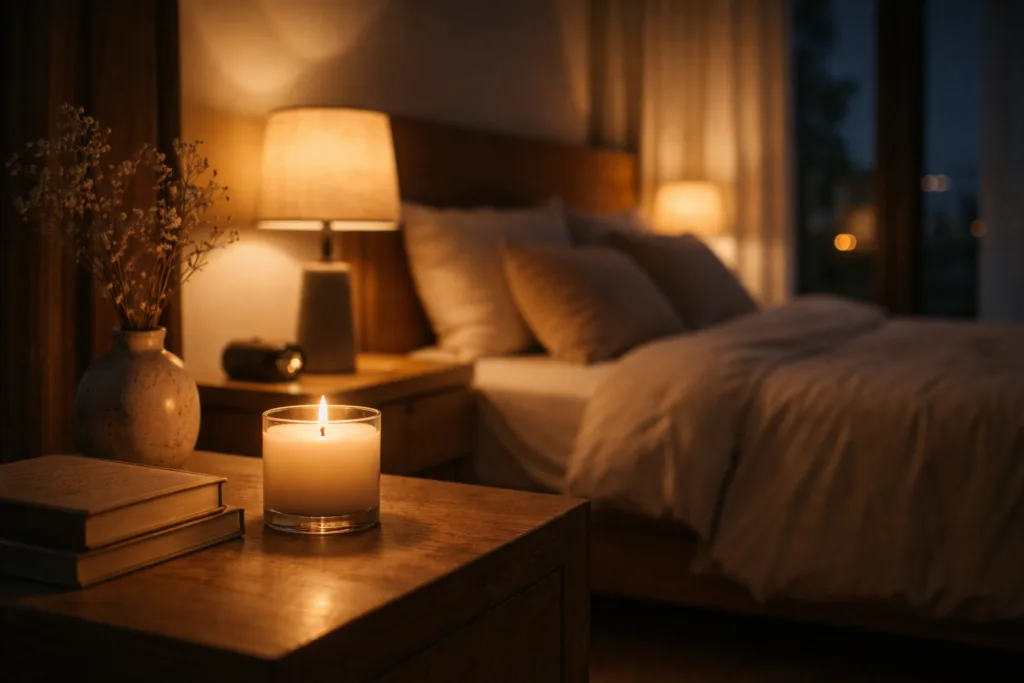 Once inside the room, the guest’s emotional state shifts. This is no longer a public space. It is personal.
Here, candle scent should support rest, privacy, and emotional grounding.
Ideal characteristics:
- Soft projection
- Warm base notes
- Familiar but elevated
Recommended scent profiles:
- Lavender blended with cashmere or musk
- Sandalwood and creamy vanilla
- Amber with subtle powdery notes
These scents create a sense of being held rather than impressed.
Many boutique hotels choose to place candles unlit, allowing guests to decide when — or if — they want to engage. This respects autonomy and personal sensitivity to fragrance.
Spa & Wellness Areas: Ritual and Restoration
In spa environments, scent becomes ritual.
Guests entering a spa are already seeking transformation — physical, emotional, or both. Candle fragrance here should feel purposeful, not decorative.
Best scent families for spa spaces:
- Eucalyptus and mint
- Lemongrass and ginger
- Rosemary and sage
These scents support clarity, breath, and renewal.
Equally important is wax quality. Clean-burning, low-toxicity candles matter deeply in wellness settings. Guests increasingly associate scent with health, not just atmosphere.
Restaurant, Bar & Lounge: Atmosphere Without Interference
Food spaces require restraint.
The role of candle scent here is not to be noticed, but to enhance mood without competing with taste.
Recommended approaches:
- Very low scent throw
- Light citrus or soft woody notes
- Or completely unscented candles
Many boutique hotels opt for visual-only candles in dining areas, reserving fragrance for peripheral spaces.
The best compliment for a restaurant candle scent is silence — guests should feel better, not distracted.
Matching Candle Scents to Boutique Hotel Style
Minimalist & Scandinavian-Inspired Hotels
These spaces value restraint, light, and material honesty.
Scent direction:
- Clean linen
- Soft woods
- Airy musks
Scents should feel almost invisible — present only when noticed.
Mediterranean & Coastal Boutique Hotels
Here, scent can be brighter and more expressive.
Scent direction:
- Fig tree
- Sea salt
- Citrus blossom
These notes evoke sun, openness, and leisure without heaviness.
Urban Luxury & Design-Forward Hotels
City hotels often aim for distinction and signature identity.
Scent direction:
- Leather
- Smoked woods
- Amber and resin
These scents feel confident and architectural, aligning with bold interiors and modern design language.
Signature Candle Scents as Brand Memory
The most successful boutique hotels treat scent as branding, not decoration.
A signature candle scent can:
- Become part of guest recognition
- Create emotional recall after departure
- Extend the hotel experience into retail
Some hotels sell their signature candles in gift shops or online, allowing guests to take the experience home.
This transforms scent from cost into asset.
Sustainability, Safety, and Guest Trust
Today’s guests are informed. Many actively avoid paraffin, artificial dyes, and overpowering fragrance oils.
For boutique hotels, candle material choices communicate values.
Guests notice:
- Natural wax blends
- Clean-burning performance
- Subtle, non-toxic fragrance
Even without technical explanations, guests feel when something is considered.
Trust is built quietly.
Candlelight as a Hospitality Detail That Matters
Hospitality is built on details that do not announce themselves.
A well-chosen candle scent does not ask for attention. It offers comfort.
Guests may not consciously remember the fragrance name — but they remember how they slept, how they slowed down, how the space felt safe.
In boutique hotels, where differentiation lives in nuance, candle scent becomes one of the most human tools available.
It is not about smelling expensive.
It is about feeling remembered.
Final Thoughts: Scent as Quiet Luxury
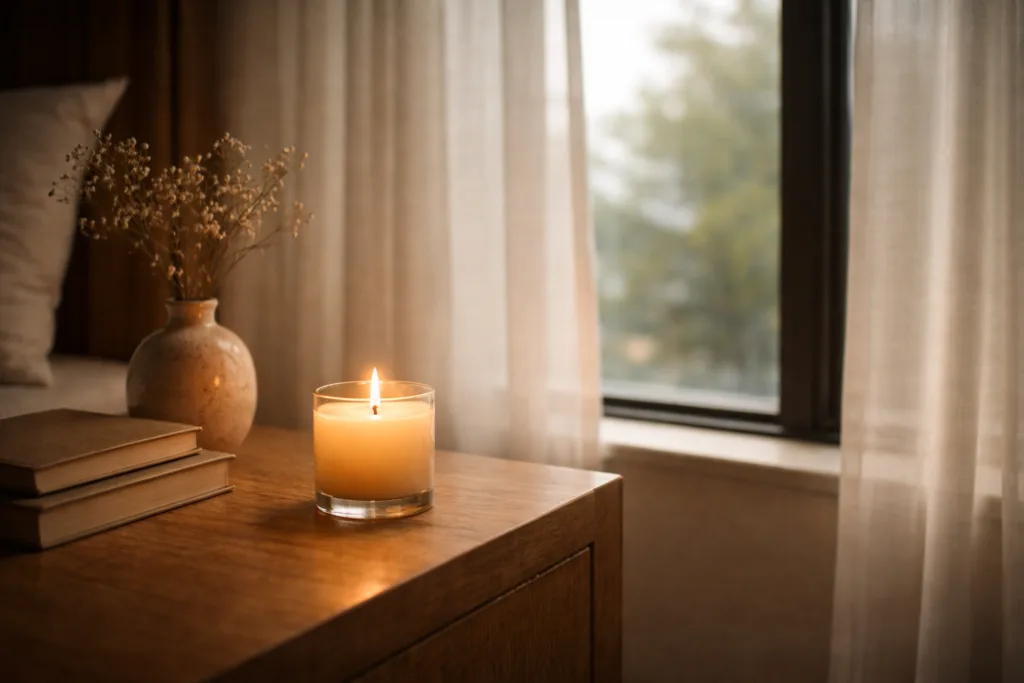 Quiet luxury is not silent — it is subtle.
In boutique hotels, candle scent is one of the rare elements that works emotionally, invisibly, and enduringly.
When chosen with care, it becomes more than atmosphere.
It becomes memory.
Frequently Asked Questions (FAQ)
1. What are the best candle scents for boutique hotels?
The best candle scents for boutique hotels are those that feel refined, subtle, and emotionally grounding rather than strong or overpowering. Popular choices include white tea, soft woods, light citrus, sandalwood, lavender blends, and gentle amber notes. These scents help guests relax and form positive memories without dominating the space.
2. Should boutique hotels use scented candles in guest rooms?
Yes, many boutique hotels place candles in guest rooms, but usually with restraint. Light, calming scents or even unlit candles allow guests to control their experience. This approach respects individual sensitivity to fragrance while still offering warmth, comfort, and a sense of thoughtful hospitality.
3. Are scented candles safe to use in hotels?
Scented candles can be safe in hotels when high-quality, clean-burning wax and well-tested fragrances are used. Many boutique hotels prefer natural or low-toxicity wax blends and subtle scent throw to ensure guest comfort, especially in wellness-focused or environmentally conscious properties.
4. How do candles contribute to a boutique hotel’s brand identity?
Candles help boutique hotels create a signature atmosphere that guests emotionally remember. A consistent candle scent across key spaces can become part of the hotel’s identity, reinforcing mood, values, and style. Over time, this sensory memory can strengthen brand recognition and guest loyalty.