
Before You Launch a Candle Brand: Read This MOQ Guide First
Launching a candle brand is equal parts vision and precision. Before you get swept up in the scent profiles and packaging design, there’s an underlying reality every founder must face: your initial investment, and how Minimum Order Quantity (MOQ) shapes what’s possible. For aspiring candlepreneurs, understanding the interplay between budget—starting at the essential $2,000 threshold—and MOQ empowers your launch to be bold yet measured. With luxury standards rising and custom blends in demand, informed decision-making is non-negotiable.
Why MOQ Should Be Your First Strategic Consideration
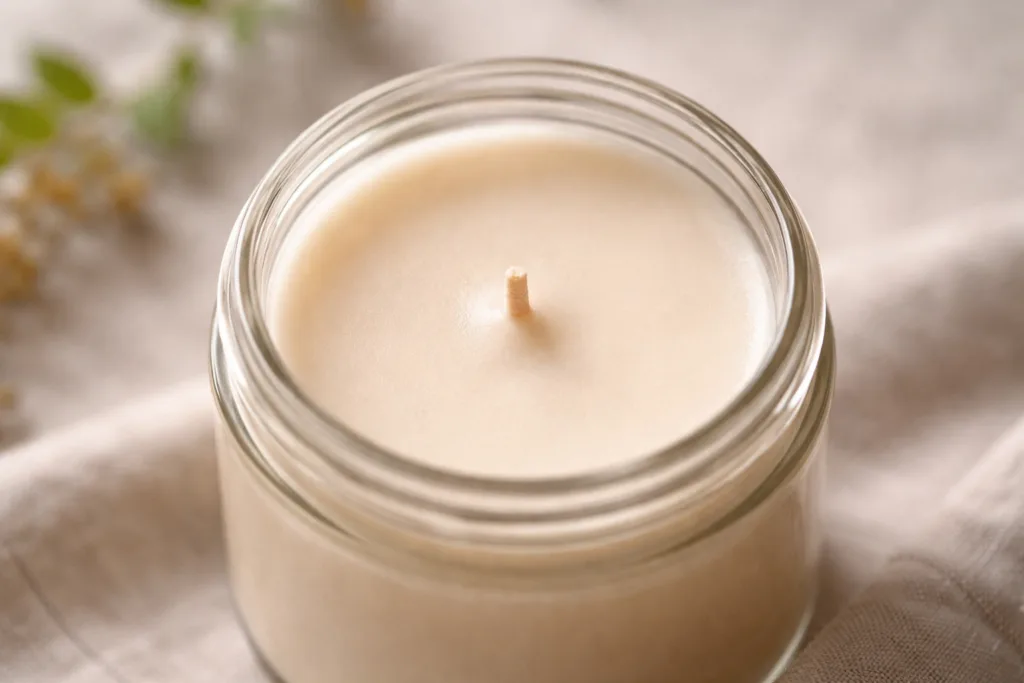
MOQ, or Minimum Order Quantity, is the baseline number of units a manufacturer like Circe Home requires per production run. It sets the stage for pricing, customization, and even warehousing decisions. Whether you’re aiming for a boutique line or a scalable private-label program, MOQ directly determines your ability to experiment with scents, vessels, and packaging—including how far your start-up capital of $2,000 will stretch.
How MOQ Frames Your Options
- Defines access to custom fragrance and design services
- Impacts per-unit cost and margin
- Establishes your inventory footprint
- Affects eligibility for compliance support (e.g., IFRA, CLP)
MOQ Ranges for Luxury Candle Production
Premium candle manufacturers like Circe Home typically set MOQs between 300–1,000 units for standard vessels. Bespoke designs, colored wax, or custom scents may require 500+ units, while eco packaging or multi-format launches (jars + tins) can increase minimums.
Budgeting for Your First Production Run: 2,000 USD Is Key
What exactly can a $2,000 starting budget achieve within today’s candle manufacturing landscape? The answer lies in strategic allocation—balancing core quality, compliance, and brand impact. Here’s how to make the most of your capital:
Essential Cost Breakdown
| Component | Typical % of Investment | Notes |
|---|---|---|
| Wax & Fragrance | 35% | Soy, coconut, rapeseed, beeswax; premium blends affect cost |
| Vessel & Lid | 30% | Glass, tin, ceramic, concrete; embossed or colored vessels elevate per-unit pricing |
| Wicks & Labels | 10% | Cotton, wood, paper-core; custom labels and brand marks |
| Outer Packaging | 15% | Private-label boxes, inserts, tissue, FSC cartons |
| Compliance & Testing | 10% | IFRA sheets, CLP signage, burn time testing, safety verification |
Maximizing Impact Under 2,000 USD
- Batch sizes: ~350–400 units in standard vessels with rich scent load
- Opt for classic soy/coconut blends for optimal performance and cost
- Limit SKUs to 1–2 core fragrances to save on compliance fees
- Choose elegant yet simple packaging with eco credentials
- Utilize manufacturer’s fragrance library before investing in full custom R&D
Wax Blends, Scent Load, and Burn Profile: Make Every Dollar Count
A candle’s soul lies in its blend and burn. With $2,000 in hand, you’ll need to prioritize formulas and performance to deliver a luxury experience. Circe Home’s approach involves refined blends such as soy-coconut or rapeseed-beeswax, tailored for a clean, soot-free burn and optimized scent throw.
Performance Metrics to Guide Your Selections
- Scent Load: Target 7–10% for rich cold and hot throw; higher loads boost perceived value but cost more.
- Burn Profile: Test for “no mushrooming,” minimal soot, centered wick tolerance of ±2mm.
- Curing Time: Minimum 3–5 days for soy blends for max scent strength.
- Fragrance Compatibility: Ensure selected fragrance oils or essential oils are compatible with wax for stable dispersion.
Comparing Wax Types and Performance
| Wax Type | Scent Throw | Melt Point | Clean Burn | Visual Finish |
|---|---|---|---|---|
| Soy | Strong | Low (45–54°C) | High | Smooth, can frost |
| Coconut | Moderate–Strong | Low (42–48°C) | Very High | Creamy, rare frosting |
| Rapeseed | Moderate | Mid (48–54°C) | High | Light, slight crystallization |
| Beeswax | Delicate | High (62–65°C) | Exceptional | Golden, minimal defects |
Circe Home Lab Insight
“For start-up candle brands, investing in wax blends with proven clean burn and high scent retention ensures compliance and customer satisfaction, even with limited capital.”
Customization vs. MOQ: Finding the Right Balance
Every founder craves distinct identity, but each leap in customization (e.g., custom fragrance, unique vessel, branded outer box) shifts MOQ upward—and spends from your budget. Standard vessels and fragrances keep MOQ low and quality high, while advanced design choices require negotiation and higher purchase commitments.
Customization Levels and Typical MOQ Shifts
| Customization | Typical MOQ | Budget Impact |
|---|---|---|
| Standard vessel, fragrance | 300–400 units | Allows more units per $2,000 |
| Custom label | 400–500 units | +8–12% |
| Custom fragrance or blend | 500+ units | +15–20% |
| Unique vessel (color/emboss) | 600+ units | +25% |
How to Negotiate Customization Under a Tight Budget
- Ask for MOQ sliding scales from your manufacturer.
- Choose one area (label or scent) for full customization.
- Pool resources with another small brand for higher MOQ leverage.
- Opt for in-stock vessel colors, reserving unique finishes for later launches.
- Validate your concept via a minimal viable SKU before full rollout.
Candle Manufacturing Process Essentials: What Every Founder Must Know
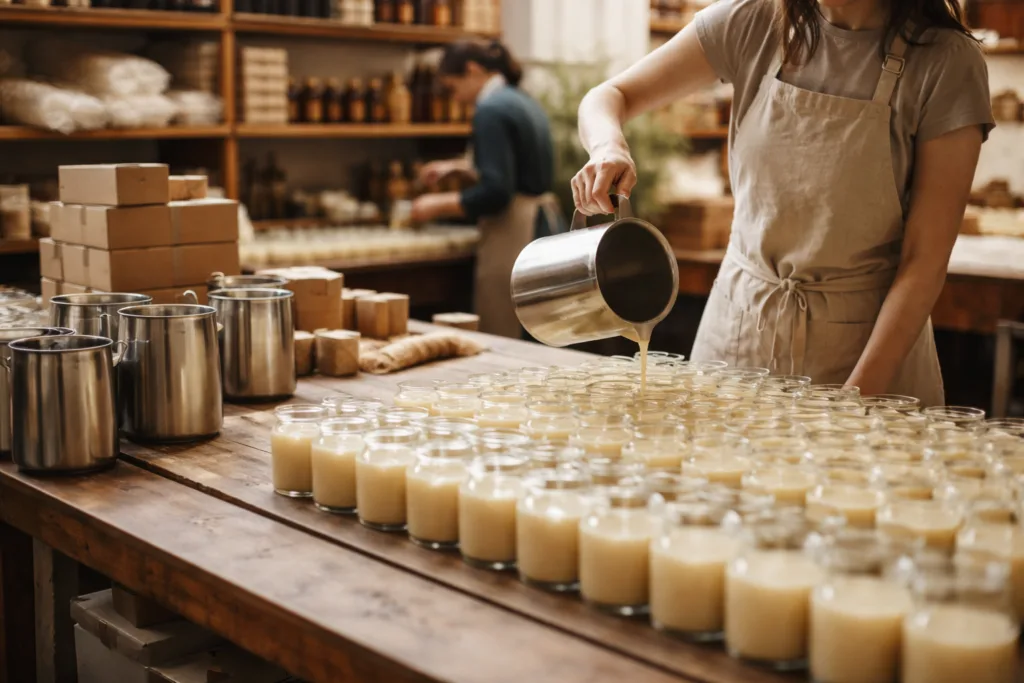
The heart of a luxury candle brand lies in process fluency. From raw wax to boxed product, each step influences fragrance delivery, compliance, and margin. Partnering with a seasoned manufacturer like Circe Home ensures precise control—key for a founder working within $2,000 and navigating MOQ limits.
Production Workflow
- Wax melting and blending: Precision temperature control avoids scent loss.
- Fragrance integration: Cold-processed oils enhance throw and longevity.
- Wick prepping: Sizing, centering, and gluing for optimal burn.
- Pouring and setting: Mastery of vessel fill level, minimizing air gaps and wet spots.
- Curing and burn-testing: Establishing minimum cure (usually 72h+) for soy blends.
- Topping, boxing, and final QC: Checking for defects, scent accuracy, and labeling compliance.
Quality Control Checklist
- Wick centering: Max ±2mm for safe, even burn
- Burn time: ≥35 hours for standard 200g candle
- Scent consistency: Cold throw/hot throw checks
- Compliance: IFRA documentation, CLP/CLP labeling (EU)
- Container integrity: No cracks, chips, or leaks
Compliance, Safety, and Responsible Production
With consumer expectations and regulations at new highs, each candle must meet strict performance and labeling standards. $2,000 allocated wisely ensures that compliance—IFRA for fragrances, CLP for the EU, and general product safety—doesn’t fall by the wayside.
Key Compliance Factors for New Candle Brands
- IFRA 51st Amendment adherence for all scents
- CLP-compliant outer box labeling, allergen listing
- Soot index: Must pass strict EU/US certifications
- Eco packaging options: FSC-certified cartons, soy inks, compostable inserts
- Safety warnings: Required for all vessels and outer boxes
Circe Home’s Commitment
“Our production philosophy centers elegant packaging, clean burn, refined scent experience, and full compliance—from the first 300 units to larger private-label.”
Designing for Luxury, Loyalty, and Brand Impact
Even within the constraints of MOQ and $2,000, founders can deliver a luxury candle experience that sets new standards for scent, aesthetic, and integrity. Thoughtful choices—like selecting tactile vessels, naming scents evocatively, and packaging with purpose—lay the foundation for brand loyalty and repeat sales.
Candle Applications to Envision
- Minimalist home décor lines: Clean shapes, muted labels, natural wax blends
- Spa and wellness blends: Calming botanicals, FSC outer packaging
- Luxury gifting: Embossed vessels, premium fragrance, special-edition boxing
- Private-label retail: Store-specific scents, branded outer boxes
- Hotel and hospitality: Consistent scent branding, compliant labeling
Before You Launch a Candle Brand: Read This MOQ Guide First
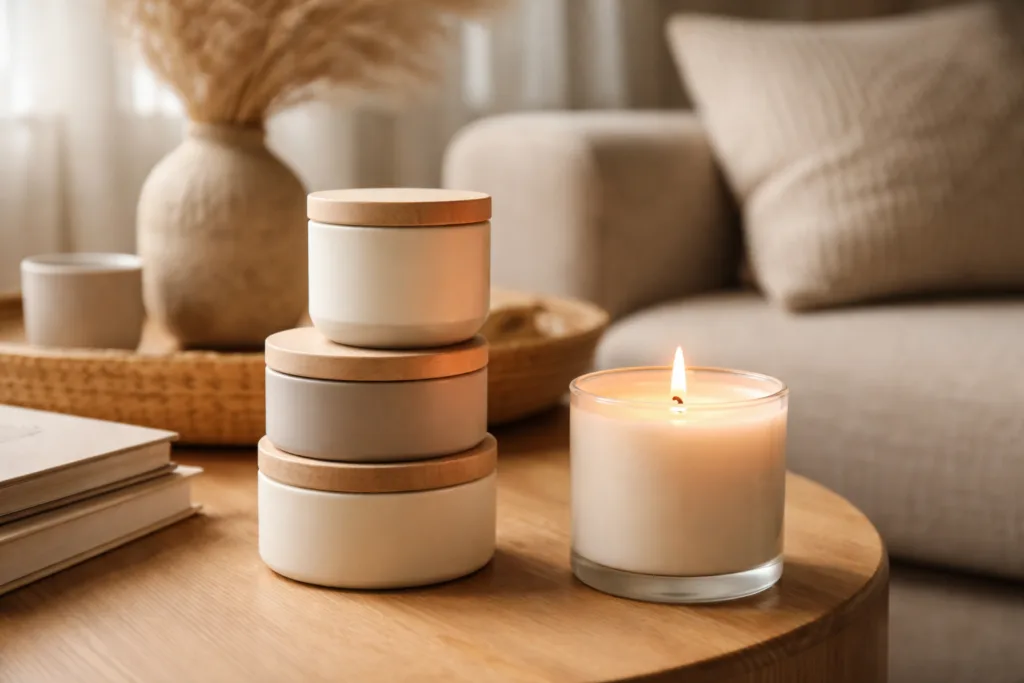
Setting out to build a candle brand is both exhilarating and intimidating. With a clear grasp of MOQ, a grounded $2,000 launch budget, and proven manufacturing strategies, founders position their business for sustainable growth from day one. Circe Home’s expertise in refined blends, custom scent creation, and responsible packaging gives you the technical support to build with confidence—while your own vision shapes the soul of the brand.
Key Takeaways Before You Start
- Pin down your core budget and minimum order requirements
- Pursue quality first—luxury blends and clean burn outperform bigger SKU counts
- Negotiate customization judiciously; standard formats go further on a tight launch
- Insist on compliance and safety, every step of the way
- Design for longevity and brand connection—not just quick sales
With these insights, your candle brand journey starts strong, informed, and ready to deliver a scent experience worthy of attention.
Frequently Asked Questions
What is MOQ and how does it affect my candle business?
MOQ, or Minimum Order Quantity, is the smallest batch a manufacturer will produce for you. It impacts pricing, customization, and total startup investment. Lower MOQs offer brand flexibility for first launches, while higher MOQs unlock more advanced design options.
How many luxury candles can I produce with a $2,000 budget?
With $2,000, you can typically produce around 350–400 high-quality candles in standard vessels, featuring premium wax blends and elegant packaging. Customizations or unique vessels will reduce unit count.
Should I prioritize custom fragrance or custom packaging first?
On a limited budget, prioritize custom packaging for brand impact. Select fragrances from the manufacturer’s curated library to maximize scent performance and compliance until your business scales.
Are soy-coconut blends better for beginners?
Soy-coconut blends are ideal for new brands as they offer strong scent throw, clean burn, and easy compliance. They also help manage costs while delivering a premium customer experience.
How do I ensure candles are compliant and safe?
Verify that all fragrances meet IFRA standards, packaging is CLP labeled if selling in the EU, and candles pass burn and soot testing. Work with a manufacturer who provides documentation and quality control support.
What types of candle applications fit best for a first launch?
Minimalist home décor, spa blends, and luxury gifting lines performed best for new brands with lower MOQs. These applications balance elegance and cost efficiency for initial market entry.