
Pre-Production Costs: The Setup No One Calculates
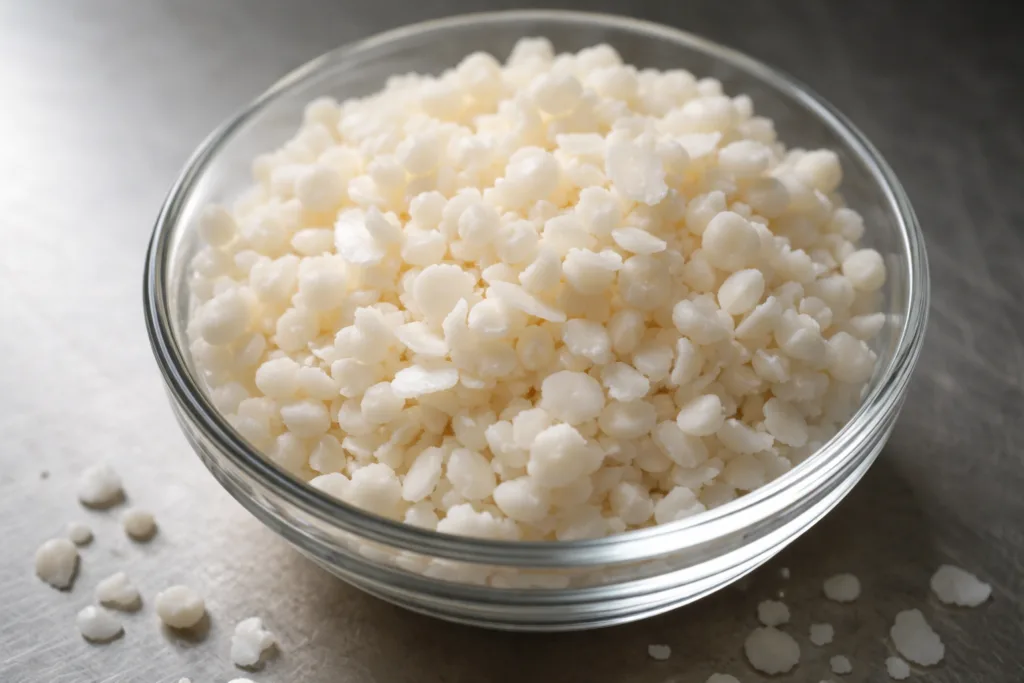
Before a single candle exists, manufacturers are already investing—often more than what newcomers assume. These early-stage costs, overlooked in typical budgeting, affect every project regardless of order size.
Machine Start-Up Fees
Industrial melters, pouring machines, and color spraying units all require start-up fees for each run. Even for small batches, switching on these machines involves energy, calibration, and dedicated operator time—expenses that don’t scale down for boutique orders.
Equipment Cleaning & Prep
Vessels, boilers, and filling hardware must be meticulously cleaned between scent or color changes to avoid cross-contamination. This labor—manual scrubbing, chemical soaks, and drying cycles—is non-negotiable for quality control but rarely itemized by new brands planning their launch budgets.
Fragrance Testing & Formula Adjustments
Custom fragrance development involves multiple iterations: cold throw, hot throw, wax compatibility, flash point validation, and precise wax-to-oil ratio calibration. Each laboratory cycle requires raw material usage, analyst time, and stability checks. Particularly when optimizing blends for soy, coconut, or beeswax, formulation costs climb quickly.
Density & Burn Profile Calibration
Getting the perfect burn profile—soot-free, optimal scent throw, even wax pool—means methodical density testing. Often, small test candles are created just to calibrate wick type, vessel diameter, and fragrance load percentage. These samples aren’t sellable but are essential to production setup.
- Wax blend selection & small-run melting
- Testing essential oil compatibility for clean burn
- Adjusting pour temperature, cooling, and curing time
Circe Home Lab Insight: “No matter the order volume, pre-production protocols remain intensive. Shortcuts risk inconsistent scent dispersion and unsafe burn profiles.”
Importantly, setup costs stay fixed regardless of whether the batch is 100 or 10,000 candles. That’s why savvy brands plan for a pre-production budget split—often 8–15% of total project spend.
Packaging Costs Are Higher Than Expected (and Have Their Own MOQ)
Packaging is a universally underestimated expense in the candle world. While wax formulas can be scaled for small runs, packaging rarely bends—minimum order quantities (MOQs) and tooling fees are the rule.
Box Printing & MOQ Realities
Custom printed boxes almost never start below 500–1000 units. Regardless of how many candles you want to produce, packaging suppliers quote based on their own setup and plate costs, not your needs.
Labels, Stickers, and Die-Cut Fees
Premium packaging means custom die-cuts for labels, foil stamping, and specialty adhesives. Every new shape or finish requires a tooling fee upfront. For small orders, these fees can rival the cost of the wax itself.
Finishes: Spraying & Foil Stamping Charges
Dream of a matte-sprayed jar or gleaming gold-embossed logo? Each finish involves opening a new production line with separate mold fees. These are charged per design and do not scale down for small runs.
- Start-up costs for metallic or colored coatings
- Embossing and debossing dies
- Custom outer cartons with magnets/ribbons
It’s common for packaging MOQs to exceed candle body MOQs, especially for luxury designs with multi-layered boxes, custom inserts, and scent-specific branding. Experienced suppliers like Circe Home walk clients through these costs to avoid surprises at invoice time.
Wax & Fragrance Choices: Unseen Price Drivers
The wax and fragrance at the heart of every candle are rarely simple line items. Performance, sustainability, and regulatory needs create complex sourcing and formulation demands.
Comparing Wax Blends for Performance & Cost
| Wax Blend | Scent Throw | Average Burn Time | Cost per kg |
|---|---|---|---|
| Soy Wax | Medium-Strong | 35–45 hr (200g) | $$ |
| Coconut Wax | Very Strong | 32–40 hr (200g) | $$$ |
| Rapeseed Wax | Soft-Medium | 38–48 hr (200g) | $ |
| Beeswax | Subtle | 45–55 hr (200g) | $$$$ |
Fragrance Load & Curing Time Impact
Perfume-grade fragrance oils command a premium, especially those crafted for high cold and hot throw. Essential oil blends carry allergen declaration costs and require stability testing by wax type to ensure clean burn and retention. Higher fragrance loads (>10%) and longer curing time mean more materials and longer factory occupancy.
Regulatory Compliance Testing
International Fragrance Association (IFRA) rules, EU CLP labeling, and allergen disclosures add compliance costs—lab testing, documentation, and material re-sourcing are all required, especially for global brands.
Wick Sizing, Vessel Selection & Burn Profile Quality
Wicks and containers look simple, but their choices steer hidden costs in performance and safety. The wrong wick can induce mushrooming, over-sooting, or incomplete melting—necessitating further rounds of testing and adjustment.
Wick Selection Process
- Test cotton, wood, or paper-core wicks for chosen wax blend
- Size wick to vessel diameter for optimal melt pool
- Check for soot-free burning & minimal mushrooming
- Trim length verification & centering tolerance
Container Aesthetics
Glass, ceramic, or metal vessels come in custom sizes, shapes, and finishes. MOQ applies for embossed lids, colored coatings, and bespoke forms. Visual packaging and scent naming are critical for shelf appeal, but each adds cost layers the unsuspecting often miss.
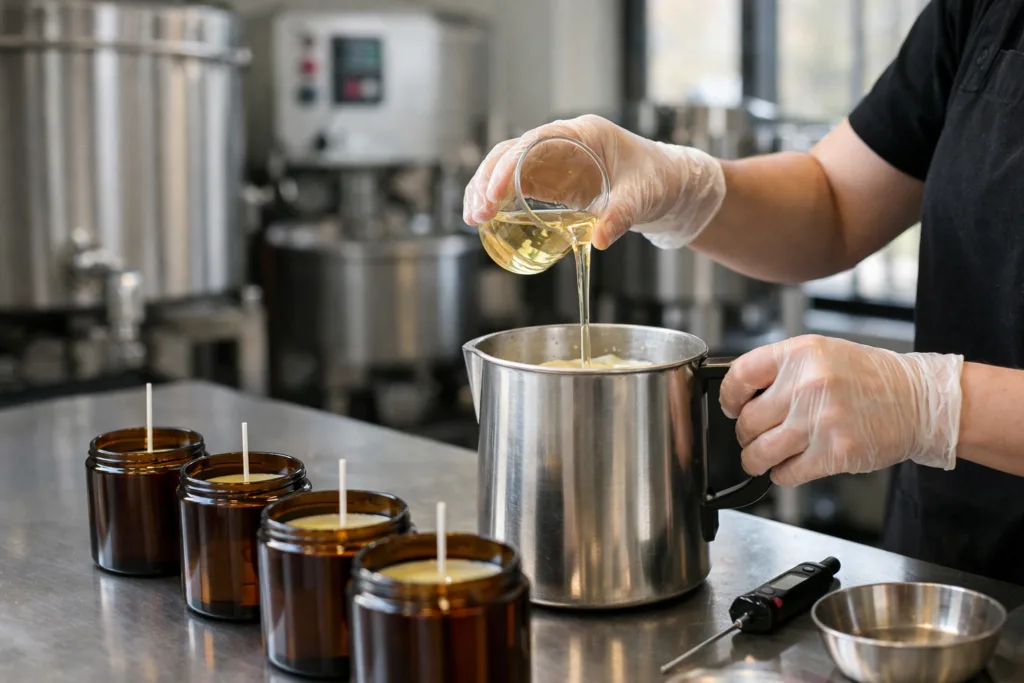
Quality Control: The Unseen Overhead
Quality assurance is integral yet frequently unquoted at project outset, especially for luxury candles. Each batch requires systematic controls for burn time, soot index, fragrance dispersion, and vessel/wick alignment.
QC Checks Before Shipping
- Test burn in controlled environment (>35 hrs for 200g standard)
- Monitor wax pool formation and wick centering
- Assess for frosting, sweating, or scent loss
- Verify IFRA and CLP compliance documentation
The higher your product standards (clean burn, flawless appearance, stable scent), the more intensive and expensive this phase becomes.
Production Process: From Lab to Box
The crafting of a luxury candle follows rigorous factory cycles. These steps involve time, labor, and operational costs often obscured behind unit price quotes.
- Raw material preparation and weighing
- Wax melting and blend calibration
- Fragrance addition (by temperature and ratio)
- Wick gluing, vessel cleaning & pre-pour inspection
- Precise pouring, capping, and topping
- Room-temperature curing (often 48–72 hr)
- Packing, boxing, and barcoding
Customization vs. MOQ
Higher customization means longer set-up and slower cycles. Most OEM/ODM suppliers (including Circe Home) have tiered pricing: higher for unique fragrances, bespoke containers, special finishes, and low-volume runs due to overheads in all phases outlined above.
Applications & Use Scenarios Impact Cost Structure
Target application drives choices—and costs. Spa-grade aromatherapy blends, minimalist home décor lines, and retail private-labels each bring unique regulatory, packaging, and quality demands.
Gifting vs. Retail vs. Wellness Blends
Luxury gift sets often require multi-layered boxes, outer sleeves, elevated wax blends, and signature scents—each element multiplying MOQs and hidden tooling fees.
Brand-Specific Customization
Private-label and boutique retailers routinely expect fragrance matching, carton UV finishes, and compostable packaging. These eco-options, while desirable, also add to cost base via specialized sourcing and compliance checks.
Eco-Compliance & Responsible Production Costs
Sustainable choices—FSC-certified cartons, soy-based inks, refillable formats—inject further costs for raw material certification, packaging R&D, and batch-level compliance documentation.
Global Regulatory Considerations
Each candle may need IFRA, CLP, and safety warning alignment for its destination market. Brands embracing responsible production must allocate budget for eco-packaging validation, test reports, and import documentation. Circe Home supports clients through fragrance compliance and sustainability audits as part of its premium manufacturing protocols.
The Hidden Costs of Candle Production No One Tells You About
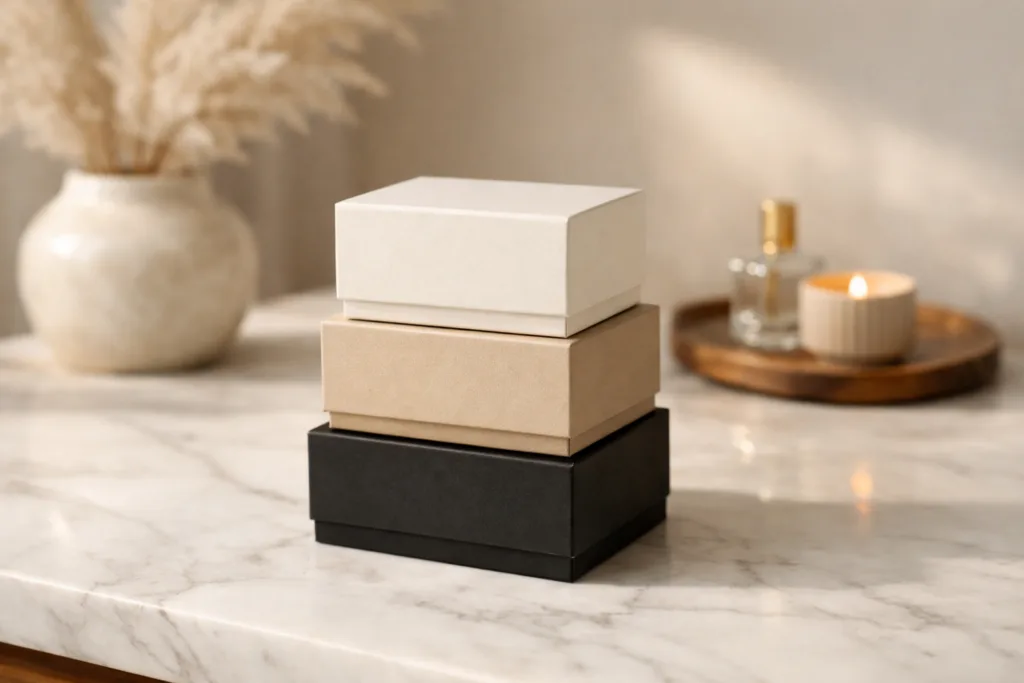
The biggest lesson for new candle brands? Hidden costs remain fixed regardless of order quantity—setup, testing, tooling, and compliance always come first. Successful luxury candle launches allocate upfront budget for these essentials, understanding that real cost per piece shrinks only as volumes grow.
By mapping every stage of production, brands sidestep surprises and build better supplier partnerships. Expertise and transparency from specialist OEMs and ODMs—Circe Home among them—ensure your products not only look and perform their best but meet every regulatory and market demand.
Frequently Asked Questions
Why are pre-production costs so high even for small orders?
Pre-production involves machine start-up fees, equipment cleaning, and multiple rounds of formula testing. These tasks require fixed labor and resource allocation, so costs do not decrease with smaller quantities.
Can packaging MOQs be reduced for new brands?
Most packaging suppliers have rigid minimums due to setup and plate fees, especially for custom luxury boxes and finishes. Negotiation is possible for stock packaging but rare for bespoke designs.
How does the choice of wax affect overall production costs?
Wax type influences fragrance load, curing time, and raw material price. Premium blends like coconut or beeswax require higher investment and careful testing, affecting total manufacturing expenses.
What compliance testing is needed for candles?
IFRA standards, EU CLP labeling, allergen disclosures, and safety warnings all require laboratory testing, certification, and documentation before candles can be sold in regulated markets.
Does custom fragrance development increase hidden costs?
Yes, custom fragrances require multiple stability tests, scent profiling, and compatibility assessments. Materials and laboratory fees accumulate across each blend iteration.
Where can brands save on hidden candle production costs?
Bulk ordering reduces per-unit setup and packaging fees. Opting for standard vessels or labels, and working with experienced manufacturers familiar with compliance, streamlines costs.