
What Exactly Is MOQ—and Why Does It Matter?
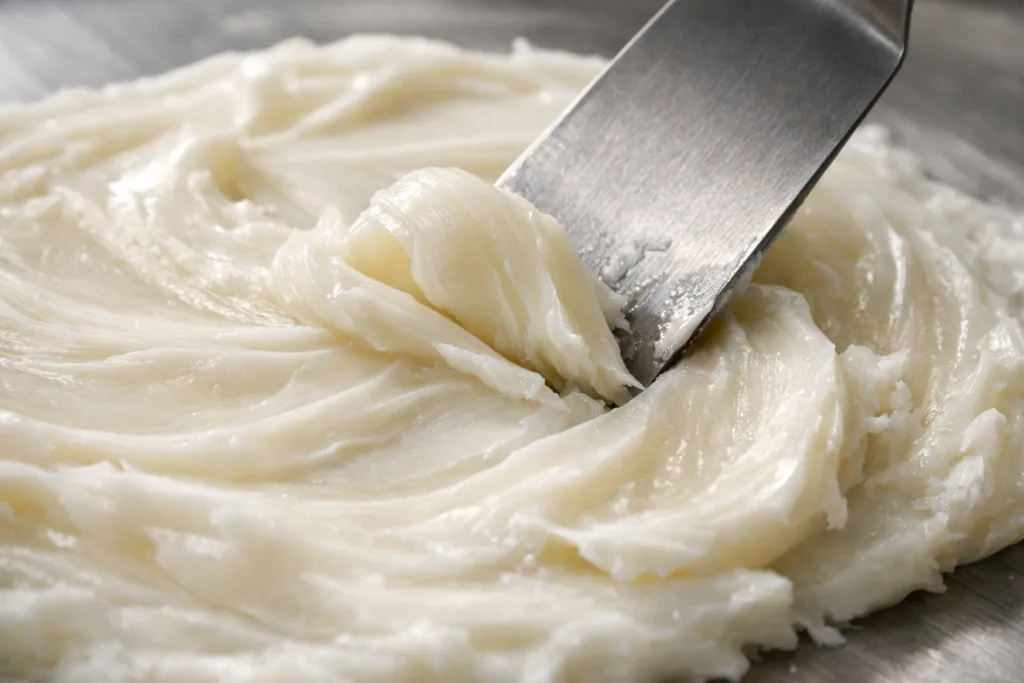
MOQ stands for Minimum Order Quantity—the smallest unit amount a manufacturer will produce per order or design. For private label candles, this number isn’t arbitrary. It’s rooted in the realities of raw material sourcing, set-up time, fragrance blending, vessel procurement, quality control, and regulatory compliance. Understanding MOQ means avoiding surprises on cost and capability.
Core Drivers of Candle MOQ
- Batch production processes (melting, blending, pouring)
- Fragrance system development and stability testing
- Custom vessel or packaging sourcing (glass, ceramics, tins)
- Regulatory compliance paperwork (e.g., IFRA, CLP)
- Efficient material use—wax, wicks, fragrance
The Truth About MOQ for Private Label Candles
Many startups believe MOQs are designed to exclude them from premium manufacturing partners, but the truth is more nuanced. MOQs reflect the real cost of achieving consistent fragrance loads, burn profiles, clean burn results, and branding safety. MOQ negotiation is possible, but understanding each element lets buyers request what really matters:
Table: Private Label Candle Option Comparison
| Wax Blend | Typical MOQ | Scent Throw | Burn Time (200g) | Customization Level |
|---|---|---|---|---|
| Soy | 500–1000 | Strong (Hot/Cold) | 35–40 hrs | High |
| Coconut | 700–1200 | Very Strong | 38–42 hrs | High |
| Rapeseed | 800–1500 | Clean, Subtle | 34–38 hrs | Medium-High |
| Beeswax | 300–800 | Mild, Natural | 40–45 hrs | Medium |
| Custom Blends | 1000+ | Variable | Varies | Full Custom |
“Circe Home Lab Insight: Batch minimums protect your scent’s integrity and brand reputation—too-small orders make it hard to ensure burn consistency, perfect wax admixture, and regulatory-compliant labeling.”
How Fragrance Choices Affect MOQ
Designing a private label candle involves more than wax and wicks. Fragrance systems—whether essential oil, fine fragrance, or custom blend—impact MOQ directly. Every new scent means additional stability trials, IFRA allergen declaration, and raw material procurement. Fragrance load (typically up to 12%, but sometimes higher for coconut or hybrid blends) and compatibility with chosen wax can change your minimums.
- Simple single-note fragrances: Lower MOQ, faster launch
- Multi-layered complex blends: Higher MOQ, longer development (especially with essential oils)
- Natural/essential oil candles: More testing required due to volatility and lower flash points (often 800+ MOQ)
Wicks, Vessels, and the MOQ Equation
Wick sizing isn’t one-size-fits-all. Choosing between wood, cotton, or paper core means sampling, burn profiling, and QC checks with each wax blend/vessel combo. Custom or imported vessels (like handblown glass, cement, or embossed ceramics) usually demand higher MOQs because their factories run in bulk. Stock vessels can lower entry minimums. Here’s how different choices stack up:
- Cotton wicks for soy/coconut: Fastest set-up, lower MOQ
- Wood wick with custom vessel: Sizing trial = MOQ 1200+
- Painted/foil glass, complex shapes: MOQ 2000+
Packaging Customization vs. MOQ
Packaging sets luxury candles apart. Full custom box structure, foil stamping, or PMS-matched label printing will always push up MOQ, sometimes as high as 5000+ for unique components. However, reputable manufacturers like Circe Home often provide semi-custom options—premium ready-made glass jars, classic label silhouettes, or eco-packaging—enabling startups to achieve an elegant presence at lower quantities.
Quality Assurance, Testing, and Compliance: The MOQ Trade-off
Each candle batch undergoes multi-level quality checks: wick centering, clean burn, fragrance dispersion consistency, sooting (per ISO 16356), and full compliance (IFRA 51st, EU CLP, etc). Startups should ask how production batch size influences quality outcomes. Smaller MOQ requests sometimes mean untested or unoptimized burn profiles, so always request batch samples and QC protocols for peace of mind.
- Burn consistency and clean finish verification
- Fragrance load testing and dispersal checks
- Wick mushrooming, soot production, tunnel/cavern issues
- Proper CLP/IFRA labeling for EU, US, or UK retail
Realistic Strategies for Startups Facing High MOQ
High MOQs don’t have to stall your launch. Consider these buyer strategies for better flexibility:
- Collaborate with manufacturers on semi-custom lines (stock glass jars, proven scents, universal packaging)
- Build initial portfolio with 1–2 core scents for lower fragrance MOQ, then expand over time
- Share batch runs with other small brands (pre-order pools)
- Explore local/regional glass or box makers to reduce imported MOQ loads
- Negotiate on aspects that matter most: prioritize fragrance and wax blend over vessel, if budget is limited
Production Process: Where MOQ Enters the Equation
The candle production cycle—melting, blending, pouring, topping, curing, boxing—dictates real-world MOQ points. For soy wax with fragrance loads above 8%, each batch must rest and cure a minimum of 10–14 days. Small batch runs introduce inefficiencies, increased per-unit labor, and more potential for inconsistency in burn or cold throw. Startups prioritizing clean burn, luxury scent throw, or sustainable materials should factor this into their trade-off calculations with their OEM/ODM partner.
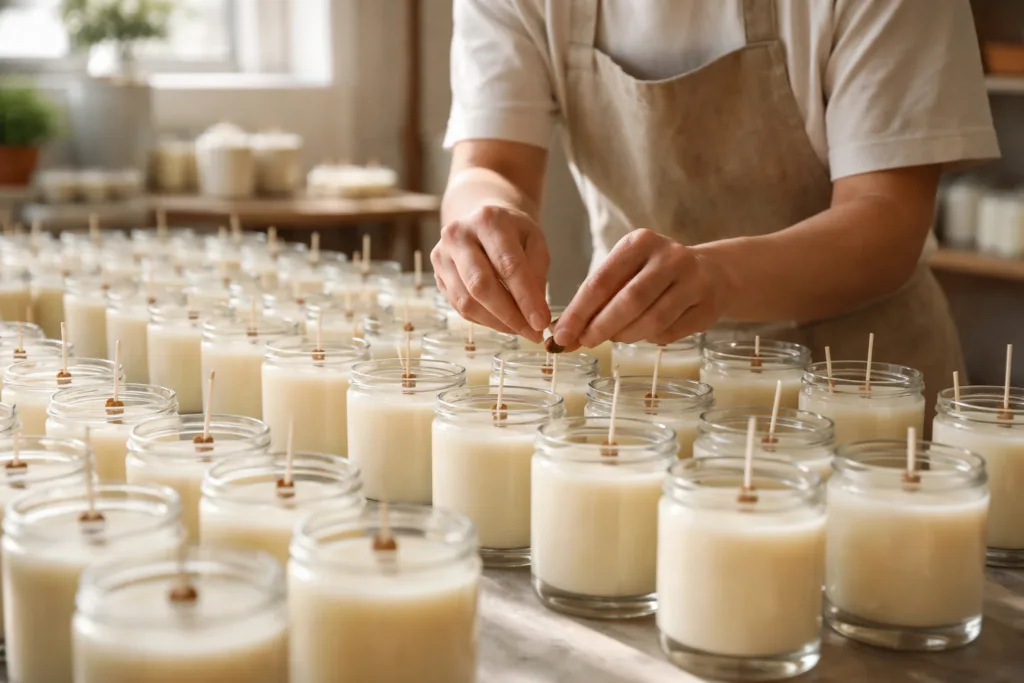
Private Label Candle Production Steps
- Wax and fragrance system melting/blending (temperature-controlled)
- Vessel pre-heating and wick gluing (centering jigs for accuracy)
- Precision pouring and topping (air bubble and surface check)
- Curing (ambient or temperature/humidity monitored rooms)
- Labeling, boxing, quality control, regulatory checks
Global Compliance, Sustainability & MOQ Decisions
Regulatory and sustainability concerns add another layer of logic to MOQ. Premium manufacturers insist on batch testing for IFRA allergen profiles, CLP labeling, and ongoing fragrance updates (like IFRA 51st Amendment). Certifications for vegan wax, FSC packaging, soy ink, or compostable programs entail consistent sourcing and additional minimums—vital for boutique and eco-driven brands, but potentially raising order thresholds.
MOQ for Private Label Candles: A Quick-Glance Guide for Startups
Summary Table for Startup Buyers
| Product Feature | Standard MOQ | Notes for Startups |
|---|---|---|
| Standard Soy Candle, Stock Glass | 500–800 | Fastest path to market, proven burn/profile |
| Custom Fragrance Blend | 1000+ | Allows full scent uniqueness, longer lead |
| Essential Oil Candle | 800–1500 | Additional stability/hot throw testing |
| Box/Vessel Embossing | 2000+ | Critical for high-end retail, plan early |
| Sustainable/Eco-Packaging | 800–2000 | Allows for FSC/soy ink/compostable claims |
Circe Home: How a Leading OEM/ODM Candle Manufacturer Balances MOQ & Customization
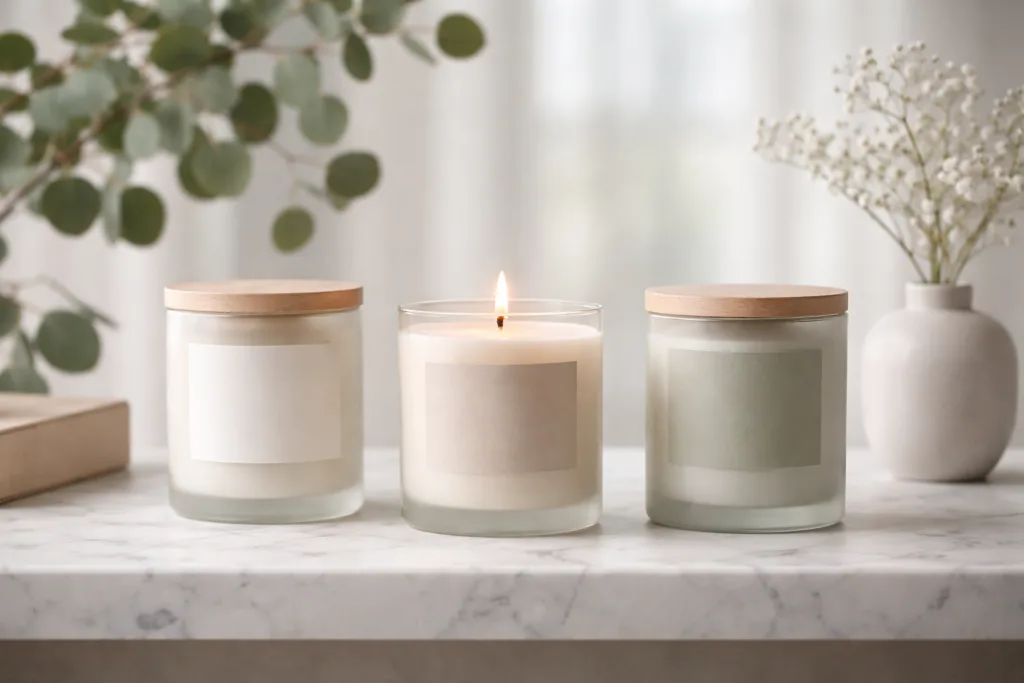
A world-class partner like Circe Home excels in balancing MOQ demands and luxury customization for startups. Offering a refined scent palette, proven wax formulas (from soy and coconut to sophisticated blends), and full-spectrum compliance support, Circe Home streamlines the process for private label clients. By providing ready-to-launch fragrance programs and flexible packaging options, they help emerging brands achieve a clean, elegant result at attainable MOQs.
Frequently Asked Questions
What is the standard MOQ for private label candles?
The standard MOQ typically ranges from 500 to 1000 units per SKU for soy or coconut candles in stock vessels. More customized fragrance and packaging solutions generally entail higher minimums, up to 2000 or more. It’s important to discuss specifics with your chosen manufacturer.
Can I negotiate a lower MOQ as a startup?
Some manufacturers offer flexibility for startups by leveraging stock vessels, proven scents, or semi-custom branding. However, lower MOQs may limit your options for unique fragrance blends, custom packaging, or specialty waxes due to material procurement and quality consistency needs.
Does fragrance choice impact MOQ for private label candles?
Yes, custom or complex fragrance systems raise MOQ requirements due to additional development, allergen testing, and raw material sourcing. Stock or bestseller scents often come with lower minimums and faster onboarding for startups.
What’s included in private label candle MOQ?
MOQ generally covers a specific vessel, wax blend, fragrance load, and all required labeling and boxing per SKU. It assumes batch production for proper curing, clean burn, and regulatory-compliant safety systems.
Are there eco-friendly or vegan options with manageable MOQs?
Many premium manufacturers now provide sustainable options—soy, coconut, or rapeseed wax, FSC packaging, and plant-based fragrances—at reasonable MOQs, though custom components may require higher minimums for production efficiency.
Can I order multiple scents or vessels under one MOQ?
Most manufacturers set MOQ per scent and vessel since each variable demands dedicated sourcing, testing, and batching. However, semi-custom programs occasionally allow buyers to split quantities across two or more options.