
How Candle Factory Production Lines Work (and Why MOQ Exists)
The elegance of a finished candle belies the intricate technical choreography orchestrated within a professional candle factory. The factory floor is a laboratory of scent, wax, and precision, where every vessel, wick, and fragrance batch is governed by the demands of consistency, compliance, and irresistible appeal. To satisfy global brands and boutique labels alike, modern candle factories—from niche ateliers to scalable leaders like Circe Home—operate with advanced production lines designed for both efficiency and artistry. Yet, each order must also navigate the economic reality of Minimum Order Quantities (MOQ), balancing custom creativity with manufacturing logic. In this guide, we’ll lift the lid on how candle production lines truly work, why MOQs are essential, and how these two forces shape every luxury candle’s journey from sketch to flame.
Inside the Candle Factory: An Overview of Modern Production Lines
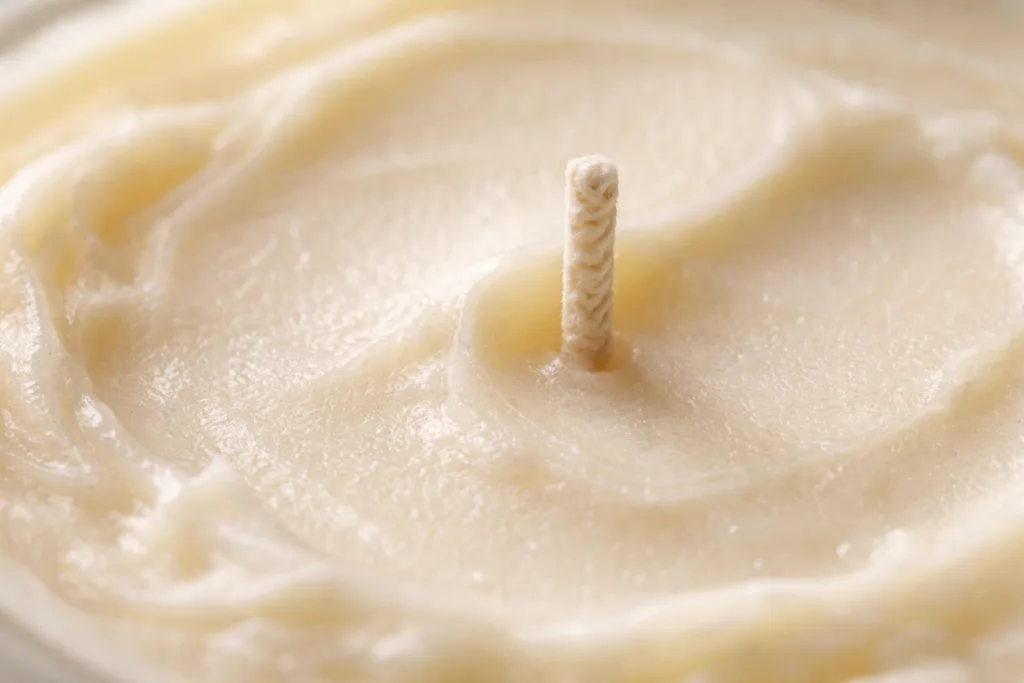
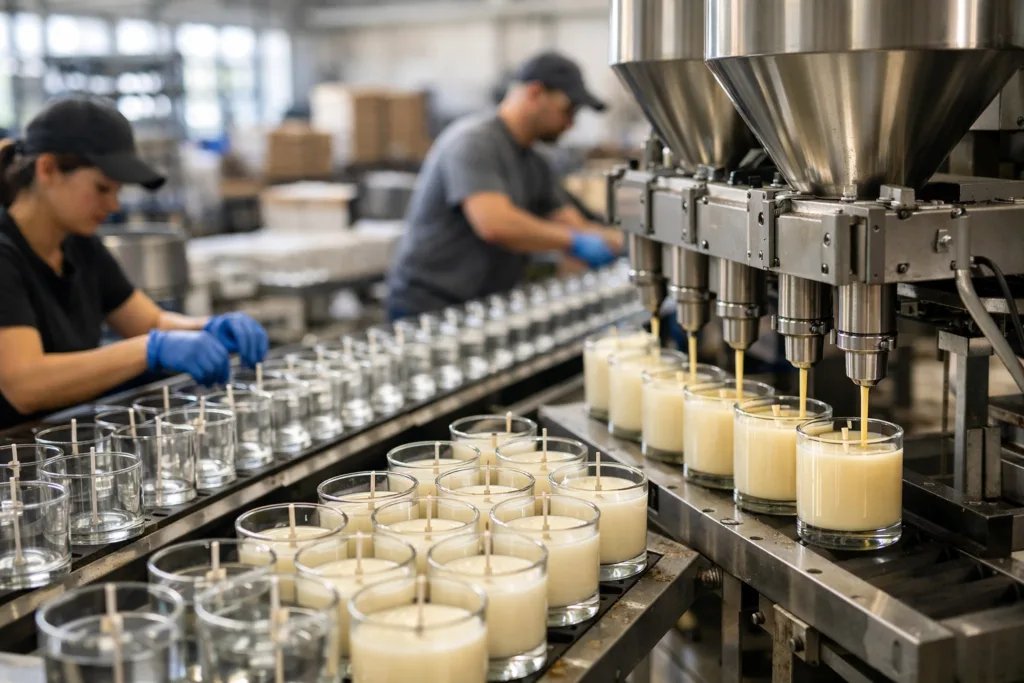
Step into a state-of-the-art candle factory, and the atmosphere is equal parts chemistry and craftsmanship. A production line here is not merely a conveyor belt—it’s a sequence of interlocking stations, each specialized for a critical stage: wax melting, precise blending, fragrance infusion, pouring, cooling, curing, finishing, and quality control.
- Raw material reception and testing
- Wax melting and controlled blending
- Fragrance compounding
- Wick cutting and centering
- Container preparation and pre-heating
- Automated or hand pouring
- Synchronized cooling and curing
- Final assembly: labeling, cleaning, boxing
Each stage is mapped for both speed and zero-defect production. Precise temperature control during wax melting preserves scent integrity, while programmable logic controllers (PLCs) on modern lines regulate pouring rates and batch segmentation according to vessel size and blend formula.
From Wax to Wick: Technical Foundations of Candle Manufacturing
The ideal candle balances clean burn, strong scent throw, and luxurious presentation. Achieving this starts with choosing the right wax—such as soy, coconut, rapeseed, beeswax, paraffin, or proprietary blends. Each brings distinct melt points, frost resistance, and fragrance load capability. For instance, Circe Home often pairs prime soy blends for eco-luxe clean burn with coconut additions for enhanced creamy texture and scent diffusion.
| Wax Blend | Scent Throw | Burn Time | Visual Quality |
|---|---|---|---|
| 100% Soy | Medium | Long | May frost |
| Coconut-Soy Blend | Strong | Medium | Smooth, creamy |
| Beeswax | Light, natural | Very long | Golden hue |
| Paraffin | Very strong | Shorter | Bright, opaque |
Fragrance addition is tightly controlled—max load may reach 8-12% by weight depending on wax compatibility. Testing for essential oil versus fragrance oil stability ensures the blend will not weep, separate, or overly reduce burn quality. Short ‘flash points’ and pour temperature mismatches can degrade delicate notes or cause tunneling, so blending is often completed at 65-75°C for optimal dispersal.
Wick Selection, Sizing, and Centering: Critical Burn Science
Wick selection directly determines how a candle burns and smells. Cotton, wood, or paper-core wicks are sized specifically for each vessel diameter and wax blend—too large, and the candle soots or over-burns; too small, and tunneling results. In QA-driven factories, each wick is hand or machine-positioned with ±1 mm centering tolerance, then anchored in place before wax pour.
- Calculate vessel diameter
- Match wax blend and fragrance load
- Select wick type and size for optimal melt pool
- QC check for wick centering
- Burn test for mushrooming/soot risk
“Circe Home Lab Insight: Scent performance relies as much on careful wick sizing as on the wax blend—especially with high-load, luxury scents where capillary action and even combustion must be balanced.”
Fragrance Compounding and Curing Science
Every luxury candle’s signature rests on a stable fragrance matrix—involving both artful compounding and rigorous technical protocol. During blending, fragrance is gently folded into just-molten wax under slow agitation. The blend then rests for a set curing period—typically 2-14 days—ensuring scent binds to wax without volatility loss.
Cold throw testing (unlit) and hot throw evaluation (upon burning) are run for each batch. High-end manufacturers document dispersion curves, appearance stability, and allergen content, assisting with IFRA (International Fragrance Association) and CLP (Classification, Labelling & Packaging) compliance for EU-bound goods.
Vessel Preparation, Labeling, and Packaging: Where Art Meets Technology
Sought-after candle lines demand vessels that inspire tactile delight and visual anticipation. Factories handle diverse container types: glass jars (clear, frosted, colored, gold rim), tins, ceramics, and even concrete. Container prepping includes pre-heating to reduce thermal shock, ultrasonic cleaning, and visual inspection for chips or warping.
Automated labeling systems align custom artwork and scent naming with total precision. Foil caps, embossed labels, and FSC-certified cartons offer clients a full spectrum of design options. Select factories, such as Circe Home, will support creative projects with bespoke packaging and scent development—always balanced against the realities of batch production and MOQ thresholds.
Why Does MOQ Exist in Candle Factory Production?
MOQ, or Minimum Order Quantity, is a cornerstone of candle manufacturing economics. But why? In any production environment, there are fixed setup and running costs for each SKU: cleaning melting tanks, prepping custom fragrance blends, configuring filling lines, and sourcing specific containers and wicks.
Lower-than-threshold orders drive up per-unit cost, waste materials, and risk quality errors. Therefore, the factory must define MOQ for each project tier—balancing efficiency, labor, and the cost of premium inputs (custom scents, exclusive vessels, branded cartons).
- Wax blend batch sizes (tanks hold 50-300 kg per run)
- Fragrance purchase minimums (e.g., 5 kg per scent for custom briefs)
- Wick and vessel sourcing (MOQ from material suppliers)
- Label print runs (cost-effective at >2,000 pieces)
- Labor efficiency and scheduling
The MOQ thus protects both factory and client: keeping unit costs competitive and guaranteeing product consistency. Clients who invest in premium production also access the most advanced QC and design support, as economies of scale unlock flexibility and innovation.
Quality Control, Safety, and Compliance: Steps No Candle Factory Can Skip
Leading candle factories impose multi-point QA checks from raw material to finished pack. Test burns are conducted in controlled chambers, monitoring burn time (e.g., >35 hours for a 200g vessel), soot index, vessel safety, wick centering, and even fragrance diffusion throughout burn life.
- Material authentication (certified soy, coconut, or beeswax origin)
- Fragrance stability and allergen content review (with IFRA certificate matching)
- Visual inspection for surface faults, sinkholes, or frosting
- Soot/combustion trials (<5% soot index)
- Pictogram and CLP/IFRA labeling for EU export
- Drop/transport tests on finished packs
Some factories offer sustainability options such as eco-packaging, soy ink, or refill programs, increasingly important for both clients and end consumers. Documentation and traceability up to the IFRA 51st amendment or CLP requirements for the EU are the rule, not the exception.
Customization, Lead Times, and MOQ: Navigating Production Realities
The more customized a candle, the higher the complexity—and the stronger the need for MOQ. Custom fragrance development, hand-painted vessels, or unique outer cartons all require setup time, supplier coordination, and material purchase in economic quantities. Lead times, from design signoff to delivery, stretch to 6-12 weeks for signature lines, compared to 3-5 weeks for a standard vessel or wax formula with in-house scents.
While smaller MOQs benefit test launches, true brand collaboration comes to fruition as production tiers scale. Only then can premium factories like Circe Home invest in bespoke scent rounds, develop exclusive label options, and run full batch QC across the line.
Applications: Where Factory Production Meets the End User

Professional production lines are engineered to deliver exceptional candles for a spectrum of uses:
- Luxury gifting (high-fragrance, elegant packaging, superb finish)
- Private-label retail (boutique boxes, signature scents, rapid scaling)
- Hotel, spa, and wellness lines (bespoke aroma profiles, large-volume runs)
- Minimalist home décor collections (clean burn, stylish glassware, unprinted options)
- Eco-conscious launches (FSC cartons, soy or rapeseed wax, non-GMO claims)
Factory sophistication makes possible the interplay of scent, style, story, and sustainability—defining the future of the modern candle.
Frequently Asked Questions
How do candle factories maintain consistency across large batches?
They use automated controls for wax melting, precise weighing systems for fragrance and additives, and tightly regulated temperatures during pouring and curing to ensure every batch meets strict quality standards.
Why is there usually an MOQ for custom candle production?
MOQ helps cover the cost of sourcing custom ingredients, prepping machines, and minimizes waste, maintaining price efficiency and consistent quality.
How does vessel type affect candle performance?
Each vessel material and shape impacts cooling rate, scent throw, and burn profile, requiring the wick and wax blend choices to be carefully matched to the vessel for optimal results.
What’s the difference between cold throw and hot throw?
Cold throw describes the scent strength of a candle when unlit, while hot throw refers to the fragrance released when the candle is burning, both assessed during factory QA.
Are factory-made candles more compliant with safety standards?
Professional factories conduct multi-point safety and compliance testing, including burn, soot, and allergen checks, and label products per IFRA and CLP requirements, ensuring high safety.
Can smaller brands with lower order volumes access luxury production lines?
Many factories have lower MOQs for semi-custom lines, but full customization and premium support are typically reserved for higher MOQ, collaborative partnerships to maintain efficiency.