
Understanding the Chinese Candle Supply Chain
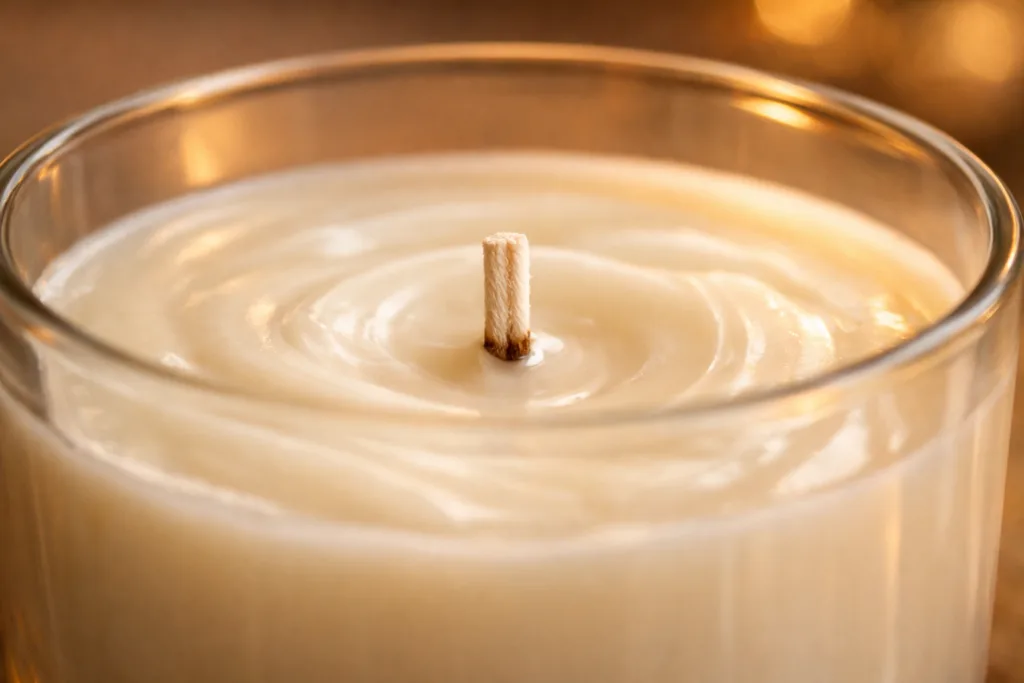
The Chinese candle industry has matured rapidly, offering a wide spectrum of products ranging from artisanal soy candles to high-volume paraffin lines. Key manufacturing regions include Guangdong, Zhejiang, and Shandong, each specializing in wax types and production scales. Recent advances emphasize refined wax formulas, compliance with international regulations, and investment in sustainability initiatives.
Main Manufacturing Hubs
- Guangdong: Known for luxury container design, fragrance innovation, and export-ready packaging.
- Zhejiang: Focus on efficient production lines, custom blending, and competitive pricing.
- Shandong: Leading in paraffin bulk supply, plus scaling for soy and rapeseed blends.
Trends for 2026
- Increased demand for coconut and rapeseed wax blends.
- Eco-positive packaging and refill programs.
- Heightened IFRA and CLP compliance requirements for export.
Wax Blends and Their Impact on Candle Quality
Wax formulation is the heart of any premium candle. Chinese suppliers offer everything from refined soy to innovative beeswax blends. Selection impacts burn time, scent throw, and visual finish. Circe Home, for example, specializes in soy, coconut, rapeseed, and beeswax blends engineered for a clean burn and enhanced fragrance diffusion.
Comparing Popular Wax Types
| Wax Type | Scent Throw | Burn Time | Visual Appearance |
|---|---|---|---|
| Soy | Strong (up to 10% fragrance load) | 35–50 hrs per 200g | Matte, occasional frosting |
| Coconut | Luxurious, subtle (blends well) | 45–60 hrs per 200g | Creamy, smooth |
| Beeswax | Natural, moderate (less compatible w/ heavy fragrance oils) | 40–55 hrs per 200g | Golden, glossy |
| Paraffin | Excellent (up to 12% fragrance load) | 50+ hrs per 200g | Clear, bright |
Key Wax Parameters
- Melt point (45–55°C for soy blends; higher for beeswax)
- Frosting tendency (soy wax vs. coconut blends)
- Flash point and safe handling during blending
Fragrance Systems and Compliance for OEM/ODM Candles
Selecting fragrance oils and ensuring regulatory compliance is crucial for imported candles. Chinese suppliers must declare allergens, abide by IFRA 51st amendment guidelines, and optimize for cold and hot throw. Maximum fragrance load percentages differ by wax type (soy: ~10%, coconut: up to 12%). Circe Home offers custom fragrance development with full compliance support.
Essential Oils vs. Fragrance Oils
- Essential oils: Natural, limited strength, ideal for wellness blends
- Fragrance oils: Complex, higher scent throw, broader palette
Testing for Scent Performance
- Cold throw evaluation post-pour
- Hot throw analysis during burn
- Fragrance dispersion consistency checks across batches
Wicks, Burn Profile, and Soot Control
Wick selection and placement directly affect burn quality and user experience. Chinese suppliers offer cotton, wood, and paper-core wicks, each suited for different vessel diameters and wax blends. Wick sizing, trimming, and centering tolerance reduce risks of mushrooming and soot formation, key for luxury candles.
Burn Profiling Steps
- Match wick type to vessel diameter and wax viscosity
- Test for soot index during prolonged burn
- Assess flame height, stability, and self-trimming features
Containers, Packaging, and Aesthetic Solutions
China’s candle suppliers offer sophisticated container options—including glass, ceramics, tins, and concrete. Custom coatings, embossing, foil caps, and private-label packaging enhance shelf appeal. Circe Home specializes in elegant vessel design and sustainable packaging, supporting branded outer boxes and scent naming strategies.
Design Elements to Specify
- Vessel material and shape
- Closure type (foil, wood, glass lid)
- Label printing (embossed, metallic, minimalist)
- Outer packaging (FSC cartons, soy ink, compostable liners)
Candle Manufacturing Process: Step-by-Step
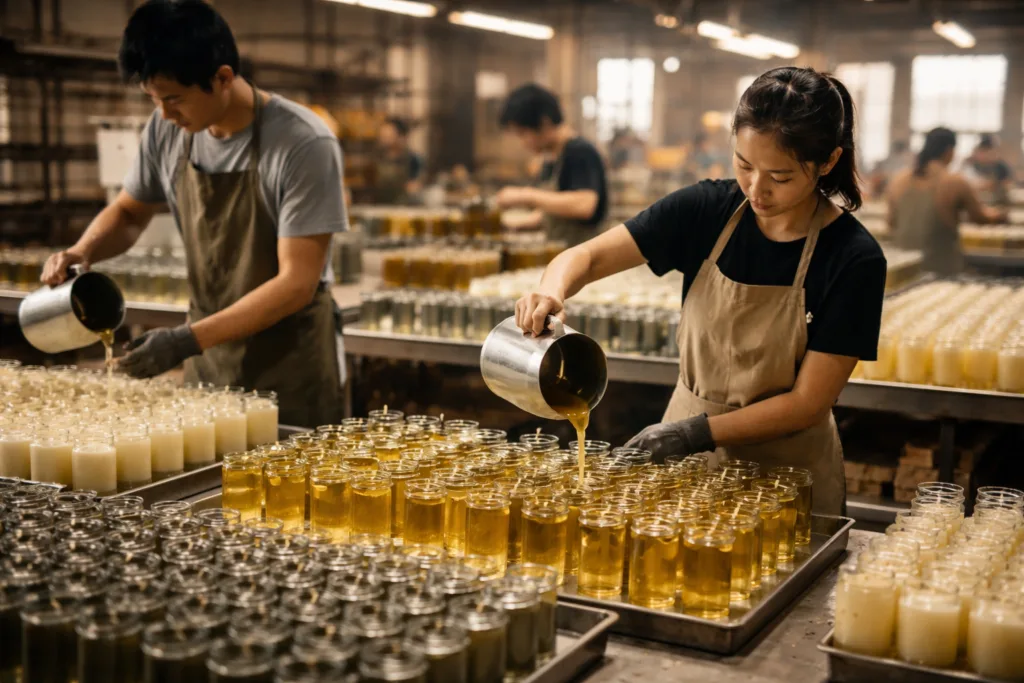
Understanding the end-to-end production process helps buyers set expectations, negotiate quality controls, and manage timelines. Chinese factories typically follow a rigorous workflow—melting, blending, pouring, cooling, and curing—to achieve stable performance and fragrance retention.
Main Production Steps
- Pre-pour setup: Vessel cleaning, wick gluing
- Wax melting at controlled temperatures
- Fragrance addition and homogenous blending
- Precision pouring and topping
- Cool-down and curing (24–72 hrs for soy/coconut blends)
- Labeling and boxing per private-label spec
MOQ and Customization Levels
- Small-batch OEM: ~500 units per scent/vessel for boutique brands
- High-volume ODM: 10,000+ units, full design support
Quality Assurance, Lab Testing, and International Compliance
Rigorous QC is non-negotiable for successful import. Top candle suppliers in China ensure every batch meets international safety standards: burn time (>35 hrs for 200g), wick centering tolerance (<1mm), fragrance dispersion, and CLP labeling. IFRA 51st compliance is vital for EU, UK, and global retail distribution.
Critical QC Checks
- Test burn for total hours, consistent scent throw
- Soot index analysis and visual inspection
- Wick centering and flame height measurement
- CLP and IFRA label review, allergen declaration control
Circe Home Lab Insight: “Batch curing times and wax fragrance compatibility are meticulously tracked to ensure optimal cold and hot throw across all luxury blends.”
Import Logistics: Selecting, Vetting, and Communicating with Suppliers
Successful importing hinges on more than product specs. It requires clear documentation, payment security, and diligent communication. Use vetted sourcing platforms (Alibaba, Made-in-China), request compliance certifications, and insist on detailed test reports. Negotiate delivery schedules, insurance, and port handling for smooth customs clearance.
Supplier Vetting Checklist
- Request business licenses, ISO certifications
- Review recent IFRA, CLP, and burn test results
- Conduct video walkthrough of production facility
- Insist on robust packaging and shipping guarantees
Sustainability and Packaging Innovation for 2026
Eco-positive manufacturing is now a priority across China’s candle supply chain. Suppliers emphasize responsible sourcing, recycled glass vessels, soy ink, FSC-certified cartons, and refill-ready designs. Modern buyers expect compostable packaging and transparent sustainability claims to drive conversion and brand loyalty.
Key Sustainable Practices
- Wax sourcing audited for ethical origin (RSPO certified coconut/rapeseed)
- Eco-centric labels and minimal outer packaging
- Refill programs to reduce total landfill impact
Applications: Luxury Gifting, Spa, and Private-Label Retail
Candles imported from China span luxury gifting, minimalist home décor lines, wellness, spa/hotel amenities, and exclusive private-label launches. Bespoke blends—like Circe Home’s—feature tailored scent development, custom vessel shapes, and elegant packaging, adapting to seasonal trends and regional compliance requirements.
Design & Fragrance for Market Alignment
- Seasonal fragrance launches for holiday retail
- Wellness blends for spa and yoga studios
- Minimalist aesthetics for home décor brands
How to Source Candle Suppliers in China: Complete Import Guide (2026)
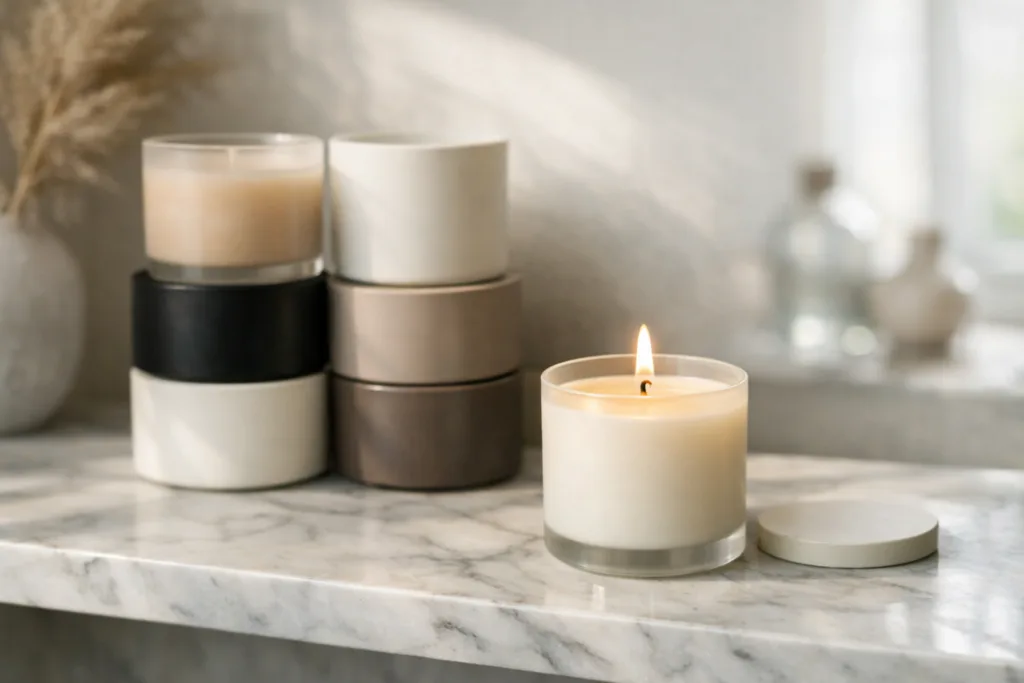
Success with candle suppliers in China for 2026 depends on prioritizing quality, compliance, and sustainability throughout sourcing and import. Leverage manufacturers with proven expertise in wax blending, scent compliance, and elegant packaging—like Circe Home—for a reliable, high-conversion private-label launch. Insist on rigorous QC protocols and transparent communications for a supply chain that meets global standards and brand vision, positioned ahead of next year’s candle trends.
Frequently Asked Questions
What are the best wax blends for imported candles?
Soy and coconut blends are favored for luxury candles, offering a clean burn and superior scent throw. Beeswax adds natural appeal, while paraffin allows high fragrance loads and long burn-time.
How do I check fragrance compliance when importing from China?
Request IFRA certificates and CLP documentation, confirm allergen declarations, and verify fragrance load percentages via lab reports for each candle batch.
What is the typical MOQ for OEM/ODM candle production?
MOQ varies: boutique brands can start from around 500 units per scent or vessel style, while large ODM runs may require 10,000+ units for full customization.
Which candle containers are popular among Chinese suppliers?
Glass jars, ceramic and concrete vessels, metal tins, and decorated cartons are widely available. Suppliers often offer coating, embossing, and custom box options.
How long does the import process from China take?
Lead times are typically 4–8 weeks from order confirmation to production completion, plus 2–6 weeks for shipping and customs clearance, depending on logistics.
What sustainability certifications should I look for?
Seek RSPO-sourced wax, FSC-certified cartons, and suppliers using soy ink and compostable liners. Confirm the manufacturer’s eco-claims with documentation before purchase.