
Luxury candle brands are more than beautiful names on a jar. For retailers, wholesalers, hotel buyers, gift companies and private label brands, they are a useful window into what makes a scented candle feel premium, giftable and commercially valuable.
In 2026, the candle category is no longer only about fragrance. It is about atmosphere, packaging, interior design, wellness, brand identity and repeatable customer experience. Global candle market estimates vary by research firm, but several reports agree on continued growth. Fortune Business Insights values the global candle market at USD 8.98 billion in 2025 and projects it to reach USD 16.42 billion by 2034, while Grand View Research estimates the candle market at USD 14.77 billion in 2025 with growth through 2033. The scented candle segment is also expected to keep expanding as home fragrance, self-care and gifting remain strong consumer habits.
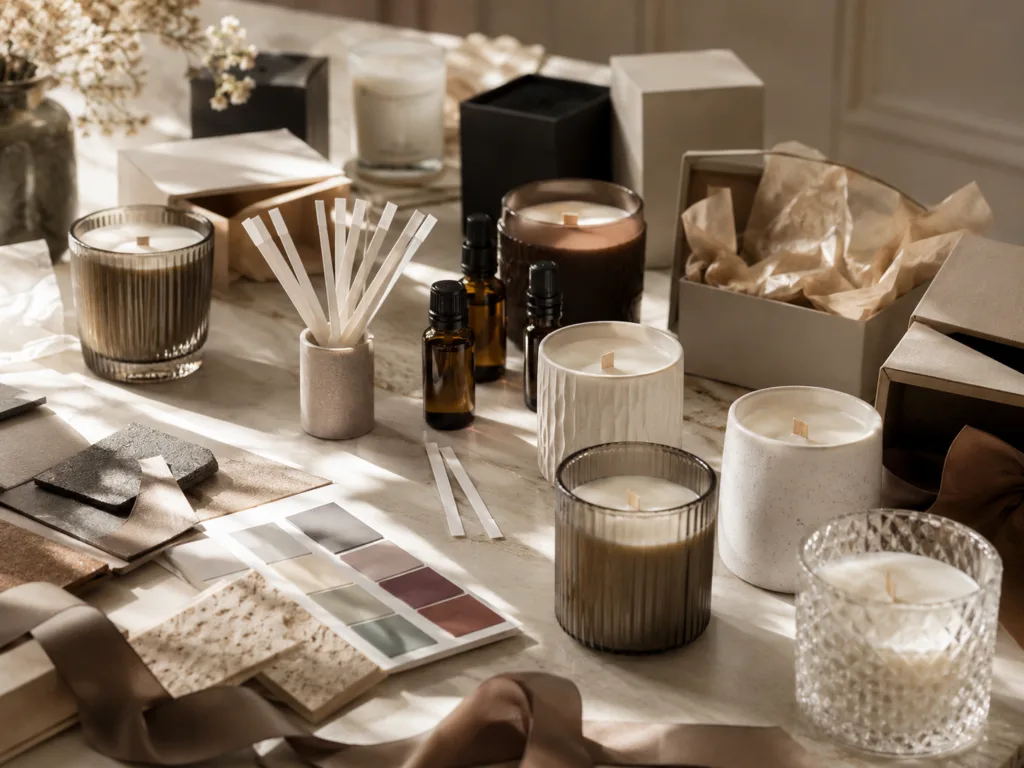
For B2B buyers, this creates a clear opportunity. Studying top luxury candle brands helps buyers understand which details justify higher retail pricing, stronger shelf appeal and better gift conversion. The goal is not to copy famous candle brands. The goal is to learn how scent, vessel, packaging, story and quality control work together to create a premium candle line.
Quick Answer: What Are Luxury Scented Candles?
Luxury scented candles are premium home fragrance products designed with refined fragrance blends, quality wax, stable burn performance, elegant vessels and brand-focused packaging. They are often used for home décor, gifting, hospitality, spa retail, corporate gifting and private label fragrance collections.
For B2B buyers, the real value of luxury scented candles is not just the candle itself. It is the complete product experience: how the candle looks on a shelf, how it smells before and after burning, how it performs in the customer’s home, how it photographs online and how it supports the buyer’s brand positioning.
Top Luxury Candle Brands to Watch in 2026
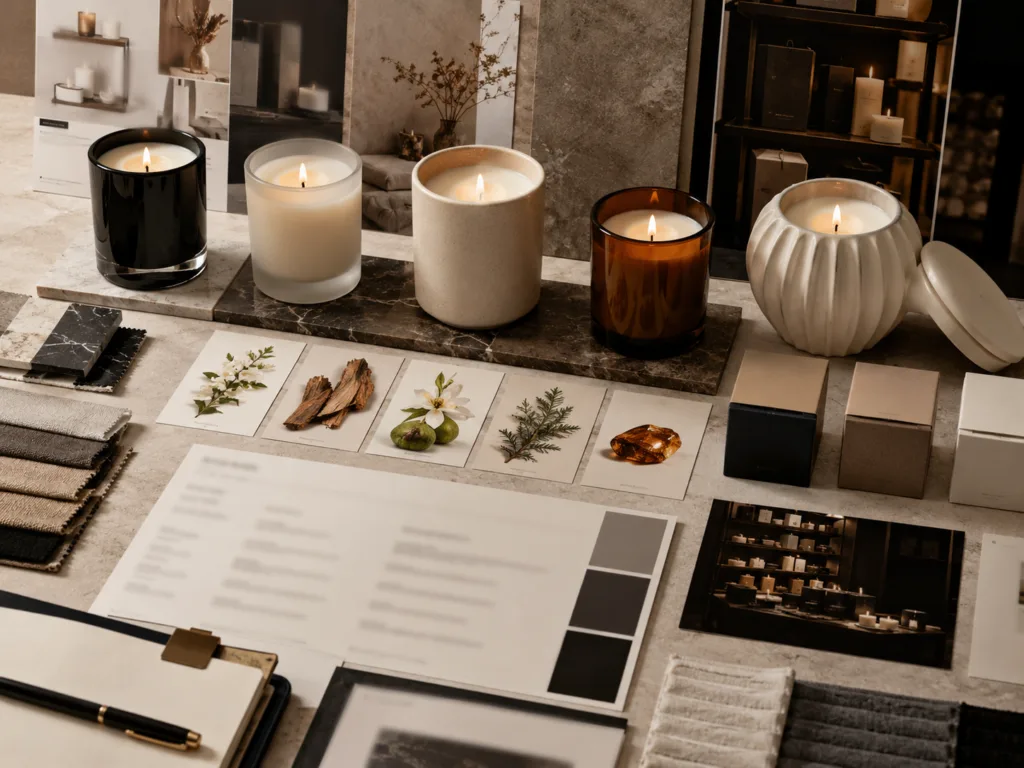
Luxury candle brands usually win because they are consistent. Their scent language, vessel design, packaging, retail environment and brand story all feel connected. Below are several famous candle brands that B2B buyers can study for product development inspiration.
1. Diptyque
Diptyque is one of the most recognizable names in luxury scented candles. The brand is strongly associated with Parisian lifestyle, artistic labels and classic fragrances. Its candle range includes classic candles, large candles, small candles, discovery sets, exclusive candles and candle accessories, showing how one fragrance universe can be expanded into multiple formats and price points.
B2B takeaway:
A strong candle line does not need dozens of random products. It needs a clear fragrance identity, recognizable visual codes and enough size options to support gifting, trial purchase and premium purchase.
2. Trudon
Trudon has a strong heritage position in the luxury candle market. The brand highlights craftsmanship, home fragrance and professional services for hotels and restaurants. Its positioning shows that luxury candles can work not only for individual consumers but also for hospitality and commercial scent experiences.
B2B takeaway:
Hospitality buyers do not only buy scent. They buy atmosphere. For hotels, restaurants, clubs and premium retail spaces, candles can become part of the customer experience.
3. Jo Malone London
Jo Malone London has built a clear fragrance world around elegant British styling, giftable packaging and recognizable scent combinations. Its candle category includes multiple sizes and iconic fragrances, which is important for retailers because the same scent can be sold across different gifting occasions and price levels.
B2B takeaway:
A luxury candle brand becomes easier to sell when scents are organized by mood, occasion and gift purpose. This structure helps sales teams, online stores and retail buyers present the collection more clearly.
4. Le Labo
Le Labo is known for niche perfumery and a minimalist, apothecary-inspired style. Its home creations include classic candles, home fragrance, concrete candles and votives. This shows how vessel material and brand personality can make a candle feel distinctive even before the customer smells it.
B2B takeaway:
Minimalism does not mean boring. A simple label, concrete vessel or restrained color palette can feel premium when the fragrance concept and material choice are strong.
5. Byredo
Byredo approaches candles through memory, place and atmosphere. Its candle collection emphasizes emotional connection, refined fragrance and minimalist black glass design.
B2B takeaway:
Storytelling matters. A candle named only “Rose” may feel generic, but a candle built around a place, memory or mood can feel more collectible and more suitable for gifting.
6. Maison Francis Kurkdjian
Maison Francis Kurkdjian brings fine fragrance language into the home fragrance category. Its scented candles are presented as sensory journeys connected with places and atmospheres.
B2B takeaway:
For buyers developing luxury perfumed candles, fragrance structure should feel more sophisticated than basic single-note scents. A premium candle often needs top, middle and base impressions, even if the final product must still burn cleanly and consistently.
7. Loewe Home Scents
Loewe has become influential in home fragrance because of its strong ceramic vessel design, botanical color palette and decorative appeal. The candle functions as both fragrance and interior object.
B2B takeaway:
For premium buyers, the vessel can be as important as the scent. Ceramic, concrete, colored glass and sculptural containers can raise perceived value, especially for gift sets and interior-focused retail.
8. D.S. & Durga
D.S. & Durga brings a more niche, story-led fragrance approach to candles. Its appeal often comes from unusual scent concepts, modern naming and a less traditional luxury tone.
B2B takeaway:
Not every luxury candle line has to look classic, beige and Parisian. Younger brands can create value through bolder storytelling, unexpected notes and a more editorial brand voice.
9. Cire Trudon, Diptyque and the Heritage Model
Some luxury French candle brands succeed because they feel rooted in heritage. Their products often communicate history, craftsmanship and cultural taste rather than short-term trend.
B2B takeaway:
For private label candle buyers, heritage can be translated into material choices, label design, fragrance names, packaging texture and copywriting. Even a new candle brand can feel more premium if its design system feels intentional.
10. Premium Private Label Candle Brands
Not every successful luxury candle line is a famous global name. Many boutique hotels, concept stores, spas, interior brands and gift companies now develop their own private label scented candles.
B2B takeaway:
This is where the B2B opportunity is strongest. Buyers do not need to become Diptyque or Trudon. They need to create a candle line that fits their own market, price point and customer base.
What Makes Luxury Scented Candles Different?
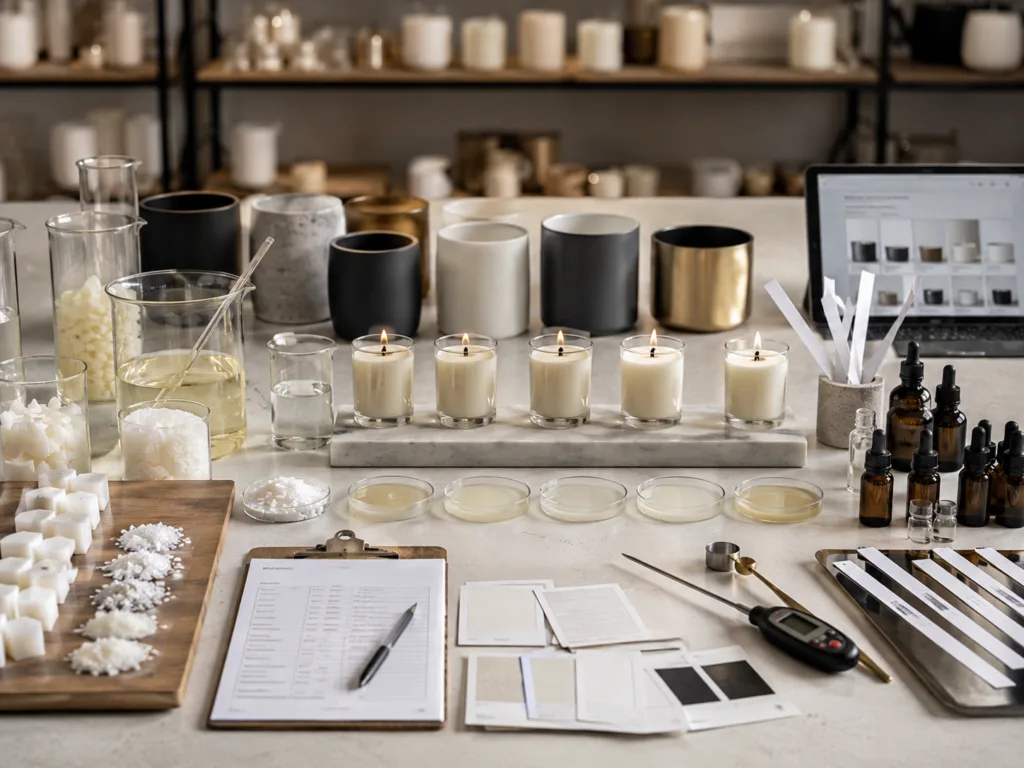
Luxury scented candles are different from ordinary candles because they combine product performance with emotional and visual value. A cheap candle may simply smell sweet. A luxury candle must feel designed.
The most important differences are:
Fragrance complexity
Premium candles often use layered fragrance structures. Instead of a flat vanilla or basic lavender, they may combine woods, amber, florals, spices, citrus, herbs, resins or musks. This gives the scent more depth and makes it feel more like a fine fragrance product.
Cold throw and hot throw
Buyers should evaluate both the scent before burning and the scent while burning. A candle that smells strong in the jar but weak during use may disappoint customers. A candle that smells elegant but overpowering may not suit hotels or smaller rooms.
Burn performance
Luxury is not only visual. Wick selection, wax formula, vessel diameter and fragrance load all affect burn pool, soot, tunneling and safety. A beautiful candle with poor burn performance can damage repeat purchase.
Vessel design
Glass thickness, ceramic finish, concrete texture, metal lid, label material and color palette all affect perceived value. For B2B buyers, vessel choice also affects MOQ, breakage risk, carton packing and shipping cost.
Packaging quality
Luxury candle packaging needs to protect the product and sell the product. Rigid boxes, paper sleeves, drawer boxes, gift boxes, inserts, ribbons, tissue paper and custom cards can all raise gift appeal.
Brand story
A premium candle line needs a reason to exist. The story may come from a city, season, hotel experience, botanical inspiration, wellness ritual, art direction or cultural reference.
Why Are Some Candle Brands So Expensive?
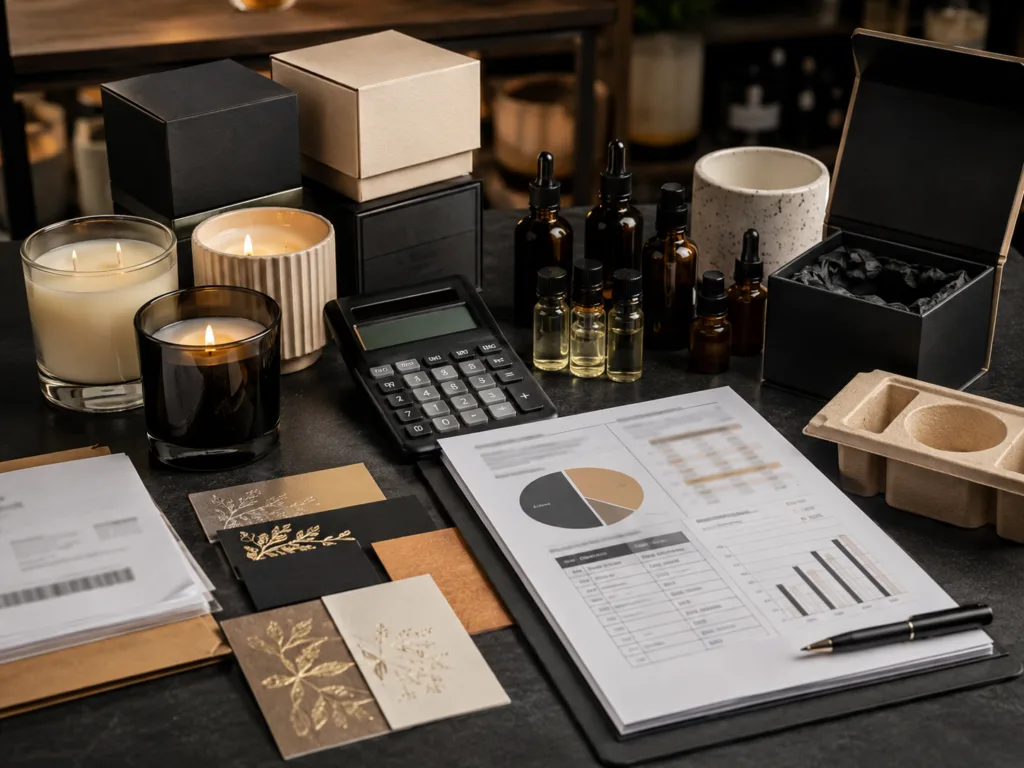
Expensive candle brands are not expensive only because of wax. In fact, wax is only one part of the cost structure. The final retail price reflects materials, development, packaging, logistics, retail margin and brand value.
For B2B buyers, it is useful to understand where the cost comes from.
- Fragrance oil quality
Fine fragrance-style oils, complex accords and exclusive scent development cost more than standard stock fragrances. Some buyers also require IFRA documentation, allergen information or market-specific compliance support. IFRA Standards are widely used in the fragrance industry to support safe use of fragrance ingredients, although companies still need to comply with local regulations in their target markets. - Vessel cost
A standard clear glass jar is usually more affordable than custom ceramic, concrete, colored glass or heavy luxury vessels. Custom molds can also increase development cost and MOQ. - Packaging cost
A luxury candle gift box can cost much more than a simple white carton. Rigid boxes, magnetic boxes, drawer boxes, paper inserts, foil stamping, embossing and custom sleeves all add cost but also increase perceived value. - Testing and development
A premium candle should be tested for wick size, melt pool, fragrance load, burn stability, soot level and vessel heat tolerance. This development time is part of the real cost. - Branding and retail margin
Luxury candles often pass through distributors, retailers, department stores or gift channels. Each layer requires margin. This is why a candle with a moderate production cost can become a much higher retail price. - Small-batch production
Some expensive candle brands produce in smaller batches, use more specialized packaging or maintain tighter quality control. This can increase cost compared with mass-market candles.
For private label buyers, the lesson is not “make everything expensive.” The lesson is to decide where premium value matters most. For some brands, fragrance is the hero. For others, packaging or vessel design creates the strongest sales impact.
French Candle Brands and European Home Fragrance Style
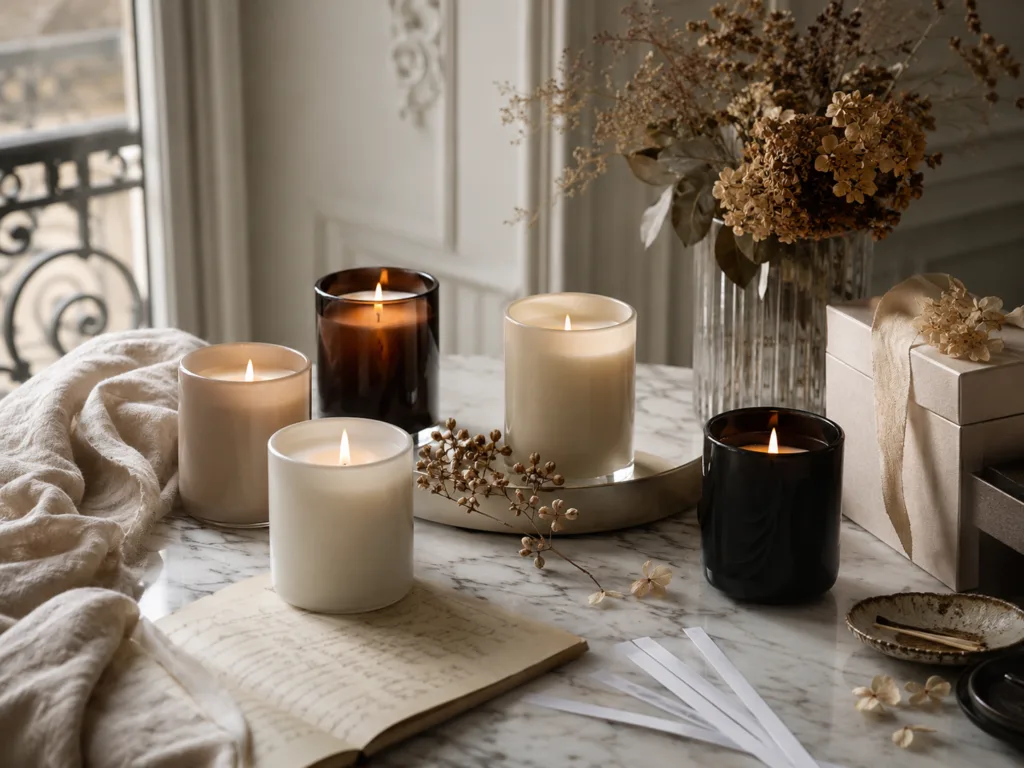
French candle brands have a special place in the luxury home fragrance market. They often feel refined, understated and connected to perfumery culture. The appeal is not only the scent itself but the complete atmosphere: elegant labels, sophisticated fragrance names, muted colors and a sense of interior lifestyle.
European home fragrance style usually has several characteristics:
Subtle color direction
Rather than loud seasonal graphics, many European-style candles use ivory, black, cream, amber, deep green, burgundy, soft grey or warm beige.
Perfumery-inspired scent language
Notes such as fig, amber, neroli, tuberose, sandalwood, cedar, myrrh, incense, iris, orange blossom and musk often feel more premium than simple fruit or candy scents.
Decorative restraint
Luxury French candles rarely look overdesigned. The label, glass, wax color and box tend to work together quietly.
Gift-ready presentation
European-inspired candles often work well as gifts because they feel elegant without being too personal.
For B2B buyers, French candle brands are useful references when developing a premium candle line for boutiques, hotels, spas, concept stores and corporate gifting. The goal is not to imitate Parisian brands directly. The goal is to understand how restraint, fragrance quality and packaging discipline create value.
What B2B Candle Buyers Can Learn from Luxury Candle Brands
Luxury candle brands can teach B2B buyers several practical lessons.
1. Build a Collection, Not Just One Candle
A single candle is difficult to market. A collection is easier to sell. Buyers can organize a candle line by mood, season, room, fragrance family or gift occasion.
Examples:
| Collection Type | Possible Scents | Best For |
| Floral Collection | Rose, jasmine, tuberose, orange blossom | Boutique retail, spring gifting |
| Woody Collection | Sandalwood, cedar, vetiver, oud | Premium home décor, men’s gifting |
| Wellness Collection | Lavender, eucalyptus, chamomile, sage | Spa, hotel, wellness brands |
| Holiday Collection | Fir, amber, cinnamon, vanilla, incense | Seasonal retail, corporate gifting |
| European Style Collection | Fig, neroli, iris, myrrh, musk | Luxury retail, concept stores |
2. Match Vessel to Market Positioning
The same fragrance can feel completely different in different vessels.
| Vessel Type | Perceived Style | B2B Use |
| Clear glass jar | Clean, simple, commercial | Standard retail line |
| Amber glass jar | Natural, apothecary, warm | Wellness and lifestyle brands |
| Frosted glass jar | Soft, premium, giftable | Boutique candles |
| Ceramic vessel | Decorative, high value | Luxury home décor |
| Concrete jar | Minimalist, modern, architectural | Design stores and niche brands |
| Tin candle | Lightweight, practical | Travel candles, promotional gifts |
3. Use Packaging to Increase Gift Value
For many buyers, especially retailers and corporate gift companies, packaging is not optional. A candle in a luxury gift box can sell at a higher price and perform better during holiday seasons.
Useful options include:
- rigid gift box
- drawer box
- kraft box
- paper sleeve
- foil-stamped logo
- embossed label
- custom thank-you card
- ribbon and tissue paper
- protective insert
- barcode and warning label
- export carton with dividers
4. Think About Compliance Early
B2B buyers should not wait until production is finished to ask about documents. For scented candles, buyers may need SDS/MSDS, IFRA-related documentation, allergen declarations, warning labels and market-specific packaging information.
Different markets have different expectations. A candle line for North America, Europe or Australia may require different label details, safety wording or testing support.
5. Plan for Bulk Production, Not Only Samples
Many buyers spend too much time making a beautiful sample but forget about bulk order reality. Before confirming a candle design, buyers should consider:
- MOQ by vessel
- MOQ by fragrance
- MOQ by packaging
- lead time
- carton quantity
- breakage protection
- shipping method
- retail barcode requirements
- seasonal delivery deadline
- sample approval process
A luxury candle line only works commercially when the product can be produced consistently at scale.
Private Label Luxury Scented Candles: What to Customize
For B2B buyers developing private label luxury scented candles, customization can happen at different levels.
Fragrance Customization
Buyers can select stock fragrances, modify existing scents or develop custom fragrance accords. For faster projects, stock fragrance options are usually more practical. For premium brand development, a custom scent can create stronger differentiation.
Popular premium directions include:
- woody amber
- fig and cedar
- neroli and musk
- sandalwood and vanilla
- rose and oud
- sea salt and sage
- lavender and chamomile
- incense and myrrh
- white tea and citrus
- jasmine and sandalwood
Wax and Wick Options
Wax choice affects burn performance, texture, marketing language and cost. Common options include soy wax, coconut wax blends, paraffin blends, beeswax blends and vegetable wax blends.
For B2B production, the best wax is not chosen by slogan alone. It should be tested with the fragrance oil, vessel size and wick system.
Vessel Customization
Buyers can choose stock vessels for lower MOQ and faster development, or custom molds for a more distinctive product. Stock glass vessels are often the best choice for first orders, while ceramic or concrete vessels may fit premium lines with stronger budgets.
Label and Packaging Customization
This is usually where private label buyers can create the biggest visual difference without changing the entire product structure.
Common options include:
- logo label
- foil sticker
- screen printing
- hot stamping
- paper box
- rigid gift box
- sleeve packaging
- gift set packaging
- fragrance card
- thank-you card
- custom insert
- export carton marks
Luxury Candle Gift Sets for Retail and Corporate Buyers
Luxury candle gift sets are one of the strongest B2B opportunities because they combine higher perceived value with better gifting appeal.
Possible gift set formats include:
- candle + reed diffuser
- candle + wax melts
- candle + room spray
- candle + mini candle set
- candle + bath towel
- candle + notebook
- candle + ceramic accessory
- seasonal candle trio
- discovery fragrance set
- hotel amenity gift set
For retailers, gift sets help increase average order value. For corporate gifting buyers, they create a complete branded experience. For hotels and spas, they allow customers to bring the atmosphere home.
How to Develop a Luxury Candle Line in 2026
A practical development process usually looks like this:
Step 1: Define the buyer and retail price
A luxury candle for a hotel gift shop is different from a promotional candle for a corporate event. Start with the target customer and price range.
Step 2: Choose the fragrance direction
Decide whether the line should feel floral, woody, fresh, gourmand, herbal, seasonal or European-inspired.
Step 3: Select vessel and wax system
Match the vessel size, wax formula and wick system before finalizing packaging.
Step 4: Build the packaging concept
Decide whether the product needs a standard box, luxury gift box, sleeve, paper insert or full gift set.
Step 5: Test before bulk order
Check burn performance, scent throw, wax surface, label adhesion, packaging fit and carton protection.
Step 6: Prepare production and shipping details
Confirm MOQ, lead time, carton size, shipping method, compliance documents and final artwork.
Looking to Create Your Own Luxury Candle Line?
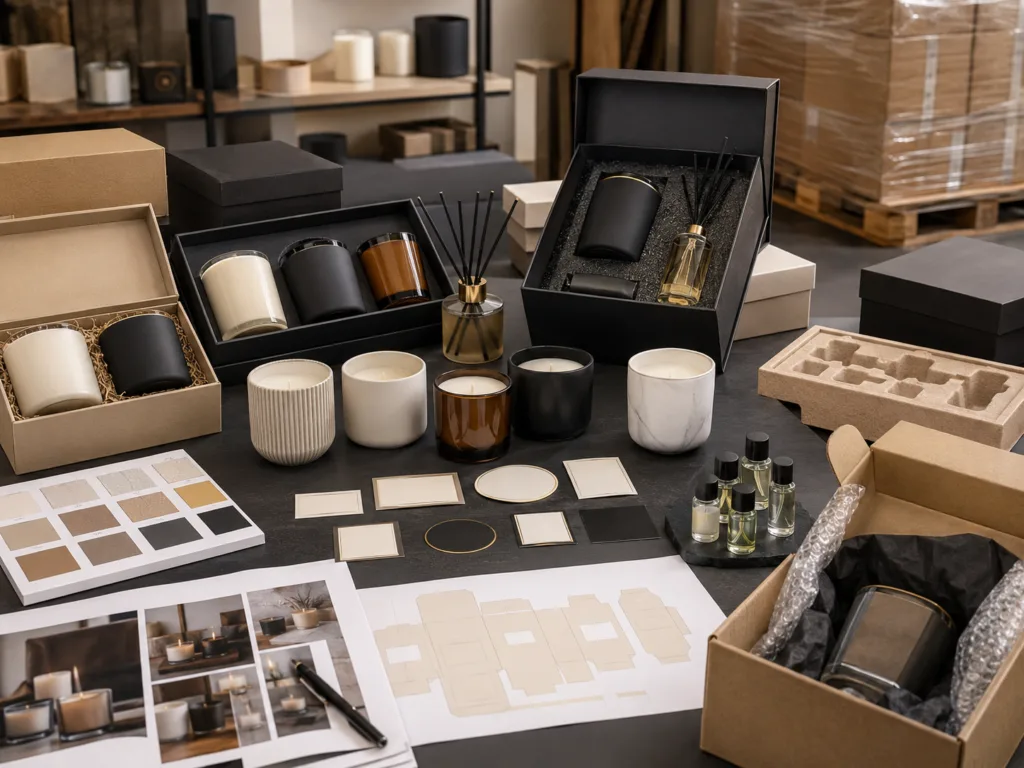
Circe Home supports private label scented candles, luxury candle gift sets, custom vessels, fragrance development, packaging design, and bulk production for brands, retailers, hotels, and corporate gifting projects.
Whether you are developing a boutique candle collection, a retail-ready gift set, a hotel home fragrance line or a seasonal corporate gifting program, we help turn fragrance ideas into export-ready candle products.
FAQ
1. What are the top luxury candle brands in 2026?
Top luxury candle brands often include Diptyque, Trudon, Jo Malone London, Le Labo, Byredo, Maison Francis Kurkdjian and other premium home fragrance houses. B2B buyers can study these brands for fragrance direction, vessel design, packaging ideas and retail positioning.
2. What makes luxury scented candles more expensive?
Luxury scented candles are usually more expensive because of fragrance complexity, vessel quality, packaging design, testing, branding, retail margin and production standards. For private label buyers, the key is to decide which details create the strongest perceived value for the target market.
3. Are French candle brands good references for private label candles?
Yes. French candle brands are strong references for buyers who want refined fragrance, elegant packaging and understated luxury. Their style can inspire private label candle lines for boutiques, hotels, spas, gift companies and premium retailers.
4. Can B2B buyers create their own luxury candle brand?
Yes. B2B buyers can create private label luxury candles by customizing fragrance, wax, vessel, label, packaging and gift set format. The most successful projects usually start with a clear target market, realistic MOQ, tested fragrance performance and strong packaging direction.