
Opening Your Boutique Candle Line: Small Batch + Wholesale Options
The allure of boutique candles lies not only in their aromatic complexity but also in their distinct personality and refined craftsmanship. Whether scouted by interior stylists or cherished as wellness gifts, boutique candles are essential for creating an immersive retail experience. Launching your own candle line—using small batch sourcing and wholesale strategies—can position your boutique at the forefront of scent-led luxury. This guide delivers actionable insights for opening a candle business with small batch flexibility, securing wholesale partnerships, and elevating your boutique through expert manufacturing decisions.
Strategic Foundations: Why Small Batch Matters for Boutique Candle Businesses
Small batch production is synonymous with exclusivity, artisan standards, and agile inventory control—key markers of a successful boutique candle line. Retailers demand flexibility to iterate scents, vessel styles, and branding as trends shift. Compared to mass production, small batch enables rapid prototyping, lower risk, and a closer connection to customer desires.
- Test new fragrance blends without heavy investment
- Refine packaging and vessel aesthetics for niche appeal
- Limit deadstock with shorter, targeted runs
- Leverage storytelling—”crafted in micro batches”—in marketing
Wholesale Options for Boutique Candle Merchants
Wholesale partnerships bring scalability and margin benefits, but navigating minimum order quantities (MOQs) and custom options requires careful strategy. Leading wax manufacturers, such as Circe Home, offer tiered solutions—from private-label runs to fully custom OEM/ODM projects. These allow boutique owners to balance volume needs with brand specificity.
- Private-label: rapid turnaround, ready-to-launch designs
- OEM: tailored fragrance development, exclusive molds
- ODM: deep customization—vessel shape, packaging, compliance
- Scalable MOQs to support seasonal drops or limited collections
Choosing Your Signature Wax Blend: Performance & Sensory Impact
Wax selection shapes every aspect of candle performance, from the texture of the melt pool to the strength of the scent throw. Understanding blend dynamics and how they align with small batch production is critical for boutique owners.
| Wax Blend | Scent Throw | Burn Time | Eco Profile |
|---|---|---|---|
| Soy | Strong (clean, subtle notes) | Long (>35 hrs/200g) | Renewable, vegan |
| Coconut-Soy | Intense, creamy diffusion | Moderate-Long | Biodegradable, soft texture |
| Beeswax | Mild, naturally sweet | Longest | Natural, air-purifying |
| Rapeseed | Medium, good for blends | Variable | Local EU sourcing, sustainable |
Custom blends allow fragrance profiles to shine while ensuring clean burn and a sophisticated hot/cold throw. Circe Home’s technical team often recommends a maximum fragrance load of 8–10% for luxury boutique candles, ensuring balance between air quality and scent dispersion.
Fragrance Development: Crafting Memorable Signatures
Curating a signature scent is the heart of boutique candle identity. The process involves olfactory testing, compatibility checks with chosen waxes, and compliance considerations. Essential oils add wellness cues but may affect burn stability; fragrance oils offer richer projection and complex layering. Key technical steps include:
- Sourcing allergen-compliant oils (IFRA/CLP standards)
- Determining maximum fragrance load (%) for selected wax
- Testing cold throw vs. hot throw in real-life settings
- Allowing proper curing time (typically 7–14 days)
- Iterating on blends until optimal balance achieved
Circe Home Lab Insight: “The true character of a candle emerges during the curing window—allowing essential notes to develop fully and harmonize with the wax. We recommend scent checks at days 3, 7, and 14 for best results.”
Wicks & Burn Profile: Fine-Tuning for a Clean, Elegant Experience
Choosing the correct wick is vital for a soot-free, consistent burn and proper scent dispersion. Wick material—cotton, wood, or paper-core—each suits a specific vessel style and wax blend. Considerations include:
- Diameter match: wick sizing must align with vessel width/wax type
- Trim length prevents mushrooming and soot risk
- Burn profile: steady flame, minimal tunneling
Quality tests should verify centered wicks, full melt pools after 2–3 burns, and an overall soot index below 5 (per ASTM F2179 standards).
Designing Your Boutique Candle: Containers, Packaging & Differentiation
Visual appeal drives desire in boutique retail. Vessel choices—glass, tin, ceramic, concrete—affect both performance and brand perception. Elements such as custom embossing, foil stamping, or coloring differentiate your line. Responsible practices like FSC-certified cartons, soy ink labeling, and compostable wraps echo modern values.
- Choose a vessel type to complement scent and style
- Design labels—full wrap, belly band, or minimal badge
- Name scents with evocative narratives: e.g., “Wild Neroli Wind”
- Plan outer packaging for gifting and transit durability
- Integrate compliance—IFRA/CLP, safety warnings
Quality Control & Compliance: Ensuring Boutique-Ready Standards
Consistent product performance earns repeat customers and supports boutique positioning. Adopt quality management protocols from pour to cure:
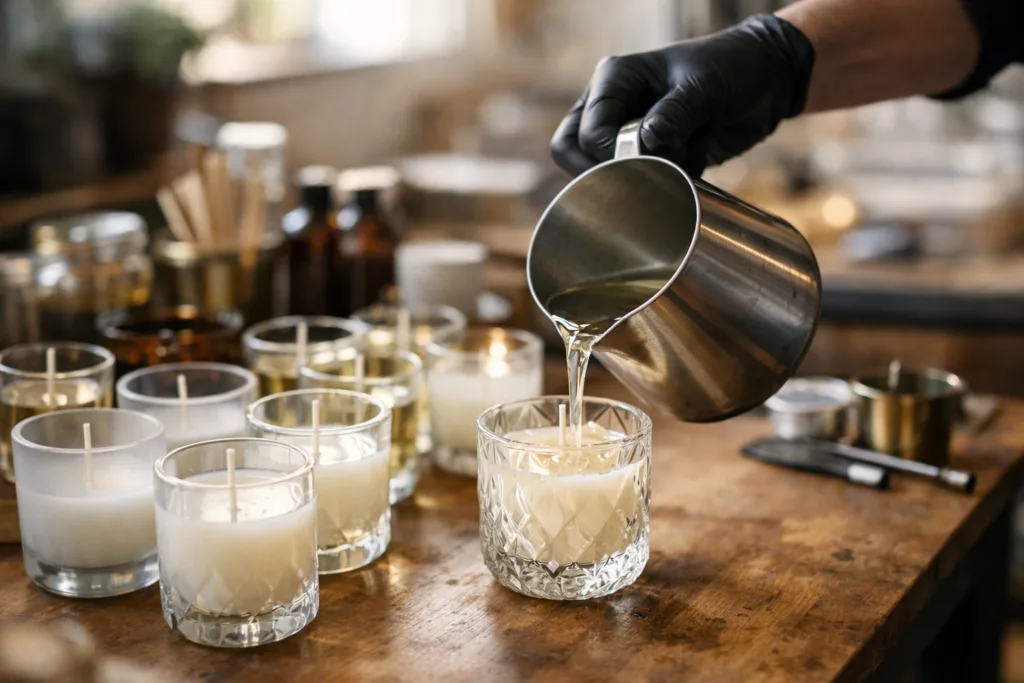
- Burn testing: verify >35 hrs for standard 200g candle
- Soot measurement: evaluate during multiple burns
- Wick centering: measure <3mm deviation
- Fragrance dispersion: test for even release throughout burn
- Labeling: apply IFRA 51st amendment and EU CLP
Responsible production methods—such as those advocated by Circe Home—build lasting trust and regulatory security.
Launching and Scaling: Boutique Candle Business Models
Most boutiques blend direct retail with small batch wholesale sourcing. Popular models include:
- Limited edition retail drops—build anticipation and urgency
- Branded collaborations with spas, hotels, and wellness retreats
- Seasonal subscription boxes for repeat engagement
- Online direct-to-consumer storefronts, layered with visual storytelling
- Wholesale distribution in concept stores and design shops
Success comes from offering trusted quality and unique style at manageable MOQs. Exploring private-label options lets boutiques experiment without committing to high-volume runs, while fully customized OEM/ODM shapes identity for the long-term.
Start a Candle Line for Your Boutique: Small Batch + Wholesale Options
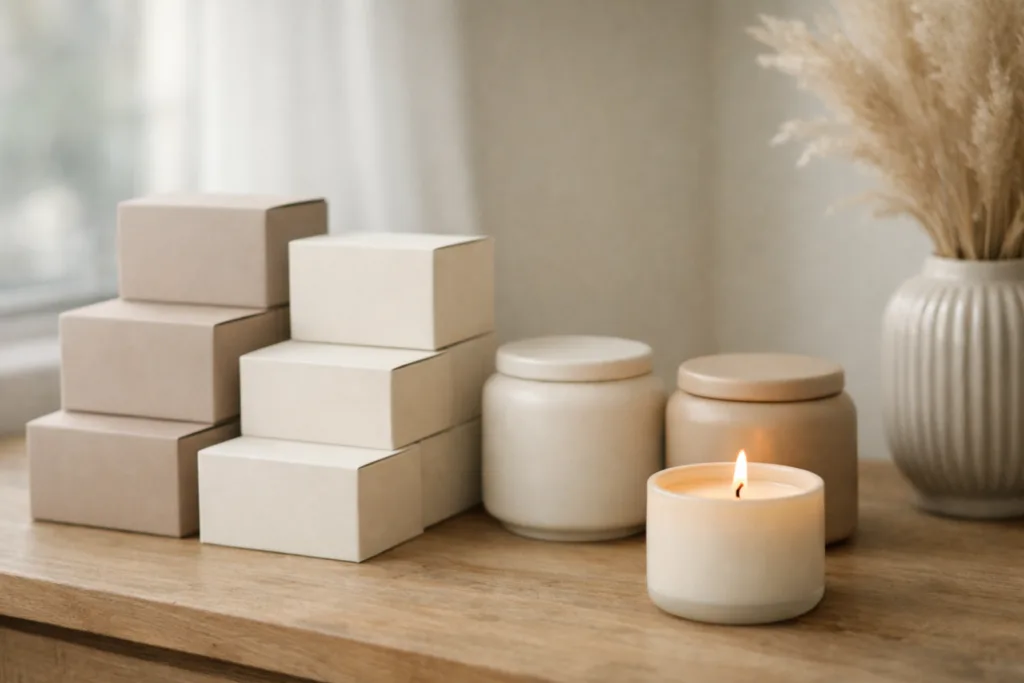
Establishing a boutique candle line—whether through small batch sourcing or scalable wholesale—means orchestrating fine details: choosing wax blends that balance performance and scent, crafting fragrance systems with real personality, designing vessels that define your aesthetic, and enforcing quality control standards that meet both customer and regulatory expectations. The flexibility of small batch production is ideal for boutiques wishing to continuously refine and evolve their candle offerings. With Circe Home’s expertise in luxury wax blends and compliance, you can navigate the nuances of OEM/ODM, ensuring each batch sparkles with authenticity and class.
Frequently Asked Questions
What is the ideal MOQ for boutique candle startups?
Ideal minimum order quantity (MOQ) ranges from 100 to 500 units, depending on vessel customization and branding requirements. The flexibility allows boutiques to test market response and refine their line before scaling.
How do I choose between soy, coconut, beeswax, and rapeseed for my candle?
Consider aroma preference, burn performance, and brand values. Soy offers clean burn and strong throw, coconut gives creamy texture, beeswax delivers air-purifying benefits, and rapeseed is highly sustainable and locally sourced in the EU.
How can I ensure scent consistency in small batch production?
Maintain strict laboratory protocols: weigh fragrance accurately, blend at stable temperatures, allow proper curing time, and conduct multiple test burns. Document processes for every run to minimize variation.
What is the difference between private-label and OEM/ODM candle manufacturing?
Private-label uses established base formulas for rapid launch, while OEM/ODM offers fully custom wax, vessel, and fragrance development—a better fit for boutique brands seeking distinct identity and control.
How do I comply with IFRA and CLP regulations for boutique candles?
Source IFRA-certified fragrances, ensure technical documentation for allergen declaration, and apply proper EU CLP labels indicating hazards, safety, and traceability on both packaging and marketing materials.
Can boutique candle lines use eco-friendly and refillable options?
Yes, many boutique brands offer refill candles in reusable vessels or compostable packaging. Preferences for FSC cartons, soy ink, and minimal plastic reinforce sustainability commitments and attract eco-conscious buyers.