
Small Batch Candle Orders: Definition and Key Drivers
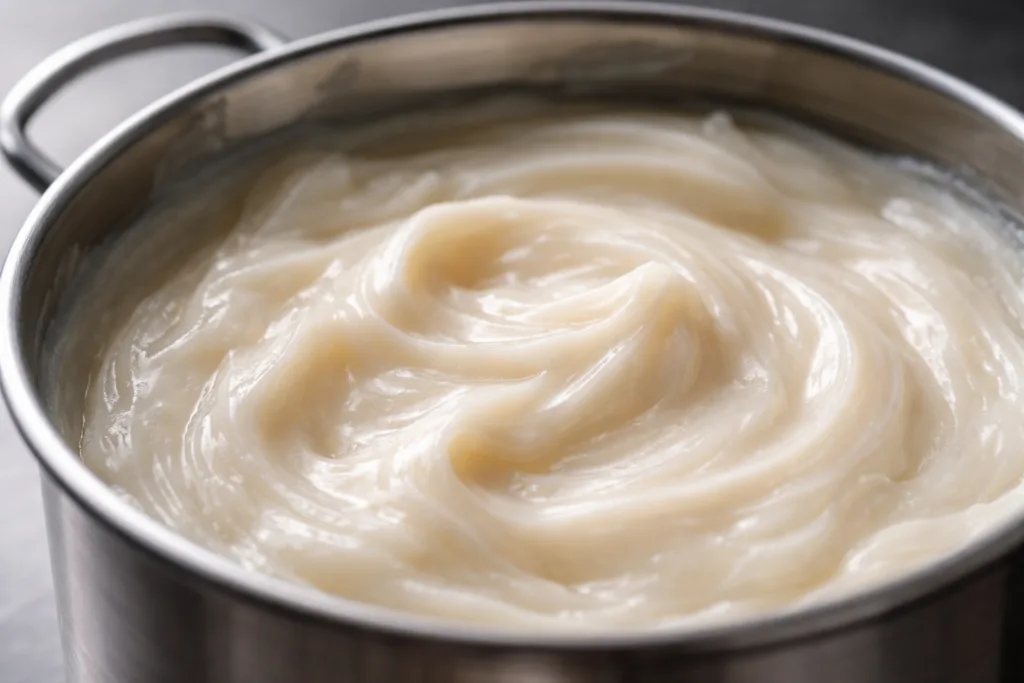
The term ‘small batch candle orders’ typically refers to orders ranging from 50 to 500 units per scent, or even fewer for luxury, custom fragrance projects. Boutique home decor brands, private-label gift companies, and wellness studios often run small batches to test new markets, minimize inventory risk, or offer exclusive limited editions.
Common Scenarios for Small Batches
- Seasonal gifting promotions
- Exclusive product launches
- Hotel/spa amenity lines
- Private-label launches for influencer brands
Why Small Batch Candle Orders Cost More: Structural Cost Factors
At first glance, the materials—wax, wicks, containers, fragrance—seem straightforward. But every step from formula development to packaging scale-up faces fixed costs, leading to higher per-unit prices on small runs. Let’s break down the manufacturing realities behind the premium.
Formulation & Compliance Overhead
Custom candles demand rigorous fragrance compatibility checks, wax-blend trials, burn profile testing, and IFRA/CLP assessments. Batch size has little impact on this foundational effort, so upfront compliance and testing costs are spread across fewer units, amplifying the unit cost on smaller projects.
Raw Material Sourcing and Minimums
Premium waxes (soy, coconut, rapeseed, beeswax) and high-grade fragrance oils often have their own supply chain minimums—sometimes 20–50kg per blend. For a small batch, leftover material may be wasted, or must be stored while incurring spoilage and shelf-life risks. Custom containers or colored glass require higher MOQs from upstream suppliers, further driving up costs when split over small orders.
Manufacturing Steps: Why Fewer Candles Aren’t Simpler
Whether producing 100 or 10,000 candles, certain labor-intensive production steps cannot be bypassed or easily shrunk in scope.
Key Steps in Small Batch Production
- Precision wax melting and temperature management
- Hand-weighing, blending, and dye incorporation (if colored)
- Fragrance dosing within wax compatibility limits (often 6–12%)
- Wick selection and gluing for vessel diameter and blend
- Precision pouring and topping
- Controlled cooling and surface finishing
- Curing for optimal cold/hot throw and burn profile
- Quality control checks (weight, wick centering, clean burn)
- Labeling, batch coding, and regulatory packaging
Labor, Setup, and Downtime
Smaller batch sizes mean frequent equipment changeovers, cleaning, setup, fragrance line purging, and increased downtime. Labor does not drop in direct proportion to batch size; in fact, smaller lots often demand greater attention to craft and continuous supervision.
Comparing Wax Blends, Fragrance Loads, and Burn Times
Wax selection and fragrance compatibility drive both cost and performance, regardless of batch size. The table below highlights key differences in popular blends, their scent throw capability, and expected burn times—essential for anyone seeking the true value proposition of luxury candles manufactured in artisanal lots.
| Wax Blend | Max Fragrance Load (%) | Scent Throw | Avg Burn Time (200g) | Frosting Tendency |
|---|---|---|---|---|
| Soy Wax | 6–10 | Moderate, clean | 35–45 hrs | Medium |
| Coconut-Soy Blend | 8–12 | Strong, creamy | 38–50 hrs | Low |
| Rapeseed-Beeswax | 5–8 | Natural, subtle | 36–48 hrs | Low |
| Paraffin | 8–14 | Intense, immediate | 33–43 hrs | Low |
The Fragrance Puzzle: Small Batches, Big Complexity
Fragrance system selection is one of the costliest elements in small batch candle orders. Essential oil blends require careful flash point checking, allergen declarations, and compatibility tests versus synthetic fragrance. Unused samples and leftovers represent sunk development cost in low-quantity runs. Each new scent also lengthens curing timelines, requiring dedicated shelving and climate-controlled space.
Cold Throw vs. Hot Throw in Small Batches
- Cold throw: How strong the fragrance is in an unlit candle
- Hot throw: Scent projection when burning; influenced by wax, scent load, and vessel size
Special attention must be given to achieving consistent scent performance in small lots, as subtle formula tweaks may have amplified effects versus scaled-up production.
Vessel, Wick, and Packaging Decisions—Why MOQ Matters
Small batch orders rarely meet the MOQs for custom vessels (glass, tin, concrete)—so manufacturers must either source expensive off-the-shelf components or pay premiums for partial runs. Wick sizing is equally precise; wood, cotton, paper, or double-wick configurations may require hand-testing for the chosen vessel and blend, and leftover stock can idle on shelves post-project.
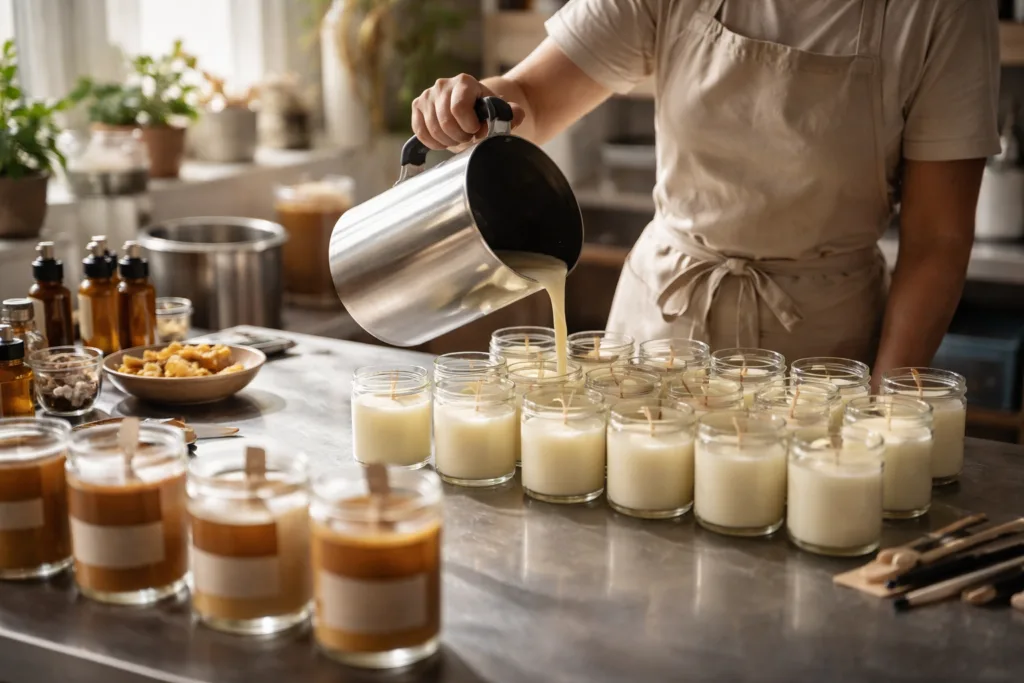
Packaging Specialties and Compliance in Small Batches
Private label boxes, custom labeling, and print finishes like embossing or hot-stamped foil are typically reserved for larger quantities due to die-cut fees, print minimums, and proofing costs. Safety labeling (CLP for EU, IFRA certificates) must still be applied, regardless of batch size, to every single unit—multiplying the regulatory time investment per candle.
Quality Control and Regulatory Rigour
Even the smallest batch goes through multi-point QC: visual inspection, burn testing, wick centering, soot and smoke checks, and scent consistency. Allergen and ingredient disclosure, IFRA 51st consistency checks, and batch traceability are required, not optional. Each pass adds time and labor, costs that don’t shrink with smaller batch sizes.
Circe Home Lab Insight: “At Circe Home, our clients receive the same safety, fragrance compatibility, and compliance protocols on 100-unit private label runs as on 10,000-piece launches. There’s simply no shortcut when it comes to premium quality and regulatory assurance.”
Sustainability, Compliance, and Eco Packaging Challenges
Environmentally conscious clients—seeking soy ink, FSC-certified cartons, or plastic-free labels—face high setup costs and supplier minimums. Refill programs, compostable options, and sustainable material audits incur premium pricing, which disproportionately affects smaller orders. Green chemistry and supply chain certifications must be documented for every batch, regardless of size.
Why Small Batch Candle Orders Cost More: Key Takeaways for Buyers and Brands
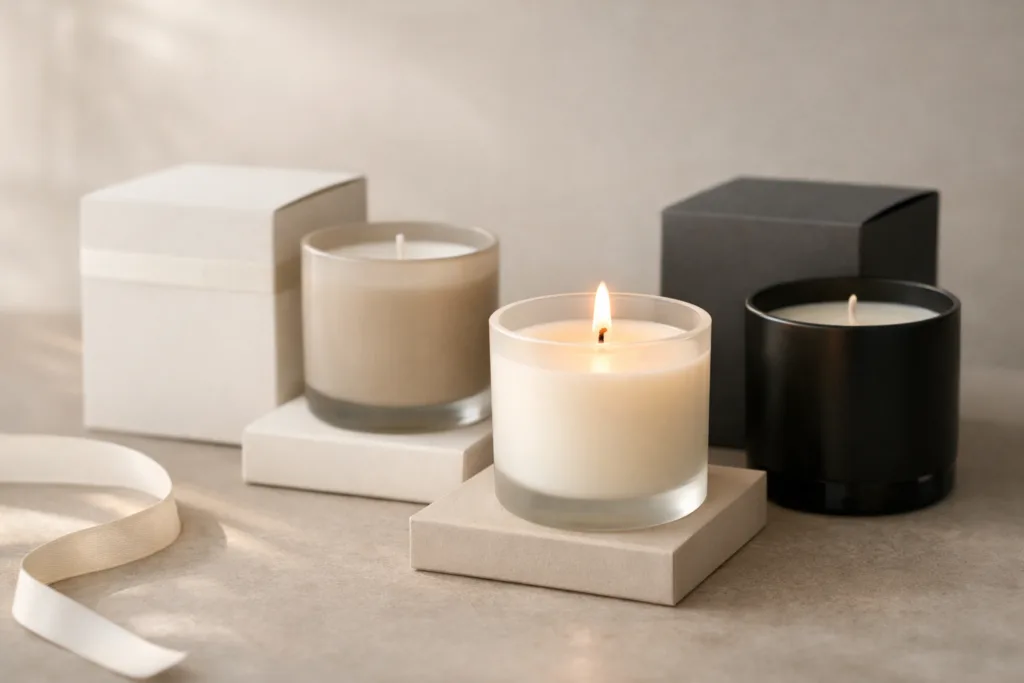
Small batch candle orders reflect bespoke craftsmanship, regulatory thoroughness, and careful resource allocation. While per-unit costs climb, so does flexibility—test launches, fragrance innovation, and curated collections for hotels, spas, and premium retailers. Partnering with seasoned specialists like Circe Home enables full compliance and luxury-level finish, even for runs as low as 100 pieces.
- Budget for development and compliance overhead
- Understand material and packaging MOQs vs. project size
- Choose suppliers with true small-batch expertise
- Weigh exclusivity and flexibility against per-unit pricing
- Prioritize fragrance and burn quality testing, regardless of volume
Frequently Asked Questions
Why is the per-unit price higher for small batch candle orders?
Smaller production runs distribute fixed costs—formulation, compliance, testing, setup—across fewer units, leading to a higher per-candle price. Material minimums, labor-intensive QC, and regulatory packaging requirements remain consistent regardless of order size.
Can I customize fragrance and packaging in very small quantities?
Yes, but expect premium pricing for custom fragrance development or branded packaging in small batches. Source MOQs and setup fees for vessels, boxes, and labels often result in higher costs per piece compared to large-scale orders.
Why can’t manufacturers simply scale equipment down for fewer candles?
Candle making involves fixed-labor steps, such as fragrance blending, wick assembly, and surface finishing, which cannot be substantially shortened. Small batches may require even more manual supervision to ensure quality and regulatory compliance.
Is burn quality different in small batch candles versus mass-produced ones?
Quality-focused producers use the same testing protocols in small batches as in large ones. In fact, small lots often receive extra attention to burn profile, ensuring optimal fragrance throw and clean, soot-free combustion.
What are typical minimum order quantities for custom candles?
Typical MOQs range from 100–300 units per fragrance for private-label runs, but fully custom projects (custom vessel, box, scent) often start closer to 500 or more due to supply chain constraints. Some luxury manufacturers like Circe Home accommodate 50–100 unit minimums with select component choices.
How can I minimize costs for a small batch custom candle project?
Limit customizations, select off-the-shelf vessels and labels, and avoid complex print or fragrance options. Working with manufacturers experienced in boutique runs and leveraging their preferred suppliers also helps control overall expense.