
Why Most Candle Brands Get Costs Completely Wrong
Let’s start with an uncomfortable truth.
Most candle brands do not fail because of bad design.
They do not fail because of weak branding.
They fail because they misunderstand cost.
A typical first-time buyer will ask one question:
“What’s your price per unit?”
And that’s exactly where things go wrong.
Because the factory price is not your real cost.
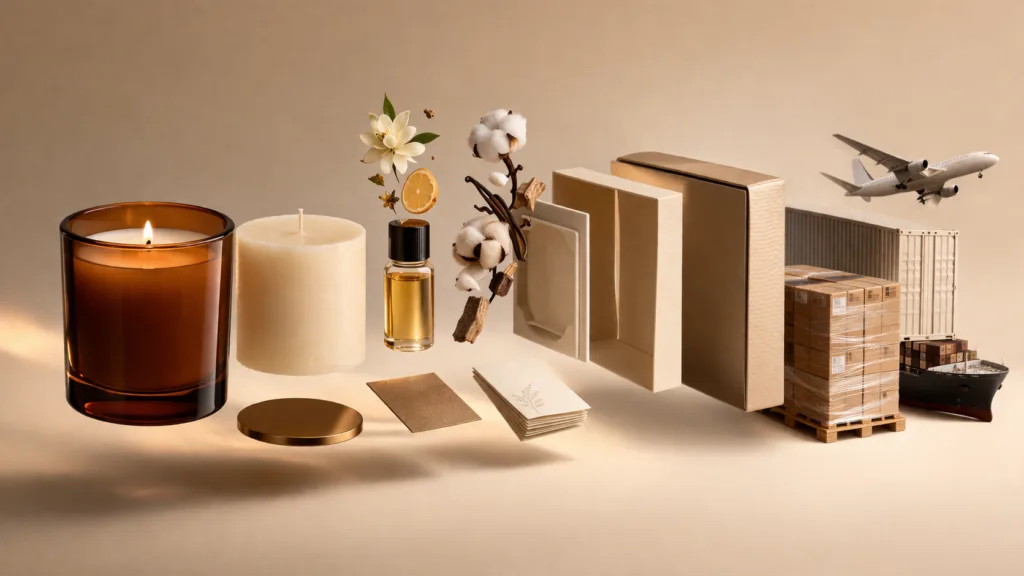
A candle quoted at $3 can easily become $8–$12 after adding packaging, shipping, duties, and hidden development costs. And when that happens, your pricing model collapses.
This is why you often see huge price gaps in the market:
- One supplier quotes $2
- Another quotes $6
- A third quotes $10
It feels confusing.
But the reality is simple:
They are not quoting the same product.
And more importantly, they are not calculating the same cost structure.
If you don’t understand cost structure, you are not building a brand—you are guessing.
What “Real Cost” Actually Means (Not Factory Price)
When we talk about cost, we need to redefine what it actually means.
Most buyers think cost = factory unit price.
But in real business, cost = landed cost.
What is Landed Cost?
Landed cost includes everything:
- Product cost
- Packaging cost
- Sampling cost (amortized)
- Shipping cost
- Import duties
- Storage and handling
Simple Example
| Item | Cost |
|---|---|
| Factory price | $4.00 |
| Packaging | $2.50 |
| Shipping | $1.80 |
| Duties & misc | $0.70 |
| Real cost | $9.00 |
This is the number that determines whether your business works.
Key insight:
👉 The number that matters is not what you pay the factory.
👉 It’s what it costs to get the product ready to sell.
Full Candle Cost Structure (Visual Breakdown)
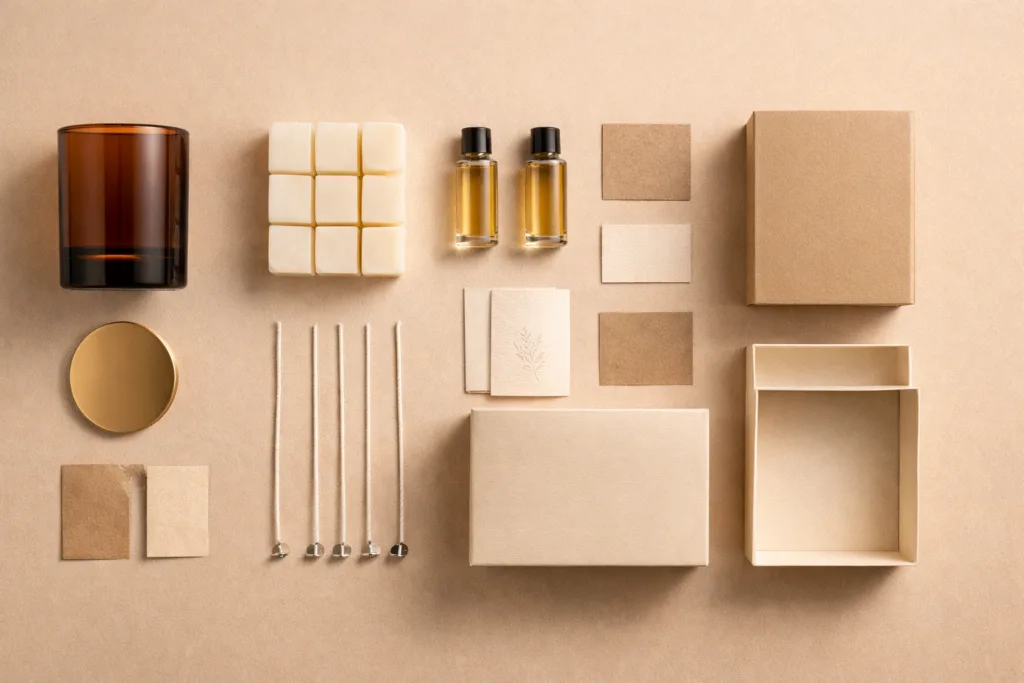
A private label candle is not one product—it is a combination of systems.
Core Cost Structure
- Vessel (glass or ceramic)
- Wax (soy / paraffin / blends)
- Fragrance (FO or EO)
- Packaging (box, insert, label)
- Logistics (freight + duties)
Cost Weight Distribution (Typical)
| Component | Weight |
|---|---|
| Vessel | 20–30% |
| Wax | 10–15% |
| Fragrance | 10–20% |
| Packaging | 25–40% |
| Logistics | 10–25% |
Notice something important:
👉 Packaging and logistics often cost more than the candle itself.
This is the biggest misconception in the industry.
Vessel Cost: The #1 Factor Behind MOQ and Pricing
If there is one decision that defines your cost structure, it is the vessel.
Standard Glass vs Custom Glass
- Low MOQ (100–500)
- Lower cost
- Faster production
Custom glass:
- Mold cost required
- MOQ 1000–5000+
- Higher risk
Ceramic Containers
Ceramic looks premium, but comes with real trade-offs:
- High mold development cost
- Longer production time
- Higher shipping weight
Surface Finishing Costs
Every visual upgrade adds cost:
- Frosted glass
- Electroplating
- Spray coating
- Screen printing
Key insight:
👉 Vessel choice defines your MOQ and price range.
Most beginners underestimate this and end up stuck with high MOQs they cannot sell.
Wax Economics: What Really Affects Cost
Wax is often marketed as the “core” of a candle.
From a branding perspective, yes.
From a cost perspective, not always.
Wax Types Comparison
| Type | Cost | Use Case |
|---|---|---|
| Paraffin | Low | Mass production |
| Soy | Medium | Mainstream branding |
| Beeswax | High | Niche premium |
Soy wax dominates private label projects because it balances:
- Cost
- Marketing appeal
- Performance
Beeswax, while natural, is often too expensive for scalable retail.
Fragrance Truth: Why Essential Oils Don’t Scale
This is where many brands make expensive mistakes.
There is a strong belief that “natural = better.”
But in candle manufacturing, reality is different.
Essential Oil vs Fragrance Oil
| Type | Cost | Stability | Throw |
|---|---|---|---|
| Essential Oil | Very High | Low | Weak |
| Fragrance Oil | Moderate | High | Strong |
Essential oils are:
- Expensive
- Less stable under heat
- Less consistent in production
Key insight:
👉 100% essential oil candles are rarely viable at scale.
This is not a marketing opinion—it is a manufacturing fact.
Packaging Strategy: Cost vs Perceived Value
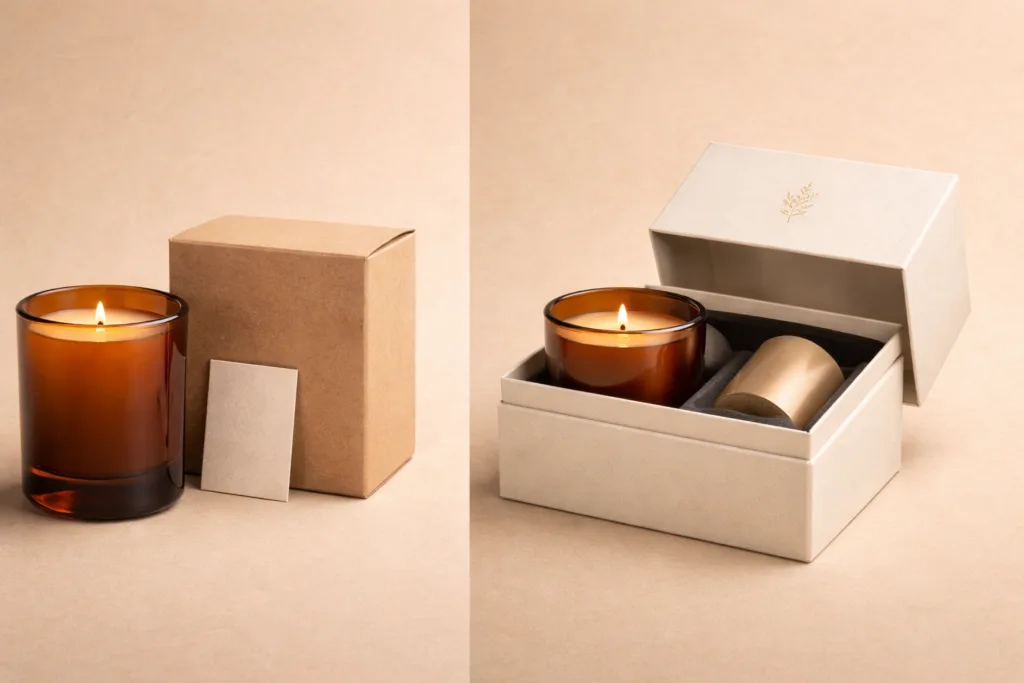
Packaging is the most powerful lever in candle business.
Not wax. Not fragrance.
Packaging.
Packaging Levels
| Type | Cost | Retail Impact |
|---|---|---|
| No box | Low | Low-end |
| Folding carton | Medium | Standard |
| Rigid box | High | Premium |
A $5 candle in a rigid box can sell for $30.
The same candle without packaging may struggle to sell at $10.
Key insight:
👉 Packaging is not cost — it is positioning.
Where Brands Go Wrong
- Over-investing too early
- Choosing luxury packaging without market validation
- Ignoring packaging MOQ
Logistics Cost: The Silent Profit Killer
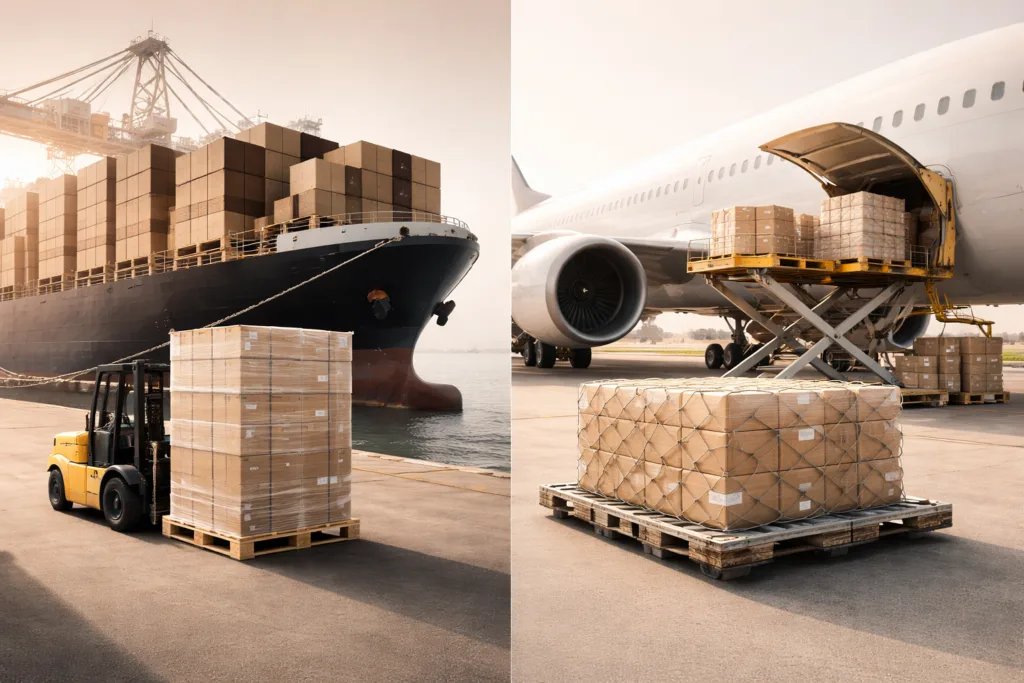
Logistics is where many candle brands lose money.
Because it is often calculated too late.
Real Example
500 sets candle gift set:
- Weight: ~350 kg
Shipping options:
- Air: ~$2800 (10–15 days)
- Sea: ~$750 (25–30 days)
What This Means
- Air freight can add $5+ per unit
- Sea freight may add only $1–2 per unit
If you choose the wrong shipping method, your margin disappears.
Sampling Cost: Why Development Is Not Free
Many buyers expect samples to be cheap or free.
But real sampling includes:
- Material sourcing
- Mold preparation
- Fragrance testing
- Labor
Typical sample cost:
$50–$200 per design
For complex designs, even higher.
This is not a cost—it is an investment.
MOQ Strategy: The Financial Trade-Off
MOQ is not just a number.
It is a financial decision.
Basic Logic
- Higher MOQ → lower unit price
- Lower MOQ → higher risk per unit
The Real Problem
Many brands:
- Choose low MOQ → high cost → no margin
- Choose high MOQ → inventory pressure → cash flow risk
You must balance both.
Case Study: 500 Sets Candle Gift Set (Real Numbers)
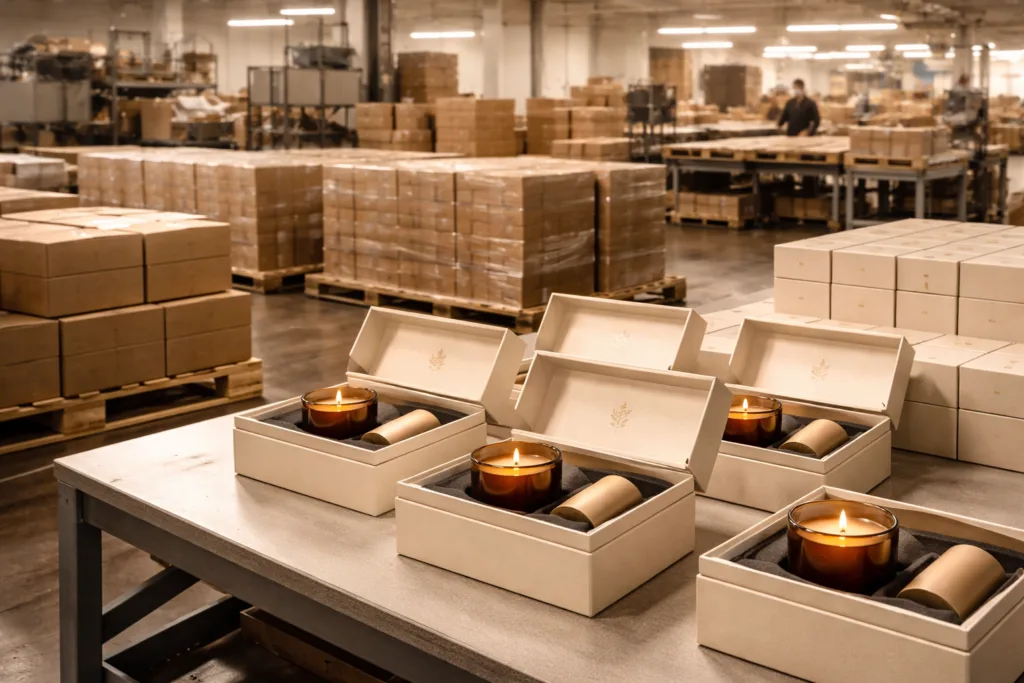
Let’s break down a real-world example.
Product Specs
- Amber glass candle
- Soy wax (220–250g)
- Gold logo
- Rigid gift box
Cost Breakdown
| Item | Cost |
|---|---|
| Candle | $5.40 |
| Packaging | $3.25 |
| Shipping (sea avg) | $1.50 |
| Total landed cost | $10.15 |
Key Conclusion
👉 Your cost per unit is not what factory quotes you.
It is what you pay after everything is included.
Landed Cost vs Factory Price (Critical Difference)
Let’s make this very clear.
| Type | Meaning |
|---|---|
| Factory price | Product only |
| Landed cost | Total business cost |
If you build your pricing based on factory price,
👉 you will lose money.
Pricing Strategy: How Brands Actually Make Money
A healthy candle business follows this model:
Retail price = 3x–5x landed cost
Example:
- Landed cost: $10
- Retail price: $30–$50
This margin covers:
- Marketing
- Platform fees
- Discounts
Cost Optimization Without Destroying Brand Value
Smart brands do not chase the lowest cost.
They optimize structure.
Practical Strategies
- Use standard vessels first
- Start with folding cartons
- Optimize fragrance, not maximize it
- Plan logistics early
Common Cost Mistakes That Kill Candle Brands
- Only comparing unit price
- Ignoring shipping cost
- Over-customizing early
- Choosing wrong MOQ
- Misusing essential oils
These mistakes are extremely common—and very expensive.
How Circe Home Helps You Control Cost Strategically
At Circe Home, we do not just manufacture candles.
We help brands design cost structures.
That means:
- Matching vessel to MOQ strategy
- Balancing packaging vs margin
- Optimizing shipping early
- Avoiding unnecessary customization
Our role is not just supplier.
👉 It is supply chain strategist.
Final Conclusion: Build a Candle Brand That Survives
If you remember only one thing from this article, let it be this:
👉 A candle business is not about product.
👉 It is about cost structure.
The brands that survive are not the most creative ones.
They are the ones that understand:
- What they are really paying
- Where their margin comes from
- How to scale without breaking
If you already have a design, we can help you evaluate your cost.
If you are starting from zero, we can help you build it correctly from day one.
Final Conclusion: What This Really Means for Your Candle Business
Let’s be very direct.
If you only compare factory prices, you will lose money.
If you treat packaging as decoration, you will underprice your product.
If you ignore logistics, your margin will disappear.
And if you don’t understand MOQ, you will either:
- get stuck with expensive inventory, or
- never reach a profitable scale
This is why many candle brands look beautiful—but quietly fail.
Because they are building products.
Not building cost structures.
👉 A successful candle brand is not the one with the best scent.
👉 It is the one with the most controlled cost structure.
At Circe Home, we don’t just quote prices.
We help you:
- understand where your money actually goes
- design products that match your budget and positioning
- avoid common but expensive mistakes
If you already have a concept, we can help you break down your real cost before you commit.
If you’re still exploring, we can help you build a product that is both sellable and scalable.
Because in the end:
👉 The goal is not to make a candle.
👉 The goal is to build a candle business that survives and grows.
FAQ
What is the difference between OEM and ODM?
OEM means producing based on your design. ODM means choosing from existing designs and customizing branding.
What is the best wax for private label candles?
Soy wax is the most commonly used because it balances cost, performance, and branding appeal.
How long does production usually take?
Standard production takes 15–30 days depending on customization level.
How do I choose the right packaging?
Start with folding cartons for balance. Upgrade to rigid boxes when your brand positioning supports it.
Is eco-friendly packaging more expensive?
Yes, but it can increase brand value and customer trust.
How can I reduce shipping costs?
Plan ahead and use sea freight when possible. Consolidate shipments to lower cost per unit.
Final Conclusion: Build a Candle Brand That Actually Makes Money
Let’s be honest.
Most candle brands don’t fail because of bad products.
They fail because they never understood their numbers.
They focused on:
– scent
– design
– aesthetics
But ignored:
– cost structure
– packaging strategy
– logistics impact
And that’s where everything breaks.
Because in this industry:
👉 The difference between a $5 candle and a $30 candle
is not the wax.
👉 It’s the structure behind it.
If you take one thing from this article, let it be this:
👉 You are not buying a candle.
👉 You are building a cost system.
And that system decides whether you:
– make profit
– break even
– or quietly lose money
At Circe Home, we don’t just give you prices.
We help you:
– understand your real landed cost
– choose the right MOQ strategy
– design packaging that increases perceived value
– avoid expensive mistakes before production starts
If you already have a design, send it to us.
We can break down your real cost before you place an order.
If you’re still at idea stage, even better.
We can help you build something that is not just beautiful—
👉 but actually profitable.
Because at the end of the day:
👉 A candle is easy to make.
👉 A profitable candle business is not.