
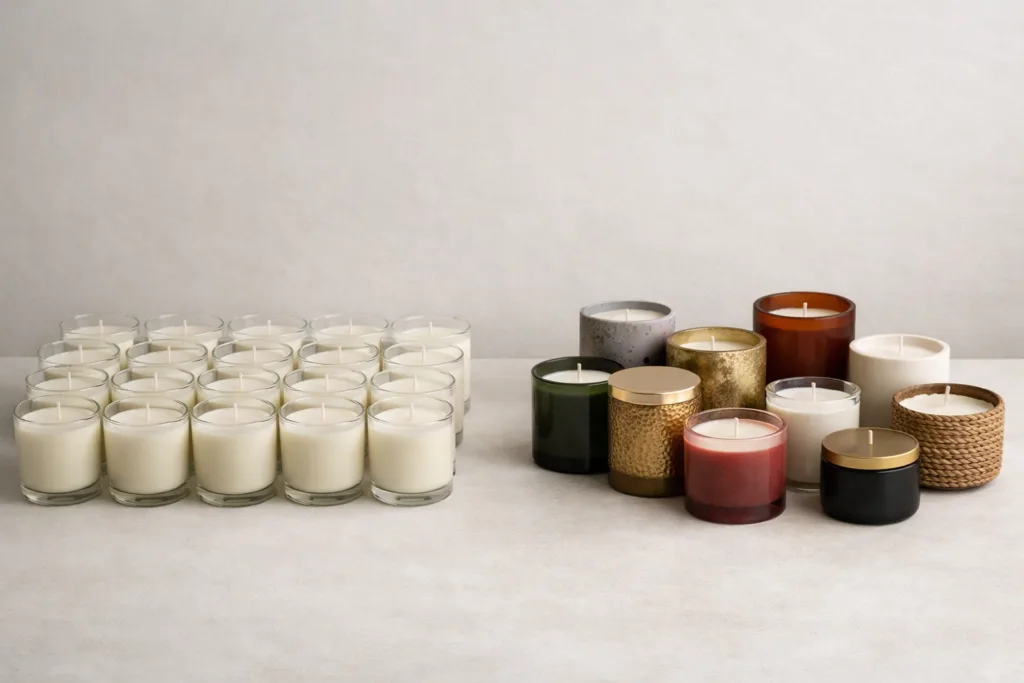
 Introduction: Why Candle Brands Don’t Fail on Scent — They Fail on Structure
In the global candle market, especially across North America, Europe, and Oceania, most brands don’t struggle because their fragrances are weak. They struggle because their collection strategy is undefined.
Too many brands treat candles as isolated SKUs. Each launch is expected to perform like a hero product. Each new scent carries emotional weight, marketing pressure, and inventory risk. This mindset may work for early-stage DTC experiments, but it breaks down immediately once a brand enters wholesale, retail, or multi-market distribution.
At scale, buyers don’t evaluate candles one by one. They evaluate collections.
A professional candle brand is not built on a single bestseller. It is built on a clear division between Core Lines and Limited Editions, supported by a seasonal strategy that aligns marketing, manufacturing, and inventory into one predictable system.
This article breaks down how to design that system — practically, commercially, and in a way that factories, distributors, and large buyers can actually support.
Understanding the Two Pillars: Core Lines vs Limited Editions
Before discussing seasonality, it is critical to define the functional role of each line type.
What Core Lines Actually Do for a Brand
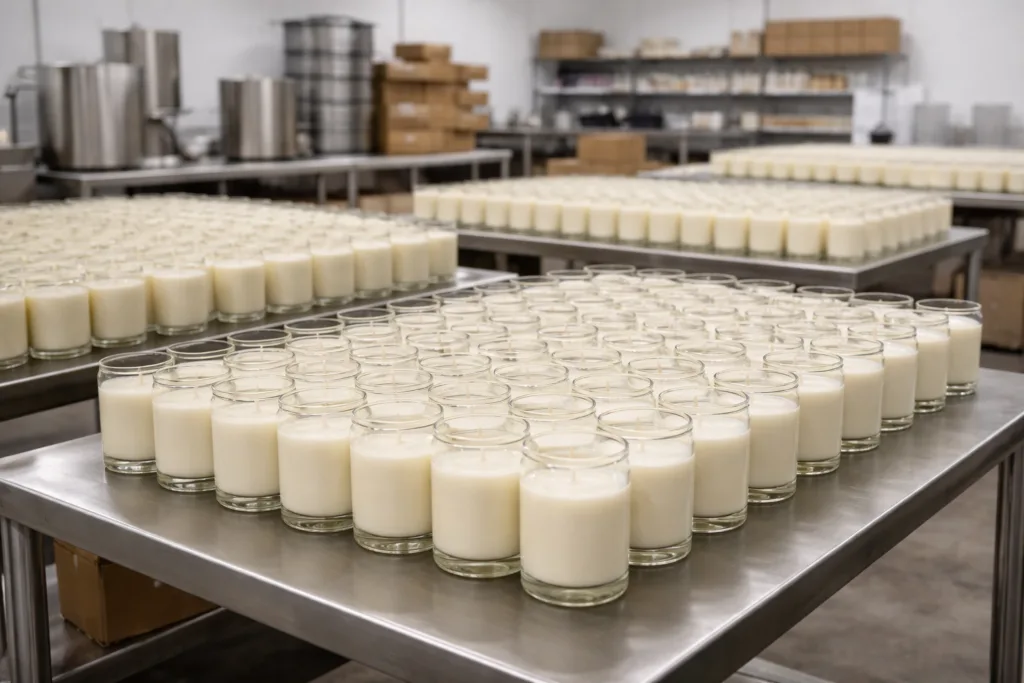 Core Lines are not the “safe” or “boring” products of a collection. They are the structural backbone of a brand’s business model.
A Core Line is defined by five characteristics:
- Permanent availability – Designed to be reordered year-round
- Stable demand – Predictable sales patterns across seasons
- Scalable production – Efficient MOQs, consistent materials, standardized processes
- Retail reliability – Suitable for permanent shelf placement
- Cash-flow function – The primary source of operational stability
From a manufacturing perspective, Core Lines justify:
- Tooling investment
- Packaging standardization
- Long-term supplier relationships
From a buyer’s perspective, Core Lines answer one key question:
“Can this brand support replenishment without disruption?”
If the answer is unclear, the brand is not retail-ready — regardless of how good the product smells.
What Limited Editions Are Designed to Achieve
 Limited Editions serve an entirely different commercial purpose.
They are not designed to stabilize a business. They are designed to activate demand.
A Limited Edition candle typically has:
- A defined production window
- A fixed quantity or time-bound availability
- A narrative or seasonal context
- Higher tolerance for experimentation
Limited Editions sell urgency, not longevity.
They give consumers a reason to buy now, retailers a reason to refresh displays, and brands a controlled environment to test:
- New fragrance profiles
- New vessel materials
- New packaging finishes
- New price points
In other words, Limited Editions are where brands explore, while Core Lines are where brands scale.
Why Seasonality Should Not Live in Core Lines
One of the most common strategic errors candle brands make is embedding heavy seasonality into their Core assortment.
Examples include:
- Pumpkin or spiced winter scents positioned as permanent SKUs
- Holiday-specific packaging treated as long-term inventory
- Colorways tied to a single quarter
This creates structural problems.
Seasonal demand is time-bound. Core Lines are designed to be time-agnostic.
When these two functions are mixed, brands face:
- Overstock after peak season
- Forced discounting
- Irregular reordering patterns
- Manufacturing inefficiencies
Seasonality belongs in Limited Editions, not in Core Lines.
A clean separation allows:
- Core Lines to remain stable and reorderable
- Seasonal demand to be forecasted and capped
- Inventory risk to be consciously controlled
The Optimal Collection Mix for Brands Scaling Wholesale
Based on production data, retail buying behavior, and factory-side feasibility, a mature candle brand typically follows this distribution model:
- 60–70% Core Lines
- 20–30% Seasonal Limited Editions
- 5–10% Experimental or Collaborative Runs
This ratio is not theoretical. It aligns with how:
- Buyers plan shelf space
- Factories schedule production
- Logistics providers forecast volume
Brands that skew too heavily toward Limited Editions often appear exciting but unreliable. Brands that rely solely on Core Lines struggle to generate new demand.
Balance is what signals maturity.
Manufacturing Strategy: Why Core and Limited Must Be Produced Differently
From a factory standpoint, Core Lines and Limited Editions should never follow the same production logic.
Core Line Manufacturing Principles
Core Lines benefit from:
- Higher MOQs with lower unit cost
- Standardized glass or ceramic vessels
- Consistent wax formulations
- Long-term packaging templates
This enables:
- Better yield control
- Stable lead times
- Predictable pricing
Factories are structurally designed to support this model.
Limited Edition Manufacturing Principles
Limited Editions require flexibility, not scale.
They are best suited for:
- Short production runs
- Higher per-unit cost tolerance
- Specialized finishes or materials
- Seasonal packaging variations
When designed correctly, Limited Editions do not disrupt factory efficiency because:
- Quantities are capped
- Timelines are pre-defined
- Materials are pre-approved
The problem is not that Limited Editions are difficult to manufacture. The problem is attempting to produce them as if they were Core Lines.
Seasonal Planning: A 12-Month Framework That Actually Works
 Professional candle brands do not design seasonally in isolation. They plan 12–18 months ahead.
A typical annual structure may look like this:
- Spring: Light florals, soft colors, minimal packaging shifts
- Summer: Fresh, marine, citrus profiles with limited visual changes
- Autumn: Warm, resinous, spiced Limited Editions
- Winter: Holiday-focused narratives with strict quantity controls
Core Lines remain visually consistent throughout.
Only Limited Editions absorb seasonal storytelling.
This allows brands to:
- Lock factory capacity early
- Coordinate marketing calendars
- Offer buyers predictable launch cycles
Retail and Wholesale Perspective: How Buyers Read Your Collection
 Buyers do not ask:
“Which candle is your bestseller?”
They ask:
- Which items are reorderable?
- Which items are time-bound?
- How often will this assortment refresh?
A clearly defined Core + Limited structure answers all three questions without explanation.
Brands that fail to articulate this structure appear risky — even if pricing and design are strong.
Practical Advice for Brands at Different Stages
Early-Stage Brands
- Limit Core Lines to 3–6 SKUs
- Introduce no more than 1–2 Limited Editions per year
- Avoid over-customization early
Growing Wholesale Brands
- Lock Core packaging and vessels
- Use Limited Editions to test premium pricing
- Plan seasonal drops 9–12 months ahead
Established Brands
- Use Limited Editions as marketing drivers
- Protect Core Lines from excessive variation
- Treat experimentation as controlled, not emotional
Conclusion: Structure Scales, Scent Sells
In the candle industry, fragrance may attract attention — but structure earns trust.
Brands that scale successfully do so not by launching more candles, but by launching better-organized collections.
A disciplined separation between Core Lines and Limited Editions allows:
- Predictable growth
- Healthier supplier relationships
- Stronger buyer confidence
This is how candle brands move from creative projects to durable businesses.
FAQs
1. How many core candle SKUs should a wholesale brand start with?
Most wholesale-ready brands perform best with 3–6 core SKUs that are permanently reorderable and production-efficient.
2. Are limited edition candles suitable for large retailers?
Yes, when quantities, timelines, and packaging are clearly defined in advance. Retailers value controlled scarcity.
3. Can seasonal scents ever be part of core lines?
Only if demand is proven year-round. Otherwise, seasonality should remain exclusive to limited editions to avoid inventory risk.