
When most buyers think about home fragrance, they think about retailers first: gift shops, home décor stores, lifestyle boutiques, supermarkets, department stores, or existing candle brands. That is understandable. Candles and reed diffusers are physical products, and physical products usually enter the market through retail.
But this view is too narrow.
A candle or reed diffuser is not only a home décor item. It is not only a nice-smelling product placed on a shelf. For many brands, home fragrance can become a powerful brand extension: a way to turn atmosphere, memory, identity, and customer emotion into something tangible.
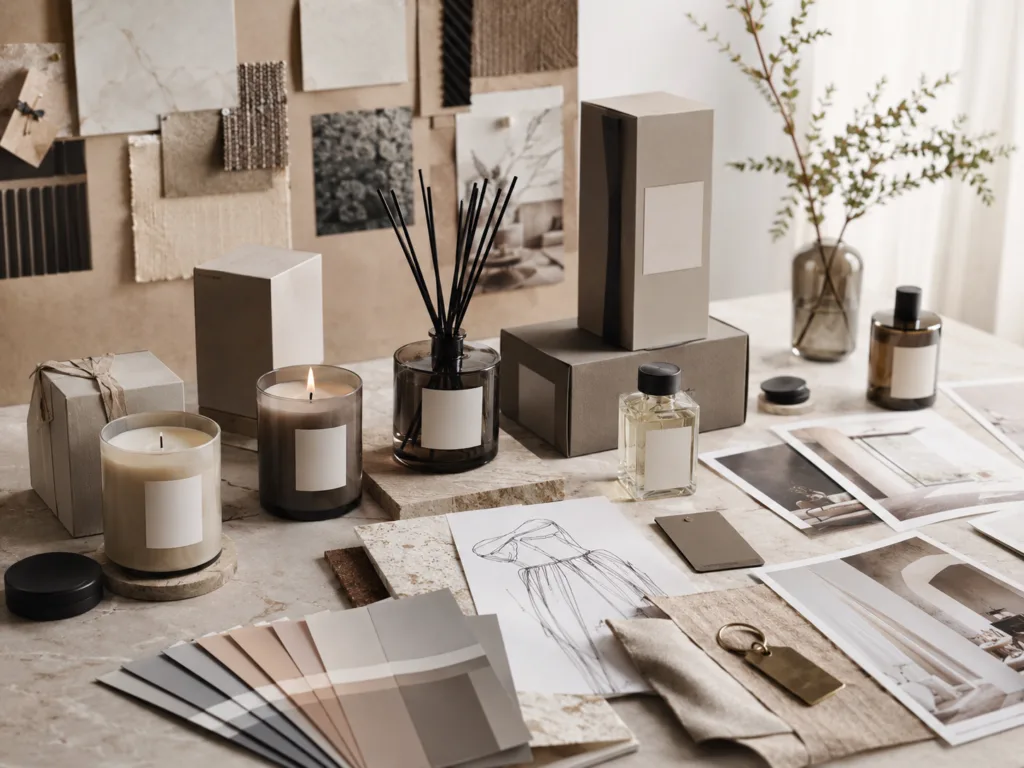
A fashion brand can create a candle that smells like the mood of a seasonal collection. A boutique hotel can use reed diffusers to make guests remember the feeling of staying there. An artist can turn an exhibition concept into a limited-edition candle. A yoga studio can use scent to strengthen its wellness experience. A café, clinic, gallery, wedding planner, music label, or independent lifestyle platform can all use home fragrance to carry their brand into the customer’s private space.
That is the real value of home fragrance.
A candle or reed diffuser allows a brand to enter the customer’s private space in a subtle, emotional, and memorable way.
The global home fragrance market is also large enough to support this broader thinking. Different research firms measure the category differently, but several market reports point to continued growth in home fragrance, candles, reed diffusers, and related products. Fortune Business Insights valued the global home fragrance market at USD 26.00 billion in 2025 and projected it to reach USD 47.98 billion by 2034, while Grand View Research estimated the global home fragrance market at USD 13.16 billion in 2025 with strong projected growth through 2033.
For buyers, this means one thing: home fragrance should not be seen only as a “retail category.” It can also be a brand product, a customer experience tool, a premium merchandise line, and a new revenue stream.
Home Fragrance Is Not Just a Product. It Is a Brand Medium.
Every brand communicates through different senses.
Visual branding uses logos, colors, packaging, photography, typography, store design, and social media aesthetics. Audio branding uses music, voice, rhythm, podcasts, sound logos, or performance. Verbal branding uses slogans, manifestos, captions, campaigns, interviews, and storytelling.
But scent is different.
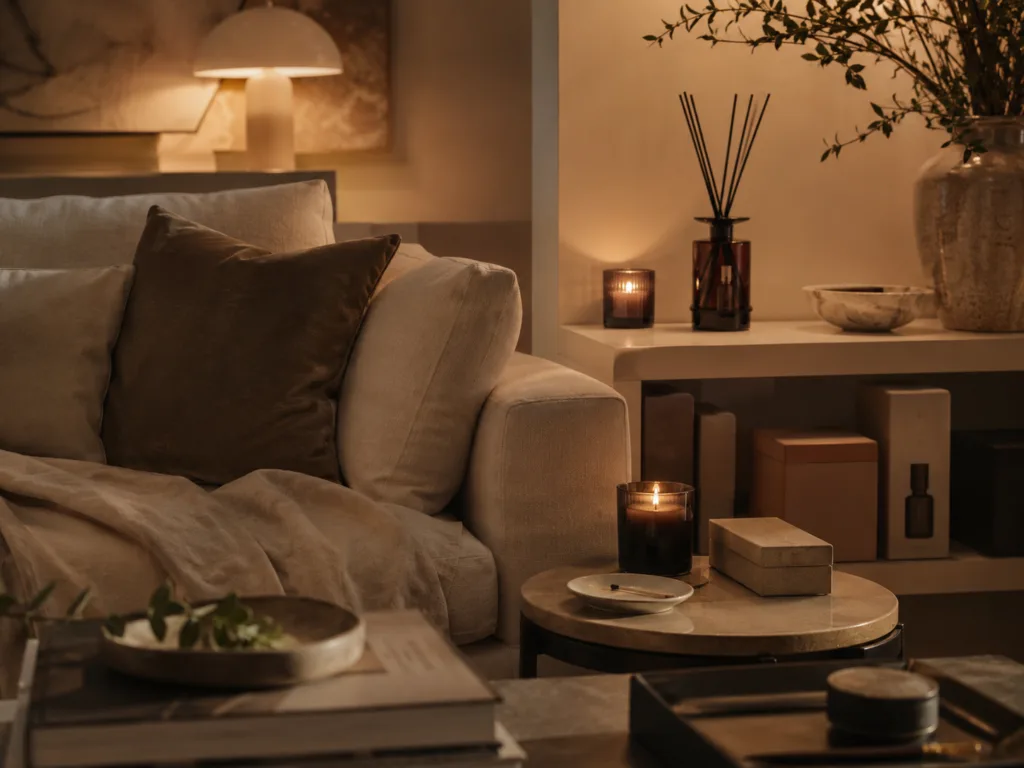
Scent does not ask customers to read, watch, or listen. It surrounds them quietly. It becomes part of the room. It connects with mood before logic. It can make a space feel warmer, cleaner, more luxurious, more relaxed, more romantic, more artistic, or more intimate.
That is why home fragrance is so interesting for brand extension.
A candle or reed diffuser does not shout for attention like an advertisement. It stays in the customer’s home, hotel room, studio, bathroom, office, clinic, shop, or bedroom. Every time the customer lights the candle or walks past the reed diffuser, the brand appears again through atmosphere.
This makes home fragrance a soft but repeated brand touchpoint.
A tote bag may be used occasionally. A brochure may be thrown away. A social media post may disappear in seconds. But a candle on a bedside table or a reed diffuser in a bathroom can stay with the customer for weeks.
That is not ordinary merchandise. That is sensory branding.
What Are You Really Selling When You Sell Candles and Reed Diffusers?
When a buyer adds candles or reed diffusers to a product line, they are not only selling fragrance. They are selling several things at once.
First, they are selling atmosphere. A scent can make a space feel like a boutique hotel, a quiet spa, a coastal villa, a winter cabin, a Paris apartment, a clean linen closet, or a candlelit dinner. The fragrance is the invisible design layer of the room.
Second, they are selling memory. Scent is closely linked with emotion and recall. This is one reason scent marketing is often discussed in relation to customer experience and brand recognition. Industry scent marketing sources frequently position fragrance as a tool for creating stronger memory and emotional association with a brand.
Third, they are selling story. A candle named “After the Rain,” “Atelier Morning,” “Desert Rose,” “Silk Road,” or “Room 302” is not only a scent. It is a narrative object. It invites the customer into a world.
Fourth, they are selling identity. Customers often buy home fragrance because it says something about taste. A minimalist white tea reed diffuser says something different from a smoky oud candle, a fig and cedarwood candle, a lavender wellness diffuser, or a rose and musk gift set.
Fifth, they are selling repeatable brand contact. Once home fragrance enters a customer’s private space, it continues to work quietly. It reminds, comforts, decorates, and reinforces the brand experience.
This is why candles and reed diffusers work for more than retailers.
They are not only SKUs. They are brand carriers.
Why Candles and Reed Diffusers Are Especially Suitable for Brand Extension
Many products can become branded merchandise, but home fragrance has several advantages that make it especially suitable for lifestyle-oriented brands.
Candles and reed diffusers are emotionally flexible. They can be romantic, clean, artistic, spiritual, luxurious, youthful, natural, minimalist, festive, coastal, vintage, or modern depending on fragrance, vessel, label, and packaging.
They are also visually adaptable. A candle jar can match a fashion brand’s color palette. A reed diffuser bottle can match a hotel’s interior design. A gift box can carry an artist’s illustration. A label can be clean and medical for a clinic, handmade for an independent brand, or premium for a corporate gift program.
They are giftable. Candles are widely associated with gifting, holidays, home décor, and personal rituals. The National Candle Association notes that candles are commonly sold through specialty or gift shops, department and home décor stores, and mass-market channels, showing how naturally the product fits gift and lifestyle buying behavior.
They are scalable. A brand can start with one signature candle, one reed diffuser, or a small gift set. Later, it can expand into seasonal collections, event editions, hotel amenities, VIP gifts, wholesale packs, refill options, or full private label home fragrance lines.
Most importantly, they are not limited by the original industry of the buyer.
A clothing brand does not need to become a candle company. A hotel does not need to become a home fragrance retailer. A musician does not need to run a perfume house. They only need a product that extends their world.
That is where private label candles and custom reed diffusers become useful.
12 Industries That Can Use Home Fragrance as Brand Extension
1. Fashion Brands
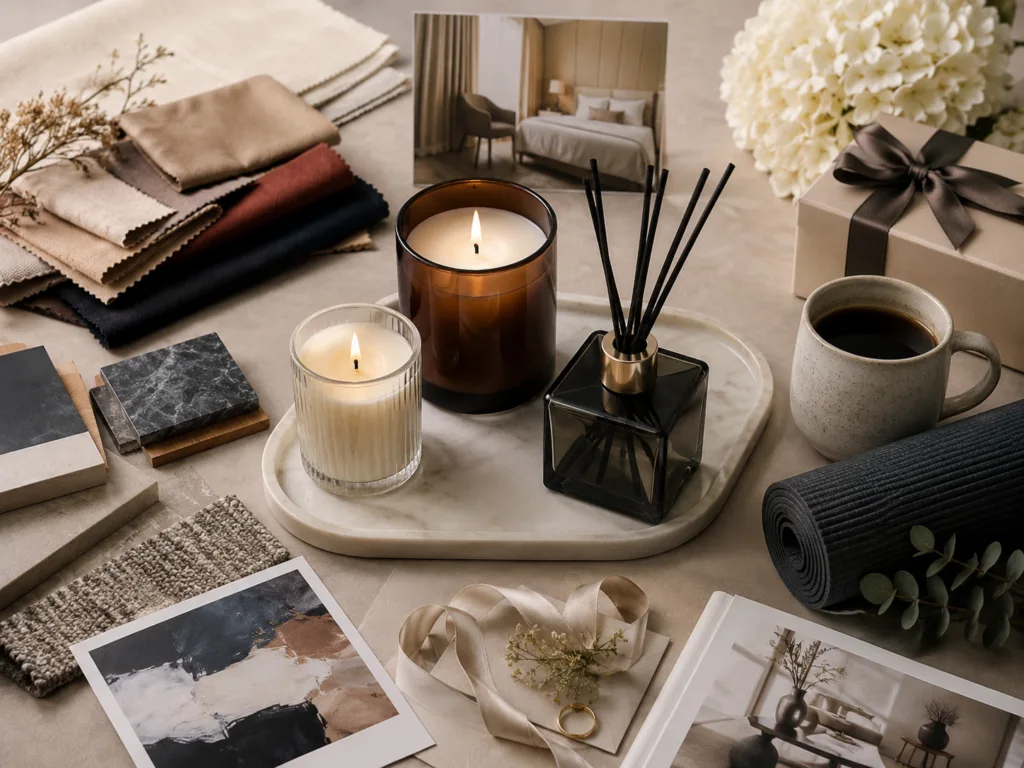
Fashion brands already sell mood, identity, texture, season, and aspiration. Home fragrance is a natural extension.
A linen clothing brand may create a clean cotton, white tea, or soft musk candle. A luxury eveningwear brand may choose amber, rose, sandalwood, or incense. A resortwear label may develop a fig, neroli, sea salt, or coconut wood scent. A streetwear label may use smoky, leathery, metallic, or urban notes.
For fashion brands, candles and reed diffusers can work as seasonal collection merchandise, runway gifts, VIP customer gifts, boutique add-ons, or online store products.
The key is not to pick a random “nice smell.” The scent should match the brand’s visual world.
If the collection is soft, natural, and feminine, the fragrance should not feel too heavy. If the brand is architectural, sharp, and monochrome, the vessel and scent profile should feel more structured. If the brand is playful and colorful, the candle line can be more experimental.
A custom candle allows a fashion brand to move from wardrobe to living space.
2. Interior Designers
Interior designers understand atmosphere better than almost anyone. They already work with space, light, material, texture, color, and proportion. Scent is simply the invisible layer of interior design.
A designer who creates warm residential interiors may develop a sandalwood and cashmere candle. A coastal interior studio may choose sea salt, driftwood, and linen. A luxury apartment designer may prefer black tea, amber, cedar, or white musk.
Home fragrance can become a designer’s client gift, showroom product, project handover gift, or retail item. It can also help create a signature experience inside a studio or showroom.
For interior designers, reed diffusers are especially useful because they offer continuous fragrance without flame. They can sit naturally in bathrooms, living rooms, reception areas, styling corners, and staged properties.
A well-designed scent can make a completed interior feel more finished.
3. Boutique Hotels and Resorts
Hotels do not sell rooms only. They sell memory.
Guests may forget the exact bedding, the room number, or the breakfast menu, but they often remember how a place felt. Scent plays a powerful role in that memory.
A boutique hotel can use a signature reed diffuser in rooms, a candle in the lobby retail corner, or a gift set for guests to purchase and take home. Resorts can build scents around location: sea salt, fig leaf, tropical wood, citrus grove, mountain pine, garden herbs, or warm spices.
This is where home fragrance becomes both experience and revenue.
A guest enjoys the scent during the stay. Later, they buy the candle or reed diffuser to recreate the feeling at home. The product becomes a portable version of the hotel experience.
For hotels, reed diffusers are often practical because they are decorative, low-maintenance, and suitable for continuous ambient fragrance in selected spaces. Candles, meanwhile, are strong for gift shops, VIP gifts, honeymoon packages, and seasonal promotions.
4. Artists and Galleries
Artists, galleries, museums, and creative institutions often sell prints, books, postcards, tote bags, ceramics, and small design objects. Candles can sit beautifully in this world.
A candle can be developed around an exhibition theme, a painting series, a sculpture material, a historical period, or a gallery identity. The packaging can feature artwork, abstract patterns, limited-edition labels, or collectible boxes.
For an artist, a candle is not just merchandise. It can become an extension of the artwork’s atmosphere.
Imagine a candle for a desert photography exhibition with dry wood, mineral notes, and warm amber. Or a candle for a floral oil painting series with rose, green stem, violet leaf, and soft musk. Or a museum shop reed diffuser inspired by an ancient garden, a library, or a ceramic collection.
Art buyers often appreciate objects with story. Home fragrance gives them a way to take home not only an image, but a mood.
5. Musicians and Cultural Creators
Musicians sell sound, but they also sell worlds. Album covers, stage design, music videos, lyrics, fashion, and fan culture all create atmosphere. A candle can translate that atmosphere into scent.
A musician can create a candle for an album launch, a tour gift, a fan box, or a limited-edition merchandise drop. A jazz artist may choose tobacco, whiskey, cedarwood, and amber. An indie folk musician may choose pine, rain, wool, and smoke. An electronic artist may choose mineral, metallic, clean musk, or cold incense notes.
For cultural creators, home fragrance can feel more premium than standard merchandise. It is intimate, collectible, and emotionally tied to listening rituals.
A fan may light the candle while playing the album. That moment links music, scent, and memory together.
6. Yoga Studios and Wellness Spaces
Wellness brands are already built around ritual. Breathing, stretching, meditation, massage, rest, skincare, sleep, and emotional balance are all strongly connected with atmosphere.
Candles and reed diffusers fit naturally into this category.
A yoga studio may develop a calming reed diffuser for reception and a candle for retail. A meditation brand may create incense-inspired candles with sandalwood, frankincense, cedar, or soft herbal notes. A spa may offer lavender, eucalyptus, white tea, hinoki, or chamomile-based home fragrance products.
For wellness spaces, the product should feel safe, clean, balanced, and not overpowering. Packaging should usually be calm, tactile, and easy to understand.
The business value is clear: customers who enjoy the scent in the studio can buy the same fragrance to continue the ritual at home.
7. Beauty Clinics and Spas
Beauty clinics, med spas, dental offices, dermatology clinics, and aesthetic centers often struggle with one problem: the environment can feel too clinical.
Scent can soften that experience.
A clean, gentle reed diffuser in a waiting area can make the space feel more comfortable, more premium, and less stressful. A branded candle or diffuser gift can also be used for VIP clients, treatment packages, holiday promotions, or post-treatment care sets.
For clinics and beauty spaces, fragrance direction matters. The scent should not feel too sweet, heavy, or invasive. Clean musk, white tea, soft floral, green herbal, light wood, or fresh linen profiles usually work better than strong gourmand or smoky scents.
In this industry, home fragrance is not only a product. It supports trust, comfort, and customer experience.
8. Cafés and Restaurants
Cafés and restaurants have strong sensory identities. Taste, smell, sound, lighting, tableware, music, and service all work together.
A café can create a candle inspired by its signature drink, bakery atmosphere, roasted coffee, vanilla cream, citrus cake, matcha, fig toast, or morning light. A restaurant can develop a home fragrance gift around its dining concept: Mediterranean herbs, smoked wood, garden tomato leaf, warm spice, or tea.
These products can be sold at checkout, included in holiday gift boxes, offered to loyal customers, or used in collaboration with local artists.
For hospitality businesses, candles work well because they feel warm, personal, and giftable. Reed diffusers can work well for branded retail shelves or private dining rooms.
The goal is not to make the restaurant smell like food at home. The goal is to translate the dining atmosphere into a lifestyle object.
9. Wedding and Event Planners
Weddings and events are built around memory. Flowers, music, lighting, table settings, invitations, and gifts all create a story. Scent can make that story more complete.
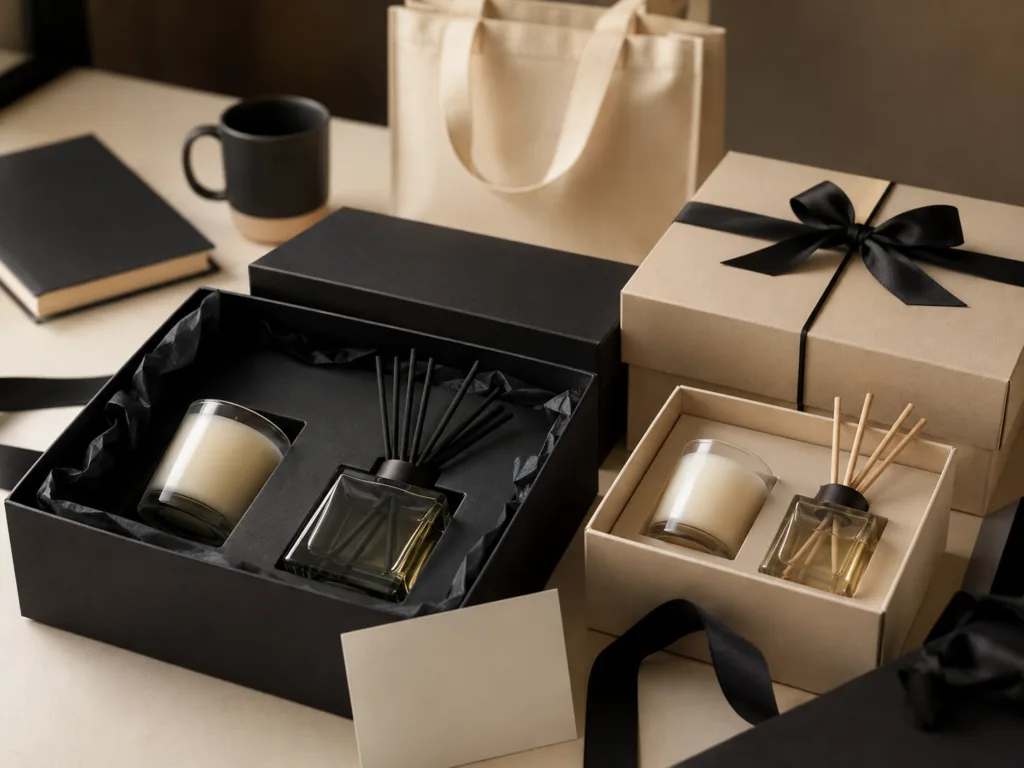
A wedding planner can offer custom candles as guest favors, bridal party gifts, table décor, welcome box items, or anniversary keepsakes. Event planners can create branded reed diffusers or candles for corporate events, launch parties, retreats, fashion shows, and private dinners.
Home fragrance works especially well because it continues after the event ends.
Guests may take home a small candle and later remember the wedding, brand launch, or celebration when they light it.
For event buyers, customization can include label design, ribbon, box, scent selection, vessel color, date, names, logo, or theme-based packaging.
10. Airbnb and Boutique Homestay Owners
Airbnb hosts and boutique homestay owners compete on experience. A clean room is no longer enough. Guests remember details: lighting, bedding, towels, local guidebooks, welcome gifts, bathroom amenities, and scent.
A reed diffuser can help create a consistent first impression when guests enter the room. A small branded candle can become a welcome gift or paid add-on. A homestay near the sea might use sea salt and driftwood. A mountain cabin might use pine, cedar, and smoke. A city apartment might choose clean linen, black tea, or soft musk.
For boutique accommodation businesses, home fragrance can also become a small retail opportunity. Guests who enjoyed the stay may want to buy the scent.
That is brand extension at its simplest: turn the memory of the stay into a product.
11. Lifestyle Platforms and Independent Brands
Lifestyle platforms, content creators, newsletters, concept stores, design communities, and niche independent brands often have strong audiences but limited physical products.
Home fragrance gives them a way to create tangible brand merchandise without entering a complicated apparel or electronics category.
A slow-living platform can create a morning ritual candle. A book community can create a reading candle. A travel newsletter can create city-inspired scents. A design studio can launch minimalist reed diffusers. A mother-and-baby lifestyle brand can develop soft, gentle home fragrance gift sets.
The strength of this category is flexibility. A brand can start small, test one scent, and build from there.
For independent brands, candles and reed diffusers can be used for limited drops, subscription boxes, seasonal collections, influencer gifts, or wholesale collaborations.
12. Corporate Gift Buyers
Corporate gifts are often predictable: notebooks, mugs, pens, tote bags, calendars, snacks, or tech accessories. A well-designed candle or reed diffuser can feel more premium and more personal.
Companies can use home fragrance gift sets for client appreciation, employee gifts, holiday gifting, real estate handover packages, hotel partnerships, event gifts, and VIP campaigns.
The product can be customized with subtle branding rather than loud logos. For premium gifting, this matters. Many recipients do not want a product that feels like an advertisement. They want something useful, beautiful, and tasteful.
A candle or reed diffuser can carry the brand quietly while still feeling like a real gift.
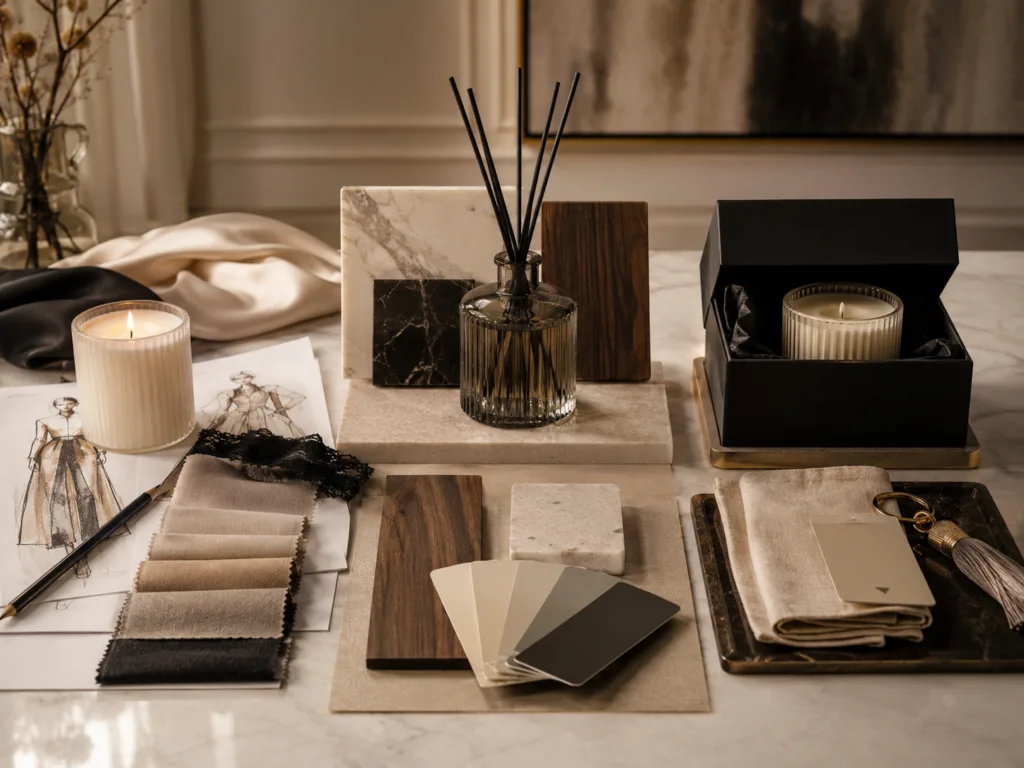
Candle or Reed Diffuser: Which One Works Better?
For brands exploring home fragrance, the first product decision is often simple: candle, reed diffuser, or both.
Candles are ideal when the brand wants ritual, warmth, gifting, visual impact, and emotional storytelling. They work well for fashion brands, artists, cafés, weddings, corporate gifts, and seasonal collections.
Reed diffusers are ideal when the brand wants continuous fragrance, low maintenance, decorative placement, and no flame. They work well for hotels, spas, clinics, homestays, interior designers, bathrooms, reception areas, and wellness spaces.
A candle feels more intimate and ceremonial. A reed diffuser feels more constant and environmental.
Many brands eventually use both: a candle for giftability and storytelling, a reed diffuser for space experience and daily brand presence.
How to Build a Home Fragrance Line Around Your Brand
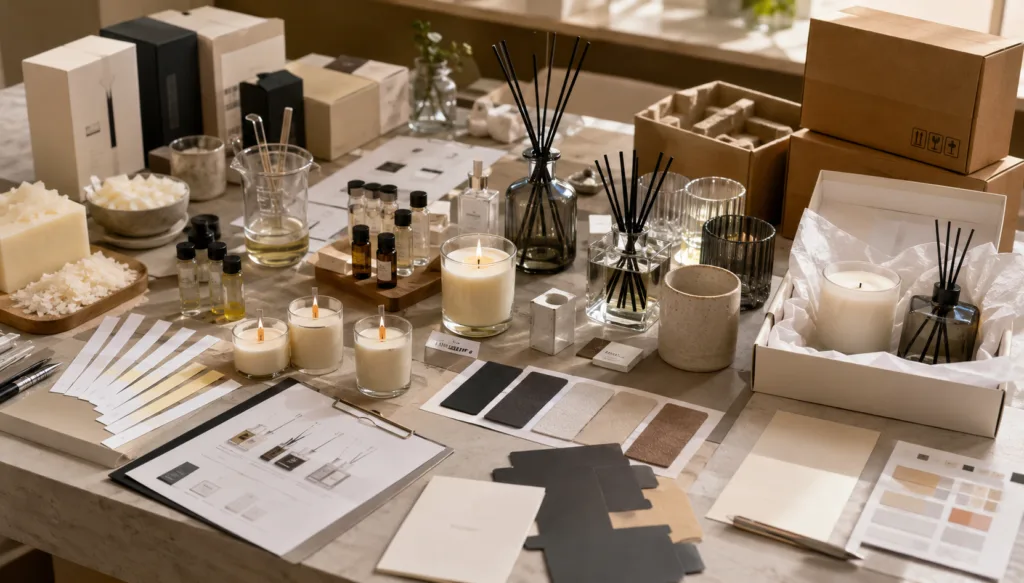
A successful home fragrance brand extension should begin with brand identity, not fragrance oil.
Before choosing jasmine, sandalwood, vanilla, or fig, buyers should ask:
What does our brand feel like?
Where will customers use this product?
Is the product for gifting, retail, hotel rooms, VIP clients, event favors, or daily home use?
Should the scent feel clean, warm, artistic, luxurious, natural, romantic, energetic, or calming?
Should the packaging look minimal, colorful, premium, handmade, clinical, rustic, or fashion-led?
Once the direction is clear, product development becomes easier.
A basic development path may include scent direction, wax or diffuser base selection, vessel choice, label design, packaging structure, sample testing, MOQ confirmation, safety documents, production timeline, and shipping method.
For candles, buyers should consider wax type, fragrance load, wick performance, vessel safety, burn testing, label material, dust cover, lid, box, and carton protection.
For reed diffusers, buyers should consider bottle design, cap material, reeds, diffuser base, fragrance strength, evaporation rate, leakage prevention, inner plug, gift box, and shipping safety.
For B2B buyers, the best supplier is not only the one who can “make a candle.” It is the one who can help translate a brand idea into a stable, giftable, export-ready product.
Why This Category Expands the Buyer’s Imagination
The strongest reason to choose candles and reed diffusers is not only market demand. It is strategic imagination.
Home fragrance allows a brand to become part of a customer’s daily environment.
A customer may wear a fashion brand once a week, but smell its candle every evening.
A hotel guest may stay for two nights, but use its diffuser at home for two months.
A gallery visitor may see an exhibition once, but keep the candle on a desk.
A yoga student may attend class twice a week, but use the studio’s scent during daily meditation.
A corporate client may forget another branded pen, but remember a beautiful candle gift.
This is why home fragrance works for more than retailers.
It gives brands a second life inside the customer’s private space.
It turns atmosphere into product.
It turns memory into merchandise.
It turns brand identity into scent.
It turns customer experience into something repeatable.
For buyers looking to expand their product line, candles and reed diffusers are not just “nice add-ons.” They are one of the most flexible, emotional, and brand-friendly categories available.
Your brand should not only be seen.
It can also be smelled, remembered, and taken home.
FAQ
1. What is home fragrance brand extension?
Home fragrance brand extension means using scented candles, reed diffusers, room sprays, or fragrance gift sets to expand a brand into scent-based products. Instead of selling fragrance as a standalone retail item, the brand uses scent to express atmosphere, identity, customer experience, and emotional memory.
2. Are candles and reed diffusers only suitable for retailers?
No. Candles and reed diffusers can work for fashion brands, hotels, interior designers, artists, galleries, cafés, spas, yoga studios, beauty clinics, wedding planners, Airbnb hosts, lifestyle platforms, independent creators, and corporate gift buyers. Any brand with a strong aesthetic, space, audience, or story can consider home fragrance.
3. Are candles or reed diffusers better for brand merchandise?
Candles are better for emotional storytelling, gifting, seasonal collections, and limited-edition merchandise. Reed diffusers are better for continuous scent, hotel rooms, clinics, spas, bathrooms, and other spaces where a flame-free option is preferred. Many brands use both to cover different customer scenarios.
4. How can a brand start a private label home fragrance line?
A brand can start by defining its scent direction, target customer, product use case, vessel style, label design, packaging, quantity, budget, and shipping market. Then it can work with a private label candle and reed diffuser manufacturer to develop samples, test fragrance performance, confirm packaging, and prepare bulk production.