
The Growing Demand for Eco-Friendly Candle Custom Manufacturing
Leading hospitality, wellness, and home décor brands are asking for candles that embody their sustainability values. Eco-conscious consumers expect more than charming scents: they demand plant-based waxes, clean-burning formulas, and sustainable packaging. Meeting these criteria requires deep technical know-how, close supplier collaboration, and agile formulation.
Choosing the Right Plant Wax: Soy, Coconut, Beeswax, and More
Candle wax forms the heart of a natural candle OEM project. The choice of plant wax impacts everything: scent throw, burn time, curing performance, and environmental footprint. Below is a comparative table highlighting common green wax options:
| Wax Type | Scent Throw | Burn Profile | Eco Score | Notes |
|---|---|---|---|---|
| Soy | Strong (8-12% fragrance load) | Slow, even, soot-free | High | Works well with essential oils, minor frosting possible |
| Coconut | Excellent (can hold 12-14%) | Ultra-creamy, long & clean burn | Very High | Soft texture, often blended for stability |
| Beeswax | Mild, naturally sweet aroma | Dripless, natural air purifier | High (if ethically sourced) | High cost, slow curing |
| Rapeseed | Moderate | Stable, low soot | Very High | Europe-sourced, low transport footprint |
Popular choices for eco-friendly candle custom runs include 100% soy wax and luxury blends with coconut for enhanced burn and scent profile. Beeswax appeals for its natural air-purifying benefits and subtle golden glow. Most natural candle OEM experts recommend thorough fragrance compatibility testing, as each wax type interacts differently with essential oils and plant-based fragrances.
Detailed Wax Performance Factors
- Fragrance Load: Higher wax purity can enable up to 14% scent addition with proper curing.
- Curing Time: Soy/coconut blends generally cure in 7-12 days for optimized scent throw.
- Burn Quality: Proper wick sizing and formula balance ensure an even, soot-free burn throughout the candle life.
“Circe Home Lab Insight: Matching wax type with fragrance system and vessel design is critical for achieving both strong cold/hot throw and responsible production.”
Soy Wax Candle Wholesale: Scaling Sustainability Without Compromise
Wholesale clients appreciate soy wax for its consistent performance, clean-burning profile, and compelling sustainability narrative. Bulk soy wax candle projects are suited for large-volume white-label lines, hotel amenities, and gift programs. Key wholesale considerations for green brands include:
- Batch Consistency: Lab-controlled fragrance and wax blending to deliver uniform sensory experience.
- Vessel Versatility: Compatibility with glass, tin, ceramics, or custom containers—always toxin-free.
- Compliance & Labeling: IFRA, CLP, and allergen declaration up to EU/UK/US standards.
- MOQ Flexibility: Ranges from 300–3,000+ units depending on level of custom scent, vessel, and branding.
- Refill Programs: Growing demand for refillable jars to minimize single-use packaging waste.
Sustainable Candle Packaging: Materials, Ink, and Eco Credentials
Sustainable candle packaging extends well beyond material choice. FSC-certified cartons, vegan inks, and the elimination of heavy-metal foiling are central to responsible candle presentation. Green packaging options for custom scented candles include:
- FSC Paperboard: Sourced from responsibly managed forests.
- Recycled Paper: Minimum 80% post-consumer content for sleeves, gift boxes, and inserts.
- Eco Inks: Soy or water-based printing, zero mineral or heavy-metal content.
- Minimal Foil: Only used with third-party certification for no heavy metals, or swapped for embossing/debossing.
- Compostable Trays/Wraps: Starch-based or biodegradable as alternatives to plastic.
Packaging Design for Brand Impact
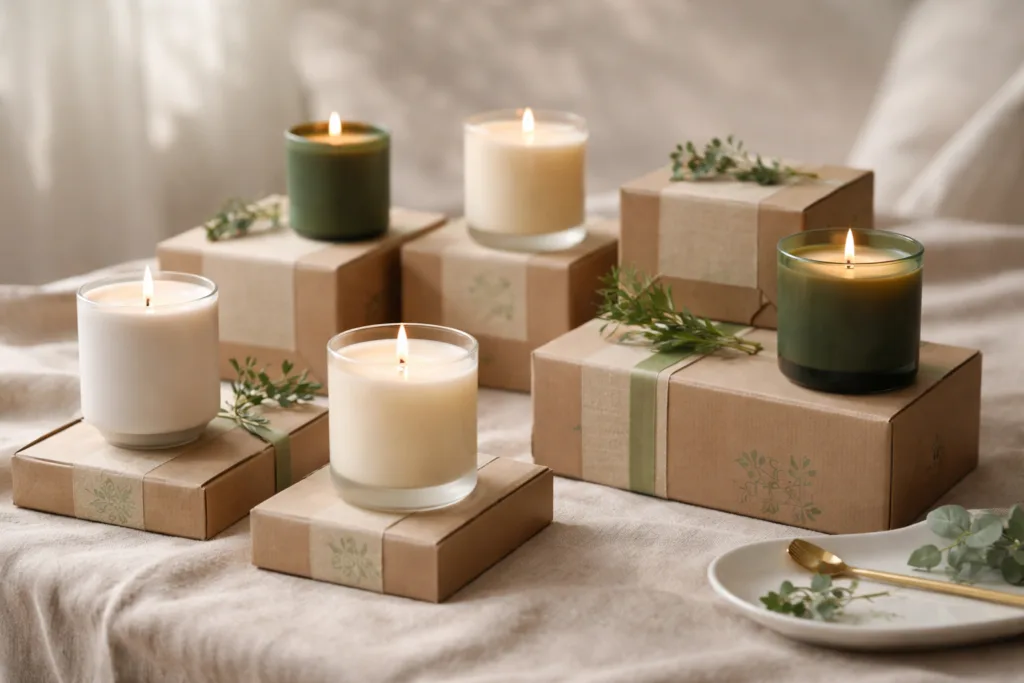
Effective packaging for eco-friendly candle custom lines balances visual sophistication with eco transparency. Techniques like spot UV, blind emboss, and simple monochrome labeling support lower ink use and boost recyclability.
Natural Candle OEM: Top Requests from Eco-Minded Clients
Partnering with an experienced natural candle OEM is key for green brands looking to scale clean-burning fragranced candles. Most-requested features for eco-friendly candle custom manufacturing include:
- High-performing soy/coconut blends with strong scent throw
- 100% cotton or FSC wood wicks with optimal sizing for clean burn
- Vessel sourcing from recycled or upcycled glass/ceramic materials
- Tailored fragrances, with ingredient transparency and vegan certificates
- CLP and IFRA-compliant labeling with allergen/support documentation
Working with OEM partners like Circe Home ensures robust fragrance development, compliance expertise, and fine-tuned manufacturing for retail-ready green candles.
How to Achieve Sustainable Brand Certification
Certifying your eco-friendly candle custom line demonstrates trust, transparency, and supply chain responsibility. Leading certifications include:
- FSC (Forest Stewardship Council): Guarantees responsible sourcing for paperboard/packaging.
- Vegan/Leaping Bunny: Ensures all formula ingredients are free of animal by-products and not tested on animals.
- RSPO (Sustainable Palm Oil): For palm oil derivatives in specific wax blends or fragrances.
- IFRA Compliance: Aligns with 51st amendment fragrance safety rules—mandatory for EU export.
- CLP Labeling: Required for EU market sales; covers hazard pictograms, signal words, and safety statements.
Steps Toward Eco Certification
- Audit every supply chain ingredient, including wax, oils, wicks, and additives.
- Document sources and material compositions for third-party review.
- Integrate certified materials and communicate standards clearly on packaging and marketing.
- Stay current with evolving compliance requirements, especially for fragrance and packaging.
Certification not only builds credibility but can unlock export markets.
Essential Steps in Manufacturing Eco-Friendly Custom Scented Candles
From development to fulfillment, producing a truly sustainable natural candle involves specialized processes and quality checks:
- Pre-production: Sourcing verified wax, oils, wicks, containers, packaging materials
- Fragrance Lab: Compatibility and allergen testing per IFRA standards
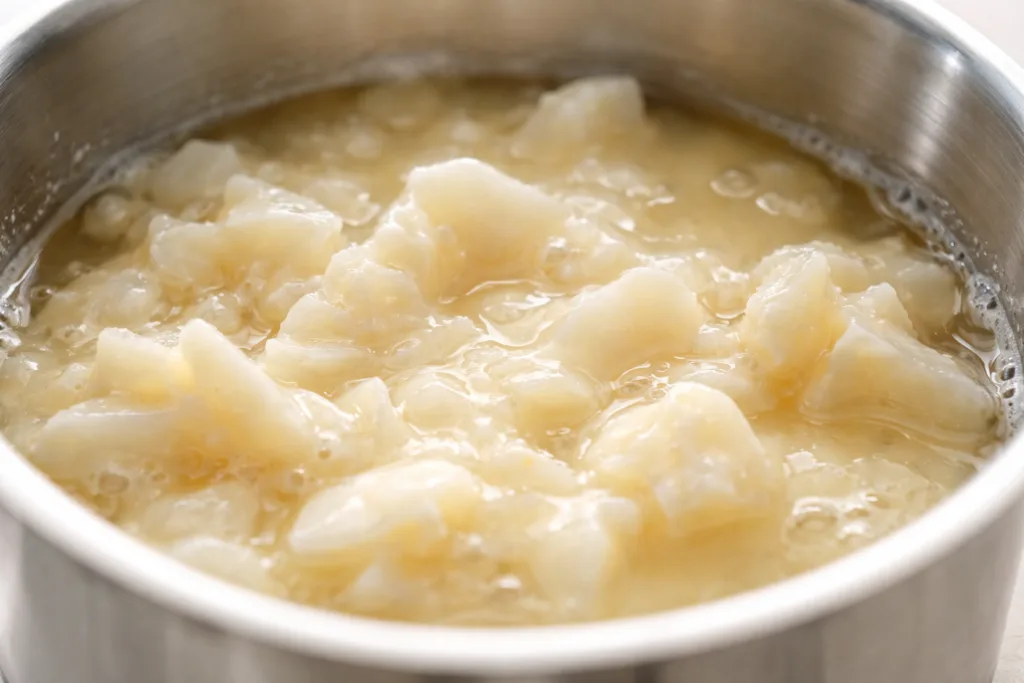
- Wax Melting: Precise temperature control (soy typically 70–80°C; coconut 65–72°C)
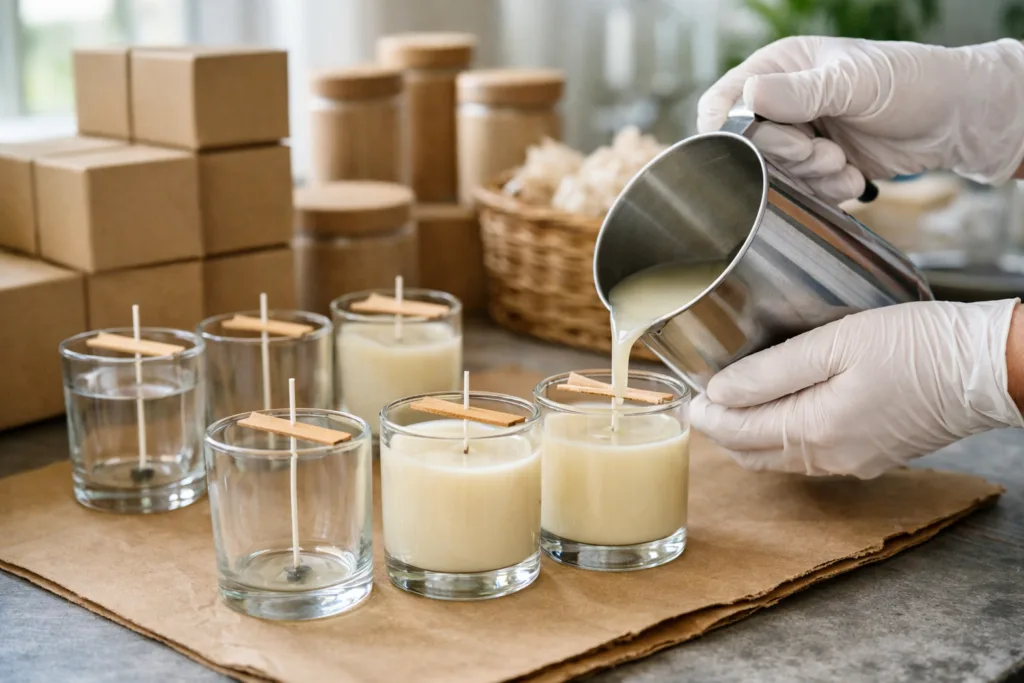
- Pour & Wick Setting: Hand pouring or semi-auto filling; wick centering tolerance ±1.5 mm
- Curing & QC: Minimum 7–14 days rest in controlled humidity for optimal scent throw and burn
- Safety Testing: Soot index, tunnel/burn test, stability validation
- Packaging & Labeling: CLP/IFRA, batch tracking, FSC/logo compliance
Quality Checks for Green Brands
- Fragrance dispersion uniformity across batch
- Burn time (target: 35–50 hours for 200g candle)
- Soot/soiling test (must pass <3% soot index)
- Wick trim and vessel centering verification
- Visual inspection for frosting, sweating, or top finish issues
Eco-Friendly Candle Custom Trends: Meeting the Market’s Hottest Needs
What are eco-responsive buyers requesting most? Trends include refillable containers, mono-material packs (no plastic inserts), and regionally inspired botanically based fragrance collections. Transparency—via full ingredient lists and carbon-neutral certifications—is non-negotiable. Green brands increasingly lean toward minimalist branding, scent names inspired by nature, and woven, plant-dyed wrappings as premium finishing touches.
The Value of Partnering with an Expert Manufacturer
Choosing a manufacturer who understands the nuances of eco-friendly candle custom production reduces risk, increases time to market, and supports brand storytelling. Circe Home, for example, brings seasoned natural candle OEM expertise: proprietary plant wax blends, fragrance compliance support, and sustainable packaging solutions tailored to luxury positioning. The right partner should offer lab documentation, small MOQ options, and prototypes to guarantee formula/packaging alignment with your green mission.
Frequently Asked Questions
What makes a scented candle truly eco-friendly?
A truly eco-friendly scented candle utilizes plant-based waxes like soy or coconut, clean-burning wicks, responsibly sourced containers, and sustainable packaging with FSC certification and ecological inks.
Which wax is best for eco-conscious custom candle manufacturing?
Soy and coconut wax blends are currently preferred for their clean burn, strong scent throw, and minimal environmental impact. Beeswax is also prized if sourced ethically, and rapeseed wax is gaining traction in Europe.
How can packaging be both elegant and sustainable?
Elegant, sustainable packaging leverages FSC-certified or recycled paperboard, minimal foil or ink, and design finishes like embossing. Labels communicate full compliance and recycled content for transparency.
What compliance and certifications are needed for green candles?
Essential certifications include FSC for packaging, IFRA and CLP for fragrance and labeling, and vegan/Leaping Bunny for ingredient transparency. Regional regulations may also apply for export.
How much fragrance load is safe for natural wax candles?
Professional plant wax candles generally hold 8–12% fragrance load by wax weight. Higher loads need careful compatibility testing to avoid leaching or pooling and to ensure compliance with IFRA standards.
What MOQ is normal for wholesale private-label eco-friendly candles?
Typical minimum order quantity (MOQ) ranges from 300–3,000 units, depending on the level of customization, vessel selection, and packaging requirements. Lower MOQs may be accepted for pilot projects.