
Envisioning a Custom Candle Scent: Laying the Groundwork
Crafting a signature candle scent begins well before wax meets fragrance oil. The process starts with precise communication between the brand and the perfumer, charting a course through fragrance development that leads to an evocative, market-ready result. For brands aiming to collaborate with an established perfume house—such as Circe Home, known for refined scent experiences, premium wax blends, and tailored OEM/ODM candle production—successful outcomes rely on clear intent, strategic feedback, and technical insight.
How to Develop a Unique Candle Scent With a Perfumer
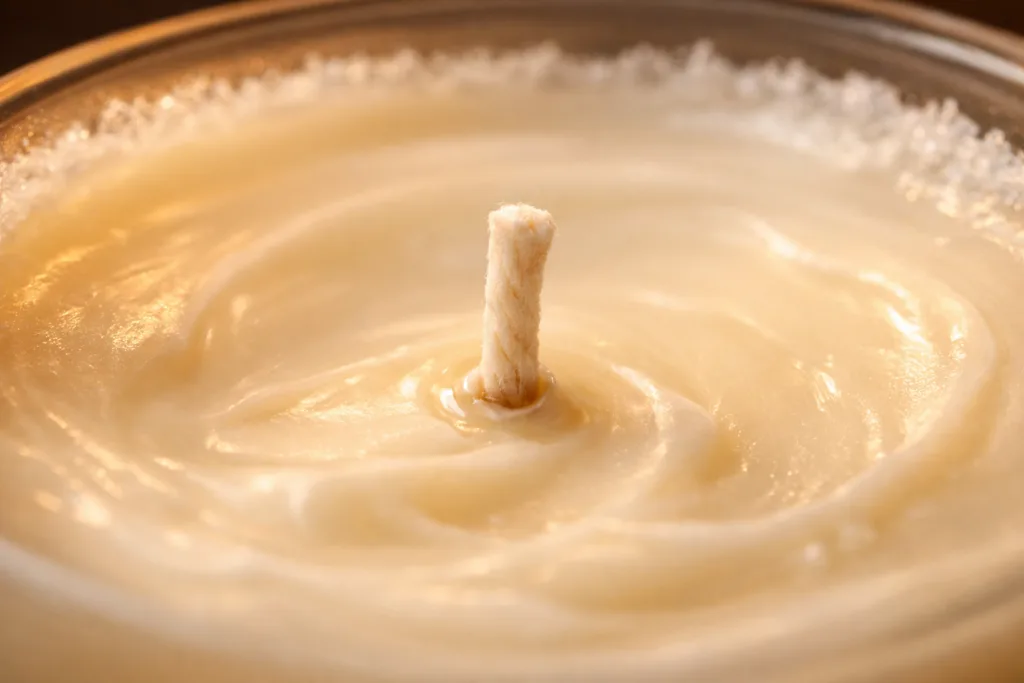
Whether you’re launching a luxury candle line or reinventing a classic, collaborating with a perfumer is both an art and a science. The journey includes multiple measured steps, from concept ideation and sample evaluation to scent positioning and compliance testing. Understanding the etiquette and process of communicating with perfumers ensures that your custom candle scent achieves a harmonious blend of market appeal and olfactory excellence.
Establishing Project Goals & Fragrance Direction
Before consulting with a perfume house, brands must define clear goals. Will the scent evoke serenity, stimulate energy, or reference a specific locale? Determining these objectives shapes fragrance development, influences ingredient selection, and sets benchmarks for performance attributes such as fragrance load, burn profile, and cold/hot throw.
- Define target demographic and emotional effect
- Reference mood boards or olfactive maps
- Highlight inspiration sources (nature, fashion, cuisine)
Perfumers at Circe Home, for example, recommend a concise scent brief—listing preferred fragrance families (e.g., woody, floral, gourmand), product format, and intended use scenario.
Effective Communication with a Perfumer
Building a working relationship with a perfumer is central to successful fragrance development. Precision and transparency are key throughout the communication cycle:
- Initial Consultation: Share detailed scent vision, technical specs, vessel type, wax blend, and anticipated burn time.
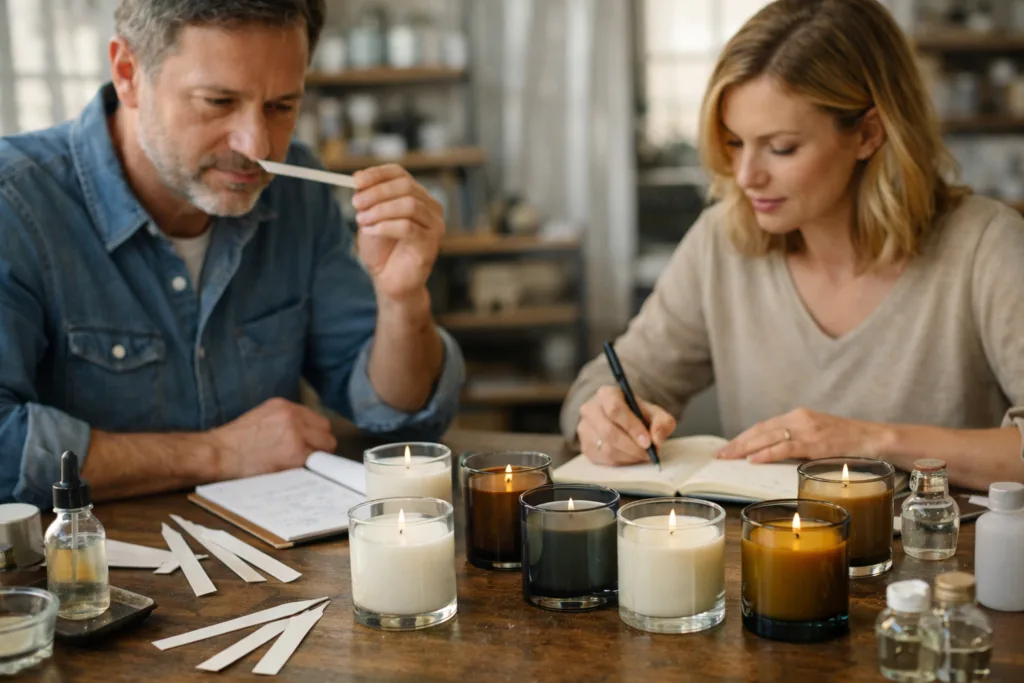
- Sample Feedback: Evaluate and communicate preferences against each initial sample (typically 3–6 iterations), noting throw, projection, and any allergen concerns.
- Scent Modifications: Articulate desired adjustments in top/middle/base notes, intensity, and compatibility by wax type (e.g., soy vs. coconut blends).
- Final Selection: Agree upon modifications and confirm compliance parameters for IFRA and CLP.
Circe Home Lab Insight: “Detailed feedback—focusing not just on scent profile, but also on technical aspects like wax load percentage, burn profile, and curing time—enables precise formulation and optimal fragrance performance.”
Fragrance Development: Sample Testing & Evaluation Process
Quality candle fragrance development typically cycles through several rounds of initial samples (3–6). Each prototype is poured in test vessels and evaluated for olfactive impact, scent throw, wax compatibility, and visual consistency:
- Review cold/hot throw side-by-side
- Assess clean burn, soot-free performance, wick responsiveness
- Monitor curing time and scent retention
- Note appearance factors: frosting, color separation, surface texture
Testing protocols should be standardized across batches, noting scent projection in different room sizes and environmental conditions.
Scent Positioning: Shaping Olfactive Identity
Scent positioning defines how your candle fragrance will be perceived in the marketplace. It requires aligning the olfactory profile with target consumer expectations, trend analysis, and brand ethos:
- Evaluate competitor candles for positioning gaps
- Decide on unique scent names and descriptors
- Choose a fragrance family that matches visual/packaging style
- Consider essential oil compatibility for natural claims
Luxury candle lines may opt for complex, layered blends (e.g., amber-oud-fig) while minimalist brands prefer single-note clarity.
Comparing Wax Blends for Custom Candle Scent Development
Wax base selection plays a crucial role in scent throw, burn profile, and aesthetics. Here’s a comparative overview:
| Wax Blend | Scent Throw | Burn Time | Visual Appearance |
|---|---|---|---|
| Soy | High (clean, moderate) | Long (~35+ hrs / 200g) | Frosting likely, creamy finish |
| Coconut | Strong (rich projection) | Medium (~30 hrs / 200g) | Smooth, glossy surface |
| Rapeseed | Moderate (soft diffusion) | Long (~40 hrs / 200g) | Matte, light color |
| Beeswax | Subtle (natural light throw) | Longest (~45+ hrs / 200g) | Golden hue, smooth |
| Hybrid Blend | Balanced (tailored strength) | Varies (per formula) | Custom appearance |
Technical Parameters: Fragrance Compatibility & Compliance
Optimal custom candle scent formulation depends on balancing fragrance load (typically 6–12% of wax weight), essential oil compatibility, and wick selection. All materials must meet IFRA 51st Amendment and CLP (EU) standards for allergen declaration and hazard labeling. Key checks include:
- Fragrance flash point vs. wax pour temperature
- Soot index and burn stability
- Wick sizing for vessel diameter and wax blend
- Allergen documentation and IFRA certificates
Container & Packaging Design: Product Differentiation
Collaborating with perfumers extends into container design, ensuring the vessel enhances scent throw and aesthetic resonance. Glass jars, ceramic pots, concrete vessels, and tins each offer distinct branding opportunities. Circe Home’s design team advises:
- Test vessel coatings for scent integrity
- Choose cap or foil toppers to retain fragrance
- Match label and box formats to scent positioning
- Plan for eco-friendly and FSC-certified materials
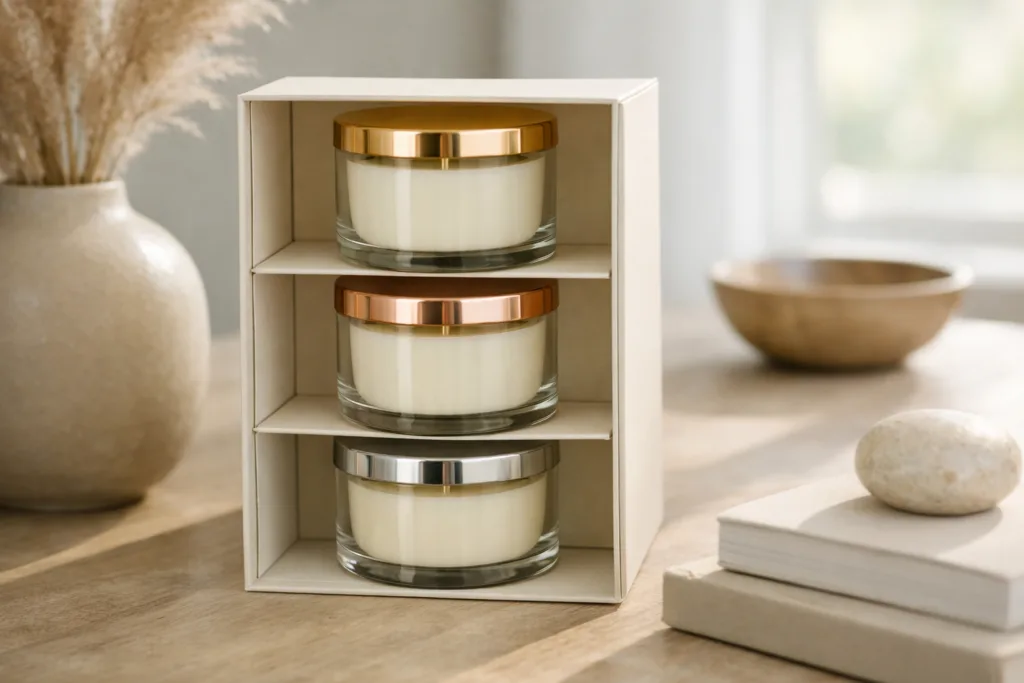
Packaging should reflect the candle’s olfactive theme—e.g., gold embossing for opulent blends, minimalist forms for Nordic scents.
Quality Control in Candle Fragrance Development
Final QC procedures ensure every candle meets premium expectations for safety, scent dispersion, and visual appeal. Each batch should undergo:
- Burn profile monitoring (optimized to avoid mushrooming and soot)
- Wax load and fragrance dispersion testing
- Visual checks (centering, topping, surface finish)
- Container heat resistance and label adhesion
Brands working with perfume houses should expect full traceability and batch documentation for all custom candle scents.
Ordering, MOQ, and Production Timeline
Production readiness is shaped by minimum order quantities (MOQ), customization level, and associated timelines. Standard MOQ with luxury OEM/ODM candle manufacturers runs from 500 to 2,000 units, depending on fragrance complexity, vessel size, and packaging design. Curing time for optimal scent retention generally ranges from 7–14 days post-pouring.
Applications for Custom Candle Scents
Unique candle scents can elevate private-label retail lines, spa or hotel amenities, wellness collections, and high-end home décor brands. The growing trend toward refill programs, compostable vessels, and soy ink labels reflects ongoing demand for sustainable luxury and responsible production.
Frequently Asked Questions
How many fragrance samples are typical during custom scent development?
Most perfume house collaborations involve 3–6 initial samples, allowing for iterative feedback and modifications based on scent projection, burn profile, and compliance.
What details should I include when briefing a perfumer?
Include target emotion, fragrance family preference, wax type, vessel style, desired burn time, and any allergen restrictions to guide technical formulation.
How is scent throw optimized in candles?
Scent throw relies on selecting compatible wax blends, setting the correct fragrance load, and engineering the wick for even, soot-free burning and optimal dispersion.
What is the minimum order quantity for custom candle scent production?
MOQ typically ranges from 500 to 2,000 units, depending on blend complexity, vessel choice, packaging, and level of fragrance customization.
Are natural essential oils recommended for strong candle throw?
Essential oils can offer natural scent profiles but often have throw limitations. Blends with select fragrance oils provide longer-lasting, richer projection.
How can packaging enhance the perception of a custom candle scent?
Luxury packaging, such as embossed glass, foil caps, and custom labels, creates emotional engagement, reinforces olfactory identity, and boosts shelf appeal.