
 Introduction to Candle Container Performance
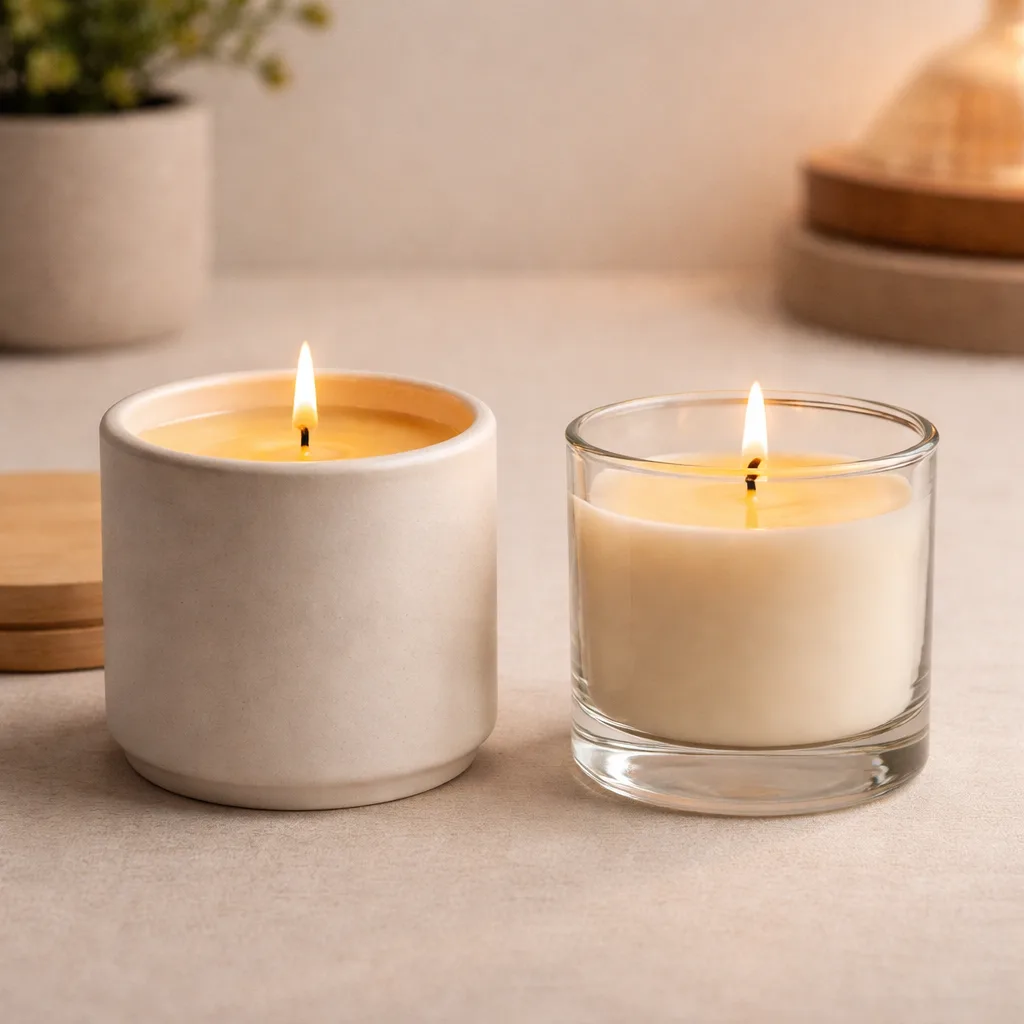
When choosing between a ceramic jar candle vs glass candle, many people focus on appearance. However, heat retention plays a crucial role in burn quality, fragrance performance, safety, and longevity.
At Circe Home, we understand that the container is not just a decorative shell. It is an active part of how a candle performs. The material of the jar affects how quickly the wax melts, how evenly the wax pool forms, how fragrance diffuses, and how safe the container remains during burning.
Understanding heat retention helps brands and consumers make informed decisions. In this guide, we explore the science behind ceramic and glass containers and determine which performs better in real-world use.
The Science of Heat Retention in Candle Containers
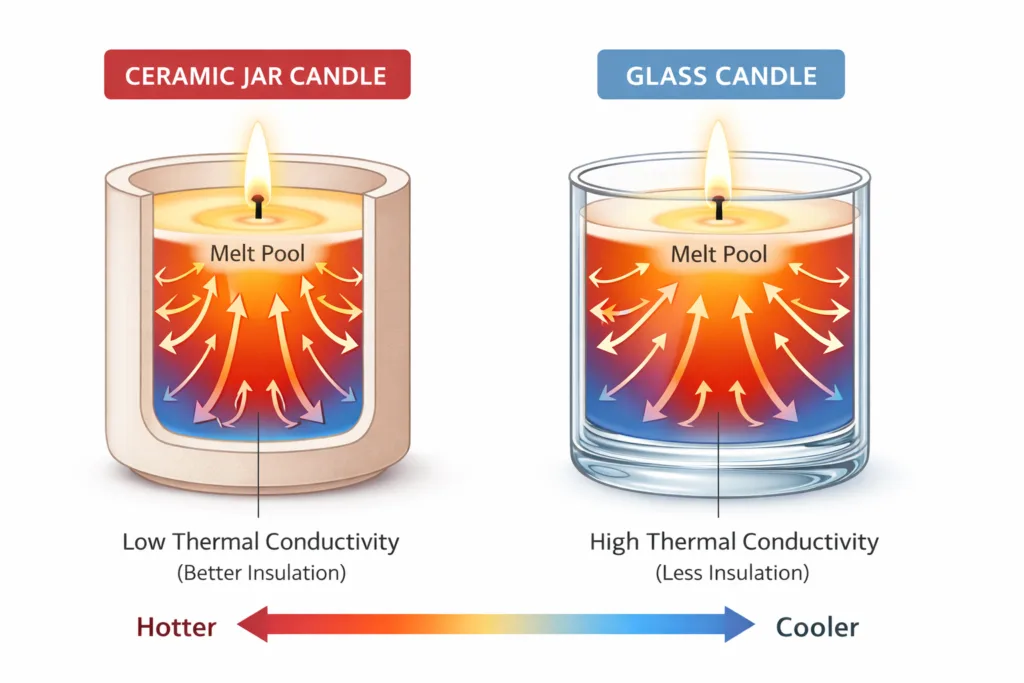 Heat retention refers to how well a material absorbs, stores, and gradually releases heat. In candle making, this directly influences wax melting and fragrance evaporation.
Thermal Conductivity Explained
Thermal conductivity measures how quickly heat moves through a material.
Glass has moderate thermal conductivity. It transfers heat relatively quickly from the flame to the outer wall. Ceramic typically has lower thermal conductivity, meaning it absorbs heat and releases it more slowly.
Lower conductivity usually means better heat retention. Ceramic jars warm up gradually and hold heat longer, which can help maintain a stable melt pool during the burn cycle.
Heat Distribution and Wax Pool Formation
A proper wax pool should reach the edges of the container, melt evenly, and avoid tunneling. Tunneling happens when wax melts only in the center and leaves unused wax along the sides.
Ceramic jars tend to provide more stable heat distribution because they warm up slowly and maintain consistent internal temperature. Glass jars heat up faster but may cool down more quickly when the flame is extinguished. This difference can affect melt consistency in cooler environments.
What Is a Ceramic Jar Candle?
A ceramic jar candle uses a container made from fired clay materials such as porcelain, stoneware, or earthenware. These materials are shaped, dried, and fired at high temperatures to create a dense and durable structure.
Material Composition and Structure
Ceramic is created by shaping natural clay, drying it carefully, and firing it at temperatures often above 1000°C. A glaze may be added for strength, moisture resistance, and decorative finish.
Because ceramic walls are often thicker than glass, they naturally provide better insulation. Thickness plays an important role in heat retention and safety.
Benefits of Ceramic for Heat Retention
Ceramic jars offer superior insulation, stable internal temperature, reduced rapid cooling, and lower risk of sudden thermal shock. Since ceramic retains heat longer, it helps maintain a consistent wax pool, especially in cooler rooms or during longer burn sessions.
For luxury candle brands, ceramic provides both performance stability and a premium tactile experience.
What Is a Glass Candle?
A glass candle uses a transparent or colored glass container to hold wax. Glass is one of the most popular candle container materials worldwide.
Types of Glass Used in Candle Jars
Common glass types include soda-lime glass, tempered glass, and borosilicate glass. Soda-lime glass is the most common and cost-effective. Tempered glass offers improved strength. Borosilicate glass provides enhanced heat resistance and is often used in laboratory glassware.
Heat Characteristics of Glass
Glass heats up quickly and transfers heat efficiently. This allows the wax near the container wall to melt faster during the initial burn. However, glass also cools faster once the flame is extinguished.
Because of this rapid heat transfer cycle, glass containers may require longer first burns to prevent tunneling, particularly in colder environments.
Direct Comparison: Ceramic vs Glass Heat Retention
| Feature | Ceramic Jar Candle | Glass Candle |
|---|---|---|
| Heat Retention | High | Moderate |
| Warm-Up Speed | Slower | Faster |
| Cooling Speed | Slower | Faster |
| Insulation | Strong | Moderate |
| Thermal Shock Resistance | Very Good | Depends on thickness |
Overall, ceramic generally performs better in heat retention due to lower thermal conductivity and thicker wall structure.
Impact on Burn Time and Fragrance Throw
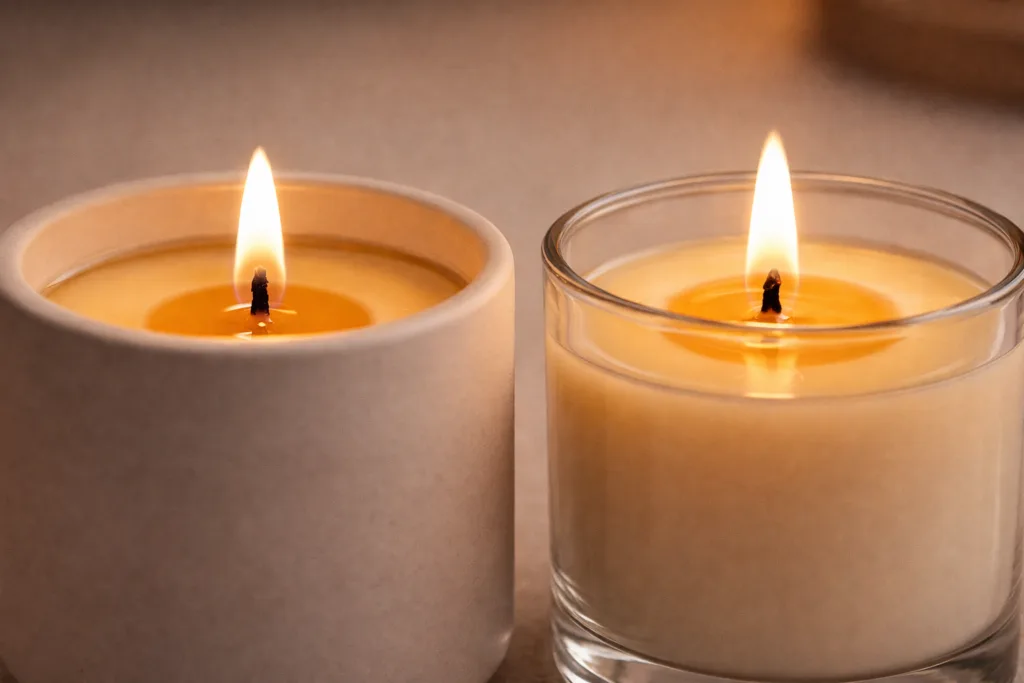 Heat retention directly influences wax consumption rate and fragrance evaporation speed.
Ceramic’s stable temperature often results in more controlled wax melt, consistent fragrance release, and slightly extended burn duration. The scent experience feels smoother and more balanced over time.
Glass may provide a faster initial scent throw because it heats quickly. This can create a stronger early fragrance burst, but wax may also be consumed slightly faster depending on wick size and wax formula.
For brands focused on luxury home fragrance experiences, ceramic often supports a more refined scent journey.
Safety Considerations in Heat Management
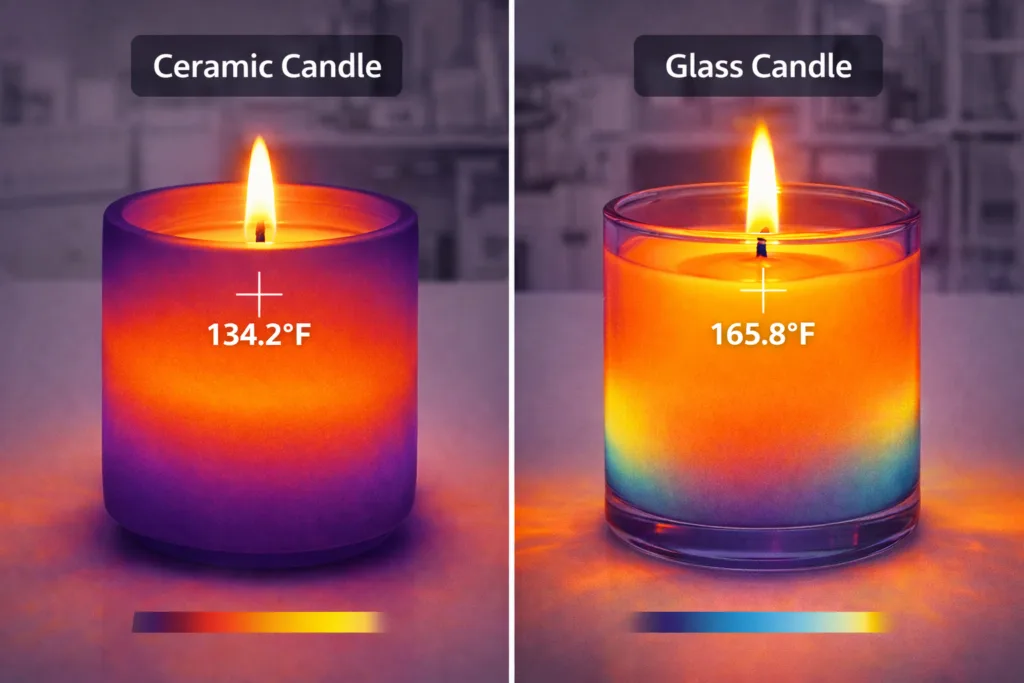 Safety is essential when comparing ceramic jar candle vs glass candle options.
Ceramic advantages include lower risk of cracking under gradual heating and thicker walls that reduce external surface temperature. This can make the outer surface more comfortable to touch after burning.
Glass risks include potential cracking from thermal shock if the material is thin or exposed to sudden temperature changes. However, high-quality tempered or thick glass remains safe when properly manufactured and tested.
At Circe Home, all containers undergo heat resistance testing and flame stability evaluation to meet international safety standards.
Environmental and Sustainability Factors
Both ceramic and glass are recyclable materials, but sustainability depends on production methods and reusability.
Ceramic jars are long-lasting and highly reusable. After the candle is finished, the jar can serve as a storage container, planter, or decorative piece.
Glass jars are fully recyclable in many regions and allow easy cleaning for refill systems. Brands focused on refill programs may prefer glass for transparency and recycling convenience.
When paired with natural soy or coconut wax, both container types can support environmentally responsible candle production.
Design, Aesthetic, and Branding Considerations
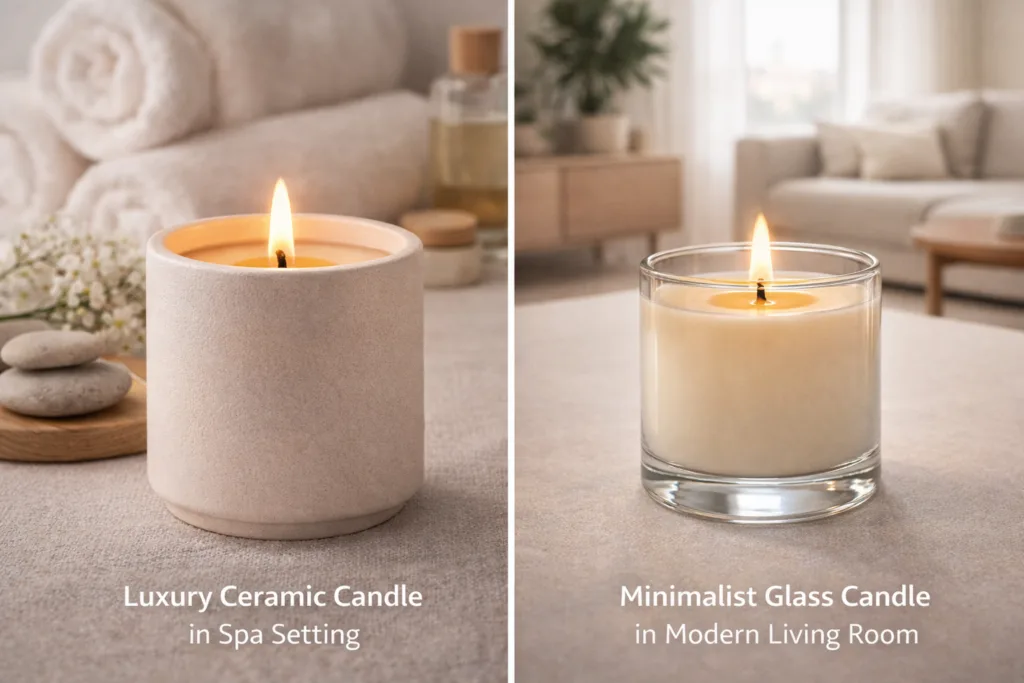 Ceramic offers matte finishes, textured surfaces, handcrafted appeal, and a premium luxury look. It feels warm and artisanal.
Glass offers transparency, modern minimalism, easy color customization, and visibility of wax color. It fits well in contemporary retail environments.
Luxury boutique brands often choose ceramic to emphasize craftsmanship, while large retail brands frequently select glass for scalability and cost efficiency.
Cost and Manufacturing Differences
Ceramic production requires higher firing energy, custom mold development, and sometimes hand-finishing. This increases production cost but enhances exclusivity.
Glass production benefits from large-scale industrial manufacturing. Unit costs are typically lower at high volumes, making glass ideal for mass-market distribution.
Ceramic is generally more expensive but supports premium positioning and perceived value.
Practical Applications: Which Is Best for Different Settings?
| Setting | Recommended Option |
|---|---|
| Luxury hotels | Ceramic |
| Spa environments | Ceramic |
| Retail gift lines | Glass |
| Mass-market products | Glass |
| Premium gifting | Ceramic |
If heat retention and luxury perception are priorities, ceramic is often the stronger choice.
How Circe Home Engineers High-Performance Candle Containers
At Circe Home, we use high-density ceramic formulations, conduct thermal shock testing, and optimize wall thickness for balanced insulation. We carefully pair containers with natural soy and coconut wax blends to ensure efficient melt pool formation.
Our design team also evaluates wick size, fragrance load, and container diameter to ensure each ceramic jar candle vs glass candle product performs consistently.
Through continuous research and development, Circe Home delivers candle containers that combine beauty, safety, and thermal performance.
Expert Recommendations for Buyers and Brands
Choose ceramic if you want superior heat retention, aim for luxury positioning, and prefer stable fragrance diffusion.
Choose glass if you need cost efficiency, prefer transparent aesthetics, or want quicker initial fragrance release.
For premium home fragrance collections, ceramic often offers measurable performance advantages in heat retention and long-term burn stability.
Frequently Asked Questions (FAQ)
1. Does ceramic make candles burn longer?
Yes. Ceramic’s better heat retention can support more consistent melting, which may slightly extend burn time depending on wax type and wick size.
2. Is glass safer than ceramic for candles?
Both materials are safe when properly manufactured. Thick ceramic typically handles gradual heat changes very well, while high-quality tempered glass is also reliable.
3. Which container gives stronger fragrance throw?
Glass may produce a faster initial fragrance release, while ceramic often provides more stable and long-lasting scent diffusion.
4. Can ceramic jars crack from heat?
High-quality fired ceramic is highly heat-resistant. Cracking is rare unless the jar experiences physical impact or extreme temperature shock.
5. Are ceramic candles more eco-friendly?
Ceramic jars are highly reusable and durable, making them environmentally friendly over long-term use.
6. Which is more expensive?
Ceramic jars usually cost more due to firing processes and craftsmanship requirements. Glass jars are typically more cost-effective at scale.
Conclusion
When comparing ceramic jar candle vs glass candle performance, ceramic clearly performs better in heat retention due to its insulating properties and stable thermal behavior. Glass remains practical and affordable, but for premium performance and controlled fragrance diffusion, ceramic stands out.
At Circe Home, we help brands choose the ideal container for performance, safety, and design excellence.