
Why Packaging Defines a Modern Candle Brand
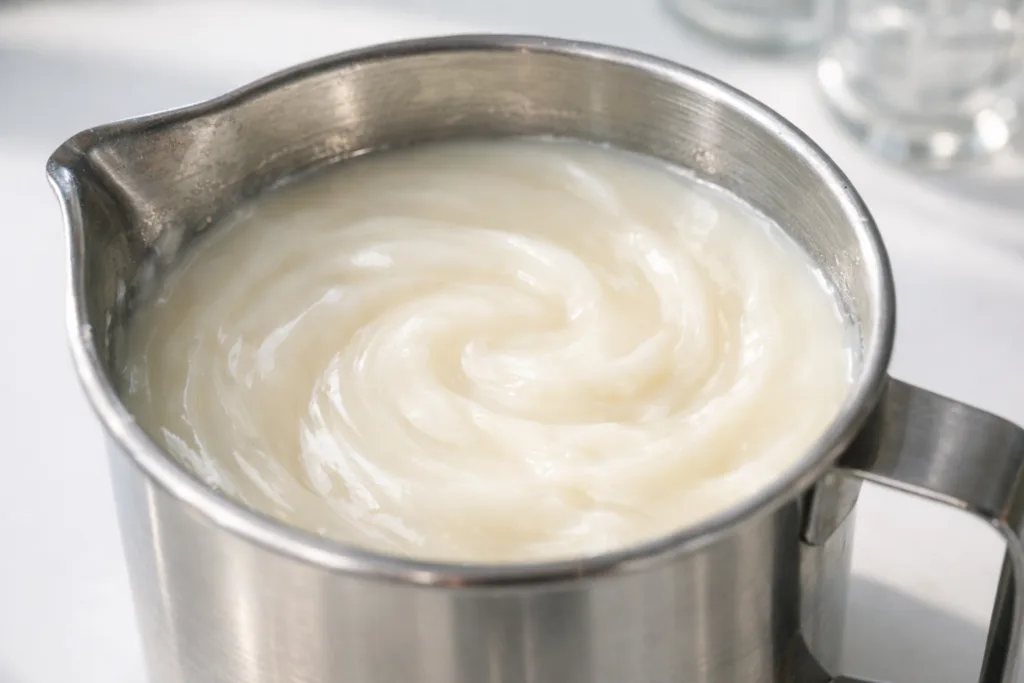
Custom boxes, elegant presentation, and sustainable choices are no longer optional; today, they anchor brand perception and influence buyer loyalty. While artisanal blends and unique scents attract the senses, it is exceptional packaging that delivers that unmistakable feeling of luxury and identity—especially for direct-to-consumer and premium retail brands.
First Impressions Set Value
Packaging frames every user’s first encounter and links your product to emotions—gifting, self-care, or minimalism. Materials, structural design, and finish quality affect willingness to purchase and perceived price point.
Storytelling through Design
Custom box formats support branding elements: logo placement, scent stories, ingredient transparency, and color palettes. Luxury boxes convey a refined touch—magnetic closures, foil accents, or rich-texture cartons—while environmentally friendly choices signal responsibility and modern values.
Choosing Your Candle Wax: Performance and Brand Positioning
Wax selection shapes both candle performance and your brand’s values. High-end brands often feature clean-burning, premium blends that amplify fragrance and visual appeal. Consider these common options:
| Wax Type | Scent Throw | Burn Time | Sustainability |
|---|---|---|---|
| Soy | Strong | Long | High |
| Coconut | Very Strong | Moderate | Excellent |
| Beeswax | Natural, Soft | Very Long | Good |
| Rapeseed | Strong | Long | Very High (EU |
| Paraffin (rare in luxury) | Intense | Moderate | Low |
Formulation Steps for Custom Blends
- Define target burn profile and visual aesthetic
- Assess fragrance oil compatibility with each wax base
- Adjust wax ratios for optimal cold & hot throw
- Test maximum fragrance load (typically 8–11%)
- Monitor for frosting, sweating, or sink holes post-cure
Circe Home Lab Insight: For velvety texture, pair coconut wax with a high-stability soy carrier; this blend offers clean burn and holds up to 12% fragrance load with minimal frosting, ideal for premium gift lines.
Fragrance Systems: Balancing Art and Technical Precision
Your candle’s signature scent defines its range—that requires careful aroma development, technical testing, and legal compliance. Whether offering a minimalist bergamot blend or a complex luxury accord, fragrance must be both memorable and safe.
Natural vs. Synthetic Oils
- Essential Oils: All-natural, require compatibility checks due to flash point. Can limit scent complexity & intensity.
- Fragrance Oils: Offer greater projection and layering. Ensure allergens are declared and oils are IFRA-compliant.
Optimizing Cold & Hot Throw
Maximize fragrance retention through precise blending temperature (usually 70–75°C), adjusting for wax type and oil flash point. Allow adequate cure time—soy or coconut blends may need 10–14 days for scent stability before boxing.
Selecting Wick & Vessel for the Ultimate Burn Profile
The interplay between wick architecture and vessel type is critical for luxury performance: clean, soot-free burn and optimal melt pool formation across varied wax formulas. Vessel material also tells your brand’s visual story.
Wick Choices
- Cotton: Classic, biodegradable, best for most blends.
- Wood: Creates crackling sound, unique visual, pairs well with coconut and beeswax.
- Paper-core: Good for paraffin, less used in eco-premium lines.
Container & Aesthetic Options
- Frosted, clear, or colored glass (most common and recyclable)
- Matte ceramics or concrete (trending for minimalist lines)
- Embossed tin or powder-coated metal for travel/gift sets
Ensure vessel selection matches wax expansion tolerance, labeling space, and cap/safety requirements.
Custom Boxes & Luxury Packaging: Design-Driven Advantage
Custom boxes not only protect but extend the luxury narrative—shapes, coatings, and print effects all contribute to a multi-sensory experience your customers will remember and share. Personalized packaging is essential for market differentiation and storytelling.
Packaging Innovations for New Brands
- Rigid board boxes with soft-touch or velvet lamination
- Foil stamping for logos or scent names
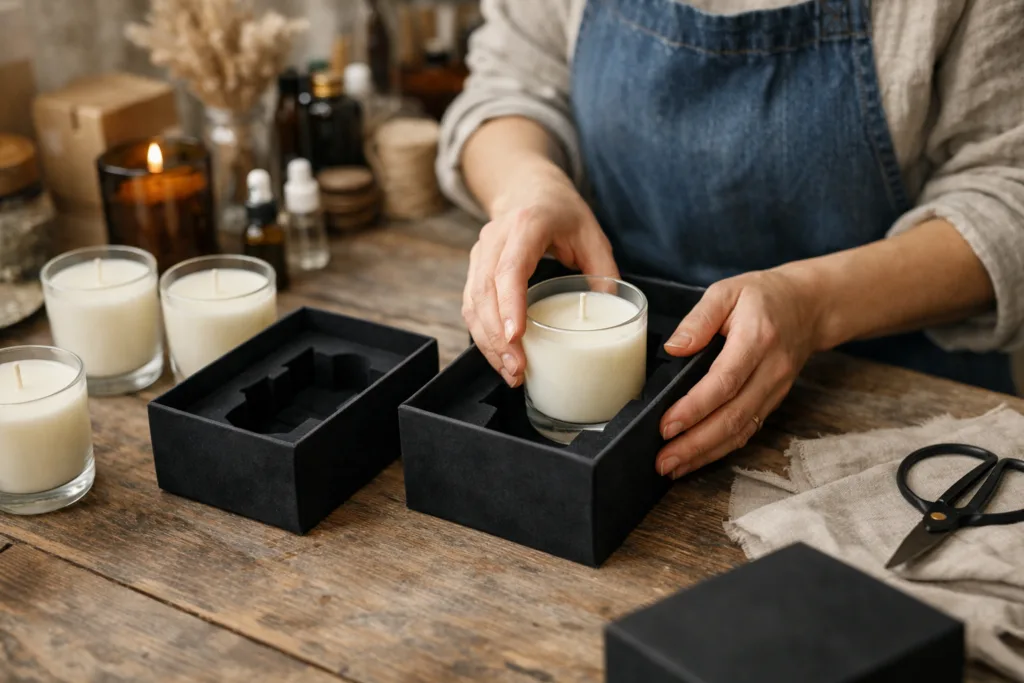
- Die-cut inserts for stability and unboxing drama
- Magnetic closures, ribbon pulls, or debossed patterns
- Refillable systems or minimal-waste formats (molded pulp, compostable trays)
Eco-Responsible Choices
Opt for FSC-certified boards, recycled content, soy or water-based inks. Highlight certifications and materials on pack or web—clarity around eco-value builds trust, especially for gifting and wellness audiences.
Production Process: From Pour to Packaging
Launching a candle brand involves more than inspired blending; consistent technical quality ensures repeat purchase and compliance at scale. The process must be precise and repeatable, from wax melting to the moment each candle leaves its custom box.
- Wax Melting: Control temperature based on blend: typically 65–85°C, avoiding overheating to preserve scent molecules.
- Pre-pour Prep & Wick Placement: Vessels cleaned, wicks glued precisely at center, wick holders in place.
- Fragrance Blending & Pour: Fragrance added between 65–70°C, constant stirring for full integration, poured in small batches for visual consistency.
- Cool & Cure: Unmold or move to cooling racks; allow specified cure time (7–14 days) for stable scent and structure.
- Finishing: Level wick length (typically 5–7mm), inspect for surface imperfections, clean vessels.
- Boxing: Candles inserted into custom die-cut packaging, checked for fit, orientation, and protective closure.
Quality & Compliance Checks
- Test burn (at least 3 per batch): uniform melt pool, >35hr for 200g candle
- Soot index measurement; ensure no visible blackening of vessel
- IFRA compliance for all fragrance components
- CLP labeling if sold in EU: hazard icons, allergen declarations
- Barcode, batch code, safety warnings on pack
Candle Packaging Applications: Gifting and Lifestyle Positioning
Luxury packaging unlocks multiple markets—freestanding retail, branded gifting, boutique hotel and spa amenities, and high-concept minimalist home décor. Package design can distinguish your candles as both sensory objects and collectible art.
Trending Applications
- Refined gifting: Insert sets, custom sleeves, and personalized greetings
- Spa & hotel: Monogrammed tins, local botanicals, travel-friendly boxes
- Minimalist home décor: Undecorated, matte boxes, subtle foil details
- Seasonal launches: Limited-edition colors, embossing, or collaborative artist wraps
Circe Home Lab Insight: For private-label launches, request sample runs of custom packaging to test both product fit and courier durability. Subtle tweaks to box thickness or insert shape often prevent damage during scale-up shipping.
Regulatory Compliance and Sustainability
For luxury or international candles, compliance is not just legal—it’s a brand pillar. Packaging should clearly reflect safety and sustainability standards, boosting buyer confidence.
Key Requirements
- IFRA 51st Amendment: Global fragrance safety for skin and inhalation
- CLP (EU): Clear allergen, hazard icons—required for all scented candles
- Eco-Certification: Use of FSC paper, soy ink, and recycling marks
- Refill or zero-waste programs: Marketable for luxury eco lines
Cost, MOQ & Partnering with Artisanal Manufacturers
Custom packaging and luxury components require careful planning. Minimum order quantities are dictated by custom mold/tooling costs but flexibility is increasing, especially for direct-to-consumer start-ups.
What Influences Per-Unit Cost?
- Outer box material (rigid board higher cost than coated folding)
- Custom inserts, metallic foils, or spot UV effects
- Multi-part or magnetic closures
- Eco-packaging or refill options may have higher initial cost but boost perceived value
- Volume: Larger runs drastically lower per-unit packaging cost
Work with an OEM/ODM specialist like Circe Home for blended wax development, fragrance compliance, and one-stop packaging sourcing. Their lab support and production flexibility can help you scale while maintaining design rigor and responsible supply chain choices.
How to Launch a Candle Brand with Custom Boxes & Luxury Packaging: Final Steps
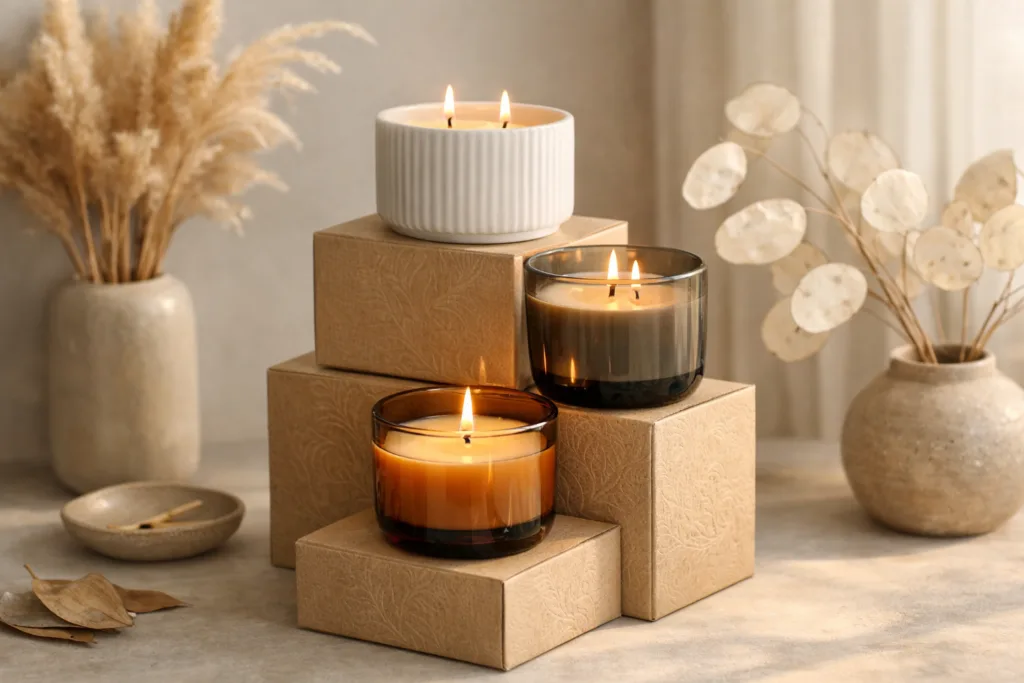
Launching a distinctive candle brand requires a harmony of design, materials knowledge, and compliance detail. Prioritize the tactile and visual experience of your custom box; let every decision—from wax blend to carton finish—extend your brand promise. Seek partners with proven technical depth and packaging innovation. Candle buyers remember the feel of your packaging as much as the scent itself—use both to create a lasting legacy in the luxury segment.
Frequently Asked Questions
What is the minimum order for custom candle packaging?
Minimum order quantities (MOQs) for custom packaging typically start at 500–1,000 units, depending on materials and design complexity. Some manufacturers can accommodate smaller runs with slightly higher per-unit costs.
How do I ensure my candle packaging is eco-friendly?
Choose FSC-certified papers, recycled cardboard, soy-based inks, and minimal-plastic finishes. Request certifications and highlight eco-features clearly on your packaging inserts or product page.
What are the most popular luxury box finishes?
Soft-touch lamination, matte or velvet coatings, foil stamping, and debossed details are common in luxury collections. Magnetic closures and ribbon pulls are also favored for upscale gifting.
How long should candles cure before packaging?
Allow candles to cure for 7–14 days, depending on blend and fragrance load. Adequate curing ensures stable scent throw and prevents surface defects after boxing and transport.
Which compliance labels are mandatory for scented candles?
CLP labeling is mandatory for sales in Europe and IFRA compliance for all fragrance components globally. Labels must include allergens, batch codes, and safety warnings.
Can I mix essential oils and fragrance oils in custom candles?
Yes, blending essential and fragrance oils is common. Always verify compatibility, possible allergen content, and legal limits based on your chosen wax system and market.