
Introduction: Why Tealight Candles Dominate the Wedding Market
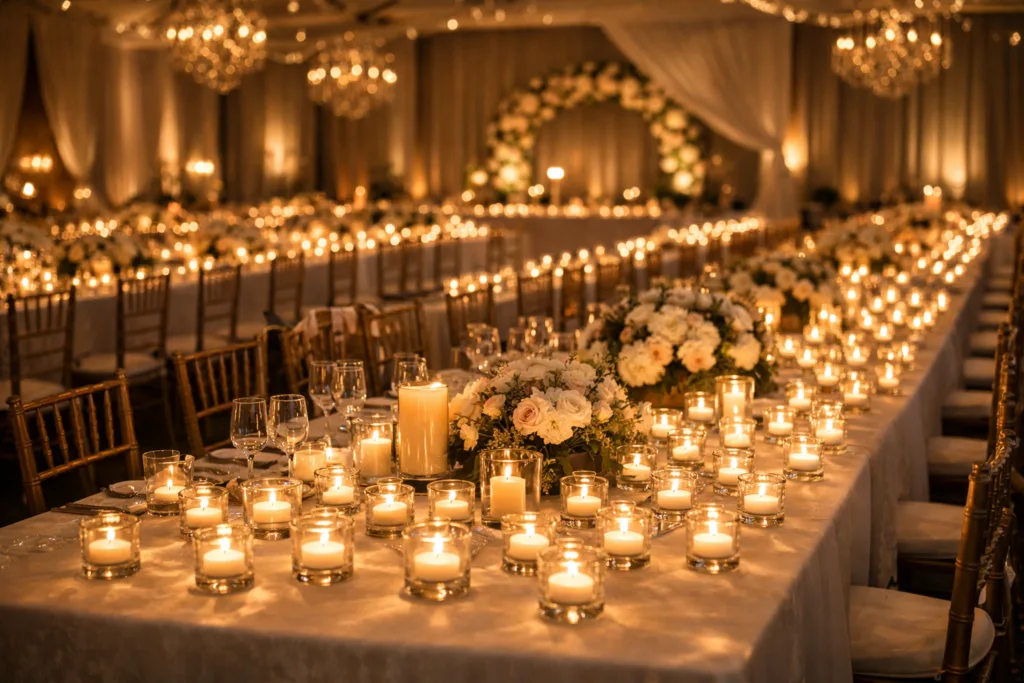
In the global wedding industry, few products deliver the same combination of scalability, consistency, and predictable demand as tealight candles. While decorative candles such as pillars, votives, or luxury jar candles attract attention, tealights quietly power the entire ambiance of most wedding setups.
They are not the centerpiece—but they are everywhere.
From reception tables to aisle lighting, from glass holders to floating arrangements, tealight candles are used in large quantities to create layered, warm lighting environments. For retailers and event brands, this makes them one of the most reliable high-volume products in the candle category.
Unlike premium scented candles that rely on branding and emotional appeal, tealight candles operate on a different business model entirely: low margin per unit, high turnover, and repeat purchasing behavior.
Why Weddings Use Tealight Candles in Large Quantities
High-Density Lighting with Minimal Cost
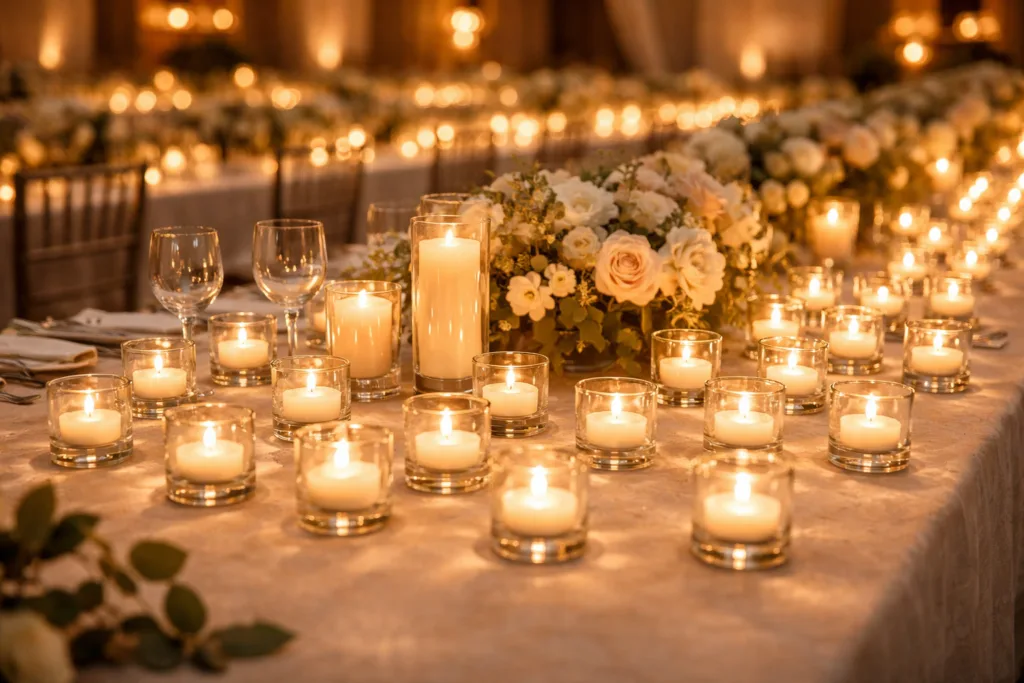
Tealight candles are designed for quantity-based visual impact. A single table setup can easily incorporate 5 to 15 tealights, depending on styling preferences. Instead of relying on one large candle, designers build atmosphere through repetition.
This creates a scalable visual effect where cost remains controlled while ambiance improves significantly.
Soft, Even Light Distribution
The small flame size produces a consistent, low-intensity glow. When multiplied across dozens or hundreds of units, the result is a balanced lighting environment that avoids harsh shadows.
This is particularly important for photography, dining experiences, and overall event mood.
Standardized Size for Universal Use
Most tealight candles follow a standard size (approximately 38mm diameter), allowing them to fit seamlessly into a wide range of holders, lanterns, and decorative containers.
This compatibility reduces complexity for buyers and simplifies sourcing decisions.
Practical Safety Advantages
Encased in aluminum or polycarbonate cups, tealight candles are stable and less prone to tipping compared to taller candles. This makes them suitable for crowded table settings and high-traffic event environments.
The Core Business Model: Low Margin, High Volume
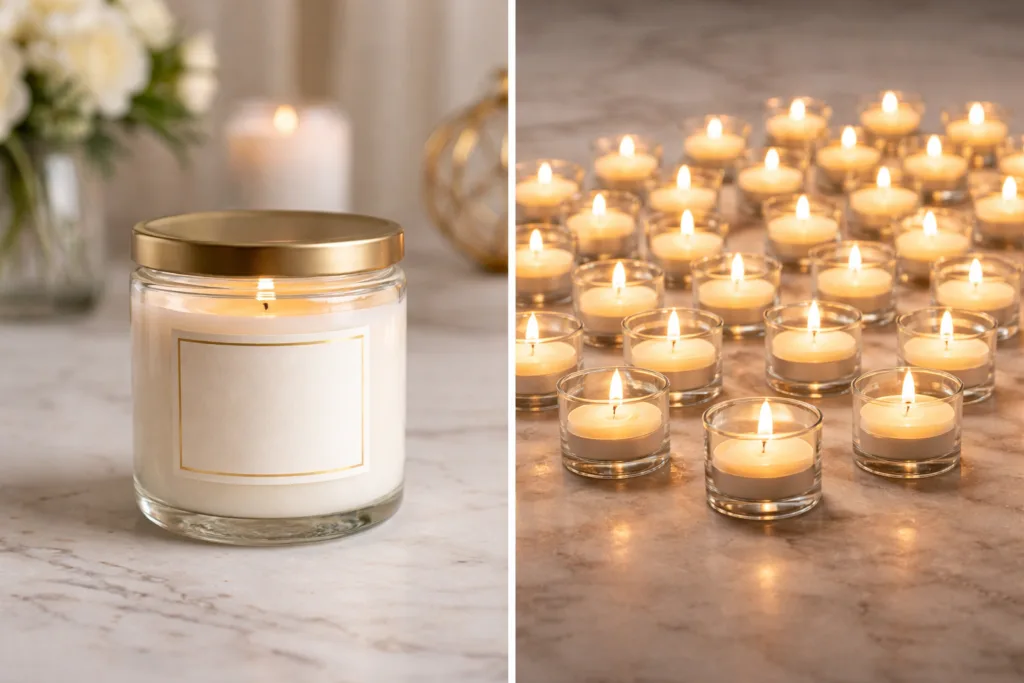
Not About Unit Profit—About Total Order Value
Tealight candles are one of the clearest examples of a volume-driven product.
Typical unit pricing may range from $0.03 to $0.08 depending on burn time, material, and packaging. However, order quantities are rarely small.
A single customer may order:
- 1,000 units for a small event
- 5,000–10,000 units for seasonal demand
- 50,000+ units for large distributors or chain retailers
The result is a business model where profitability is driven by total volume rather than margin per piece.
A Built-In Repeat Purchase Cycle
Unlike decorative home candles, tealight candles are consumables. Once used, they must be replaced.
This creates a recurring demand pattern:
- Weekly weddings and events
- Seasonal peaks (spring and summer)
- Hospitality and restaurant usage
For wholesalers and retailers, this translates into predictable reorder cycles and stable cash flow.
Low Inventory Risk Compared to Trend Products
Tealight candles are not trend-sensitive. White, unscented tealights remain the industry standard across all markets.
This means:
- Minimal risk of unsold inventory
- Long shelf life
- No dependence on changing design trends
Retailers can confidently stock large quantities without worrying about obsolescence.
Wholesale Buying Considerations
Burn Time Selection
Burn time is one of the most critical specifications.
Common options include:
- 2-hour tealights (short events)
- 4-hour tealights (standard weddings)
- 6–8 hour tealights (extended events or outdoor use)
For most wedding applications, 4 to 6 hours is considered optimal.
Wax Type
The choice of wax impacts both cost and positioning.
- Paraffin wax: cost-effective and widely used
- Soy blend: marketed as eco-friendly
Buyers targeting sustainability-focused customers may opt for soy blends, though paraffin remains dominant in bulk applications.
Cup Material
- Aluminum cups: industry standard, lowest cost
- Clear PC cups: premium appearance, suitable for visible setups
The choice depends on whether the candle will be visible or placed inside holders.
Packaging Options
Packaging affects both logistics and retail presentation.
Typical formats include:
- Bulk bags (50–100 pcs)
- Shrink wrap packs
- Printed retail boxes
Efficient packaging reduces shipping costs while maintaining product protection.
Logistics Efficiency: A Hidden Advantage
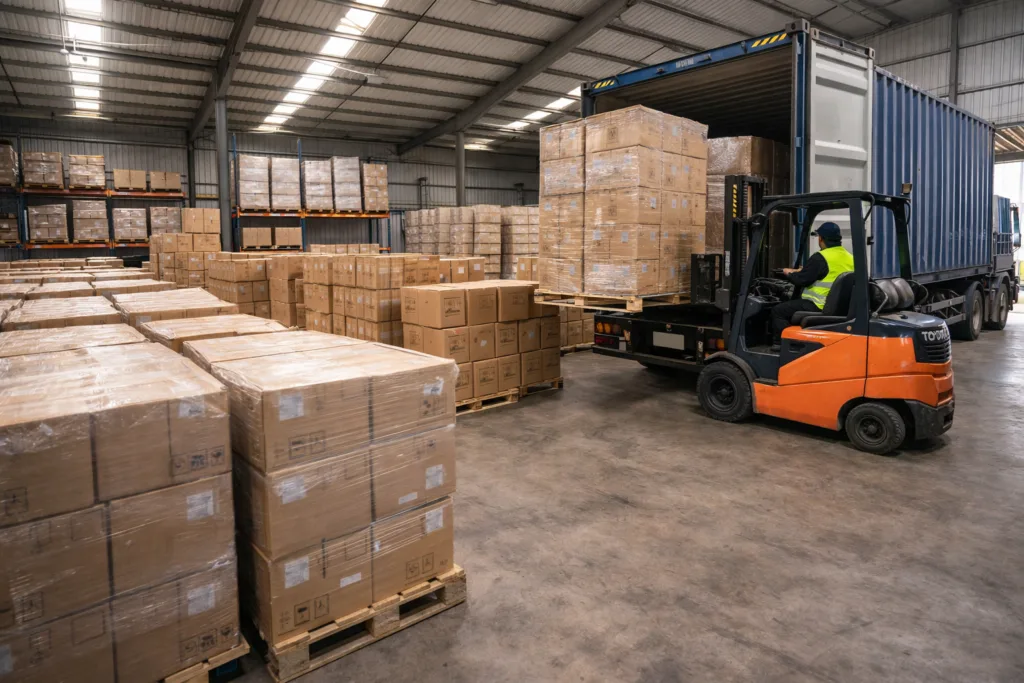
High Container Utilization
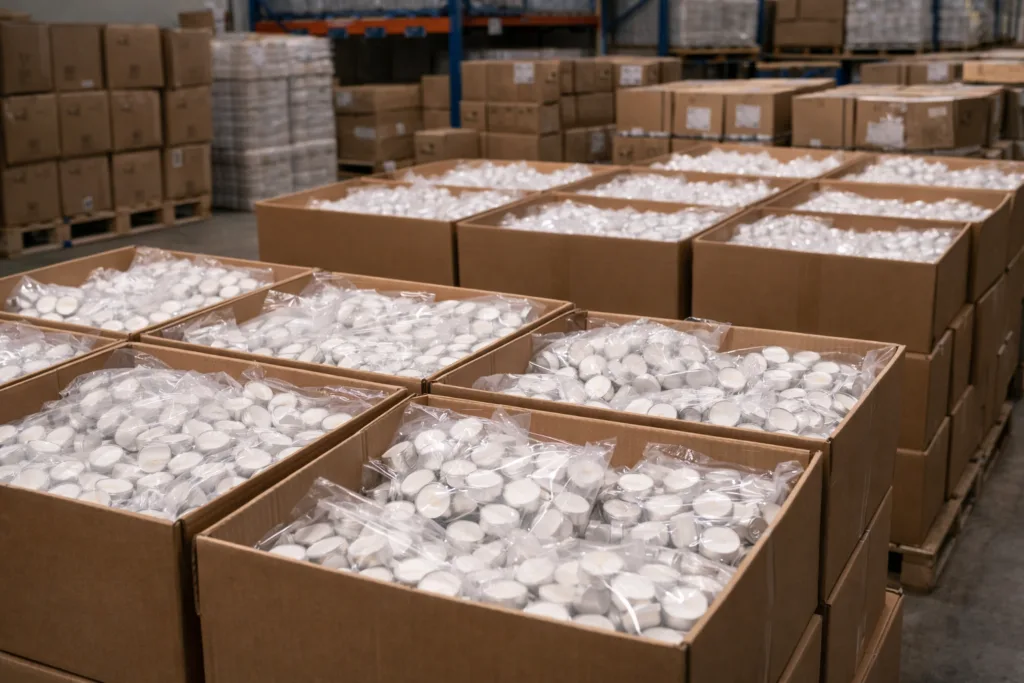
Due to their small size, tealight candles can be packed at extremely high density.
A single container can hold hundreds of thousands of units, dramatically reducing cost per piece in transportation.
Lightweight Structure
Compared to glass jar candles, tealights have significantly lower weight, further lowering freight costs.
Low Breakage Risk
Without fragile components like glass vessels, tealights are less prone to damage during shipping. This reduces loss rates and improves overall supply chain efficiency.
Customization Opportunities (Without Complexity)
While tealight candles are primarily standardized products, there are still opportunities for differentiation:
- Scented tealights for premium events
- Colored wax for themed weddings
- Branded packaging for retail or gifting
However, successful suppliers maintain a balance between customization and efficiency, ensuring that production remains scalable.
Target Buyers in the Wedding Tealight Market
Tealight candles are widely used across multiple buyer segments:
Event Planners
Require large quantities for single events and ongoing projects.
Retailers
Sell bulk packs or repurpose tealights for home decor and seasonal sales.
Hospitality Businesses
Hotels, restaurants, and spas use tealights daily, creating consistent demand.
Distributors
Operate at scale, supplying regional markets and maintaining inventory turnover.
Why Tealight Candles Are a Stable Revenue Product
Tealight candles represent a rare combination of simplicity and reliability.
They do not rely on branding trends, influencer marketing, or seasonal design shifts. Instead, they are driven by functional demand.
For businesses, this means:
- Predictable sales cycles
- Easy inventory management
- Strong scalability potential
In the wedding industry, where visual impact and cost control must coexist, tealight candles continue to be one of the most practical and profitable product categories.
Conclusion
Bulk tealight candles for wedding are not just decorative items—they are a volume-driven business model built on repeat demand and operational efficiency.
For retailers and event brands, they offer a low-risk, high-turnover product that supports consistent revenue generation.
When sourced strategically, tealight candles can become a foundational category within a broader candle or event product portfolio.
FAQ
How many tealight candles are needed for a wedding?
Most weddings use between 50 and 300 tealight candles depending on venue size and decoration style.
What burn time is best for wedding tealight candles?
4 to 6 hours is typically ideal, covering most ceremonies and receptions without needing replacement.
Are tealight candles profitable for retailers?
Yes. While margins per unit are low, high volume and repeat purchases make them a stable and scalable revenue source.