
 Executive Summary
 Executive Summary
The global candle category has shifted from decorative accessory to lifestyle statement. For mature buyers—supermarket chains, concept boutiques, museum stores, spa operators, hospitality groups, and established personal brands—”non toxic” and “eco-friendly” are no longer marketing enhancements. They are procurement requirements tied to compliance, brand positioning, and long-term ESG strategy.
This white paper provides:
• A scientific breakdown of what “non toxic” means in combustion chemistry
• A lifecycle analysis of eco-friendly candle systems
• Documentation standards retail buyers should require
• Engineering insights that impact indoor air quality
• Scalable sourcing strategy for 1,000+ unit programs
• Risk-control guidance for private label production
The objective is not trend commentary. It is structured decision-making support for professional purchasing teams.
1. Market Context: Why Non Toxic and Eco-Friendly Now Define Premium
 Retail data across North America and Europe indicates growing consumer awareness of indoor air quality and sustainable sourcing. Parallel to this, hospitality and wellness sectors increasingly integrate scent into branded environments.
Three forces drive demand:
- Indoor health awareness (post-pandemic air quality focus)
- Corporate sustainability commitments (ESG reporting)
- Regulatory tightening in fragrance and materials disclosure
For mature buyers, the question is no longer “Should we carry clean candles?” but rather:
How do we differentiate authentic clean formulations from superficial claims?
2. Scientific Definition of “Non Toxic” in Candle Systems
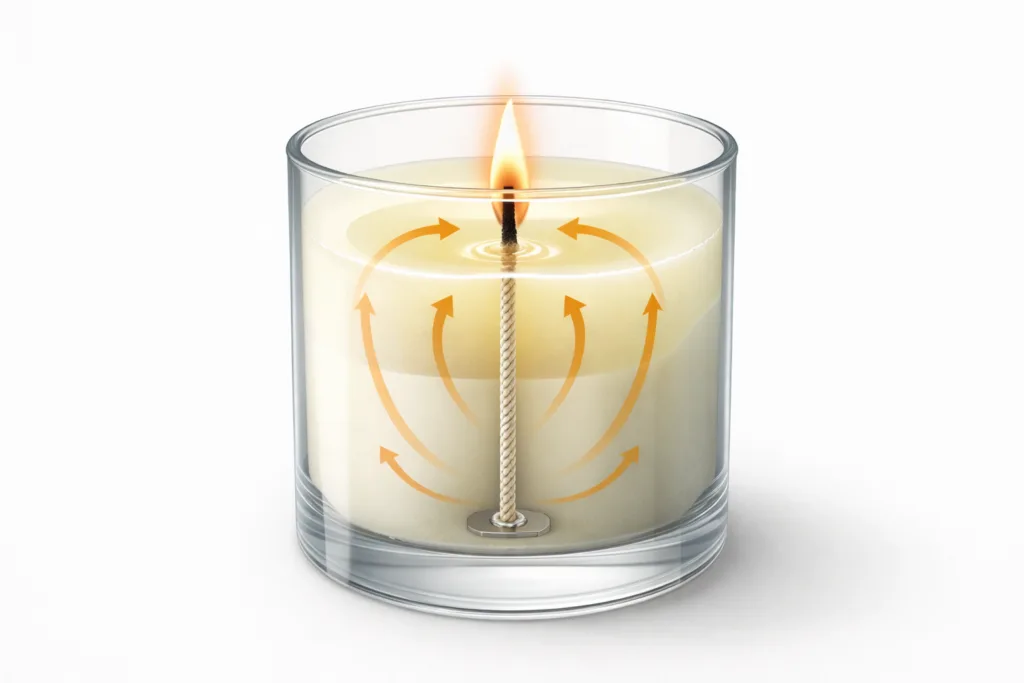 The term “non toxic” must be defined through measurable components. In combustion-based products, safety depends on materials, formulation ratios, and engineering precision.
2.1 Wax Chemistry: Petroleum vs Plant-Based Systems
Paraffin wax is derived from petroleum distillation. Chemically, it consists primarily of saturated hydrocarbons (alkanes). Cosmetic-grade paraffin is highly refined; however, it remains fossil-based.
Plant-based waxes such as soy, coconut, rapeseed, and beeswax consist primarily of triglycerides and fatty acid esters.
From a combustion standpoint, incomplete burning produces soot (carbon particles). Soot output depends on:
• Wick diameter
• Oxygen availability
• Wax viscosity
• Fragrance load
• Container diameter
Peer-reviewed combustion studies indicate that soot formation is strongly linked to wick trimming and melt pool consistency rather than wax origin alone. Therefore, the claim “soy is clean, paraffin is dirty” is oversimplified.
A scientifically defensible non toxic candle requires:
• Controlled fragrance loading
• Proper wick matching
• Stable melt pool formation
• Low aromatic hydrocarbon release
2.2 Fragrance Safety: IFRA and Toxicological Modeling
 Fragrance ingredients undergo toxicological risk assessment through the International Fragrance Association (IFRA).
For candles (IFRA Category 12), usage limits are determined through dermal and inhalation exposure modeling.
Retail buyers should request:
• Current IFRA certificate (matching production batch)
• SDS documentation
• Allergen disclosure lists
• Confirmation of phthalate-free formulation
Phthalates have been phased out of most premium fragrance systems due to consumer perception and regulatory scrutiny.
Fragrance load typically ranges between 6% and 10%. Higher loads increase volatility but may compromise burn stability.
Professional procurement teams should evaluate scent performance through controlled burn tests rather than fragrance percentage claims.
2.3 Wick Safety and Flame Engineering
Modern candle wicks are cotton or cotton-paper composite. Lead-core wicks are banned in the United States.
However, wick selection remains critical for combustion stability.
Oversized wick:
• Larger flame
• Faster fuel draw
• Higher soot output
Undersized wick:
• Tunneling
• Incomplete melt pool
• Waste
Professional manufacturing requires wick testing across at least 3–5 burn cycles before finalizing production specification.
2.4 Indoor Air Quality Considerations
Candles produce particulate matter (PM) during combustion. Studies comparing candle emissions show variability across brands.
Key performance indicators include:
• Visible smoke output
• Glass wall residue
• Soot accumulation
• Flame height stability
For hospitality and spa environments, low soot is essential to protect interior surfaces and maintain air clarity.
Non toxic is therefore a system-level outcome, not a single-material claim.
3. Eco-Friendly Defined Through Lifecycle Assessment
Eco-friendly evaluation must extend beyond wax origin.
3.1 Renewable Wax Sourcing
Soy wax is derived from hydrogenated soybean oil. Soybeans are annually renewable crops.
Advantages:
• Stable global supply
• Competitive pricing
• Established agricultural systems
• Renewable annually
Concerns:
• Land-use impact
• Regional sourcing transparency
For European markets, rapeseed wax offers reduced transport footprint when sourced regionally.
Coconut wax provides premium smooth texture and lower melt point but is often blended due to cost.
From a lifecycle perspective, plant-based waxes reduce fossil resource dependence.
3.2 Packaging Sustainability
 Packaging contributes significantly to carbon footprint.
Best practices include:
• FSC-certified rigid boxes
• Recyclable glass vessels
• Mono-material packaging for easier recycling
• Soy-based inks
• Plastic-free cushioning
Refill systems dramatically reduce long-term waste. Ceramic outer vessels paired with refill inserts reduce glass waste and encourage repeat purchases.
For museum and boutique channels, refill architecture also enhances storytelling value.
3.3 Logistics and Carbon Efficiency
Sustainability must include logistics.
Professional buyers benefit from:
• Optimized master carton design
• Pallet height standardization
• Sea freight prioritization
• Regional warehouse support
Air freight negates many environmental advantages of plant-based wax.
Strategic seasonal planning reduces urgent air shipments.
3.4 Waste Minimization Through Product Engineering
Incomplete melt pools result in 20–40% wax waste in poorly designed candles.
Wide-diameter vessels with multi-wick systems improve full consumption.
Engineering consistency is an environmental responsibility.
4. Non Toxic vs Eco-Friendly: Strategic Positioning for Buyers
Non toxic focuses on indoor combustion safety.
Eco-friendly focuses on environmental lifecycle.
Premium buyers increasingly require both.
Retail messaging must align with documentation.
Overclaiming risks regulatory challenge and brand erosion.
5. Top 7 Evaluation Criteria for Mature Buyers
- Verified IFRA compliance documentation
- Fragrance allergen disclosure transparency
- Confirmed phthalate-free status
- Plant-based wax composition breakdown
- Burn test documentation (multi-cycle)
- Sustainable packaging certification
- Batch traceability and quality control systems
Large buyers ordering 1,000–10,000 units per SKU must prioritize repeatability.
6. Channel-Specific Procurement Strategy
6.1 Supermarkets & Large Retail Chains
Focus:
• Stable pricing
• Barcode and labeling compliance
• Efficient palletization
• Broad scent profiles
Soy-based glass candles provide scalability and price control.
6.2 Concept Boutiques & Design Stores
Focus:
• Unique vessel design
• Ingredient transparency
• Refill programs
Ceramic refill systems increase perceived value and sustainability positioning.
6.3 Museum Gift Shops
Focus:
• Cultural narrative alignment
• Educational packaging copy
• Ingredient clarity
Scientific transparency enhances credibility in museum environments.
6.4 Hotels, Spas & Boutique Hospitality
Focus:
• Clean burn reliability
• Low soot output
• Consistent fragrance diffusion
• Repeat bulk ordering
Operational consistency is critical.
7. Scaling Clean Candle Manufacturing
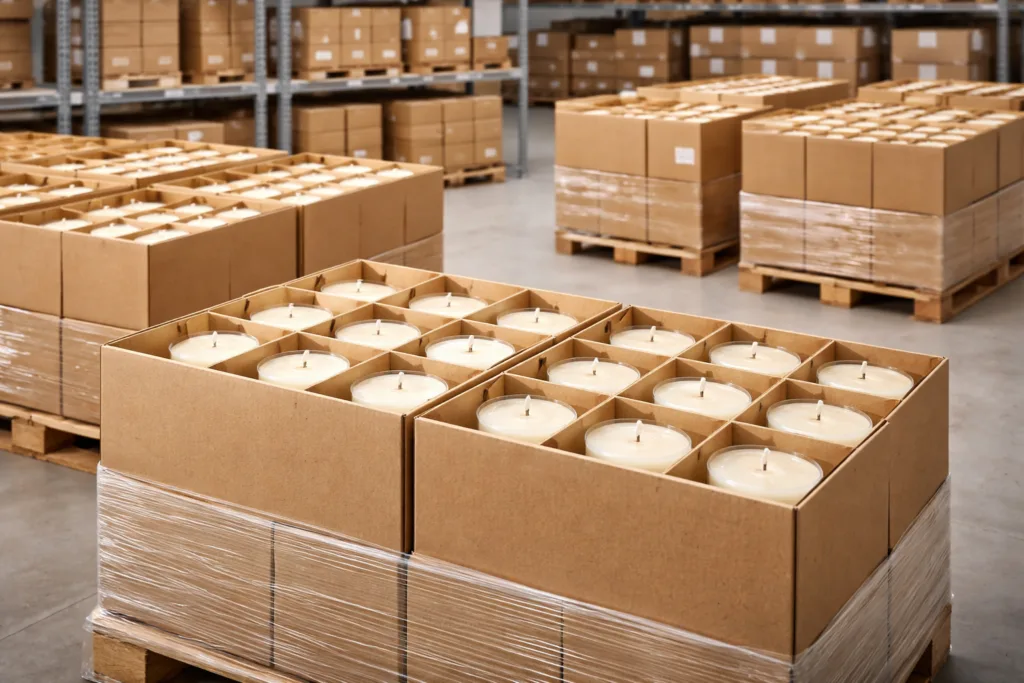 Scaling non toxic systems requires discipline.
7.1 Raw Material Control
• Controlled wax melting temperature
• Fragrance homogenization time
• Accurate weighing systems
7.2 Cure Time Management
Plant-based wax requires curing (typically 7–14 days) for optimal scent throw.
Rushed production reduces performance.
7.3 Batch Traceability
Professional suppliers maintain batch records linking:
• Wax lot number
• Fragrance lot number
• Wick type
• Production date
Traceability protects retailers during compliance audits.
8. Cost Structure Transparency
Plant-based wax systems typically cost more than paraffin-based systems.
Cost drivers:
• Wax price volatility
• Fragrance oil grade
• Packaging certification
• Quality control testing
However, premium positioning supports higher retail price points.
Buyers must evaluate margin structure holistically.
9. Risk Management for Private Label Buyers
Professional procurement teams should:
• Conduct burn tests before bulk approval
• Review compliance documentation annually
• Audit packaging sustainability claims
• Avoid unrealistic fragrance load promises
Short-term savings often result in long-term brand risk.
10. Long-Term Program Strategy
Mature brands structure collections around:
• Core permanent SKUs
• Seasonal rotation lines
• Refill systems
• Gift set architecture
Clean candle programs perform best when integrated into broader brand narrative.
11. Why Soy Wax Remains the Most Strategic Choice
Despite emerging alternatives, soy wax remains the most scalable renewable option due to:
• Established agricultural infrastructure
• Consistent supply chain
• Competitive cost balance
• Reliable combustion profile when engineered properly
Soy blends with coconut wax can improve texture and burn smoothness while maintaining scalability.
For large retail programs balancing cost, sustainability, and performance, soy-based systems remain commercially rational.
Conclusion
Non toxic and eco-friendly candles represent structural evolution within the home fragrance industry.
They demand:
• Scientific formulation
• Transparent documentation
• Sustainable lifecycle planning
• Scalable manufacturing discipline
For supermarkets, concept stores, museum retailers, hotels, spas, and established brands, the opportunity lies in building structured, compliant, and repeatable clean candle programs.
The best non toxic and eco-friendly candles are not defined by marketing language.
They are defined by engineering integrity, supply chain stability, and documented transparency.
FAQs
1. Are soy candles automatically non toxic?
No. Soy wax is plant-based, but overall safety depends on fragrance compliance, wick engineering, and controlled formulation.
2. Do eco-friendly candles reduce carbon footprint significantly?
Plant-based wax reduces fossil dependence, but true carbon reduction depends on packaging design and logistics efficiency.
3. What documentation should professional buyers require?
IFRA certificate, SDS sheet, allergen disclosure, phthalate-free confirmation, and batch traceability records.