
Introduction: Why Burn Time Matters More Than You Think
Most people light a candle for one simple reason: they want a space to feel better. Warmer. Calmer. More lived‑in. Candles are rarely treated as technical products, yet they are—quietly—one of the few consumer goods that involve open flame, heat transfer, and chemical evaporation inside the home.
That is where the 3‑hour rule for candles comes in.
If you have ever wondered why high‑quality candle brands recommend limiting each burn session to around three hours, the answer is not superstition, marketing, or arbitrary instruction. It is the result of decades of manufacturing practice, safety testing, and material science.
This guide explains what the 3‑hour rule actually is, why it exists, and how it protects both people and performance. Whether you are a candle user, retailer, interior designer, or hospitality buyer, understanding this rule changes how you evaluate candle quality.
At Circe Home, every candle we produce is designed, tested, and labeled with this principle in mind—because safety and performance are not optional features. They are the foundation.
1. What Is the 3‑Hour Rule for Candles?
The 3‑hour rule refers to a widely accepted industry guideline:
A candle should not be burned continuously for more than 3 to 4 hours per session.
After this time, the candle should be extinguished, allowed to cool completely, and only relit after the wax and container have returned to room temperature.
This is not a legal requirement, nor is it a consumer myth. It is a best‑practice standard used by professional candle manufacturers, safety testers, and premium brands across global markets.
The exact number may vary slightly depending on candle size, wax type, and vessel design, but the principle is consistent: controlled burn cycles protect both the candle and the environment around it.
2. Where the Rule Comes From: Industry Practice, Not Folklore
The 3‑hour rule did not appear overnight. It emerged from repeated observations during burn testing:
- Container temperatures rising steadily after prolonged burns
- Wick instability and carbon buildup over time
- Fragrance performance declining after overheating
- Increased soot and smoke during long, uninterrupted sessions
Professional candle testing involves multiple burn cycles, not one long burn. Candles are evaluated based on how they behave when lit, extinguished, cooled, and relit—because that is how they are actually used in real life.
Manufacturers who care about safety design their candles to perform optimally within a defined burn window. At Circe Home, burn‑cycle testing is a core part of our quality control process, not an afterthought.
3. Candle Safety: Why Continuous Burning Becomes a Risk
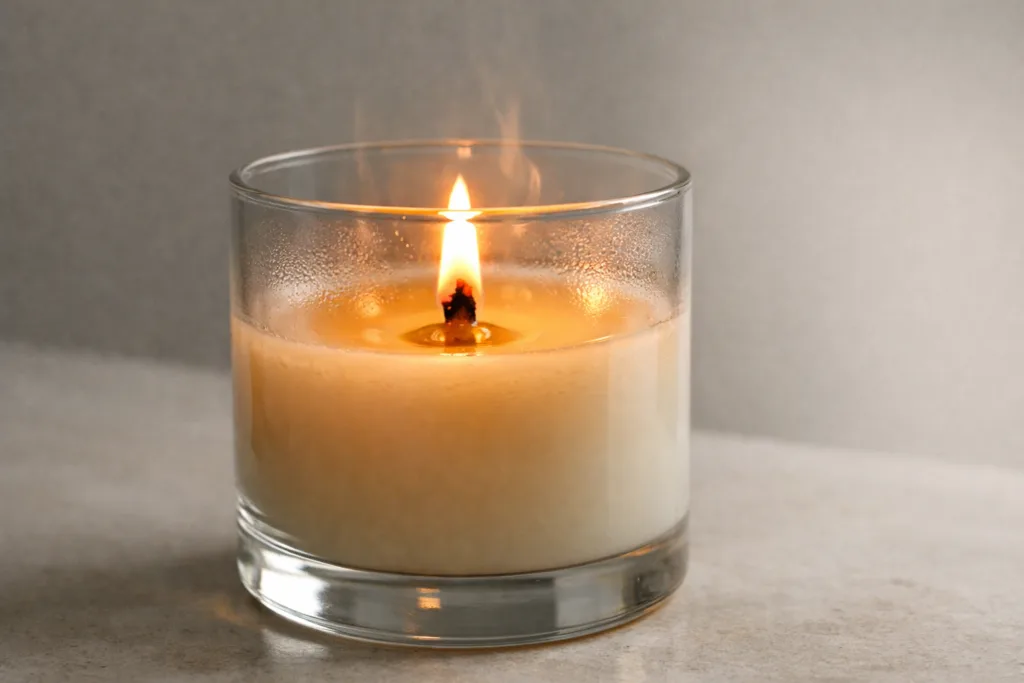 The most obvious reason for the 3‑hour rule is safety.
Heat Accumulation in Container Candles
Container candles trap heat. As wax melts and holds temperature, the glass or ceramic vessel gradually absorbs that heat. After several hours, container wall temperatures can rise significantly—sometimes beyond what is comfortable or safe to touch.
Extended heat exposure increases the risk of:
- Overheated containers
- Thermal stress on glass
- Surface damage to furniture
- Increased fire risk in poorly ventilated spaces
Wick Degradation and Flame Instability
As a candle burns, the wick slowly changes. Carbon builds up at the tip, flame height can increase, and combustion becomes less stable. This is why soot often appears after a candle has been burning for a long time—not at the beginning.
Limiting burn time reduces these risks and keeps the flame behavior predictable.
4. Performance Matters Too: Burn Time and Scent Quality
Safety is only half the story. The 3‑hour rule also protects how a candle smells.
Fragrance Oil Degradation
Fragrance oils are designed to evaporate gradually. When wax overheats, volatile aromatic compounds can burn off too quickly or degrade, leading to:
- Flat or dull scent
- Loss of top notes
- Harsh or smoky undertones
Burning longer does not mean stronger scent. In fact, controlled burn sessions often deliver better fragrance clarity.
Nose Fatigue vs. Real Performance
Many people assume a candle has “stopped smelling” after hours of burning. Often, the issue is nose fatigue—not performance. Extinguishing the candle and returning later frequently restores the full scent experience.
5. Wax Types and Why the Rule Still Applies
Different waxes behave differently, but none are immune to physics.
Natural Waxes (Soy, Coconut Blends)
- Lower melting points
- Softer structure
- More sensitive to overheating
These waxes benefit greatly from shorter, controlled burn cycles.
Paraffin and Hybrid Blends
- Higher heat tolerance
- More stable flame behavior
Even so, extended burns still increase container temperature and wick stress.
At Circe Home, wax formulations are selected not just for scent throw, but for thermal stability within safe burn windows.
6. Wick Size, Vessel Size, and Burn Engineering
Burn time recommendations are not arbitrary. They are tied directly to design.
- Oversized wicks create larger flames and faster heat buildup
- Wide containers hold more molten wax and retain heat longer
- Tall vessels concentrate heat near the flame
Professional manufacturers engineer candles so that wick, wax, and vessel work together within a defined burn duration. Ignoring that duration undermines the design itself.
7. What Happens When the Rule Is Ignored
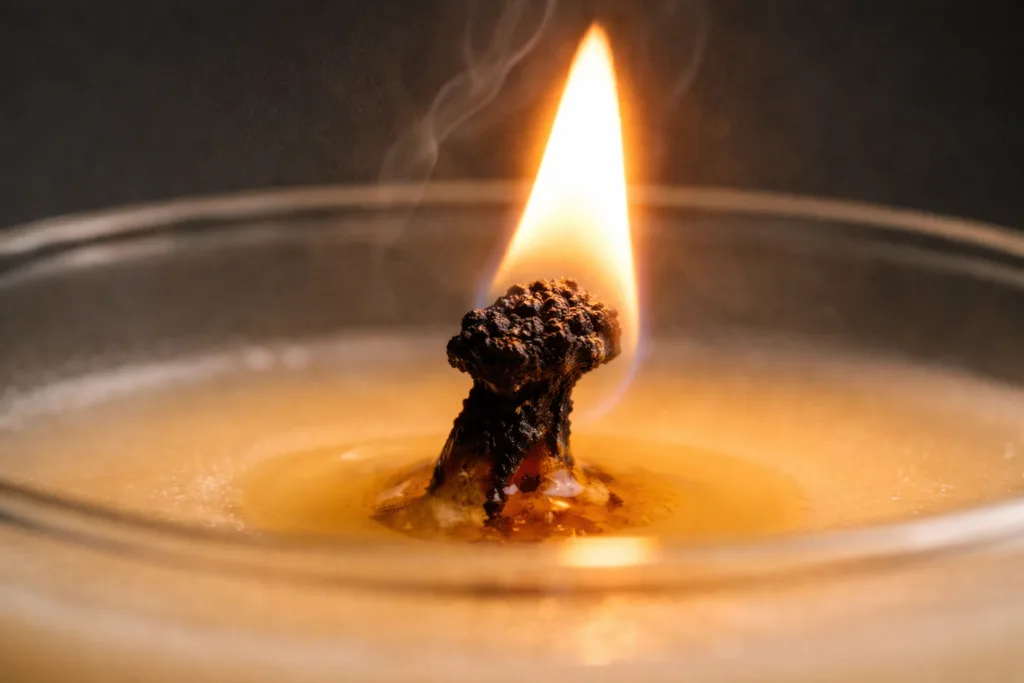 Consistently burning candles beyond recommended limits can lead to:
- Excessive soot on container walls
- Discolored or scorched wax
- Reduced candle lifespan
- Warped or cracked vessels
- Uneven burns in future sessions
These are not signs of a bad candle—they are signs of misuse.
8. How Professionals Actually Use Candles
In retail, hospitality, and interior design settings, candles are treated as managed elements, not decorative afterthoughts.
- Burn cycles are scheduled
- Staff are trained on extinguishing and relighting
- Candles are never left burning all day
This approach maximizes safety, consistency, and longevity.
Circe Home works closely with professional buyers who expect this level of reliability. Our production standards are aligned with real‑world commercial use—not idealized scenarios.
9. How to Burn a Candle Correctly (Practical Guide)
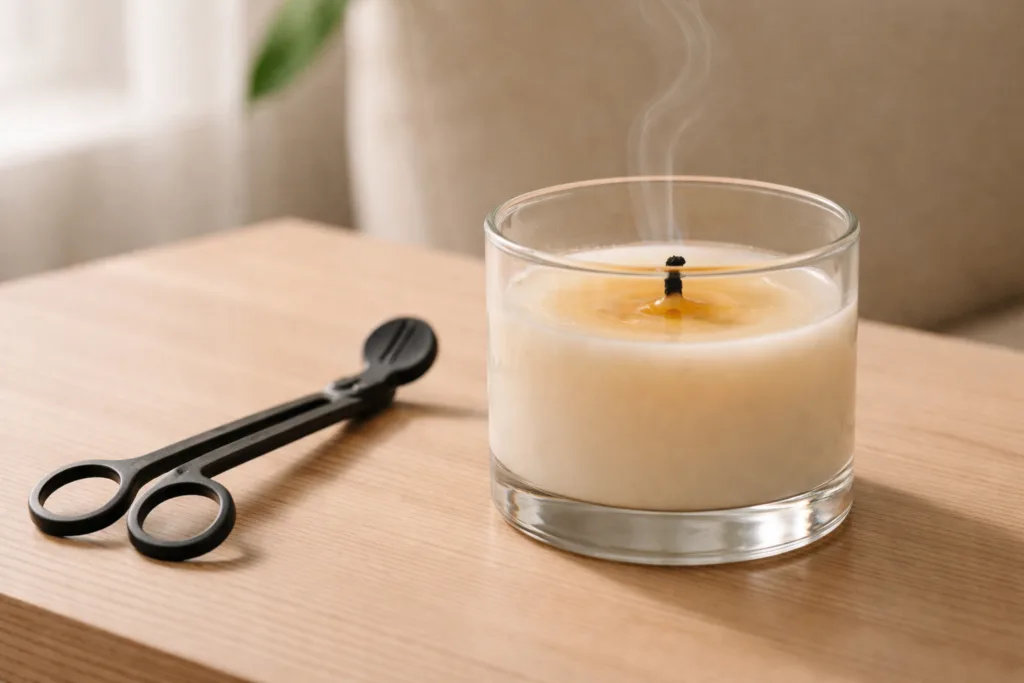
- Trim the wick to 5–7 mm before each burn
- Burn for 2–3 hours per session
- Allow full cooling before relighting
- Avoid drafts and unstable surfaces
These small habits make a measurable difference.
10. Container Candles vs. Pillar Candles
The 3‑hour rule is especially important for container candles, where heat is retained. Pillar candles disperse heat more freely, but still benefit from controlled burn sessions.
11. Common Myths About Candle Burn Time
- “Burning longer makes candles last longer” — false
- “Natural wax candles don’t need rules” — false
- “Large candles can burn all day” — unsafe
Good candles are designed to perform within limits.
12. Final Takeaway: Control Is the Mark of Quality
The 3‑hour rule is not a restriction. It is a signal.
It tells you whether a candle was designed thoughtfully, tested responsibly, and produced by a manufacturer who understands both safety and performance.
At Circe Home, every candle we produce is engineered around controlled burn cycles, verified through testing, and delivered with clear usage guidance. Because a candle should never demand trust—it should earn it.
When a brand respects the 3‑hour rule, it respects the person lighting the flame.
Frequently Asked Questions: The 3-Hour Candle Burn Rule
FAQ 1: Why do most high-quality candles recommend burning for no more than 3 hours at a time?
Because heat builds up continuously during a burn. After around 3–4 hours, the temperature of the wax pool, wick, and container can rise to levels that affect both safety and performance.
The 3-hour guideline is not arbitrary—it reflects decades of burn testing and manufacturing experience, balancing optimal scent performance with controlled heat and stable flame behavior.
FAQ 2: What happens if I burn a candle for much longer than recommended?
Extended, uninterrupted burning can lead to:
- Excessive container heat and potential surface damage
- Wick carbon buildup and unstable flame size
- Increased soot or smoke
- Faster fragrance degradation and dull scent
- Reduced candle lifespan
These issues usually indicate misuse rather than poor quality. Candles are engineered to perform within defined burn cycles.
FAQ 3: Do natural wax candles (soy, coconut, blends) still need to follow the 3-hour rule?
Yes. In fact, natural waxes often have lower melting points and are more sensitive to overheating. Burning them too long can cause the wax to retain excessive heat, affecting scent clarity, wick behavior, and container temperature.
Regardless of wax type—natural, paraffin, or hybrid—the physics of heat accumulation still apply.
FAQ 4: Will shorter burn sessions reduce fragrance strength?
No. Controlled burn sessions typically deliver clearer, more balanced scent performance. Overheating can cause fragrance oils to evaporate too quickly or degrade, leading to flat or harsh aromas.
If a candle seems to stop smelling after hours of use, it is often due to nose fatigue rather than fragrance loss. Allowing the candle to cool and relighting later often restores the full scent experience.