
Why Hotel Custom Candle Fragrance Matters in Modern Hospitality
Five-star hospitality is no longer built only around room size, thread count, marble bathrooms, or breakfast quality. The new luxury guest experience is sensory, consistent, and highly memorable. A guest may forget the exact brand of the lobby sofa, but they often remember how the property smelled when they arrived after a long flight.
That is why hotel custom candle fragrance has become a strategic procurement category rather than a decorative afterthought. For luxury hotel chains, boutique resorts, private villas, wellness retreats, and branded residences, a custom candle can perform several jobs at once. It can scent a guest suite, reinforce the hotel’s brand identity, support spa rituals, become a turndown amenity, and generate retail revenue in the hotel boutique.
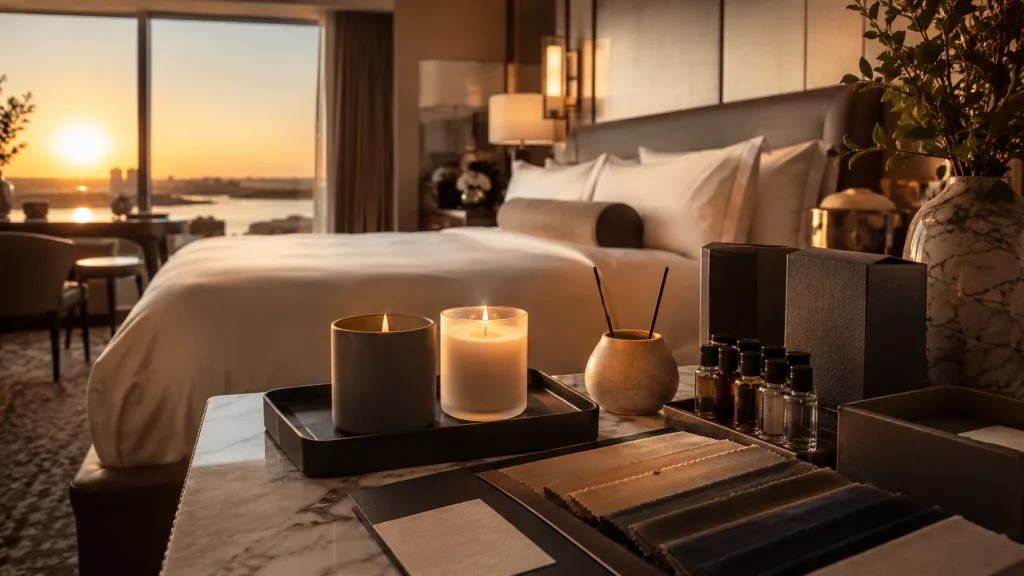
The commercial logic is simple: scent creates memory. Memory creates emotional attachment. Emotional attachment supports repeat visits, referrals, gift purchases, and brand recall after checkout. For sourcing directors, the opportunity is not to buy another generic scented candle. The real opportunity is to develop a controlled, scalable, compliant, and brand-owned fragrance product line.
A well-planned hotel candle program can include guest room candles, spa treatment candles, wedding gift candles, VIP welcome sets, seasonal resort collections, private label retail candles, corporate gifting, and branded amenities for multi-property groups.
Olfactory Marketing in Modern Luxury Hospitality
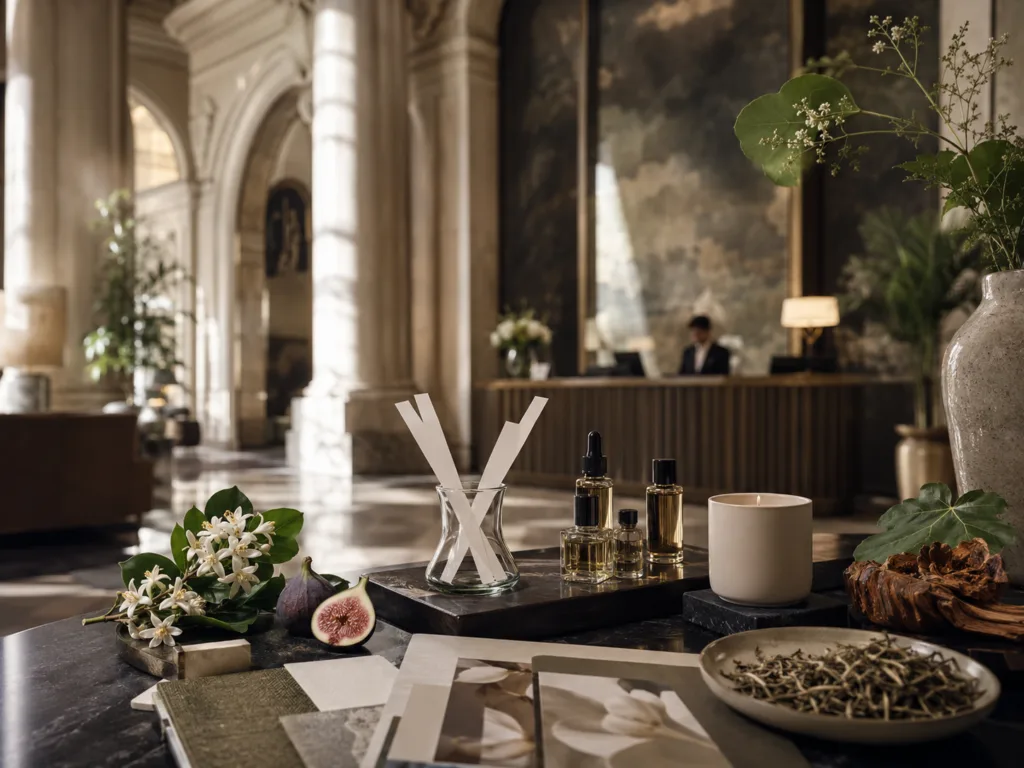
Luxury hotels use scent because smell reaches emotion faster than most visual brand assets. A signature aroma can become part of the guest’s mental map of the property: the quiet lobby, the polished stone floor, the fresh linen, the sea air, the wooden furniture, the flower arrangement, the spa corridor, the room after evening turndown.
For hospitality brands, scent architecture means designing fragrance by space and purpose. A lobby may need a clean and elegant aroma with strong brand recognition. A spa may need soft botanical notes with a relaxing finish. Guest rooms usually require lower intensity, safer diffusion, and better balance because the space is enclosed. A candle used in a guest suite must not behave like an aggressive retail candle designed for a large living room.
A mature hotel custom candle fragrance strategy usually answers these questions:
- What should guests feel within five seconds of entering the room?
- Should the fragrance express local nature, urban luxury, wellness, heritage, or minimalism?
- Will the candle be used only as an amenity, or also sold in the hotel boutique?
- Should the scent match the lobby diffuser, or should it be a softer room-safe interpretation?
- Will the same fragrance be used across all properties, or will each destination have a local variation?
The strongest hotel scent programs do not simply smell expensive. They smell specific.
Understanding the Procurement Role Behind Bespoke Hotel Amenities
Hospitality procurement is not retail buying. A hotel sourcing director must protect the brand, guest safety, cost structure, inventory rhythm, logistics timeline, and multi-property consistency.
For custom candles, this means the buyer is not only comparing unit prices. They are evaluating whether the supplier can manage repeatable fragrance quality, wax performance, container decoration, packaging standards, compliance documents, lead times, and reorder cycles.
A low-cost candle may become expensive if it smokes, tunnels, discolors, leaks fragrance oil, stains packaging, arrives late, or smells different between batches. A strong supplier must understand candle manufacturing and hospitality usage at the same time.
For five-star hotel groups, the right sourcing model usually includes:
- A clear fragrance brief
- Controlled sample development
- Wax and wick testing
- Packaging mockups
- Batch approval standards
- Compliance documents
- Forecast-based production planning
- Stable reorder pricing
- Export packaging suitable for long-distance shipping
In short, hotel candle procurement is a product development project, not a one-time catalog purchase.
Translating a Hotel Brand DNA into a Signature Scent Brief
A custom fragrance should begin with brand identity, not with a random list of popular notes. The best brief connects the physical property to the emotional experience.
A coastal resort may use sea salt, neroli, fig leaf, white tea, driftwood, or soft musk. A mountain lodge may lean toward cedarwood, fir needle, amber, smoked tea, cashmere, or vetiver. An urban five-star hotel may need iris, bergamot, sandalwood, suede, white flowers, or mineral musk. A wellness retreat may prefer lavender, eucalyptus, hinoki, green tea, sage, chamomile, or frankincense.
H3: Scent Direction by Hotel Type
Luxury city hotel
Polished, elegant, restrained. Best fragrance families include citrus musk, iris, amber woods, tea, suede, and soft floral notes.
Beach resort
Fresh, airy, sunlit. Suitable notes include sea salt, neroli, coconut water, fig leaf, white musk, driftwood, and orange blossom.
Spa and wellness retreat
Clean, therapeutic, calm. Suitable notes include eucalyptus, lavender, sage, hinoki, chamomile, green tea, and sandalwood.
Heritage boutique hotel
Textured, warm, memorable. Suitable notes include incense, cedar, leather, rosewood, amber, spice, tobacco leaf, and aged wood.
H5: Procurement note
A hotel fragrance should be distinctive enough to own, but not so polarizing that it creates complaints in enclosed guest rooms.
H6: Practical rule
For guest room candles, elegance and tolerance matter more than maximum scent intensity.
Formulating Allergen-Controlled, Clean-Burning Waxes for Guest Suites
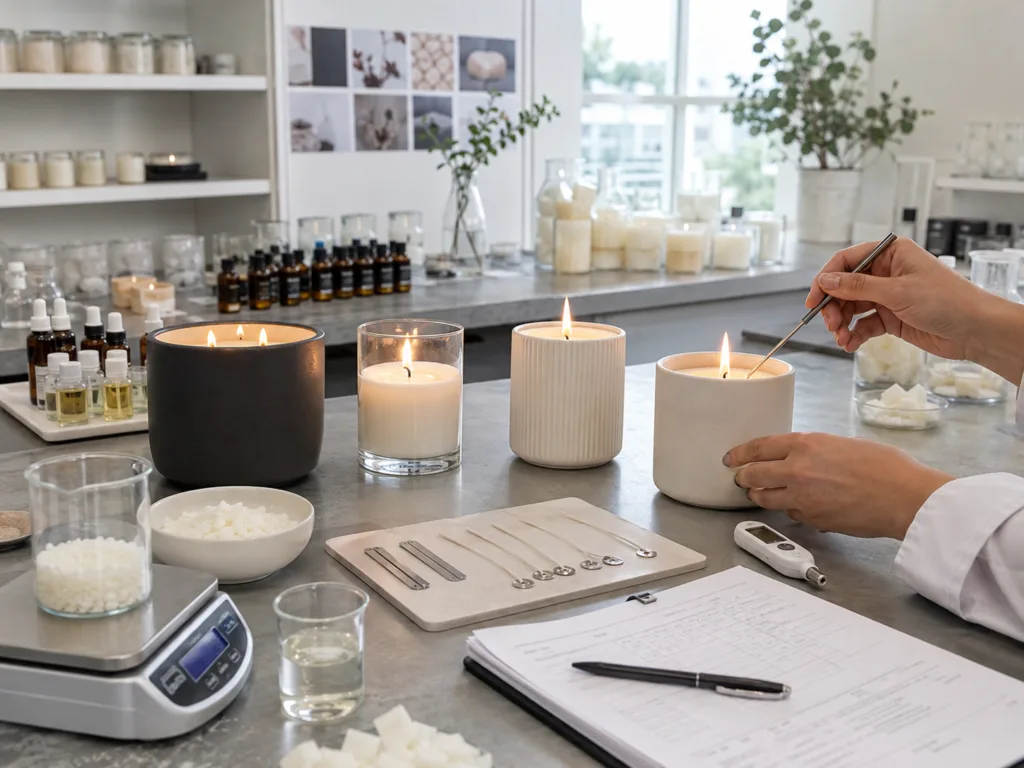
The phrase “non-allergen candle” is often used in marketing, but it is not technically precise. Natural essential oils and synthetic fragrance molecules can both contain allergen-relevant compounds. A more professional procurement target is allergen-controlled, IFRA-aligned, low-soot, clean-burning formulation.
For enclosed guest suites, a candle formula should be designed around controlled fragrance load, suitable wick size, stable melt pool, low visible soot, and appropriate burn duration. Overloading fragrance oil may sound attractive on a retail product page, but it can cause poor combustion, sweating, wick drowning, smoke, or unstable scent release.
A hospitality-grade candle should be tested for:
- Cold throw before lighting
- Hot throw after full melt pool
- Wick mushrooming
- Flame height
- Soot behavior
- Container temperature
- Wax adhesion
- Surface cracking
- Fragrance discoloration
- Burn time consistency
- Final safety margin at the bottom of the vessel
For hotels, the safest guest experience is not created by the strongest candle. It is created by a balanced candle that burns cleanly, releases fragrance steadily, and looks premium from first use to final burn.
Choosing Eco-Friendly Wax Materials for Luxury Hospitality
Sustainability has become a serious procurement filter for hotel groups, especially in North America, Europe, Australia, and premium Asian resort markets. Guests increasingly expect luxury to feel responsible, not wasteful.
Common wax options for hotel custom candles include soy wax, coconut wax, beeswax blends, vegetable wax blends, rapeseed wax, and palm-free formulations. Each material has trade-offs.
Soy wax is widely accepted, cost-effective, and suitable for many private label candle programs. Coconut wax blends offer a smooth appearance and elegant burn profile, often positioned for premium collections. Beeswax can add natural character, but cost and scent interaction must be managed. Palm-free vegetable blends are attractive for sustainability messaging, although performance testing is essential before large orders.
The right wax is not chosen by trend alone. It should match the vessel, fragrance oil, burn diameter, destination climate, shipping route, and brand positioning.
For example, a candle shipped to a hot resort market needs careful wax selection and packaging protection. A candle for a winter mountain hotel may prioritize cozy scent throw and surface stability. A candle sold as a premium boutique product may require a smoother top finish, better vessel weight, and gift-ready packaging.
Private Label Custom Branding and Vessel Color Matching
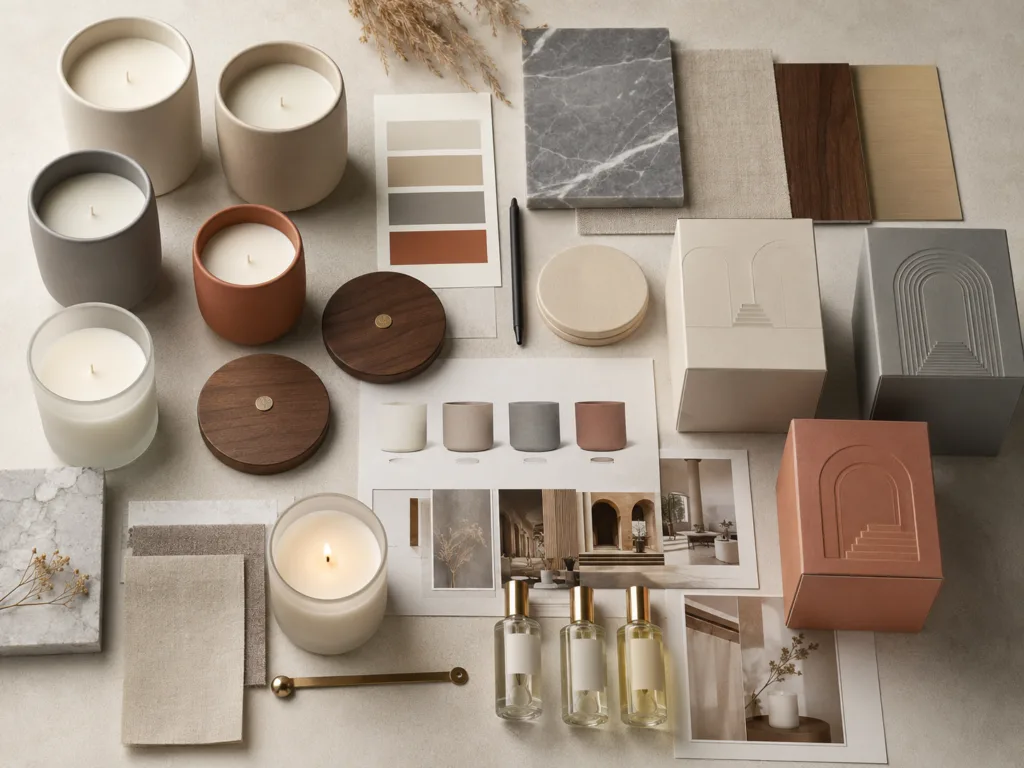
In five-star hospitality, a candle container is not merely packaging. It is part of the room design. The vessel should feel natural on a bedside table, bathroom counter, spa shelf, or welcome tray.
Private label customization can include logo printing, ceramic decal, UV printing, hot stamping, screen printing, laser engraving, embossed labels, metal nameplates, hang tags, wax color matching, lid customization, and outer box design.
Vessel color matching is especially important for hotel groups with strong interior design codes. A warm ivory ceramic vessel may suit a desert resort. Matte black glass may fit a city hotel bar concept. Frosted white glass may support a spa identity. Sandstone, terracotta, sage green, champagne, bronze, and soft grey can connect the product to the hotel’s architecture and material palette.
A mature supplier should be able to discuss color tolerance, surface finish, decoration durability, and packaging compatibility. A beautiful vessel is not enough if the logo scratches off, the color shifts between batches, or the candle rattles inside the gift box.
Vessel Styles That Fit Five-Star and Resort Aesthetics
Different hotel brands require different vessel languages. A luxury resort does not need the same candle as a business hotel, and a wellness retreat should not use the same container as a nightclub-style urban property.
Popular vessel directions include:
- Heavy glass jars for classic luxury
- Matte ceramic vessels for boutique hotels and wellness resorts
- Frosted glass for spa and bathroom settings
- Metal tins for travel-size amenities or corporate gifting
- Stone-look ceramic for desert resorts and architectural hotels
- Refillable vessels for sustainability-focused properties
- Lidded containers for linen closet storage and retail presentation
- Minimalist straight-wall vessels for modern hotel rooms
For large hotel groups, refillable or reusable vessels can support sustainability goals and guest retention. A guest who takes home a beautifully designed candle vessel is also taking home a physical reminder of the hotel.
Custom Fragrance Development: From Lobby Scent to Room Candle
Many hotel groups already have a lobby aroma diffused through HVAC or professional scent systems. The challenge is translating that ambient scent into a candle format.
A diffuser fragrance cannot always be copied directly into wax. Some aroma materials perform differently when heated. Some notes become weaker in wax. Others become too sharp, smoky, sweet, or heavy. The right approach is to create a candle adaptation that keeps the brand identity while improving burn performance.
There are three common development routes:
1. Duplicate an existing hotel aroma
The hotel sends a scent sample, diffuser oil, room spray, or reference candle. The manufacturer evaluates the olfactory profile and develops a close interpretation.
2. Create a new signature scent from a brand brief
The hotel provides mood boards, property images, interior colors, target guest profile, and preferred fragrance direction.
3. Build a scent portfolio
The hotel develops a master fragrance plus seasonal or property-specific variations. For example: Lobby Signature, Spa Calm, Beach Villa, Winter Suite, Wedding Gift, and Boutique Retail Edition.
For multi-property groups, a scent portfolio is often more commercially useful than one single candle.
Packaging Luxury Amenities for Room Placement and Retail Sales
Hotel candle packaging must work in multiple environments: housekeeping storage, guest room display, gift service, shipping, and retail sales.
A room amenity candle may only need a clean label and protective inner box. A VIP welcome candle may require a rigid gift box, ribbon, custom card, and branded bag. A boutique retail candle may need barcode labeling, ingredient and warning information, outer carton protection, and shelf-ready visual design.
Common packaging formats include:
- Rigid gift boxes
- Drawer boxes
- Paper tube boxes
- Folding cartons
- Linen pouches
- Cotton bags
- Kraft boxes
- Magnetic boxes
- Custom sleeves
- Multi-candle gift sets
- Room amenity cards
- Wedding favor packaging
For hotels, packaging should also consider operational handling. Housekeeping teams need packaging that is easy to store, easy to identify, and resistant to damage. Procurement teams need carton labeling, SKU clarity, and predictable replenishment.
Luxury packaging should look beautiful, but it must also survive real hotel logistics.
Compliance, Safety, and Documentation for Hotel Candle Procurement
Compliance is a serious part of B2B hospitality sourcing. Hotels serve guests from many regions, including people with allergies, asthma, fragrance sensitivity, children, and elderly travelers. A candle program must therefore be professionally documented.
A qualified supplier should be able to provide:
- MSDS or SDS for fragrance and finished product where applicable
- IFRA certificate or IFRA-aligned fragrance usage guidance
- Allergen declaration where required
- Candle warning label layout
- Wick safety information
- Product specification sheet
- Packaging material information
- Batch number system
- Burn test record
- Export carton details
- HS code support for customs documentation
For the U.S. market, lead-core wick restrictions must be respected. For the EU and UK markets, classification and labeling requirements should be checked carefully if the candle contains fragrance ingredients that trigger hazard labeling obligations. For global hotel groups, it is best to confirm destination requirements before mass production.
Compliance should not be treated as paperwork after the order. It should shape the formula, label, packaging, and procurement approval from the beginning.
Inventory Logistics: Managing Automated Restocking Cycles
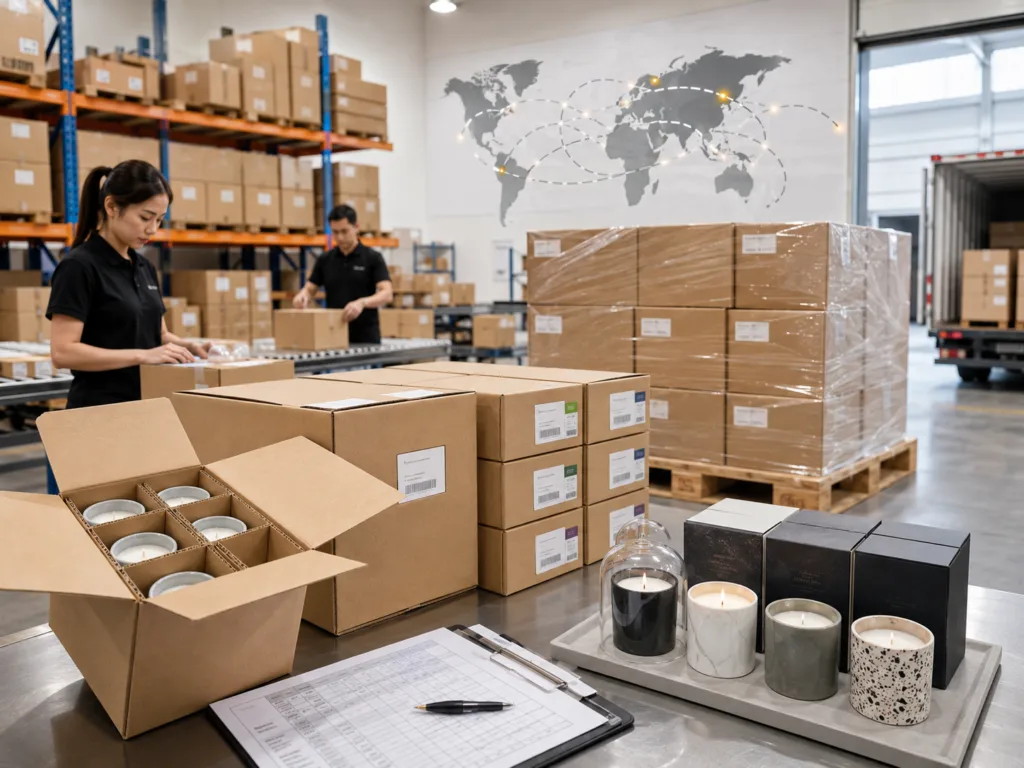
Large hotel groups do not want unstable supply. A signature candle program must fit operational reality.
A hotel may need monthly, quarterly, or seasonal replenishment. A resort group may need stock split across several destinations. A wedding property may need peak-season inventory. A spa chain may need constant supply of treatment-room candles. A hotel boutique may need retail-ready packaging and barcode control.
The best procurement model is usually a rolling forecast with scheduled production windows. This allows the manufacturer to secure wax, fragrance oil, vessels, packaging materials, and shipping space in advance.
A practical restocking system may include:
- Annual demand forecast
- Quarterly call-off orders
- Safety stock for high-season periods
- Agreed reorder lead time
- Approved master sample
- Locked fragrance formula
- Batch-to-batch color standard
- SKU-level carton marks
- Property-level shipping plans
- Reorder price validity terms
For global resort groups, predictable contract pouring is more reliable than urgent spot orders. Candles require curing, testing, packaging, and careful shipping. Rushing production increases risk.
MOQ Strategy for Multi-Property Hotel Groups
MOQ is often misunderstood. Mature buyers should not only ask, “What is your minimum order quantity?” They should ask, “How can we structure the order to reduce risk while keeping production efficient?”
MOQ depends on the vessel, wax, fragrance, packaging, decoration method, and whether molds or custom colors are required. A fully custom ceramic vessel may need a higher MOQ than a stock glass jar with private label decoration. A custom fragrance requires development time and sample rounds. A custom color vessel may require batch minimums from the container supplier.
For multi-property groups, there are smarter ways to plan MOQ:
- Use one master vessel across several hotel properties
- Change label or sleeve by property
- Use one fragrance family with small variations
- Consolidate packaging materials
- Launch with a pilot SKU before expanding
- Use annual volume commitments with scheduled deliveries
- Develop gift sets using shared components
For example, a group with five boutique hotels may start with one 220g signature candle in a shared ceramic vessel, then customize the label and fragrance story for each property. This reduces mold cost, simplifies packaging, and improves purchasing leverage.
Quality Control for Hospitality-Grade Candle Production
A candle that looks good in a sample photo is not automatically ready for hotel procurement. Hospitality buyers need repeatability.
Quality control should include incoming material inspection, fragrance oil verification, wax melting control, pouring temperature control, wick centering, curing time, surface inspection, vessel cleaning, label position checking, packaging drop resistance, and final random inspection.
Key QC checkpoints include:
- Vessel color consistency
- Logo position and durability
- Wax surface smoothness
- Wick centering tolerance
- Net weight
- Fragrance dosage
- Burn test performance
- Soot observation
- Packaging alignment
- Carton strength
- Barcode or SKU accuracy
- Batch record traceability
For hotel groups, the approved sample should become the production benchmark. Bulk production should not be weaker than the sample. This is especially important for fragrance strength, vessel finish, wax color, and packaging quality.
A serious supplier should keep a sealed approval sample and compare every production batch against it.
Cost Drivers in Hotel Custom Candle Fragrance Projects
The unit price of a custom hotel candle is shaped by many components. Sourcing teams should understand these drivers before comparing suppliers.
Main cost factors include:
- Wax type
- Fragrance oil quality and dosage
- Vessel material
- Vessel weight
- Custom mold cost
- Surface finish
- Logo decoration method
- Lid material
- Packaging structure
- Insert card or amenity card
- Labor and QC requirements
- Testing documentation
- Freight and destination duties
- Order quantity
- Reorder frequency
A cheaper candle may use a lighter vessel, lower fragrance dosage, weaker packaging, or unstable wax blend. A premium hotel candle should not be overbuilt without reason, but it should feel aligned with the property’s room rate and guest expectation.
For procurement teams, the best value is not the lowest unit price. The best value is a candle that delivers brand experience, safe use, attractive presentation, consistent reorder quality, and smooth logistics.
How Circe Home Supports B2B Hospitality Buyers
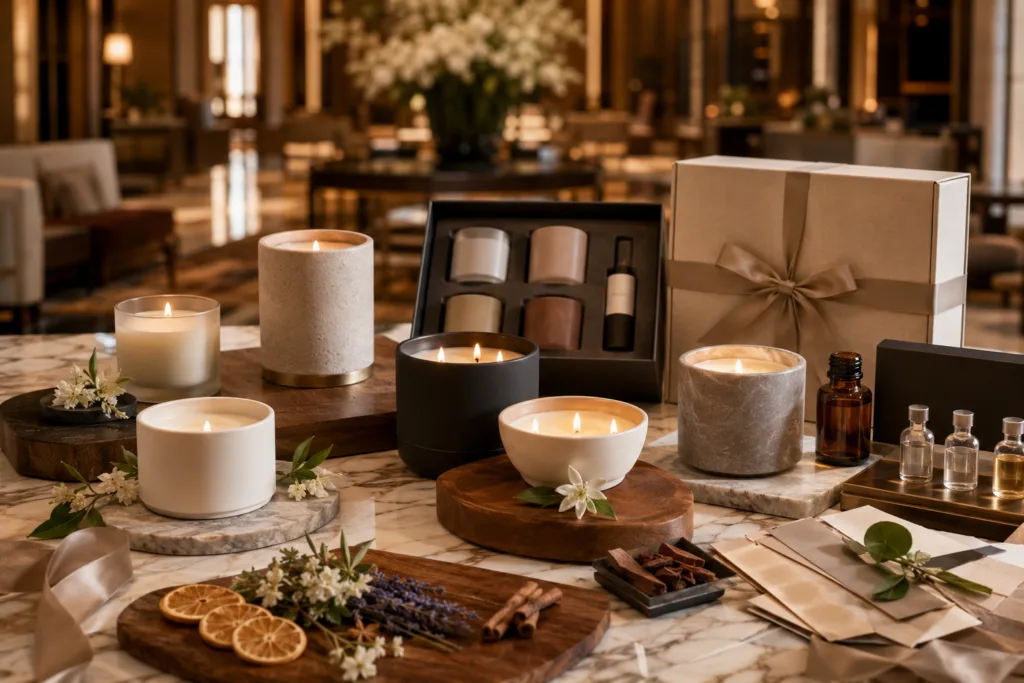
Circe Home works with B2B buyers who need more than generic candles. For hotel groups, resorts, spas, wedding venues, gift companies, and private label fragrance brands, we support custom candle development from concept to bulk production.
Our hospitality candle solutions can include:
- Custom hotel signature scent development
- Existing aroma interpretation
- Natural and nature-inspired fragrance directions
- Soy wax, coconut wax, vegetable wax, and eco-conscious blends
- Private label candle production
- Custom ceramic, glass, or metal vessels
- Vessel color matching
- Logo printing, decal, engraving, and label customization
- Gift-ready packaging
- Room amenity packaging
- Multi-SKU hotel fragrance portfolios
- Sample development
- Bulk production planning
- Export packaging support
- Documentation support for B2B procurement
We understand that hotel buyers need stable quality, clear communication, and practical production solutions. A luxury candle should not only look beautiful in a presentation deck. It should pass sampling, survive shipping, fit the room, satisfy guests, and reorder smoothly.
If your hotel group is planning a signature room candle, spa fragrance collection, VIP welcome gift, wedding candle set, or private label retail candle line, Circe Home can help turn your scent idea into a scalable hospitality product.
Develop Your Hotel Signature Scent Portfolio
A hotel custom candle fragrance project should begin with a clear brand brief and a realistic production plan. Share your hotel concept, target market, preferred fragrance direction, vessel style, packaging idea, estimated quantity, and destination country. Circe Home can help evaluate the best wax, vessel, scent direction, packaging structure, MOQ strategy, and sampling process.
Develop Your Hotel Signature Scent Portfolio with Circe Home.
Explore custom hospitality gifting at /gift-solution/ or start fragrance development at /custom-candle-fragrance/.
FAQ
1. Can you duplicate an existing hotel lobby aroma?
Yes. If you already use a lobby diffuser oil, room spray, reference candle, or branded scent, we can evaluate the aroma direction and develop a candle-friendly interpretation. Because diffuser formulas and candle formulas behave differently, the final candle version may need adjustment for wax performance, burn stability, and guest room suitability.
2. What is the shelf life of candles stored in hotel linen closets?
Most well-made scented candles can remain in good condition for around 12 to 24 months when stored properly. For hotel storage, keep candles away from heat, direct sunlight, humidity, and strong odors. Use sealed packaging, stable cartons, and first-in-first-out inventory control. High temperatures may affect fragrance strength, wax surface, labels, and packaging.
3. What vessel styles fit luxury resort aesthetics?
Luxury resorts often choose matte ceramic vessels, frosted glass, stone-look containers, warm ivory jars, sand-tone vessels, refillable cups, or lidded designs with natural wood accents. The best vessel depends on the hotel’s architecture, room palette, climate, sustainability goals, and whether the candle is used as an amenity, VIP gift, spa product, or boutique retail item.
4. What are the MOQs for multi-property hospitality orders?
MOQ depends on vessel type, fragrance customization, packaging, decoration method, and whether custom molds or custom colors are required. Multi-property hotel groups can often optimize MOQ by using a shared vessel, shared packaging structure, and property-specific labels or fragrance variations. For accurate MOQ planning, provide estimated annual volume, number of properties, SKU count, and delivery schedule.