
For premium scented candle lines, the vessel is no longer just a container. It is part of the product engineering system. It affects burn safety, fragrance performance, heat distribution, brand perception, packaging durability, retail shelf presence, and post-burn reuse.
This is why professional candle buyers should not compare ceramic and glass vessels only by appearance. A beautiful jar can still fail if it cracks during burn testing, leaks fragrance oil, breaks in export cartons, or does not support the intended retail price.
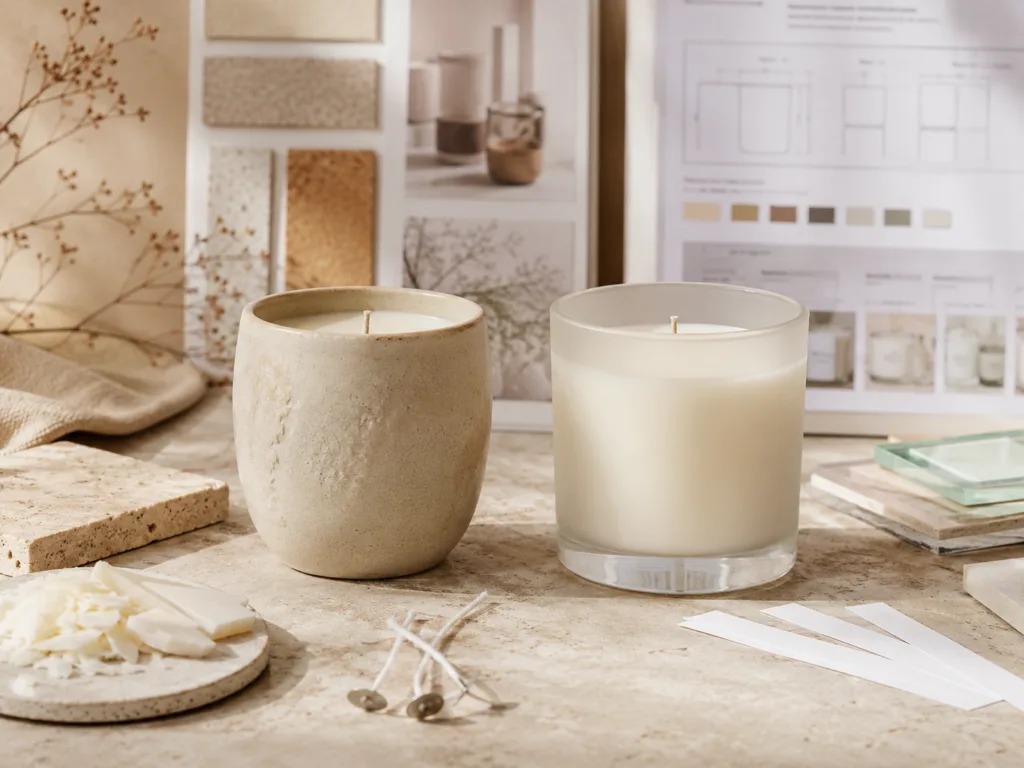
At Circe Home, we evaluate ceramic and glass candle vessels through a full manufacturing lens: wax formula, wick size, fragrance load, thermal behavior, surface decoration, MOQ, packaging structure, compliance needs, and export logistics. The goal is not simply to choose the “prettier” vessel. The goal is to choose the vessel that supports the buyer’s commercial strategy.
The Core Difference: Ceramic Builds Brand Differentiation, Glass Delivers Commercial Efficiency
The most important difference between ceramic and glass candle vessels is not only material cost. It is the role each vessel plays in the product line.
Glass is the most cost-effective and scalable choice for most bulk scented candle orders. It offers mature supply chains, stable dimensions, faster sampling, easier decoration, predictable pricing, and stronger commercial flexibility. For retailers, hotels, spas, corporate gift buyers, and private label candle brands, glass is usually the safest and most efficient starting point.
Ceramic, on the other hand, is not mainly chosen for cost efficiency. It is chosen for differentiation. A ceramic candle vessel can make the candle feel more architectural, tactile, collectible, and aligned with sustainable lifestyle trends. After the candle is finished, a well-designed ceramic container can remain in the consumer’s home as a reusable décor object, storage cup, planter, or refillable vessel.
This is especially true for wabi-sabi ceramic candle vessels, matte stoneware textures, reactive glaze finishes, and hand-finished ceramic designs. These vessels create a stronger emotional connection and higher perceived retail value. However, they also usually require higher MOQ, longer sampling cycles, stricter quality control, and more protective packaging.
In short, glass is the best value-engineered choice for most commercial candle lines, while ceramic is the better choice when the vessel itself needs to become part of the brand story.
Market Signals: Glass Leads in Volume, Ceramic Leads in Visual Appeal
In high-volume candle manufacturing, glass still dominates. It is widely used for private label candles, hotel candles, spa candles, retail gift candles, and supermarket candle lines. Buyers choose glass because it is familiar, easy to customize, easy to scale, and easier to price competitively.
Glass candle jars also perform well across mainstream search and marketplace behavior because buyers often search for practical terms such as glass candle jars, frosted candle jars, amber candle jars, empty candle jars, and wholesale candle containers. These terms usually indicate commercial sourcing intent.
Ceramic candle vessels are growing from a different direction. They are stronger in visual discovery and lifestyle positioning. On platforms driven by images and home décor inspiration, ceramic candle jars, pottery candle vessels, matte ceramic candles, wabi-sabi candle containers, and reusable candle vessels often communicate a more premium mood.
For mature buyers, the conclusion is clear: glass is better for volume and cost control; ceramic is better for visual differentiation and premium brand value.
Material Properties and Thermal Dynamics of Glass vs. Ceramic
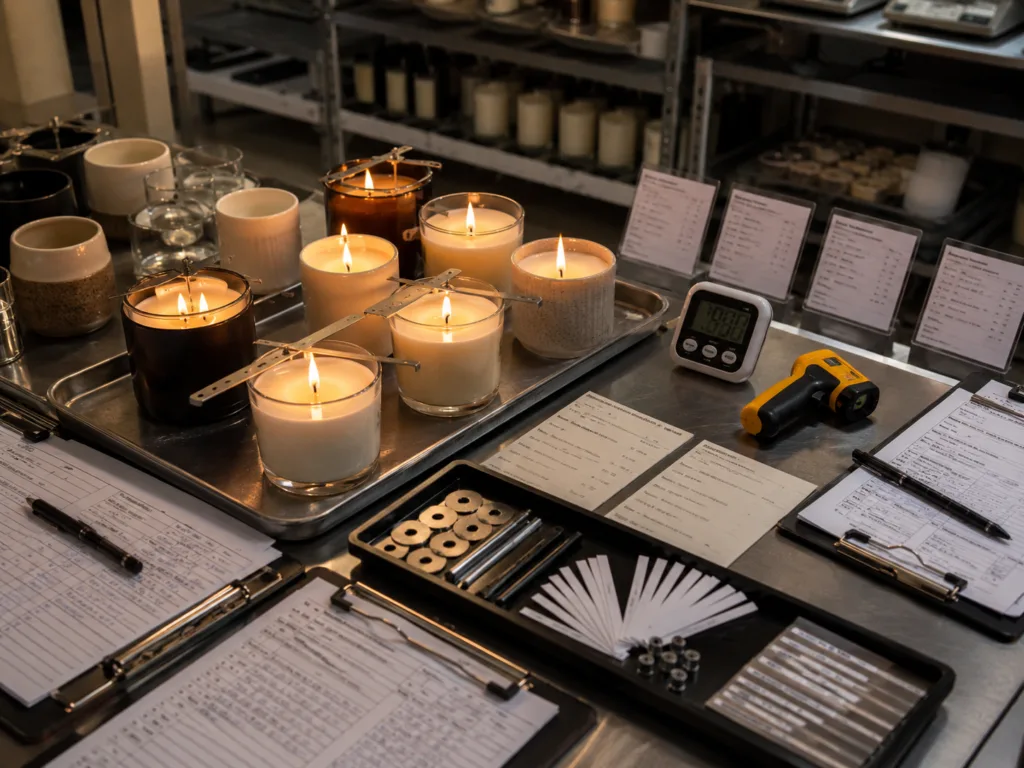
Glass is non-porous, smooth, chemically stable, and easy to inspect. For candle production, this makes glass highly practical. It supports consistent filling, clean labeling, visual wax inspection, and stable bulk production. Clear glass also allows consumers to see wax color, flame glow, and remaining burn level.
Ceramic is more complex. Depending on clay body, firing temperature, glaze system, wall thickness, and inner sealing, ceramic can range from risky to highly premium. High-fired porcelain and stoneware can create strong durability and refined texture. Low-fired or poorly sealed ceramic may absorb wax or fragrance oil, leading to seepage or long-term quality problems.
This is why ceramic candle vessels require more technical evaluation before mass production. The outside may look beautiful, but the inner wall, glaze coverage, water absorption rate, base thickness, and burn behavior are what determine whether the vessel is suitable for candles.
Thermal Conductivity, Heat Retention, and Melt Pool Behavior
Glass transfers heat more directly to the outer wall. During product testing, this helps engineers observe how the melt pool develops, whether the wick is centered, whether the vessel wall overheats, and whether wax adhesion or wet spots appear.
Ceramic usually retains heat longer. In some candle systems, this can help stabilize the melt pool, especially with soy wax, coconut wax blends, or beeswax blends. However, ceramic should not be treated as automatically safer. Thick bases, uneven wall thickness, irregular glaze, or poor firing can create localized heat stress.
For both glass and ceramic vessels, safety must be verified through burn testing. A candle vessel should be tested with the actual wax formula, fragrance load, wick series, fill weight, and intended burning cycle. Material appearance alone is not enough.
Soda-Lime Glass vs. Porcelain, Stoneware, and Wabi-Sabi Ceramic
Most commercial candle jars use soda-lime glass because it offers a practical balance of cost, clarity, moldability, and scalability. It works well for frosted jars, amber jars, ribbed jars, apothecary jars, electroplated jars, and private label candle lines.
Porcelain and stoneware offer a different type of value. They create weight, texture, and a stronger home décor identity. Matte porcelain, reactive-glaze stoneware, speckled ceramic, and sculptural ceramic containers can support higher retail pricing when the candle is positioned as a premium lifestyle object.
Wabi-sabi ceramic vessels are especially attractive for boutique fragrance brands and luxury gifting. Their irregular surfaces, natural glaze variations, and handmade mood create a sense of uniqueness. But this style is also more demanding in production. Buyers should expect higher MOQ, more color variation, stricter sorting, and longer lead times.
Customization Capabilities: Glass Candle Jars
Glass is excellent for scalable branding. Common finishing options include:
- Frosting
- Color spraying
- Inner coating
- Electroplating
- Silk screen printing
- Hot stamping
- High-temperature decals
- Paper labels
- Custom lids
- Custom molds
Glass is especially suitable for clean luxury, spa collections, hotel amenities, retail candle programs, and private label projects. It can look minimal, modern, classic, or decorative depending on the finish.
From a sourcing perspective, glass also has a clear advantage: many existing molds are available. This allows buyers to reduce development time and control cost before committing to large custom tooling.
Customization Capabilities: Ceramic Candle Vessels
Ceramic supports a richer design language. It can be customized through:
- Matte glaze
- Reactive glaze
- Speckled glaze
- Relief molding
- Embossed logo
- Debossed logo
- Sculptural shape
- Hand-finished texture
- Wabi-sabi surface
- Refillable vessel design
Ceramic is ideal when the buyer wants the candle to feel like a decorative object rather than a disposable container. A ceramic vessel can become part of the consumer’s home after the wax is finished. This gives the brand a longer life inside the customer’s living space.
However, ceramic customization is not as simple as changing a label. Glaze color, firing temperature, surface texture, shrinkage, wall thickness, and defect rate all affect the final result. Custom ceramic projects require more serious product development commitment.
Cost Structures and MOQ Barriers in High-Volume Sourcing
Glass is usually more cost-effective for bulk candle production, especially when existing molds are used. Standard glass jars allow faster sampling, lower unit cost, and more predictable lead time. Custom glass molds may require tooling investment, but once volume increases, production consistency is usually strong.
Ceramic cost is shaped by more variables. Mold making, clay body selection, glazing, firing, hand-finishing, sorting, and packaging all affect the final price. Even when the shape looks simple, ceramic production can involve higher loss rates and more manual inspection.
This is why ceramic MOQ is often higher than buyers expect, especially for wabi-sabi styles, custom glaze colors, sculptural shapes, or embossed branding. Small trial quantities may be possible only when existing stock vessels are used. Fully custom ceramic vessels usually require larger production commitment.
For mature buyers, the question should not be “Which vessel is cheaper?” The better question is: which vessel supports the target retail price, brand positioning, order quantity, and acceptable defect rate?
Ceramic vs. Glass Candle Vessels: Practical B2B Comparison
| Comparison Point | Glass Candle Vessel | Ceramic Candle Vessel |
|---|---|---|
| Best For | High-volume orders, private label candles, hotel candles, spa candles, retail programs | Premium gifting, boutique home fragrance, luxury collections, reusable candle vessels |
| Main Advantage | Cost-effective, scalable, mature supply chain | Differentiation, premium texture, sustainable reuse value |
| Visual Style | Clean, transparent, frosted, electroplated, minimalist | Matte, reactive glaze, wabi-sabi, sculptural, artisanal |
| MOQ Level | Usually more flexible when using existing molds | Usually higher, especially for custom shapes, glazes, or wabi-sabi finishes |
| Unit Cost | More competitive for bulk orders | Higher due to forming, glazing, firing, sorting, and defect control |
| Customization | Frosting, spraying, electroplating, silk screen, decals, labels | Glazing, embossing, debossing, relief molding, hand-finished textures |
| Sustainability Message | Recyclable and widely understood | Reusable, refillable, and suitable as home décor |
| Production Risk | Cracking, chipping, thermal shock, carton breakage | Porosity, glaze pinholes, seepage, color variation, firing defects |
| Best Buyer Type | Buyers prioritizing price, speed, and repeatable production | Buyers prioritizing brand value, design identity, and premium shelf presence |
Structural Flaws: Preventing Seepage, Cracking, and Glaze Defects
Glass risks are usually easier to identify. Common issues include cracks, chips, bubbles, sharp rims, uneven bases, and thermal shock failure. These problems can be reduced through incoming inspection, annealing control, thickness checks, and proper export packaging.
Ceramic risks can be more hidden. Porosity, glaze pinholes, micro-cracks, uneven firing, and unsealed interiors may not be obvious at first glance. In candle production, these issues can lead to wax seepage, fragrance oil absorption, surface staining, or cracking after repeated burn cycles.
For ceramic candle vessels, Circe Home checks the inner wall, rim, base, glaze coverage, absorption risk, and burn-test behavior before confirming bulk production. For glass candle jars, we check wall thickness, rim finish, base stability, thermal response, and carton protection.
Wax, Wick, and Fragrance Compatibility
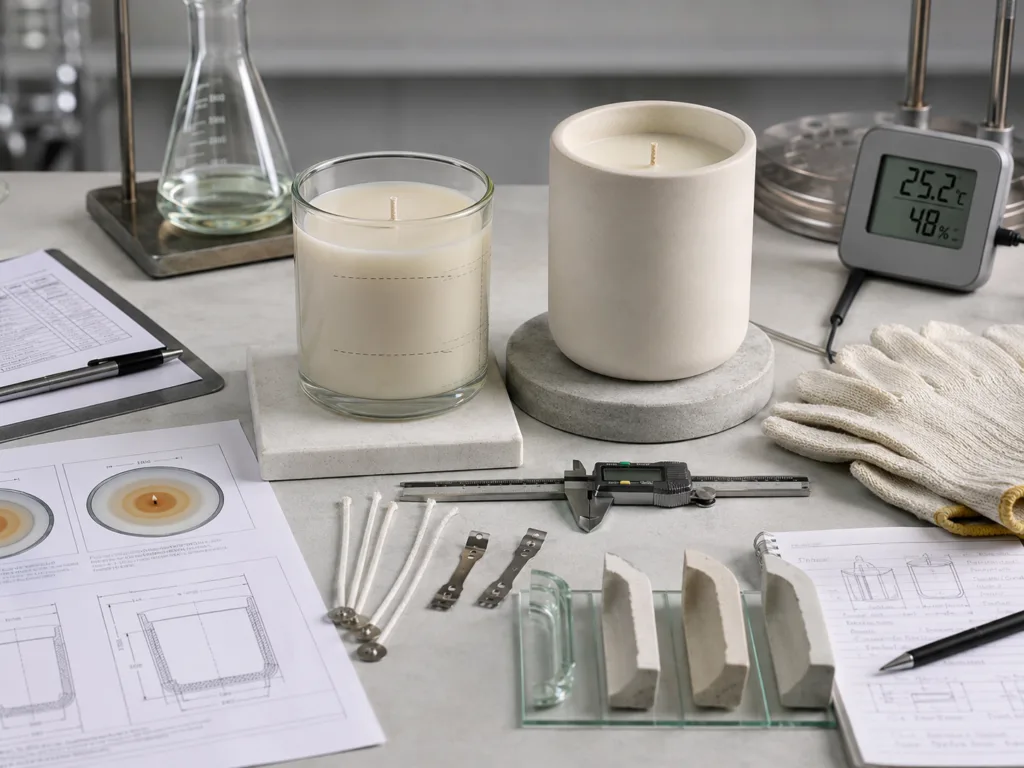
A candle vessel cannot be selected separately from the wax system. Soy wax, coconut wax, beeswax blends, and natural-inspired fragrance systems all behave differently under heat.
A glass jar with smooth inner walls often supports cleaner wax adhesion and easier visual QC. A ceramic vessel may hide wet spots and minor wax imperfections, but it requires more testing for heat retention, seepage, and wick behavior.
Fragrance load also matters. Higher fragrance concentration can affect combustion, surface sweating, cold throw, hot throw, and wick stability. Beeswax blends may burn hotter than some soy-based formulas. Wood wicks and cotton wicks also respond differently depending on vessel diameter and wall temperature.
At Circe Home, vessel selection is evaluated together with wax formula, wick choice, fragrance concept, and desired burn time. This helps buyers avoid expensive mistakes before mass production.
Sustainable Positioning: Recyclable Glass vs. Reusable Ceramic
Glass has a simple and widely understood sustainability message: it is recyclable. This is helpful for brands that want clear eco communication without overcomplicating the product story.
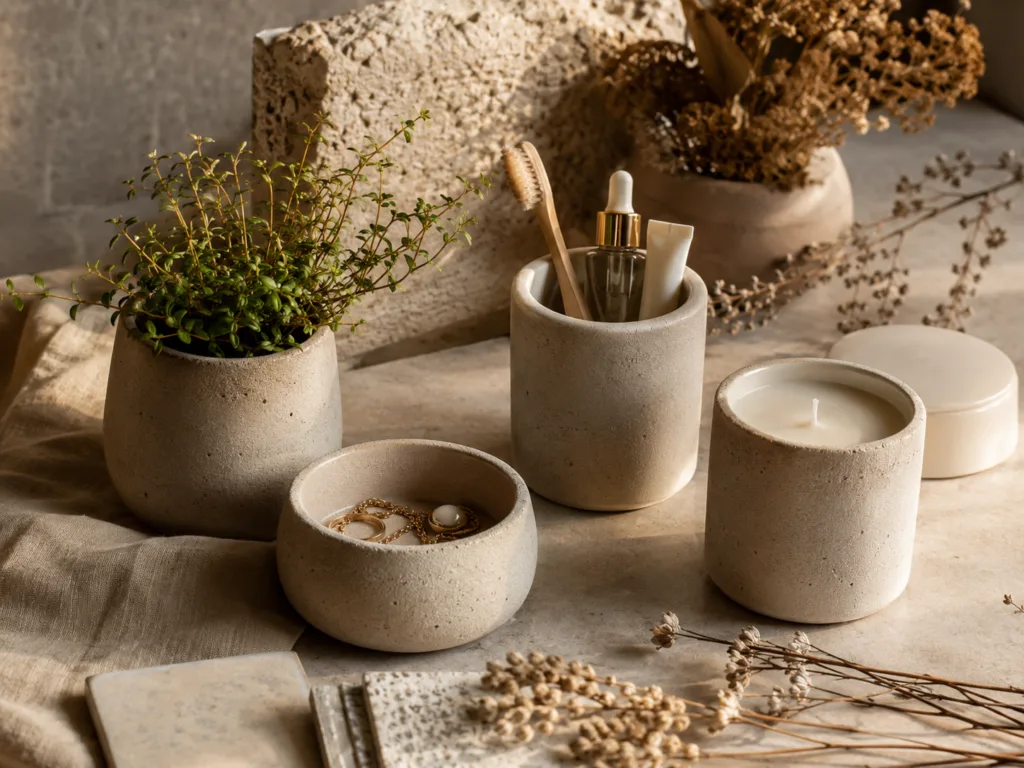
Ceramic has a different sustainability advantage: reusability. A premium ceramic candle vessel can become a home décor object after the candle is finished. It can be reused as a storage cup, jewelry holder, bathroom container, planter, desk accessory, or refillable candle vessel.
This makes ceramic especially powerful for brands that want to connect with sustainable fashion, slow living, interior design, and long-lasting product value. The customer does not throw the vessel away. The vessel stays in the home, and the brand stays with it.
Packaging, Freight, and Export Logistics
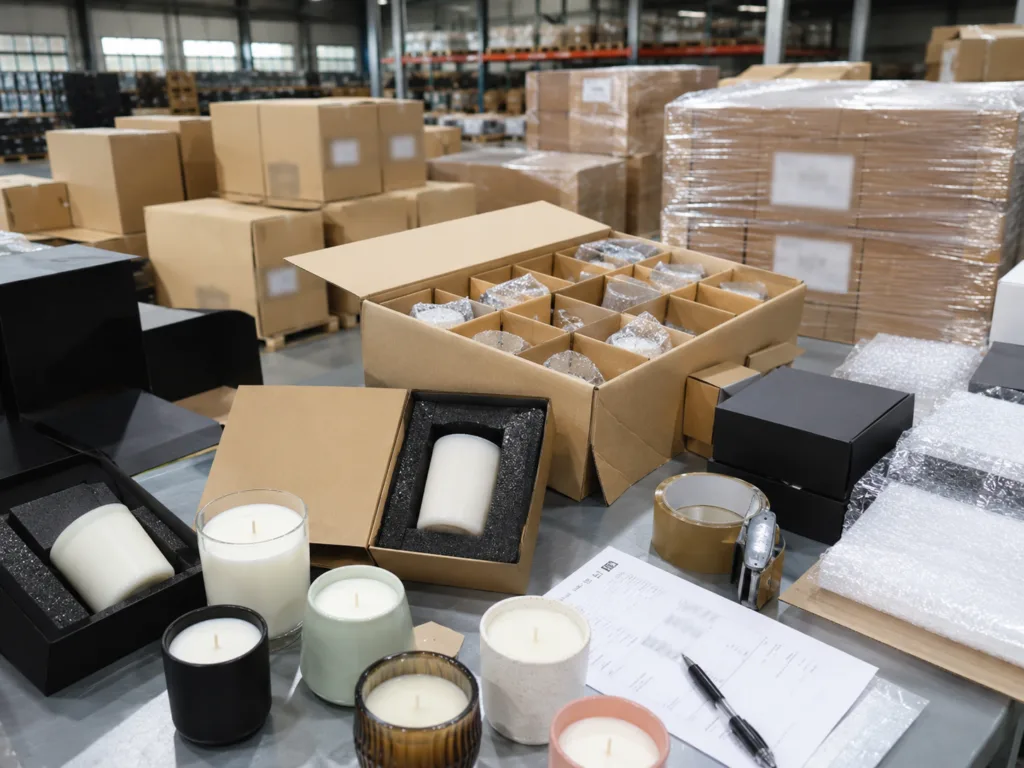
Glass and ceramic both require serious packaging engineering. A premium candle can pass burn testing and still fail if it breaks during shipping.
Glass candle jars usually require dividers, bubble protection, corner support, inner boxes, carton compression planning, and drop-test awareness. Ceramic vessels require even more attention to surface protection because glaze scratches, rim chips, and lid mismatch can damage the premium experience.
For export orders, Circe Home evaluates individual boxes, inserts, warning labels, shipping marks, carton strength, pallet loading, and freight options. Mature buyers should always consider packaging cost when comparing ceramic and glass vessels. A cheaper vessel is not truly cheaper if the breakage rate is high.
When to Choose Glass Candle Vessels
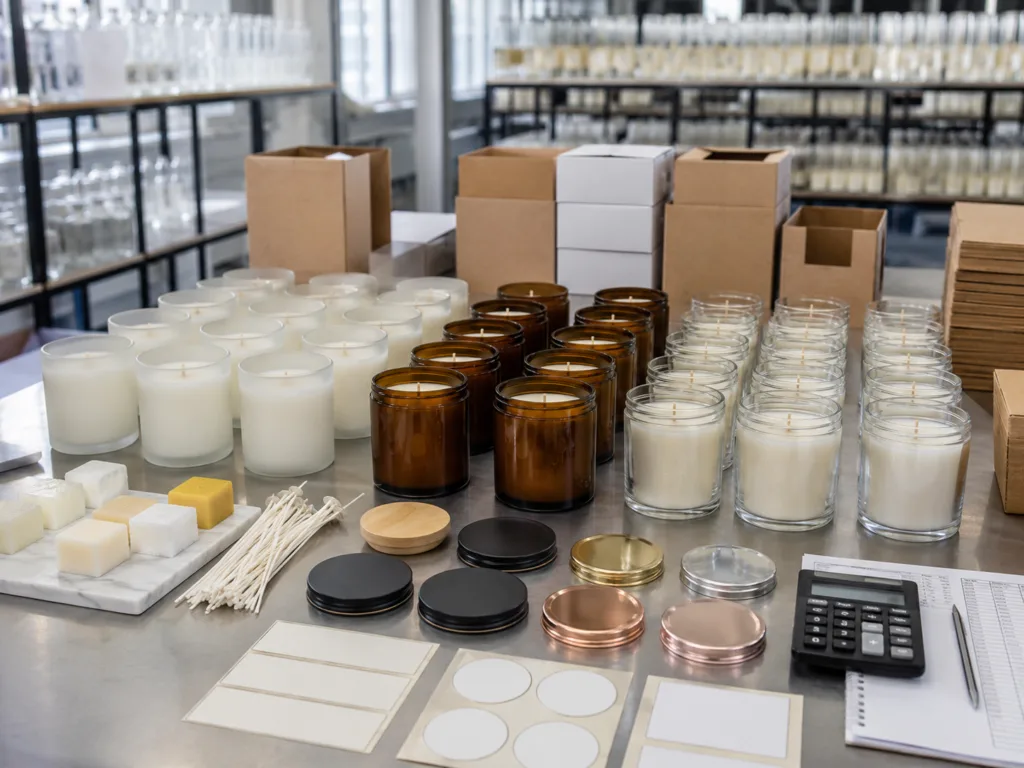
Glass is usually the better option when the buyer needs:
- Strong cost control
- Faster product development
- More flexible MOQ
- Existing mold options
- Stable bulk production
- Predictable unit cost
- Clear, frosted, amber, or electroplated aesthetics
- Hotel, spa, retail, or corporate gift candle programs
For most commercial candle lines, glass is the most practical starting point. It is not low-end by default. With the right finish, label, lid, wax color, and packaging, glass can still look highly premium.
When to Choose Ceramic Candle Vessels
Ceramic is usually the better option when the buyer needs:
- Strong brand differentiation
- Higher perceived retail value
- A reusable vessel concept
- Home décor positioning
- Matte, reactive, or wabi-sabi texture
- Sculptural or artisanal shelf appeal
- Luxury gifting or boutique retail identity
- Refillable candle system potential
Ceramic is not the cheapest choice, but it can be the stronger brand investment. It is especially suitable when the vessel itself is part of the reason customers buy the candle.
Why Mature Buyers Should Source with a Candle Factory, Not Only a Jar Supplier
A jar supplier can provide containers. A candle factory must validate the complete system.
For premium scented candle production, the vessel interacts with wax, wick, fragrance, label, lid, packaging, and shipping method. If these elements are developed separately, problems may appear only after production starts.
Circe Home supports custom scented candle manufacturing as an integrated solution. We help buyers evaluate ceramic and glass vessels based on target price, MOQ, wax formula, fragrance direction, packaging structure, compliance needs, and export logistics.
This is especially important for buyers developing premium candle lines, hotel gift candles, private label candles, home fragrance collections, and sustainable refillable candle programs.
Learn more about our company at /about-us/ or explore our candle production capabilities at /custom-candle-manufacturing/.
Final Recommendation: Choose Glass for Efficiency, Ceramic for Brand Value
For most bulk scented candle orders, glass remains the most cost-effective and commercially reliable vessel choice. It is easier to source, easier to decorate, easier to scale, and better suited for buyers who need predictable pricing and stable lead times.
Ceramic vessels should be selected when the candle line needs stronger differentiation, higher perceived value, and a more sustainable lifestyle story. A ceramic candle jar can become part of the consumer’s home after the candle is finished, which makes it especially suitable for premium gifting, boutique retail, hotel collections, and refillable home fragrance programs.
However, ceramic also requires a more serious development commitment. Custom ceramic vessels, especially wabi-sabi styles, matte glaze finishes, reactive glaze effects, and sculptural shapes, usually require higher MOQ, longer sampling time, stricter QC, and more protective packaging.
At Circe Home, we help buyers evaluate both options based on real project goals: target price, MOQ, design direction, wax formula, fragrance concept, packaging structure, and export logistics. If your priority is cost efficiency and fast scaling, glass is usually the better starting point. If your priority is brand differentiation and premium home décor value, ceramic may be the stronger investment.
CTA: Schedule a Virtual Tour of Our Facility
Planning a premium ceramic or glass jar candle line? Schedule a virtual tour of our facility and let Circe Home help you evaluate vessel options, wax systems, fragrance direction, packaging structure, MOQ, and export-ready customization.
FAQ
1. Are ceramic candle vessels better than glass candle vessels?
Not always. Ceramic vessels are better for premium differentiation, reusable décor value, and luxury positioning. Glass vessels are usually better for cost efficiency, high-volume production, faster sampling, and more predictable bulk sourcing.
2. Why do ceramic candle vessels usually require higher MOQ?
Ceramic production involves forming, drying, glazing, firing, sorting, and defect control. Custom glaze colors, wabi-sabi textures, embossed logos, and sculptural shapes require more development work, which usually increases MOQ and lead time.
3. Are glass candle jars suitable for premium candle lines?
Yes. Glass is not automatically low-end. Frosted glass, thick-wall glass, amber glass, electroplated glass, ribbed glass, and custom-labeled glass jars can all support premium candle positioning while keeping cost and production more manageable.
4. What should buyers test before approving ceramic or glass candle vessels?
Buyers should test thermal shock resistance, full burn performance, wick compatibility, wax adhesion, fragrance load behavior, vessel cracking risk, ceramic seepage risk, label durability, packaging strength, and export carton protection before mass production.