
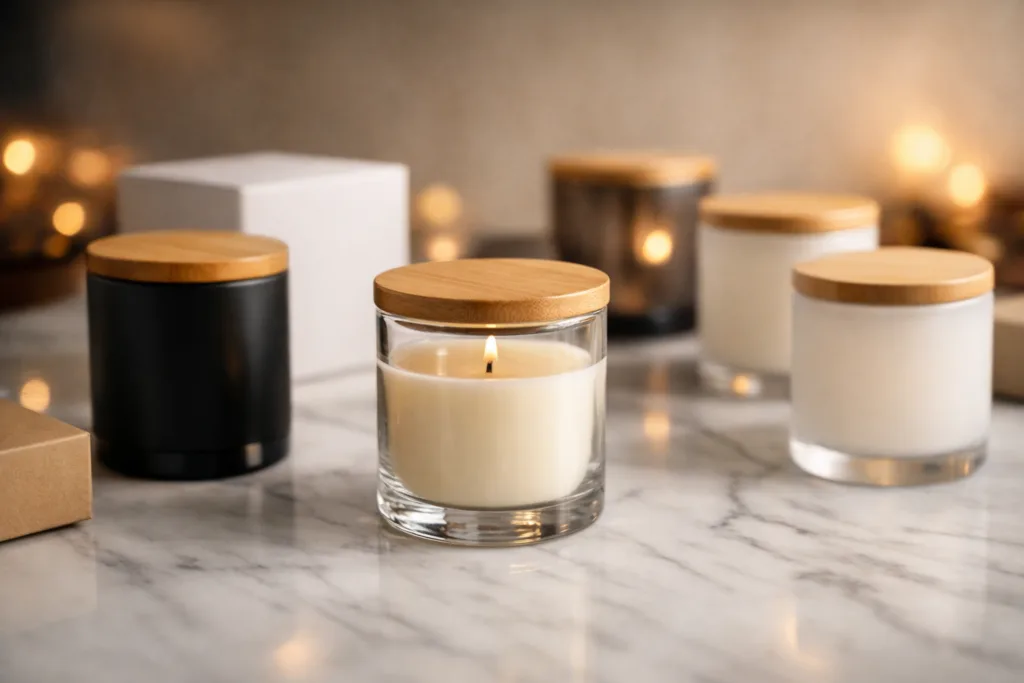
 In the candle business, size is never just a technical detail. It affects pricing, shelf appeal, shipping efficiency, customer expectations, burn performance, packaging design, and retail margin. Among the many formats available in the market, the 8oz jar candle has become one of the most commercially practical options for private label brands, retailers, gift companies, hotels, and large-volume importers. It sits in the sweet spot: substantial enough to feel premium, compact enough to ship efficiently, and familiar enough to work across multiple sales channels.
That is exactly why the keyword custom 8oz candles with logo wholesale carries strong commercial intent. Buyers searching this term are rarely browsing for inspiration. They are usually in one of three stages: comparing manufacturers, evaluating the real cost structure behind custom production, or planning a branded candle line that must work at scale. They want clear answers. What does 8oz actually mean in practice? How large is the jar? How many hours does it burn? What can be customized? What affects pricing the most? When does a custom candle project become commercially viable, and when does it simply become an expensive packaging experiment?
This guide is written from a B2B perspective for serious buyers. It is not a lifestyle article and not a trend piece. The purpose is to explain how custom 8oz candles with logo wholesale works in the real world, especially for brands that are planning retail-ready programs, gift sets, hotel projects, subscription lines, or large private label collections. We will break down the actual size logic of an 8oz candle jar, explain what makes this format commercially strong, clarify where the money goes in production, and show how large buyers can control cost without diluting product quality.
If your goal is to build a candle line that looks credible, scales smoothly, and protects margin, the 8oz format deserves serious consideration.
Why the 8oz Jar Candle Has Become a Commercial Standard
A lot of buyers assume candle sizing is mainly aesthetic. In reality, size is a business decision. The 8oz jar candle works because it aligns product experience with retail economics.
From the end customer’s point of view, an 8oz candle feels like a “real” candle rather than a sample, travel size, or low-value gift item. It looks substantial on a shelf, feels good in the hand, and usually offers enough burn time to justify a premium or upper-mid market price point. For many consumers, it is large enough to function as a personal indulgence or gifting product but not so large that the purchase feels excessive.
From the brand’s perspective, the 8oz jar is often the most efficient format for launching a core collection. It supports a broad range of fragrance profiles, accepts standard secondary packaging more easily than unusual vessels, and allows room for label design without forcing oversized packaging. It also works across different customer categories: boutique retailers want it because it merchandises well; hospitality buyers like it because it feels elegant without being overly bulky; corporate gifting teams like it because it can be customized with logos and outer boxes; and importers like it because it balances product value against freight cost.
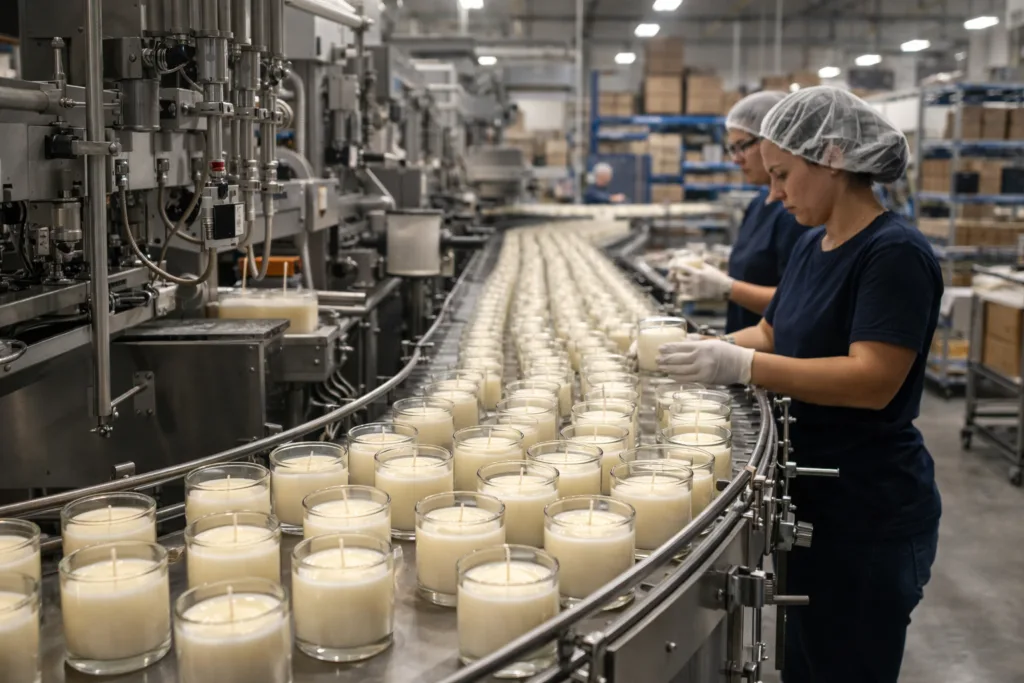
From the factory side, 8oz is one of the most production-friendly capacities. It often fits standardized filling lines, carton packing logic, and accessory sourcing options such as lids, labels, warning stickers, and insert trays. That matters more than many first-time buyers realize. The more a candle format aligns with production infrastructure, the easier it is to keep quality stable, lead times predictable, and costs under control.
That is why 8oz is not simply “popular.” It is commercially efficient.
What Does an 8oz Candle Actually Mean?
 This is one of the most misunderstood parts of candle sourcing.
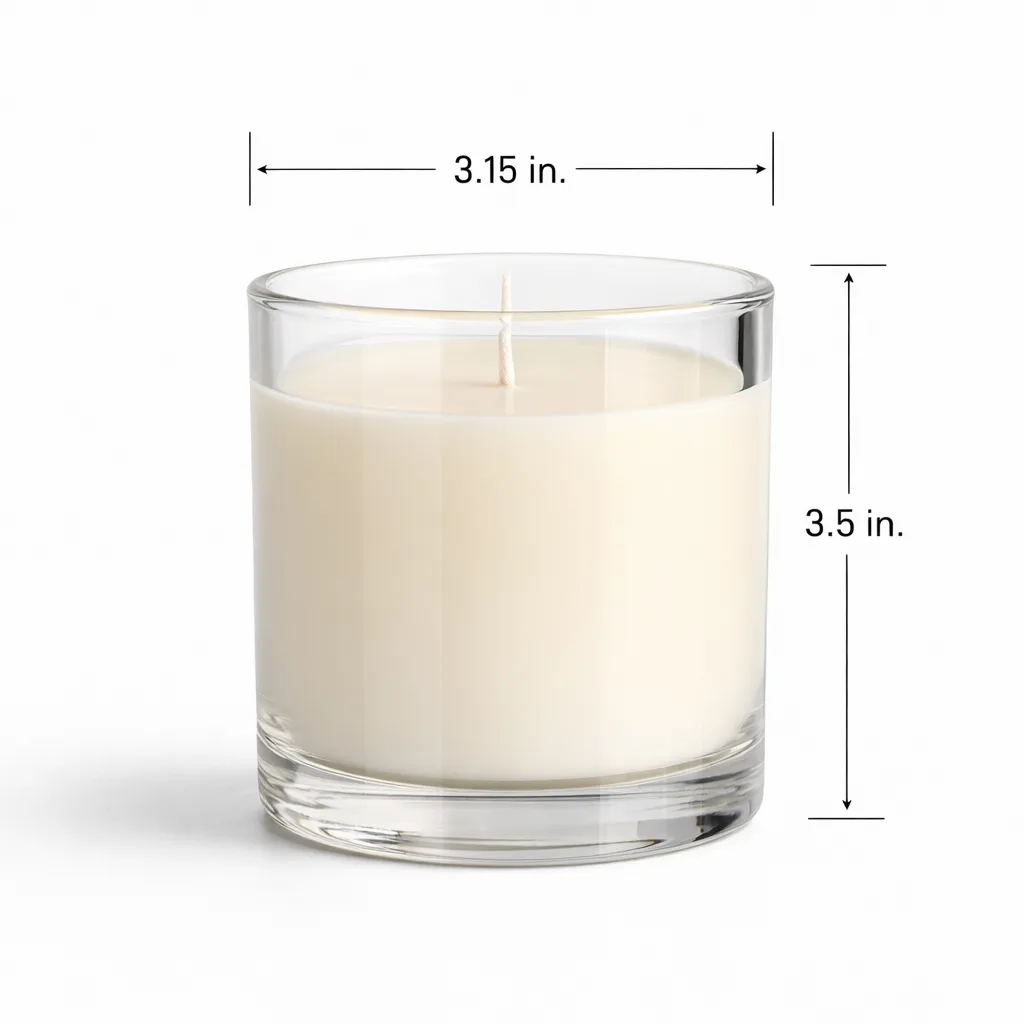
When buyers talk about an 8oz candle, they are usually referring to the wax fill weight, not necessarily the total jar capacity, the gross weight of the finished product, or the external dimensions of the vessel. In plain terms, the candle contains about 8 ounces of wax by weight, which is approximately 226.8 grams. However, the jar itself may be larger than the wax fill volume suggests, because candle design also requires headspace, wick placement tolerance, safe burning considerations, and visual proportion.
That is why two products can both be sold as 8oz candles while looking noticeably different in height or width.
Common 8oz Candle Jar Dimensions
There is no single universal size, but in wholesale production, many 8oz jar candles fall into a range such as:
- Diameter: around 2.8 to 3.2 inches (7.1 to 8.1 cm)
- Height: around 3.3 to 4.0 inches (8.4 to 10.2 cm)
A common commercial proportion is approximately 3 inches in diameter and 3.5 inches in height, though variations are normal depending on wall thickness, base thickness, interior capacity, and vessel style.
For example:
- A straight-sided jar may look wider and more modern.
- A taller tumbler may feel more elegant and giftable.
- A thick-bottom glass vessel may look more premium but reduce usable internal fill space.
- A ceramic jar may have a similar wax fill weight but different external dimensions because of heavier material walls.
So when discussing custom 8oz candles with logo wholesale, buyers should never rely on the “8oz” label alone. They should confirm at least four technical points:
- Wax fill weight in grams
- Outer dimensions of the vessel
- Inner dimensions / usable fill volume
- Total finished unit weight including jar, wax, lid, and packaging
These details directly affect shipping cost, packaging engineering, and retail presentation.
Why Size Clarity Matters for Serious Buyers
For large buyers, “8oz” is not enough information to approve production. Size ambiguity creates downstream problems in nearly every part of the project.
If the jar is too narrow, the fragrance throw and melt pool behavior may not perform as expected. If it is too wide, the wick specification may need to change, which can alter cost and burn stability. If the jar is too tall, the label artwork may need redesign, the master carton may hold fewer pieces, and the outer box may become more expensive. If the finished unit is much heavier than forecast, shipping economics can deteriorate quickly on large orders.
That is why professional candle development is not just about choosing an ounce number. It is about selecting a vessel architecture that supports the intended fragrance system, aesthetic direction, target margin, and logistics plan.
For large-volume private label programs, it is smart to define the candle not as “an 8oz candle” but as a complete specification package. That package should include:
- Fill weight
- Vessel material
- Vessel dimensions
- Vessel color or finish
- Wick type and count
- Fragrance load
- Lid material
- Label method
- Unit box specification
- Master carton packing quantity
- Target gross weight per carton
This level of precision is what separates commercially scalable projects from trial-and-error projects.
What Can Be Customized in Custom 8oz Candles with Logo Wholesale?
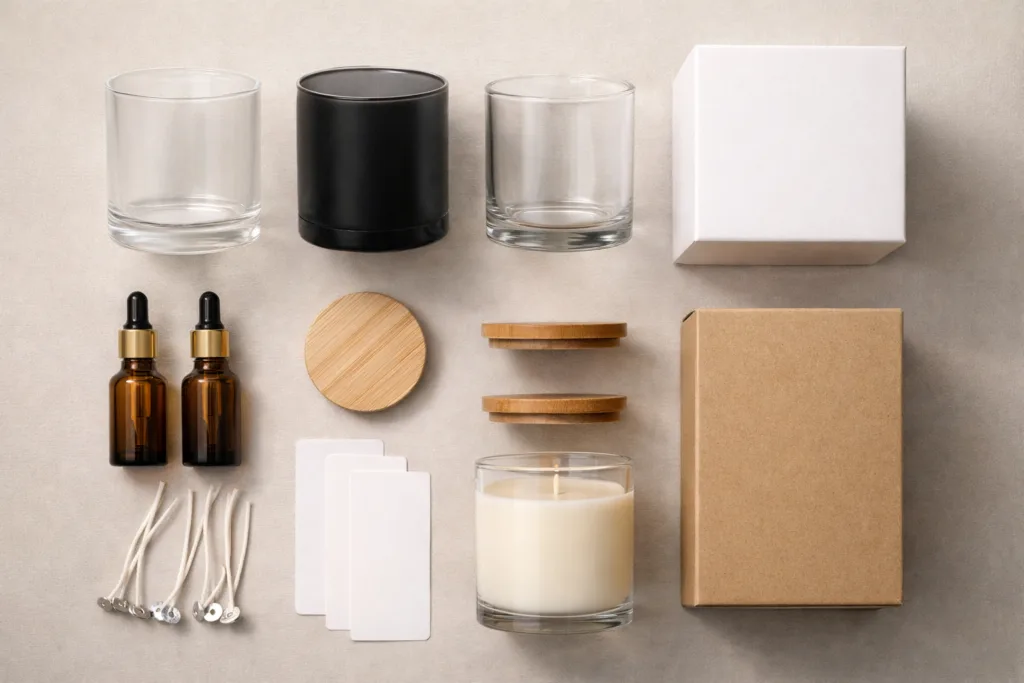 A serious wholesale candle project is rarely about printing a logo on a generic jar and calling it custom. Real private label development involves multiple layers of product customization, each with its own cost and MOQ logic.
1. Vessel Customization
The jar is the first major cost and branding variable.
Common options include:
- Clear glass
- Frosted glass
- Matte spray-coated glass
- Electroplated or metallic finishes
- Amber glass
- Thick-base luxury glass
- Ceramic containers
- Concrete-look or stone-effect vessels
For large buyers, the smartest path is often to separate visual customization from structural customization. Structural customization means developing a new vessel mold or highly specific custom component. This is expensive and usually requires high minimum volumes. Visual customization means using an existing production-ready vessel and customizing finish, decoration, and branding. That route is more efficient, faster, and often commercially safer.
If the goal is to win on speed, margin, and repeatability, standard vessel shapes with customized finishes usually outperform fully bespoke vessels.
2. Logo Application
A logo can be applied in several ways, and the method matters.
Common branding options include:
- Adhesive label
- Screen printing
- Hot stamping / foil detail
- Decal transfer
- Direct print on secondary packaging
- Embossed or debossed box branding
For large clients, adhesive labels are not automatically the “cheap” option. A beautifully designed, well-finished label can look premium while keeping the project flexible across fragrance SKUs. Direct printing looks cleaner, but it may require tighter production controls, higher setup cost, or longer lead time.
The best method depends on your assortment strategy. If you plan to run many fragrances under one core vessel, labels may improve agility. If you want a minimal high-end aesthetic with fewer SKUs, direct decoration may be worth the added complexity.
3. Wax Type
For custom 8oz candles with logo wholesale, wax selection affects not just marketing language but performance, price, filling temperature, and production yield.
Common systems include:
- Soy wax
- Coconut soy blend
- Paraffin soy blend
- Beeswax blends
- Custom proprietary blends
Premium private label lines often favor soy-based or coconut-based blends because they support a cleaner brand story and a more upscale market position. However, the exact blend should not be chosen purely for trend value. A factory-quality blend must also be evaluated for fragrance compatibility, surface finish, adhesion to the vessel, stability across seasons, and burn results.
The wrong wax system can make a beautiful jar candle perform badly.
4. Fragrance Development
Fragrance is one of the strongest perceived value drivers in a candle, and one of the easiest ways to destroy margin if handled carelessly.
Buyers usually choose one of two paths:
- House fragrance library: faster, lower development cost, easier MOQ structure
- Custom fragrance development: stronger differentiation, but more testing, time, and cost
For large orders, it is not always necessary to create a fully bespoke fragrance. Sometimes the better commercial strategy is to select from a refined factory fragrance library, then customize the naming, packaging, and product story. This protects speed while still creating a distinctive customer-facing brand experience.
5. Lid and Accessory Choices
The lid contributes more to perceived value than many buyers expect.
Common options:
- Bamboo lid
- Natural wood lid
- Painted metal lid
- Gold or matte black metal lid
- No lid for lower-cost retail formats
A lid adds cost, weight, and packing complexity, but it can dramatically improve shelf presence. For premium retail, hotel, and gifting programs, the right lid often earns its cost back in perceived value and merchandising strength.
6. Packaging Customization
For B2B buyers targeting serious retail channels, the candle is only half the product. Packaging often determines whether the item feels mass-market, premium, or gift-ready.
Common packaging options include:
- Simple folding cartons
- Rigid gift boxes
- Drawer boxes
- Window boxes
- Sleeve packaging
- Set packaging with inserts
- Branded tissue, cards, and protective components
For large-volume buyers, packaging design must be commercial, not merely pretty. Overbuilt packaging can damage profit just as easily as underbuilt packaging can damage brand perception.
Burn Time and Performance Expectations for 8oz Jar Candles
Most buyers want a simple answer to burn time, but the honest answer is that it depends on the wax system, wick, fragrance load, jar diameter, environmental conditions, and testing standards.
That said, many properly developed 8oz jar candles typically target a burn time range of roughly 40 to 50+ hours, with some formulas performing above or below that range. Buyers should treat any burn time claim as a testing question, not a marketing assumption.
Performance is not just about how long the candle burns. Serious buyers should evaluate:
- Full melt pool formation
- Flame stability
- Soot level
- Fragrance throw when cold and hot
- Jar temperature behavior
- Residual wax level
- Surface appearance after cooling
- Consistency across production batches
If you are building a serious retail line, insist on performance validation before bulk production.
The Real Cost Structure of Custom 8oz Candles with Logo Wholesale
 This is where many first-time buyers get lost. They compare quotations too quickly without understanding what is actually included.
A finished 8oz custom candle is not one cost. It is a stack of cost layers.
Major Cost Components
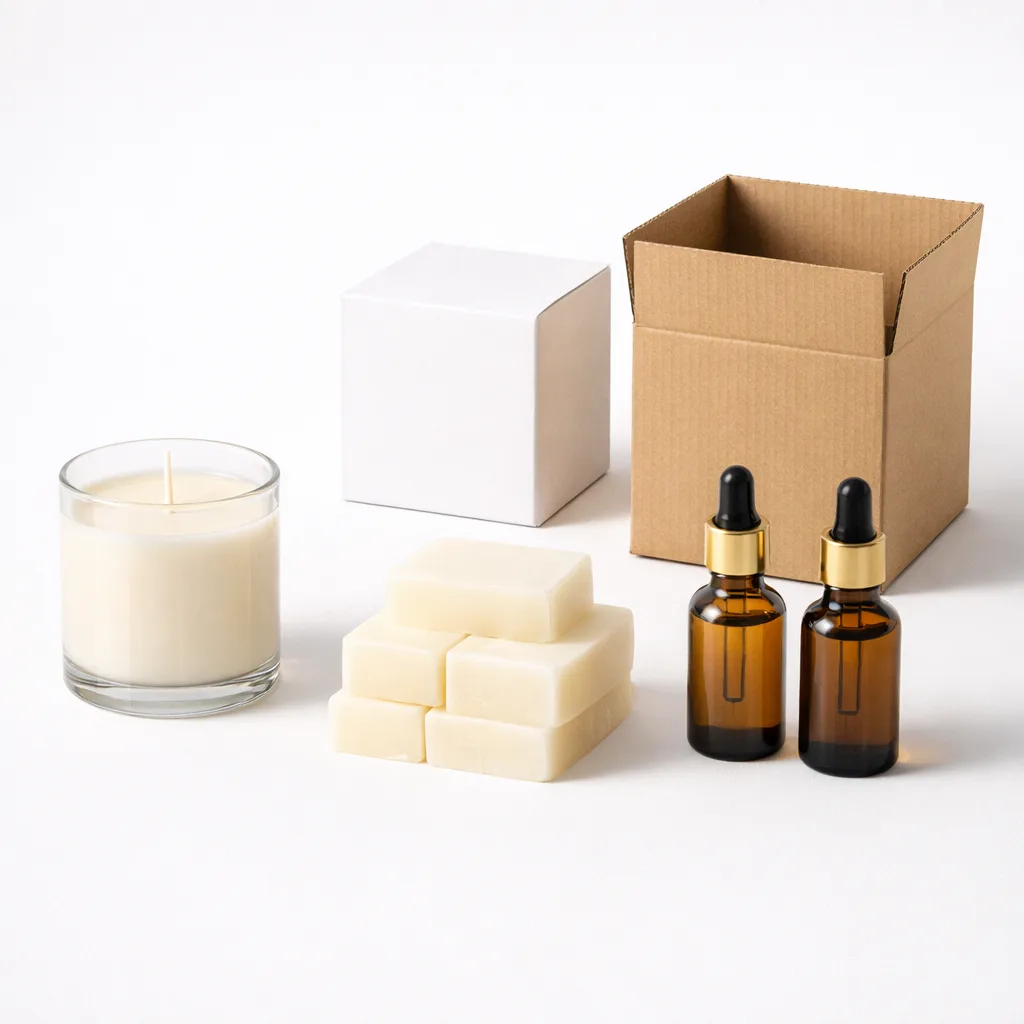 1. Vessel Cost
The jar is often one of the largest cost drivers, especially if you move beyond standard clear glass. Frosted finishes, spray color, thick-bottom glass, ceramic, and custom molds all push the number upward.
2. Wax Cost
The wax cost depends on both the wax type and the fill weight. Since an 8oz candle uses around 226.8g of wax, changes in wax formula scale directly across volume. On large runs, even a small per-kilogram wax increase matters.
3. Fragrance Cost
Fragrance pricing can vary significantly depending on oil complexity, concentration, and sourcing. Premium fragrance oils can materially change the final cost, particularly if the fragrance load is high.
4. Wick and Small Components
Wicks, wick stickers, centering tools, warning labels, dust covers, and bottom labels may seem minor, but collectively they matter in mass production.
5. Lid Cost
Metal lids, bamboo lids, custom wooden lids, and branded lids each carry different cost implications.
6. Decoration Cost
Label printing, silk-screening, foil stamping, and custom graphics all add cost. Multi-SKU projects with many small print runs can also create inefficiency.
7. Packaging Cost
The box can range from basic and efficient to luxury and margin-destroying. Unit cartons, gift boxes, inserts, and set configurations can materially alter the total landed cost.
8. Labor and Production Overhead
Filling, curing, labeling, packing, inspection, and line setup all contribute. Custom projects with multiple fragrance SKUs or packaging versions usually require more handling.
9. Testing and Sampling
Sampling is not just a courtesy; it is part of development cost. Repeated revisions, new artwork proofs, and multiple rounds of approval consume real resources.
10. Freight and Landed Cost
The ex-factory price is not the whole story. Glass candles are heavy and fragile. Freight mode, destination, packaging density, and duty structure can materially change the landed cost.
A Practical Way to Think About Cost
Serious buyers should not ask only, “What is your unit price?” They should ask:
- What is included in the quoted unit price?
- Is this based on standard jars or custom molds?
- Is the logo cost included?
- Is the box included?
- Does the quotation assume one fragrance or multiple fragrances?
- Does the packaging include inserts?
- Is the lid included?
- What testing has already been done, and what still needs to be validated?
- What changes if I increase order quantity?
- What is the estimated gross weight per carton?
These questions reveal whether a supplier actually understands private label production or is simply sending a surface-level quote.
Why Large Buyers Usually Get Better Economics
In candle manufacturing, scale does not just lower price. It improves efficiency across the entire program.
Larger buyers can spread fixed setup costs across more units. They can order packaging in more efficient print quantities. They can standardize the vessel across multiple fragrances. They can justify stronger quality controls. They can negotiate better carton utilization. They can also reduce the risk premium that factories often build into small custom projects.
That is one reason many suppliers are more interested in serious retail launches, national distribution programs, hotel groups, and corporate gifting contracts than in fragmented micro-orders. Large buyers create operational logic. Small custom projects often create operational disruption.
If you are a serious buyer, it helps to present your program like one. Share projected annual volumes, SKU plan, channel strategy, packaging direction, and reorder expectations. Factories respond differently when they see a scalable account rather than a one-off experiment.
How to Control Cost Without Cheapening the Product
Cost control is not about stripping quality from the candle. It is about protecting the brand while removing unnecessary complexity.
The most effective cost strategies for custom 8oz candles with logo wholesale usually include:
Standardize the Vessel
Using one core jar across multiple fragrances improves procurement, simplifies cartons, reduces sampling complexity, and helps maintain visual consistency.
Limit Decorative Variables
Too many label versions, lid finishes, or box designs create cost leakage. Standardize the structure, then differentiate through fragrance naming and artwork details.
Use Existing Production-Ready Components
Custom molds, unusual lids, and special-fit inserts look exciting at the concept stage but often erode margin. Existing components with strong design execution usually produce better business results.
Rationalize Packaging
A premium folding carton can outperform an expensive rigid box if the brand design is strong. Packaging should support price positioning, not sabotage it.
Consolidate Fragrance SKUs for the First Production Run
Too many fragrances in the first order increase risk and reduce efficiency. A focused launch assortment is often healthier both operationally and commercially.
Optimize for Shipping Early
Do not wait until production is done to ask about carton weight and pallet efficiency. Freight should be part of product design from the start.
MOQ Logic: Why Suppliers Push Minimums
MOQ is not a random factory rule. It reflects material purchasing, production scheduling, packaging economics, and labor efficiency.
For custom 8oz candles with logo wholesale, MOQs typically rise when a project includes:
- Custom vessels
- Custom fragrance development
- Complex packaging
- Multiple SKUs with low volume per SKU
- Special decoration methods
- Non-standard lids or accessories
Large buyers understand this. MOQ is not there to make life difficult. It is there to make the project commercially sustainable for both sides.
A factory can support lower MOQs more easily when the project uses existing jars, standard lids, shared fragrance options, and flexible branding methods such as labels. As customization depth increases, MOQ usually follows.
Who Should Buy Custom 8oz Candles with Logo Wholesale?
This format is particularly suitable for:
Boutique Retail Brands
The 8oz jar candle works well as a signature everyday luxury SKU. It displays cleanly, photographs well, and fits standard shelf planning.
Department Store and Concept Store Suppliers
It offers enough physical presence to justify premium packaging and higher perceived value.
Corporate Gifting Programs
An 8oz candle feels substantial enough for gifting while remaining practical for custom branding and large-volume fulfillment.
Hospitality and Spa Buyers
For hotel boutiques, room gifting, spa retail, and amenity extensions, the 8oz size offers a polished, upscale presentation without becoming too cumbersome.
Importers and Distributors
The format is easy to understand across markets and can be adapted to different branding tiers, from entry premium to luxury gift positioning.
What Serious Buyers Should Ask Before Approving Production
Before placing a bulk order, ask for clarity on the following:
- Exact wax fill weight in grams
- Outer and inner vessel dimensions
- Finished unit weight
- Lid specification
- Box structure and material
- Master carton packing quantity
- Estimated carton gross weight
- Fragrance options and fragrance load
- Wick type and burn test status
- Decoration method and artwork limitations
- Production lead time
- Sample approval process
- QC process before shipment
These are not excessive questions. They are standard questions for a commercially disciplined buying process.
Final Thoughts
The reason custom 8oz candles with logo wholesale remains such a strong commercial category is simple: it balances brand value and production reality better than many other candle formats. It is large enough to feel premium, flexible enough for private label programs, efficient enough for wholesale logistics, and familiar enough to work across retail, gifting, and hospitality channels.
But successful sourcing is not just about picking an 8oz size and adding a logo. The buyers who win in this category are the ones who understand the full structure behind the finished product: fill weight, vessel dimensions, wax system, packaging logic, MOQ economics, freight implications, and assortment discipline. They treat the candle as a commercial program, not a visual mockup.
For large buyers, the smartest approach is usually not to customize everything. It is to customize the right things. Use a strong vessel, a stable wax system, disciplined branding, efficient packaging, and a specification package built for repeatability. That is how a candle line becomes scalable, margin-friendly, and credible in the eyes of both retailers and end consumers.
In wholesale candle manufacturing, good design gets attention. Good specification gets reorders.
FAQs
1. What size is a custom 8oz jar candle?
An 8oz jar candle usually refers to the wax fill weight, about 226.8 grams, not the total jar size. Common dimensions are around 2.8 to 3.2 inches in diameter and 3.3 to 4.0 inches in height, depending on vessel style.
2. How much does custom 8oz candles with logo wholesale usually cost?
The final cost depends on the jar, wax type, fragrance oil, lid, logo method, packaging, order quantity, and freight. Standard glass jars with efficient packaging cost far less than fully custom vessels with premium gift boxes.
3. Why is the 8oz candle size so popular for private label brands?
Because it offers a strong balance of shelf presence, burn time, retail value, shipping efficiency, and packaging flexibility. It is one of the most commercially practical sizes for scalable candle programs.