
 For established candle brands, private label programs, and retail buyers operating at scale, shipping cost is no longer a secondary operational detail. It is a structural component of margin.
At lower volumes, freight may appear manageable. But as order quantities scale into the thousands or tens of thousands of units, packaging weight and volume begin to exert a disproportionate influence on total landed cost.
Most buyers focus on product cost, fragrance quality, vessel aesthetics, and packaging presentation. These factors are visible and directly tied to brand perception. Shipping cost, by contrast, is often treated as an external variable—something determined by freight carriers, fuel prices, or global logistics conditions.
In reality, shipping cost is heavily influenced by decisions made much earlier in the supply chain. Among those decisions, packaging weight and structural design are two of the most powerful variables.
Lightweight packaging is not a compromise in quality. It is a strategic tool that improves shipping efficiency, reduces landed cost per unit, and increases margin without changing retail price.
This article examines how packaging weight directly affects freight cost, container efficiency, fulfillment economics, and ultimately profit structure.
Shipping Cost Is Directly Influenced by Packaging Weight and Volume
Freight cost is calculated based on two measurable variables:
• Physical weight of the shipment
• Physical volume occupied by the shipment
Both variables are directly influenced by packaging.
When importing private label candles, the packaging weight can represent a significant portion of total shipment weight. In many cases, the outer box, inserts, and structural packaging components weigh nearly as much as the candle vessel itself.
This means packaging is not just a protective layer. It is a freight cost multiplier.
For example, consider a standard private label candle program with the following structure:
Glass candle vessel weight: 450g
Wax and fragrance weight: 280g
Packaging weight: 320g
Total weight per unit: 1,050g
In this scenario, packaging represents over 30% of total shipping weight.
Reducing packaging weight by even 150g per unit can reduce shipment weight by 15%.
When scaled across large purchase orders, this reduction translates directly into freight savings.
Freight Cost Multiplies Across Large Production Runs
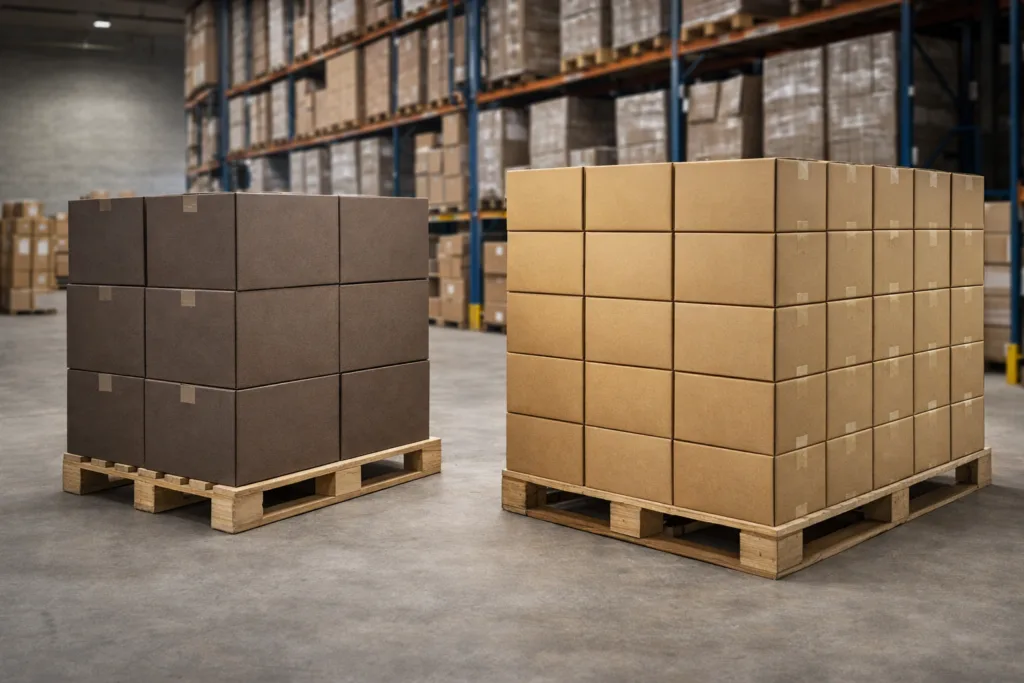 At scale, small differences in packaging weight compound into substantial cost differences.
Consider a 20,000-unit order shipped via sea freight.
Heavy packaging scenario:
Packaging weight per unit: 320g
Total packaging weight: 6,400kg
Lightweight packaging scenario:
Packaging weight per unit: 150g
Total packaging weight: 3,000kg
Weight reduction: 3,400kg
This reduction has several direct effects:
• Lower total freight weight
• Lower handling cost
• Lower container loading density pressure
• Lower cost per unit shipped
Freight carriers charge based on container space utilization and weight distribution. Reducing excess packaging weight improves overall shipment efficiency.
This does not require changing the product, vessel, or retail positioning. It is purely a packaging optimization decision.
Container Efficiency Determines Cost Per Unit
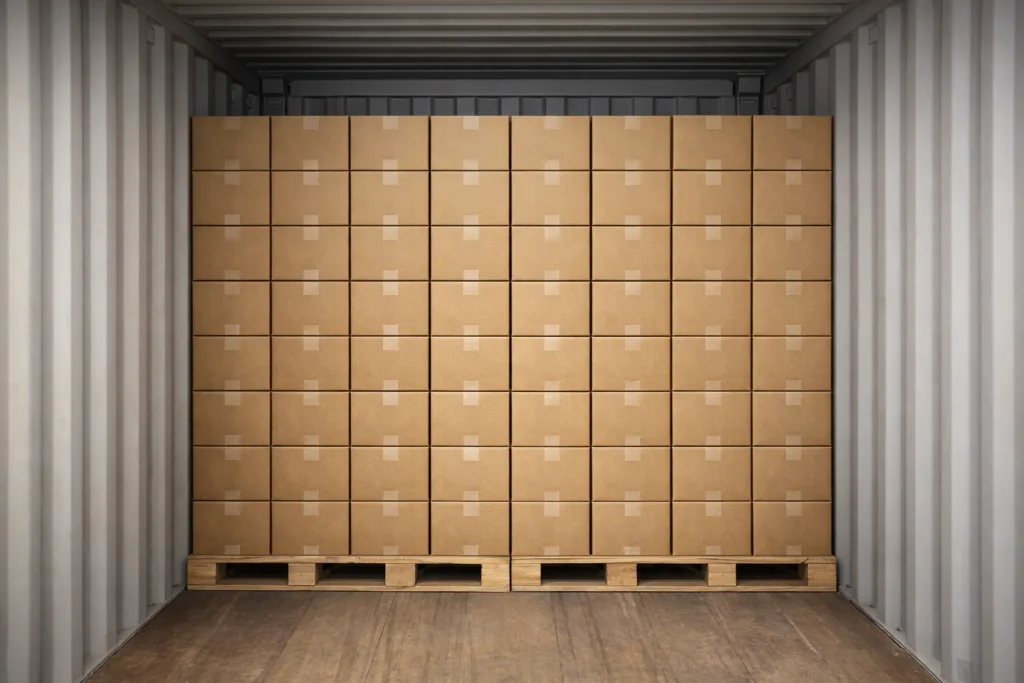
For large buyers importing candles via full container load (FCL), container efficiency is a primary determinant of cost per unit.
A standard 40-foot container has fixed physical limits. These limits include both maximum weight and maximum volume.
Heavy packaging consumes both.
Rigid box packaging, multi-layer inserts, and thick structural materials increase both carton weight and carton dimensions. This reduces the number of units that can be loaded into each container.
Lightweight packaging improves container density.
Example comparison:
Heavy rigid packaging:
Units per carton: 12
Cartons per container: 1,200
Total units per container: 14,400
Lightweight optimized packaging:
Units per carton: 18
Cartons per container: 1,200
Total units per container: 21,600
This represents a 50% increase in container efficiency.
Freight cost per container remains relatively constant.
Freight cost per unit decreases dramatically.
This improves margin without altering retail price.
Packaging Weight Directly Influences Landed Cost
 For professional buyers, landed cost is the true cost basis for margin calculation.
Landed cost includes:
• Product manufacturing cost
• Packaging cost
• Freight cost
• Import duties
• Handling cost
• Warehousing cost
Packaging weight influences multiple components of landed cost simultaneously.
Reducing packaging weight lowers:
• Freight cost
• Handling cost
• Container loading cost
• Fulfillment handling cost
This has a compounding effect on profit structure.
For example:
Retail price: $28
Product cost: $6.20
Heavy packaging freight cost: $3.10
Lightweight packaging freight cost: $2.20
Freight savings: $0.90 per unit
At 50,000 units annually, this represents:
$45,000 additional margin
This is achieved without changing retail price, branding, or customer experience.
It is purely operational efficiency.
Lightweight Packaging Improves Fulfillment Efficiency
 Beyond international freight, packaging weight continues to influence domestic logistics.
Once candles arrive at their destination, they enter warehouse and fulfillment systems.
Warehouse operations calculate cost based on:
• Storage volume
• Handling frequency
• Shipment weight
Lighter packaging improves performance in all three areas.
Benefits include:
Lower storage density cost
Lower picking and handling cost
Lower last-mile shipping cost
For large retail chains and e-commerce distribution networks, these efficiencies scale across thousands of shipments per month.
Over time, lightweight packaging contributes significantly to overall logistics optimization.
Lightweight Packaging Improves Supply Chain Scalability
As candle brands grow, logistics efficiency becomes increasingly important.
Heavy packaging creates structural inefficiencies that limit scalability.
These inefficiencies include:
• Increased container requirements
• Higher freight cost exposure
• Reduced inventory turnover efficiency
• Higher fulfillment burden
Lightweight packaging improves scalability by increasing throughput efficiency.
More units per container.
More efficient warehouse storage.
Lower logistics cost per unit.
This supports sustainable growth.
Lightweight Packaging Does Not Mean Lower Perceived Value
A common misconception is that heavier packaging creates higher perceived value.
While structural packaging plays an important role in premium positioning, excess structural weight does not necessarily improve brand perception.
Modern packaging engineering allows brands to achieve premium presentation with optimized structural efficiency.
This includes:
• Optimized folding carton structures
• Precision inserts
• Engineered board thickness
• Efficient dimensional design
Professional buyers increasingly prioritize packaging efficiency alongside presentation.
Packaging is no longer evaluated solely on appearance. It is evaluated on performance.
Strategic Packaging Allocation Maximizes Margin
Experienced buyers apply packaging strategically across product portfolios.
Premium gift sets may justify heavier rigid box packaging.
Core volume SKUs benefit from lightweight optimized packaging.
This balanced approach maximizes overall margin performance.
The goal is not to eliminate premium packaging.
The goal is to eliminate unnecessary structural weight in high-volume SKUs.
This improves profitability at scale.
Packaging Optimization Is a Profit Engineering Decision
Packaging weight directly influences:
• Freight cost
• Container efficiency
• Fulfillment efficiency
• Landed cost
• Margin performance
These effects compound across large production volumes.
Lightweight packaging is not a cost-cutting measure.
It is a structural optimization strategy that improves long-term profitability.
For private label candle programs operating at scale, packaging efficiency is one of the most reliable methods to increase margin without changing retail pricing.
Brands that optimize packaging weight gain structural advantages in logistics efficiency, cost stability, and scalability.
Over time, these advantages translate into stronger financial performance.
FAQ
Does lightweight packaging increase damage risk?
When properly engineered, lightweight packaging provides full structural protection. Packaging efficiency is achieved through structural optimization, not material elimination.
How much can lightweight packaging reduce shipping cost?
Depending on order volume and packaging structure, shipping cost reductions typically range between 10% and 35%.
Is lightweight packaging suitable for premium candle brands?
Yes. Many premium brands use optimized folding carton structures that maintain premium presentation while improving shipping efficiency and margin performance.
Conclusion
Shipping cost is not an external variable beyond buyer control. It is strongly influenced by packaging decisions made during product development.
Lightweight packaging improves container efficiency, reduces freight cost, and increases profit margin.
For established brands and large-scale buyers, packaging optimization is one of the most effective operational strategies for improving long-term profitability.