
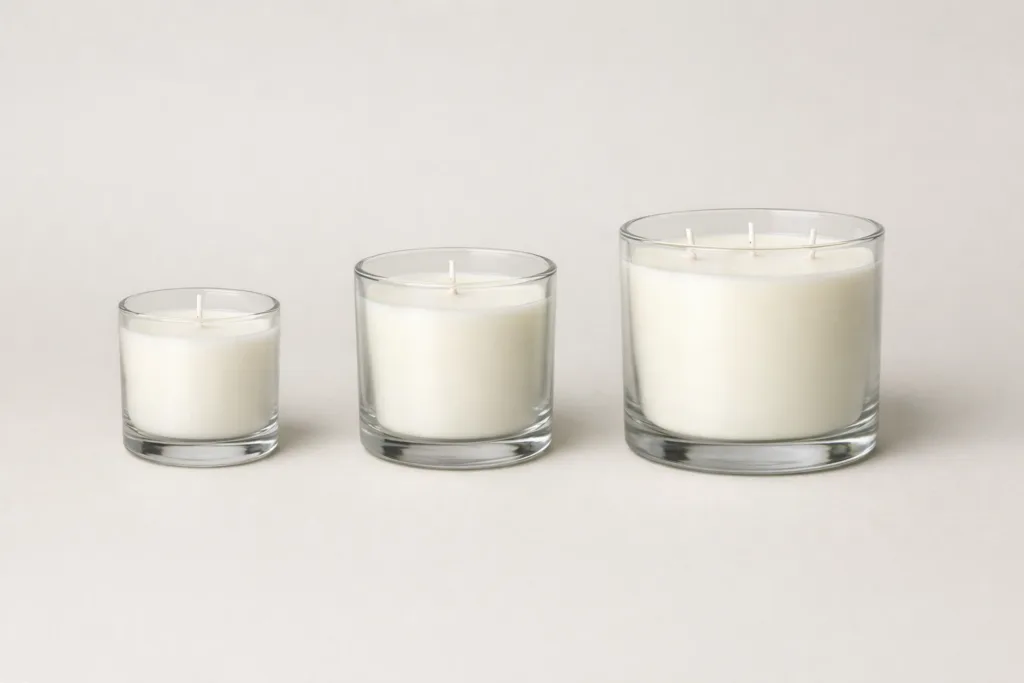
 Introduction: Why Jar Size Is a Strategic Decision — Not a Design Detail
In the luxury candle industry, jar size is rarely accidental.
It is a positioning decision.
It is a pricing strategy.
It is a supply‑chain calculation.
It is a burn‑performance engineering choice.
When mature buyers study the top 10 luxury candle brands, one pattern becomes clear: while scent direction evolves every season, jar dimensions remain remarkably disciplined.
This article breaks down the common jar size standards used by leading luxury brands in 2026 and explains what serious buyers should extract from them when building scalable, high‑margin collections.
This is written for:
- Established retailers
- Multi‑location boutiques
- Hotel groups
- Corporate gifting buyers
- Distributors ordering 1,000+ units per SKU
- Private‑label brands targeting premium positioning
If you are planning bulk production, jar size decisions directly impact:
- Unit cost
- Wick engineering
- Packaging structure
- Pallet optimization
- Freight efficiency
- Retail pricing psychology
Let’s break down what the best brands consistently do — and why.
Section 1: The 7 Proven Jar Size Standards Used by Top Luxury Candle Brands
After analyzing the dominant global luxury players, seven size structures consistently appear.
1. The 190g–200g Classic Single‑Wick (The Global Benchmark)
Typical Dimensions:
- Diameter: 7–8 cm
- Height: 8–9 cm
- Wax Fill: 180g–200g
- Burn Time: 40–50 hours
This is the most replicated size in the luxury candle world.
Why?
- Balanced melt pool performance
- Ideal for single‑wick heat distribution
- Perfect for $60–$90 retail positioning
- Efficient carton packing ratio
- Works seamlessly with rigid gift boxes
For bulk buyers, this size offers the most predictable production consistency. Factories have mature tooling, standardized glass thickness, and tested wick charts for this dimension.
If you are launching a premium line and want minimum risk, this is the safest structural starting point.
2. The 220g–250g Premium Upgrade (The Margin Optimizer)
Typical Dimensions:
- Diameter: 8–9 cm
- Height: 9–10 cm
- Burn Time: 50–60 hours
This size looks subtly more substantial in hand.
Retail psychology matters: when a candle crosses the visual threshold from “standard” to “substantial,” consumers accept price upgrades more easily.
For brands targeting $75–$110 retail, this format dominates.
From a production standpoint, the difference between 190g and 240g is not dramatic in cost — but perceived value increases significantly.
This is where many mature brands anchor their core collection.
3. The 300g–350g Statement Single Wick
Typical Dimensions:
- Diameter: 9–10 cm
- Height: 10–11 cm
This size is less common in European heritage brands but increasingly popular in US‑based luxury lifestyle brands.
Advantages:
- Longer burn time
- Higher shelf impact
- Stronger gifting presence
Challenges:
- Requires thicker glass for safety
- Melt pool engineering must be precise
- Slightly higher freight cost per unit
For B2B buyers, this size works best when positioned as a “signature scent anchor.” Not every SKU needs this format.
4. The 500g–600g Three‑Wick Format (Revenue Driver)
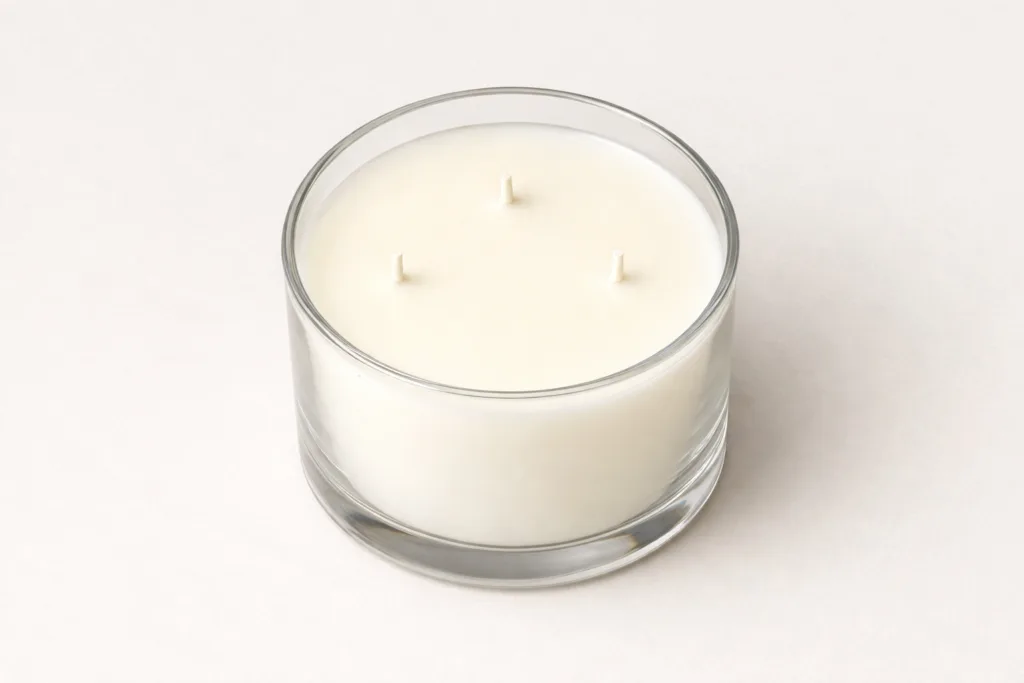 Typical Dimensions:
- Diameter: 12–14 cm
- Height: 8–10 cm
This format dominates holiday launches.
Three‑wick candles:
- Create stronger fragrance diffusion
- Justify $120–$180 retail
- Increase average order value
But buyers must understand the operational impact:
- Higher defect sensitivity (wick alignment critical)
- Greater wax shrink risk during cooling
- More carton space per unit
Three‑wick should not replace core single‑wick SKUs. It should complement them strategically.
5. The 800g–1000g Oversized Format (Brand Authority Piece)
These are not volume sellers.
They exist to:
- Elevate brand image
- Anchor visual merchandising
- Support VIP gifting
Logistically, these formats:
- Require reinforced packaging
- Increase breakage risk if glass quality is low
- Demand strict burn testing
Mature buyers treat this as a marketing investment, not a replenishment SKU.
6. Travel Size (70g–100g Mini Format)
Typical Dimensions:
- Diameter: 5–6 cm
- Height: 6–7 cm
Used for:
- Discovery sets
- Hotel programs
- Subscription boxes
Margins per gram are often higher here.
But this format requires disciplined MOQ planning to avoid fragmentation.
7. Refill Systems (The 2026 Sustainability Driver)
Luxury brands increasingly design jars that accommodate refill inserts.
Common refill weights:
- 180g refill
- 220g refill
Buyers planning refill systems must design the primary vessel dimension with insert tolerance in mind from the beginning.
Refill planning is structural — not cosmetic.
Section 2: The Hidden Engineering Logic Behind Luxury Jar Sizes
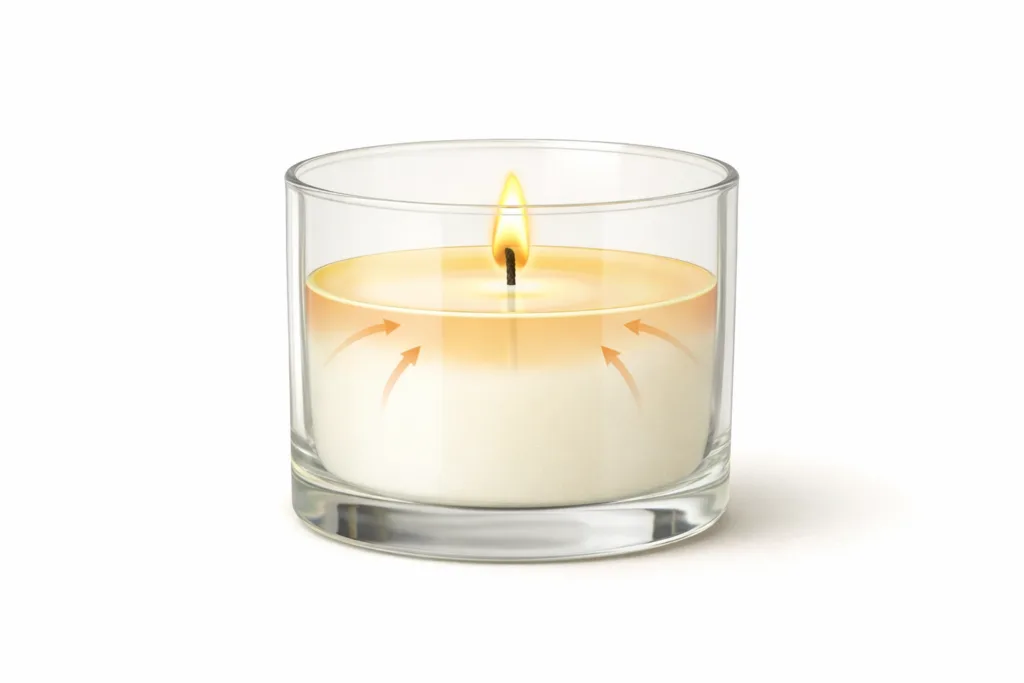 Luxury candle sizing is not random. It is tied to burn physics.
Diameter and Melt Pool Control
Single‑wick performance works best within 7–9 cm diameter.
Beyond 9 cm, single wicks struggle to:
- Reach edge‑to‑edge melt
- Prevent tunneling
- Maintain consistent fragrance throw
This is why most luxury brands stay within this range.
Three‑wick systems compensate for wider diameters.
Glass Thickness and Heat Management
Luxury brands rarely use thin glass.
Standard thickness for premium jars:
- 3mm–5mm depending on diameter
Thicker glass:
- Improves heat insulation
- Enhances perceived quality
- Reduces cracking risk
However, thicker glass increases weight and freight cost.
Bulk buyers must balance perception vs logistics.
Height-to-Diameter Ratio
Most luxury candles follow a near 1:1 ratio.
This creates:
- Visual harmony
- Stable burn dynamics
- Packaging compatibility
Extreme tall formats often perform poorly in melt control.
Section 3: What Mature Buyers Extract From Top Brand Patterns
After studying the top 10 luxury brands, these shared behaviors stand out:
1. Limited Core Size System
Most brands operate within 2–3 core sizes.
This simplifies:
- Reordering
- Packaging inventory
- Carton standardization
- Warehouse organization
Complex size systems increase operational chaos.
2. Consistent Vessel Architecture
Even when fragrances change seasonally, vessel dimensions remain consistent.
This allows:
- Label template reuse
- Box die‑line reuse
- Pallet stacking efficiency
Serious buyers avoid constant structural redesign.
3. Pricing Tiers Aligned With Size Tiers
Luxury brands align:
- 190g = Entry premium
- 240g = Core
- 600g = Elevated gifting
Size supports pricing ladder clarity.
4. Freight Awareness Built Into Design
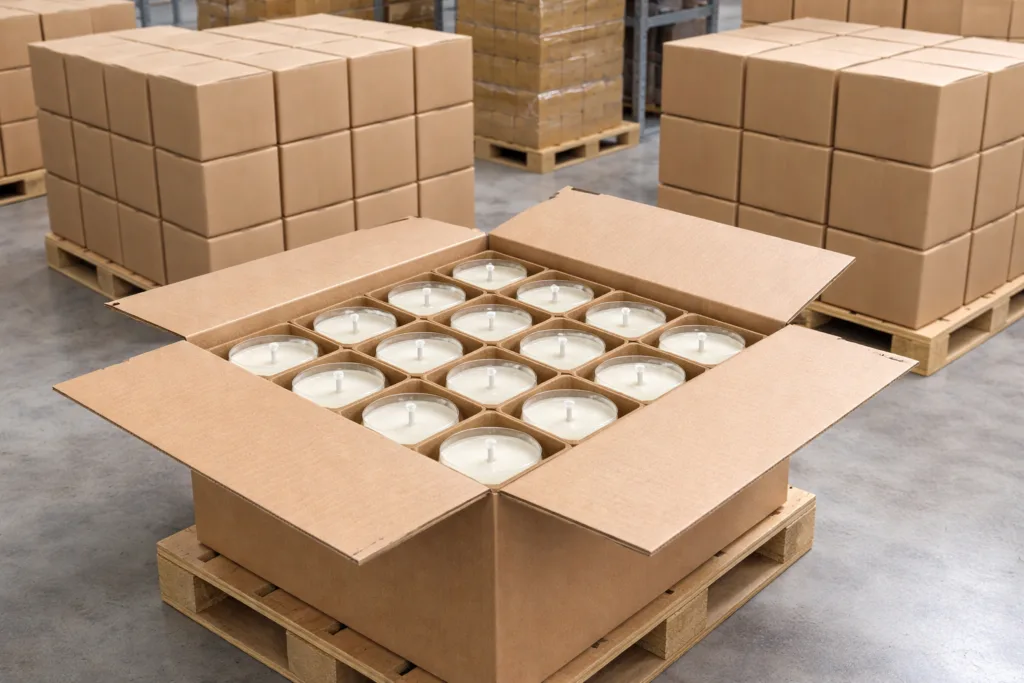 High‑volume buyers calculate:
- Units per master carton
- Master cartons per pallet
- Pallets per container
Jar diameter changes container economics significantly.
Section 4: Jar Size and MOQ Strategy for Large Orders
For buyers ordering 1,000–5,000+ units per SKU:
Jar size impacts:
- Mold cost (if custom glass)
- Carton tooling
- Inner box structure
- Freight density
Standard sizes (190g / 240g / 600g) usually have lower tooling barriers.
Custom oversized shapes increase minimums dramatically.
If your goal is scalable reorder cycles, align with industry‑proven dimensions.
Section 5: Packaging Compatibility — The Overlooked Factor
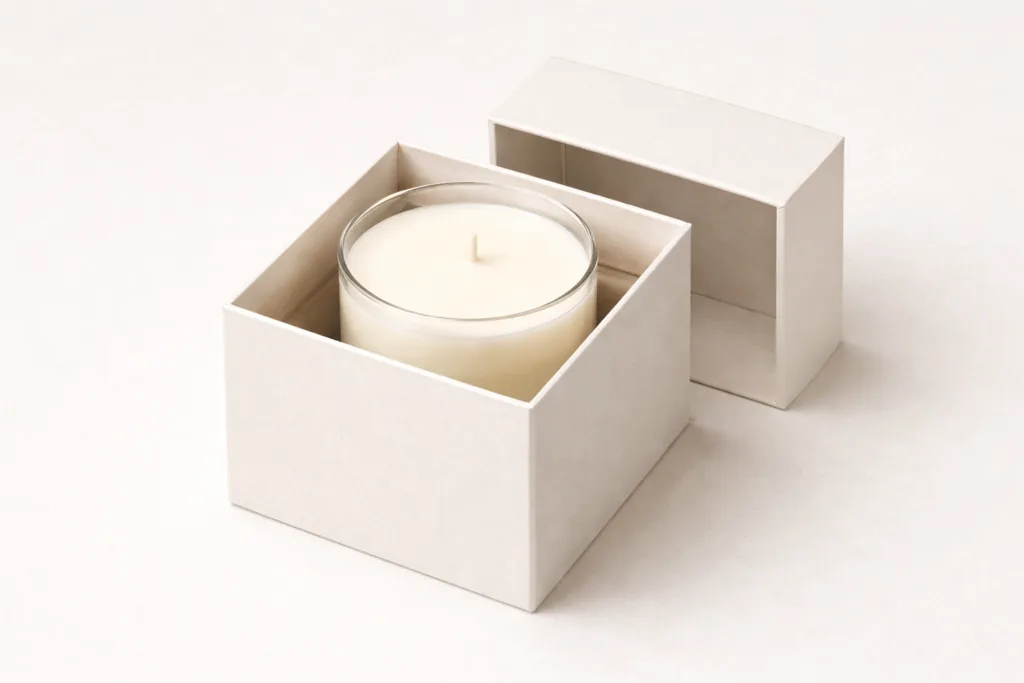 Rigid gift boxes, magnetic closures, and sleeve systems are all dimension dependent.
Standard 8 cm diameter jars fit effortlessly into:
- Square rigid boxes
- Two‑piece lid base boxes
- Holiday slipcase systems
Irregular diameters complicate:
- Foam inserts
- Box strength testing
- Shipping drop tests
Packaging should be designed after jar size is finalized — not before.
Section 6: Strategic Recommendations for Serious Buyers
If you are developing a premium private‑label candle collection for bulk production, consider the following disciplined approach:
- Choose one core single‑wick size (190g–240g).
- Add one premium upgrade (3‑wick 500g–600g).
- Keep vessel diameter consistent across scents.
- Design packaging around standardized dimensions.
- Test burn performance before scaling.
- Avoid excessive size experimentation in year one.
Luxury brands scale through discipline — not novelty.
Section 7: 2026 Outlook — Where Jar Sizing Is Heading
In 2026, two trends are shaping jar decisions:
- Refillable systems
- Heavier base glass for luxury feel
However, the 190g–250g core format remains dominant.
Expect innovation in materials, not radical dimension shifts.
The structure is stable.
The branding evolves around it.
FAQ
1. What is the most common luxury candle jar size?
The 190g–200g single‑wick format with a 7–8 cm diameter remains the global benchmark for premium brands.
2. Are larger candle jars more profitable?
Not necessarily. While larger jars support higher retail pricing, they increase freight, packaging, and defect risk. Profit depends on margin discipline and reorder stability.
3. Should new private‑label brands copy luxury brand jar sizes?
Aligning with proven industry dimensions reduces risk and simplifies scaling. Structural innovation should come after core stability is achieved.
Final Thoughts
Jar size is one of the most underestimated decisions in luxury candle development.
The top brands are consistent for a reason.
They prioritize:
- Burn reliability
- Pricing clarity
- Supply‑chain efficiency
- Structural repeatability
If you are planning a serious private‑label candle program for bulk production, studying jar dimensions is not imitation — it is strategic alignment.
The most successful luxury brands are not structurally experimental.
They are operationally disciplined.
And that discipline begins with size.