
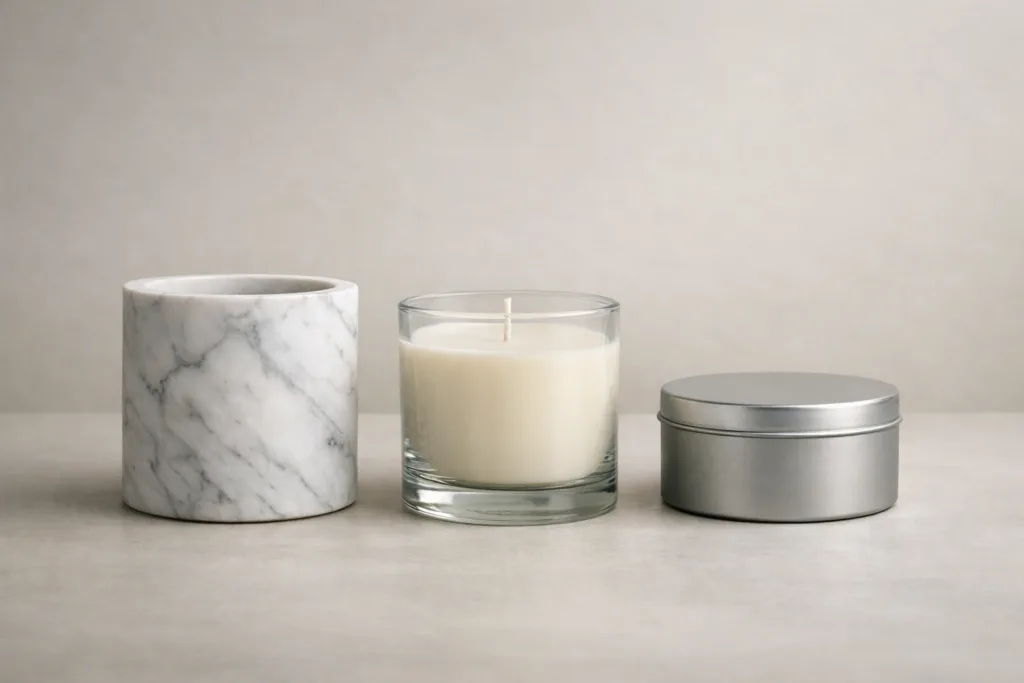
 Running a business—especially a manufacturing-backed, product-based business—has very little to do with chasing what looks expensive.
It has everything to do with doing the right things consistently, sustainably, and at scale.
In Chinese business culture, there is a strong emphasis on “jiao ta shi di”—keeping your feet on the ground. You build step by step. You respect cost structures. You make decisions that can survive growth.
This philosophy matters deeply in the candle industry.
Because a candle is not a sculpture. It is not a one-off art object. For most brands, a candle is meant to be produced repeatedly, shipped efficiently, priced rationally, and repurchased willingly.
And this is exactly why, despite its visual appeal, marble is rarely the right choice for large-scale candle production.
The Core Misunderstanding: Expensive Materials ≠ Strong Brands
Many first-time buyers approach candle development with a simple assumption:
If the jar looks expensive, the product must be premium.
This is understandable—but it is also incomplete.
Strong candle brands are not built on materials alone. They are built on:
- Consistent fragrance performance
- Reliable burn behavior
- Repeatable production quality
- Healthy cost and margin structures
A beautiful container cannot compensate for a candle that fails in these areas.
Marble Candle Jars: Aesthetic Strength, Commercial Weakness
Marble jars attract attention for good reasons:
- Natural stone feels luxurious to the touch
- Each jar has unique veining
- Visual weight suggests permanence and value
However, these strengths sit almost entirely on the surface level.
From a supply-chain perspective, marble introduces friction at nearly every stage of production and distribution.
Weight Is Not a Detail — It Is a Cost Multiplier
In global trade, weight is never neutral.
Every additional gram affects:
- Ocean freight pricing
- Air freight feasibility
- Carton design and palletization
- Warehousing and handling costs
Marble is one of the heaviest materials commonly used for candle containers.
A marble jar of standard candle size can weigh two to three times more than its glass or ceramic equivalent.
This creates a cascade effect:
- Higher freight cost per unit
- Lower quantity per shipment
- Increased breakage risk
- Higher insurance and packaging requirements
What begins as a design choice quietly reshapes your entire cost structure.
Packaging Becomes a Problem, Not a Detail
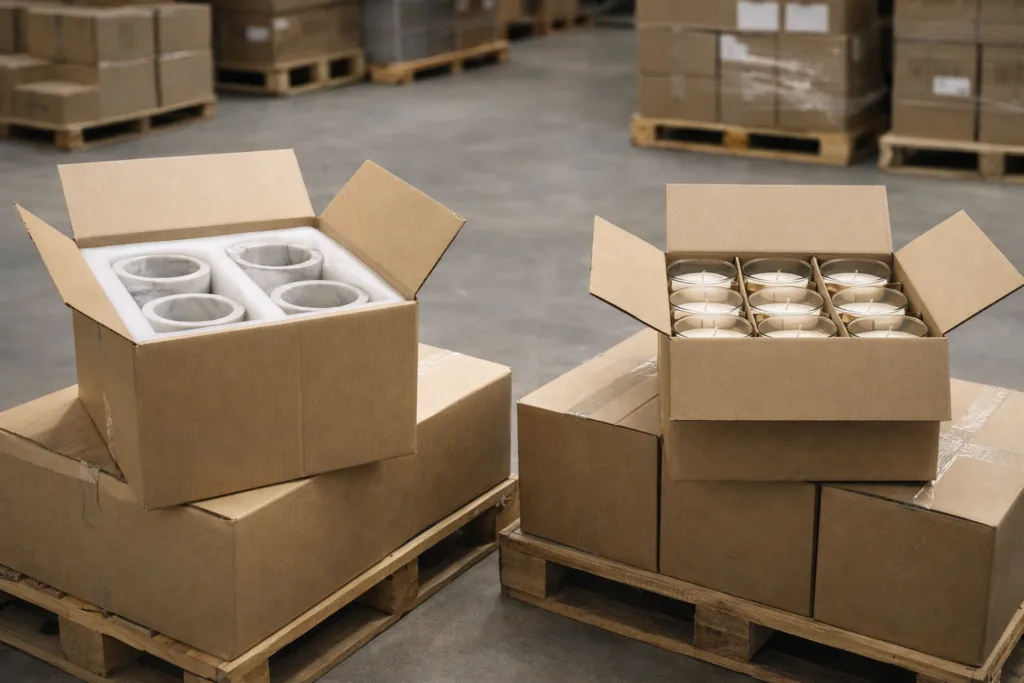 Marble is brittle.
To ship it safely, factories must:
- Add thicker foam protection
- Use custom-molded inserts
- Increase outer carton strength
Packaging volume increases. Weight increases. Handling complexity increases.
For brands aiming to scale, these are not minor inconveniences—they are operational bottlenecks.
When the Container Consumes the Budget, the Product Suffers
This is where many candle projects quietly go wrong.
When too much budget is allocated to an expensive vessel, something else must give.
In most cases, that “something” is the candle itself:
- Lower-grade fragrance oils
- Reduced fragrance load
- Less refined wax blends
- Fewer rounds of burn testing
The result is a candle that looks premium but performs like a mid-range product.
Customers may buy it once—but they rarely come back.
Fragrance Is the Soul of a Candle
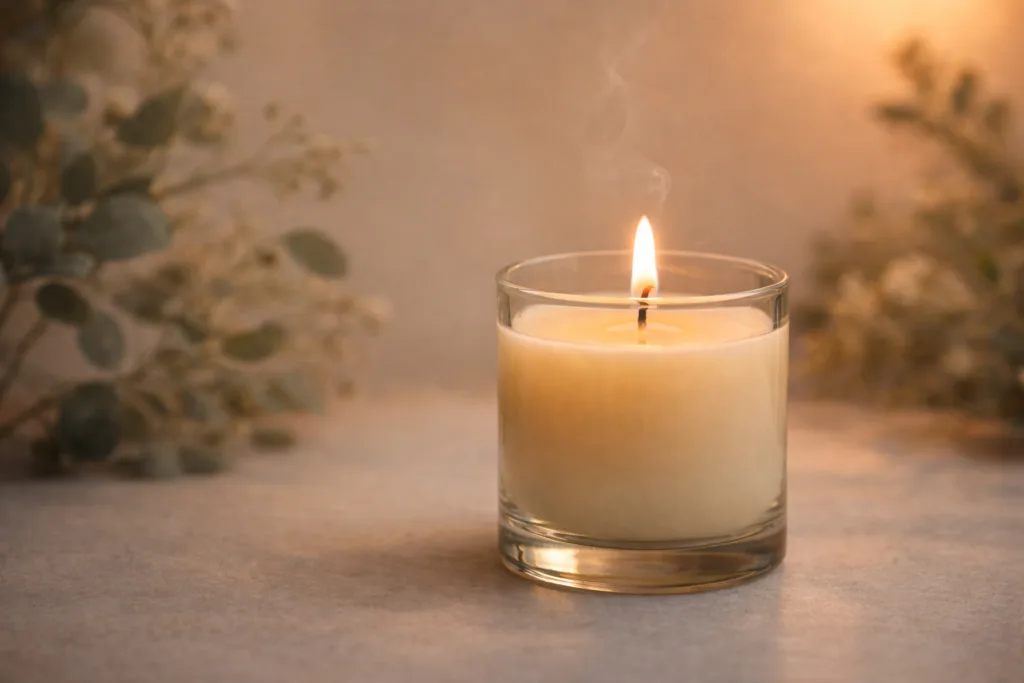 A scented candle lives or dies by its fragrance.
Not the jar. Not the label. Not the weight.
Fragrance determines:
- Emotional connection
- Memory retention
- Brand recognition
- Repurchase behavior
Consumers forgive simple containers far more easily than they forgive disappointing scent performance.
If forced to choose, always protect the fragrance budget first.
Scale Changes Everything
What works for a 300-unit boutique launch does not necessarily work for a 10,000-unit production run.
As volume increases:
- Freight becomes a dominant cost
- Warehouse space becomes valuable
- Cash flow timing matters
- Inventory risk grows
Materials that feel manageable at small scale often become liabilities at larger volumes.
Marble is one of them.
The Purpose of Industrial Development: Cost Reduction and Efficiency
Modern manufacturing exists for two reasons:
- Cost reduction
- Efficiency improvement
These two forces allow brands to grow without collapsing under their own weight.
In this structure:
- The supply chain is responsible for lowering unit costs through material choice, process optimization, and logistics planning
- The marketing side is responsible for increasing perceived value through storytelling, branding, and positioning
When these roles are confused, businesses struggle.
Using an excessively heavy, inefficient container to signal luxury is a supply-chain decision trying to do a marketing job.
It rarely works long-term.
Practical, Scalable Candle Jar Alternatives
There are many materials that balance aesthetics, cost control, and scalability far better than marble.
Glass Candle Jars
Glass remains the backbone of the global candle industry for good reason:
- Predictable weight
- Excellent heat resistance
- Clean, neutral aesthetic
- Highly scalable production
Thick-wall glass can feel premium without destroying freight economics.
Metal Tins (Including Tinplate Cups)
Metal containers are often underestimated.
When designed well, they offer:
- Lightweight durability
- High shipping efficiency
- Strong branding surface
- Excellent suitability for large volumes
For many brands, metal tins support both gifting and everyday-use lines.
Ceramic Vessels
Ceramic offers visual richness without the extreme weight of stone.
Properly specified ceramic jars can:
- Feel substantial
- Maintain reasonable freight costs
- Support consistent quality at scale
Consumers Don’t Buy Materials — They Buy Experiences
Most end customers cannot identify the material composition of a candle jar.
What they can identify is:
- How the candle smells
- How evenly it burns
- How long it lasts
- Whether it feels worth the price
These experiences are driven far more by formulation and testing than by stone thickness.
A Founder’s Perspective: Choosing the Long Road
As the founder of Circe Home, I spend a great deal of time advising clients not to over-design themselves into a corner.
If your goal is:
- Large-scale production
- International shipping
- Sustainable margins
- Long-term brand growth
Then material choices must support those goals—not fight them.
This does not mean sacrificing beauty.
It means choosing materials that allow beauty, performance, and scalability to coexist.
Final Advice for Brands Planning to Scale
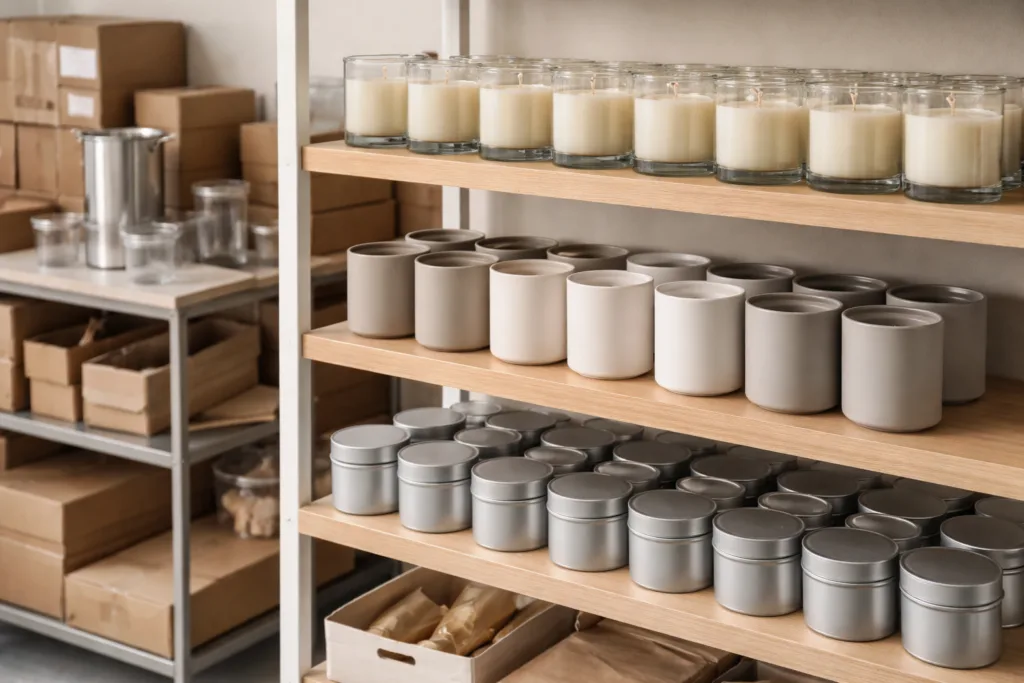 If you are serious about building a candle business—not just launching a product—ask yourself:
- Can this material scale from 1,000 units to 50,000 units?
- Does it protect my fragrance budget?
- Does it support healthy logistics and cash flow?
If the answer is no, the material may be impressive—but it is not practical.
In business, practicality is not a compromise.
It is a foundation.
Choose materials that allow your brand to grow steadily, sustainably, and profitably.
Let the fragrance carry the soul. Let the supply chain carry the weight.
Frequently Asked Questions (FAQ)
1. Are marble candle jars suitable for luxury candle brands?
Marble candle jars can work for decorative or limited-edition luxury pieces, especially when the product is positioned as a home décor object rather than a repeat-use candle. However, for most luxury brands aiming for scalable production and international distribution, marble often introduces excessive weight, shipping cost, and operational complexity that outweigh its aesthetic benefits.
True luxury in candles is defined by fragrance quality, burn performance, and consistency—not by the heaviness of the container.
2. Why do many large candle brands avoid heavy containers like marble?
Large brands prioritize supply-chain stability and margin control. Heavy containers increase freight costs, reduce shipment efficiency, and complicate packaging and warehousing. At scale, these factors significantly affect pricing flexibility and cash flow.
This is why many established brands choose glass, ceramic, or metal containers that balance visual appeal with logistical efficiency.
3. What candle jar materials are best for large-scale production?
For brands planning to scale, the most practical candle jar materials typically include:
- Thick-wall glass jars for premium yet efficient production
- Ceramic vessels with controlled specifications
- Metal tins or tinplate cups for lightweight durability and shipping efficiency
These materials support consistent quality, predictable costs, and smoother logistics—key factors for long-term growth.
4. Should I invest more in the candle container or the fragrance?
For most candle brands, fragrance should always take priority. Scent quality drives emotional connection, brand recognition, and repeat purchases. Customers may appreciate a beautiful container, but they return for a fragrance that performs well and feels memorable.
If budget trade-offs are required, protecting fragrance development and burn testing will deliver far greater long-term value than investing in an overly expensive container.