
Understanding Candle Types: Why Material Choice Shapes Your Brand
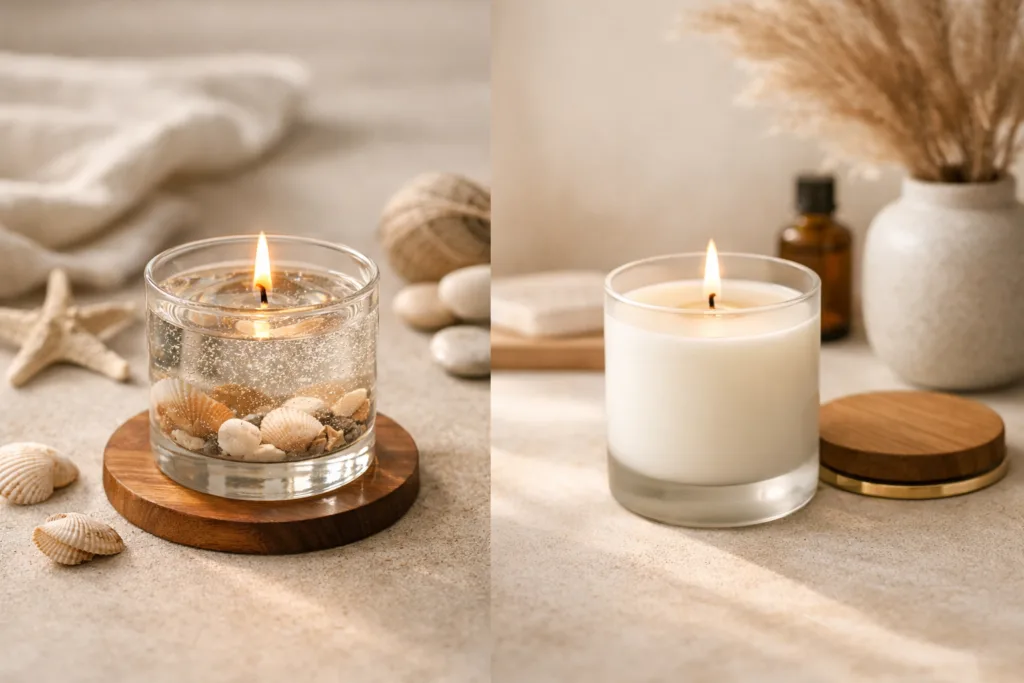 Choosing between gel vs wax candles is not merely a manufacturing choice—it is a strategic branding decision. Candle materials directly influence scent performance, safety perception, sustainability claims, pricing strategy, and customer loyalty. For modern home fragrance brands, especially those positioning themselves in wellness, eco-conscious living, or premium gifting, the candle base becomes part of the brand story.
Wax candles dominate the global candle market due to their versatility, fragrance compatibility, and established consumer trust. Gel candles, while visually striking, serve a more niche role focused on decorative impact. Understanding these differences allows brands to align product development with long-term positioning rather than short-term trends.
The History of Wax Candles: A Timeless Craft
Wax candles have been part of human civilization for thousands of years. Early forms were made from animal fats and beeswax, used for lighting, religious rituals, and community gatherings. Over time, candle-making evolved alongside advances in refining and material science, eventually giving rise to modern plant-based waxes such as soy.
Today, wax candles symbolize comfort, ritual, and emotional warmth. Their soft glow and familiar scent diffusion connect deeply with consumers seeking calm and stability in their homes. This emotional heritage gives wax candles a storytelling advantage that newer candle types often lack.
The Rise of Gel Candles: A Modern Decorative Trend
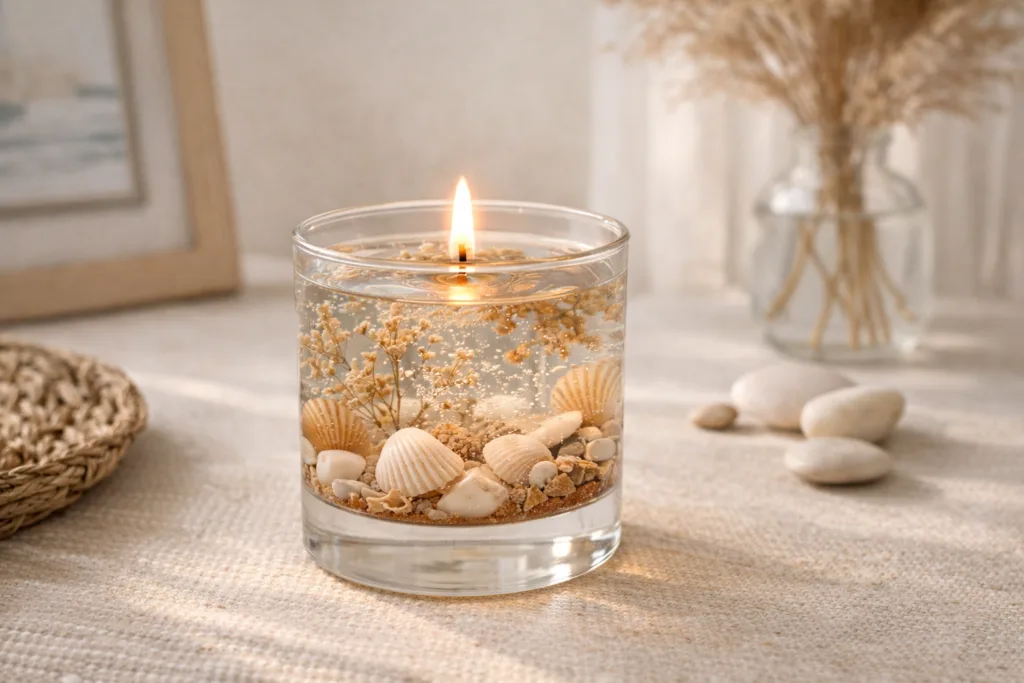 Gel candles emerged in the late twentieth century as a response to changing interior design trends. Consumers began to view candles not only as functional or aromatic items but also as decorative objects. The transparent nature of gel allows decorative elements—such as shells, stones, dried botanicals, or figurines—to appear suspended within the candle.
This visual novelty makes gel candles popular for seasonal décor, event centerpieces, and themed displays. However, their appeal is primarily visual, and they are often purchased for short-term use rather than repeated consumption or brand loyalty.
What Are Wax Candles Made Of?
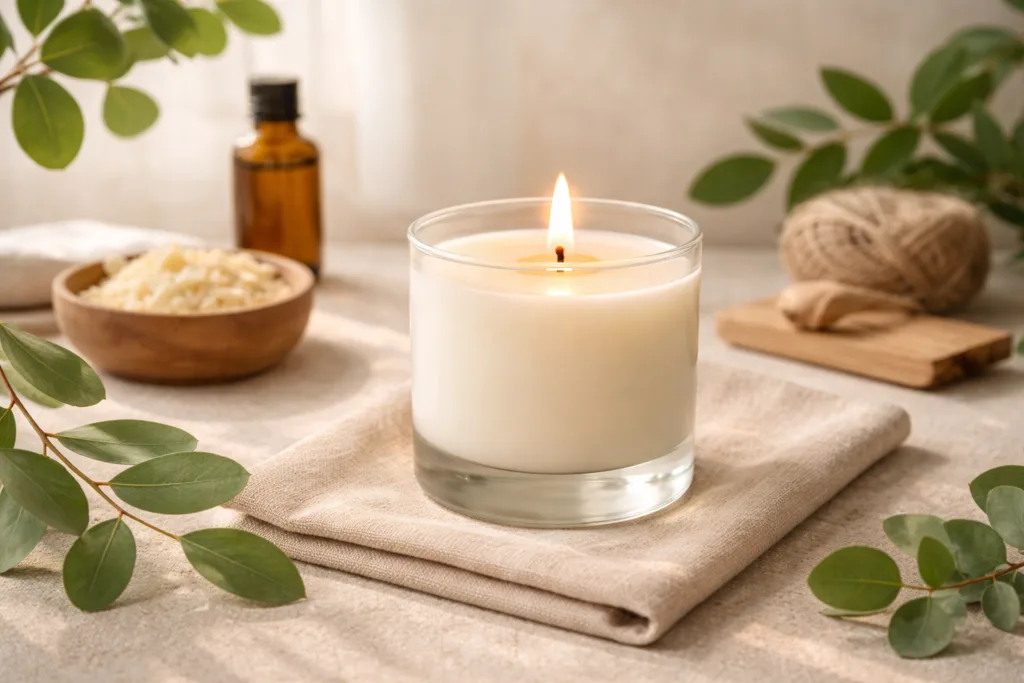 Wax candles can be produced from a variety of bases, each with distinct characteristics:
- Soy Wax: Derived from soybeans, renewable and clean-burning
- Beeswax: Naturally produced, long-burning, subtle honey aroma
- Paraffin Wax: Petroleum-based, strong scent throw, cost-effective
- Wax Blends: Combine natural and synthetic waxes for performance balance
For brands emphasizing sustainability and wellness, soy wax and blended natural waxes are often preferred due to their lower environmental impact and excellent fragrance compatibility.
What Are Gel Candles Made Of?
Gel candles are produced using a combination of mineral oil and polymer resin. This mixture creates a clear, jelly-like substance that remains transparent when cooled. While visually appealing, gel wax is petroleum-derived and not biodegradable.
Another limitation of gel wax is its restricted fragrance load. Many essential oils and natural fragrance oils are incompatible or unstable in gel, reducing its effectiveness for aromatherapy or scent-focused branding.
Visual and Decorative Appeal: Transparency vs Warmth
Gel candles excel in visual impact. Their clarity allows for creative expression and thematic designs, making them ideal for decorative displays. Wax candles, in contrast, offer a softer, more diffused glow that enhances ambiance rather than commanding attention.
From a branding perspective, gel candles are design-forward, while wax candles are experience-forward. Brands must decide whether they want customers to admire the candle or emotionally connect with it.
Scent Throw Performance: Which Delivers Better Fragrance?
Scent throw refers to how well a candle releases fragrance both before and during burning. Wax candles, particularly soy and paraffin blends, offer superior cold throw and hot throw. They can carry complex fragrance profiles and maintain consistency throughout the burn.
Gel candles typically provide a lighter scent experience. Their chemical structure limits fragrance load, making them less suitable for brands centered on aromatherapy, relaxation, or mood enhancement.
Burn Time and Efficiency
Wax candles burn evenly when properly wicked and formulated. They create stable melt pools and predictable burn times, which is critical for customer satisfaction. Gel candles may appear to burn slowly, but they can trap heat, leading to uneven burning or container overheating.
Consistency and reliability make wax candles more suitable for everyday use and repeat purchases.
Safety Considerations
Safety is a non-negotiable factor in candle branding. Wax candles follow well-established safety standards and testing protocols. Gel candles present additional risks, particularly when decorative embeds are placed too close to the wick or when improper containers are used.
For brands targeting families, wellness consumers, or hospitality environments, wax candles offer a higher level of trust and compliance.
Environmental Impact and Sustainability
Environmental responsibility increasingly influences purchasing decisions. Soy and beeswax candles are biodegradable, renewable, and produce fewer indoor pollutants. Gel candles, being petroleum-based, do not align with eco-conscious values and cannot be marketed as sustainable.
Brands seeking long-term relevance benefit from choosing materials that support environmental transparency and responsibility.
Customization and Branding Opportunities
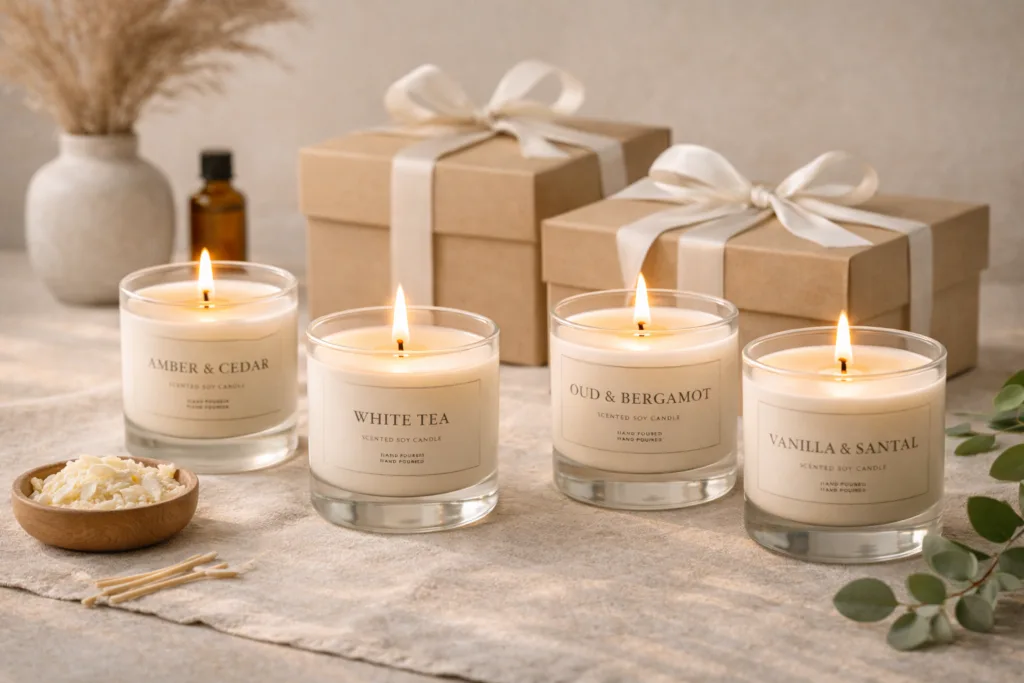 Wax candles provide extensive customization options, including scent blending, vessel design, labeling, and gift-ready packaging. They scale easily for private label programs and seasonal collections.
Gel candles allow visual customization but are more limited in scent development and long-term product lines.
Manufacturing Complexity and Cost
Gel candle production requires precise temperature control and specialized containers, increasing defect risk. Wax candles are easier to scale, automate, and quality-control, making them more suitable for growing brands.
Price Positioning and Profit Margins
Wax candles support premium pricing due to their sensory experience, sustainability, and perceived value. Gel candles often compete in novelty or decorative price ranges, which can limit margins and repeat purchases.
Target Customers: Who Buys What?
Wax candles appeal to wellness-focused consumers, gift buyers, and eco-conscious households. Gel candles attract décor-driven shoppers and event planners seeking visual impact.
Understanding your core customer is essential when selecting a candle type.
Use Cases by Space
Wax candles are ideal for bedrooms, living rooms, bathrooms, and spas. Gel candles are better suited for decorative centerpieces and temporary displays.
Gel vs Wax Candles: Comparison Table
| Feature | Wax Candles | Gel Candles |
| Scent Strength | Strong | Mild |
| Eco-Friendly | Yes | No |
| Visual Appeal | Soft | High |
| Safety | High | Medium |
| Brand Longevity | Excellent | Limited |
Which Candle Type Fits Your Brand Best?
For brands built on wellness, sustainability, emotional connection, and long-term customer relationships, wax candles are the superior choice. Gel candles can complement décor-focused collections but rarely serve as a strong foundation for premium branding.
FAQ Section
1. Do gel candles last longer than wax candles?
Not necessarily. Wax candles burn more evenly and offer better overall efficiency.
2. Are gel candles safe for home use?
They require careful design and testing. Wax candles are generally safer.
3. Which candle type holds fragrance better?
Wax candles, especially soy wax, perform significantly better.
4. Are gel candles environmentally friendly?
No. They are petroleum-based and not biodegradable.
5. Which candle type is better for gift branding?
Wax candles provide stronger emotional and sensory value.
6. Can gel candles use essential oils?
Only in limited amounts. Wax candles are far more compatible.
Conclusion
Choosing between gel vs wax candles is ultimately a strategic brand decision. Wax candles deliver superior fragrance performance, safety, sustainability, and emotional resonance, making them the ideal choice for premium and wellness-oriented candle brands.