
Introduction: Why Candle Choice Matters More Than It Seems
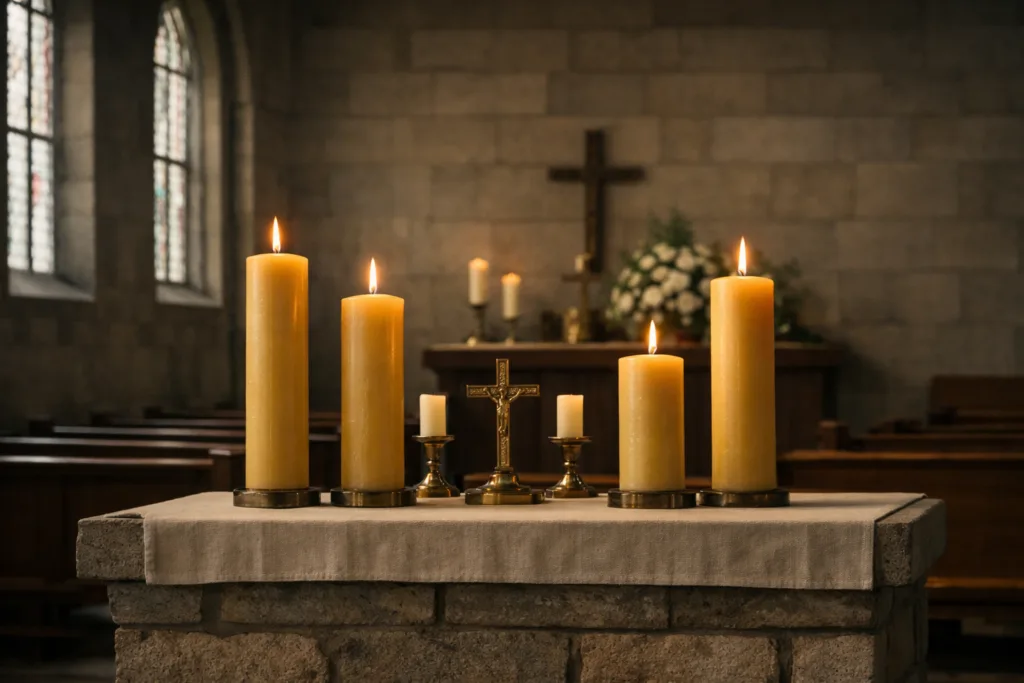 If you are responsible for purchasing candles for a church or ceremonial space, you already know this truth:
Candles are not decoration.
They are functional ritual tools. They burn during moments of silence, prayer, remembrance, weddings, funerals, and weekly services. A poorly chosen candle distracts. A well‑chosen one disappears into the ritual while quietly doing its job.
This guide is written from a procurement and long‑term supply perspective, not a lifestyle or retail angle. It is based on manufacturing‑side experience supplying beeswax pillar candles to churches, ceremonial venues, and religious goods distributors across North America, Europe, and Oceania.
The goal is simple:
- Help you choose the right beeswax pillar candles
- Avoid common purchasing mistakes
- Build a stable, repeatable supply solution that works year after year
1. Why Churches Historically Choose Beeswax (Not Trend, But Logic)
Beeswax is not a modern upgrade. It is the oldest intentional candle material used in religious settings, long before paraffin or blended waxes existed.
From a procurement standpoint, beeswax continues to be preferred for three practical reasons:
1.1 Material Purity
Pure beeswax is a natural by‑product of beekeeping. It contains no petroleum derivatives, no chemical stabilizers, and no artificial fillers when properly refined.
For churches and ceremonial institutions, this matters because:
- Material symbolism aligns with values of purity and integrity
- There is no ambiguity about chemical content
- It avoids questions from congregants about toxicity or artificial materials
1.2 Stable Burn for Long Ritual Use
Unlike paraffin candles that may smoke or deform over time, properly formulated beeswax pillar candles burn slowly and evenly.
This makes them suitable for:
- Long services
- All‑day ceremonial use
- Repeated lighting and extinguishing
1.3 Respect for the Space
Beeswax candles do not compete with the space. They support it.
No strong scent. No excessive smoke. No dripping wax damaging altars or floors.
From a purchasing lens, beeswax is not about luxury. It is about predictability and respect.
2. Clean Burning Is Not Marketing — It Is Operational
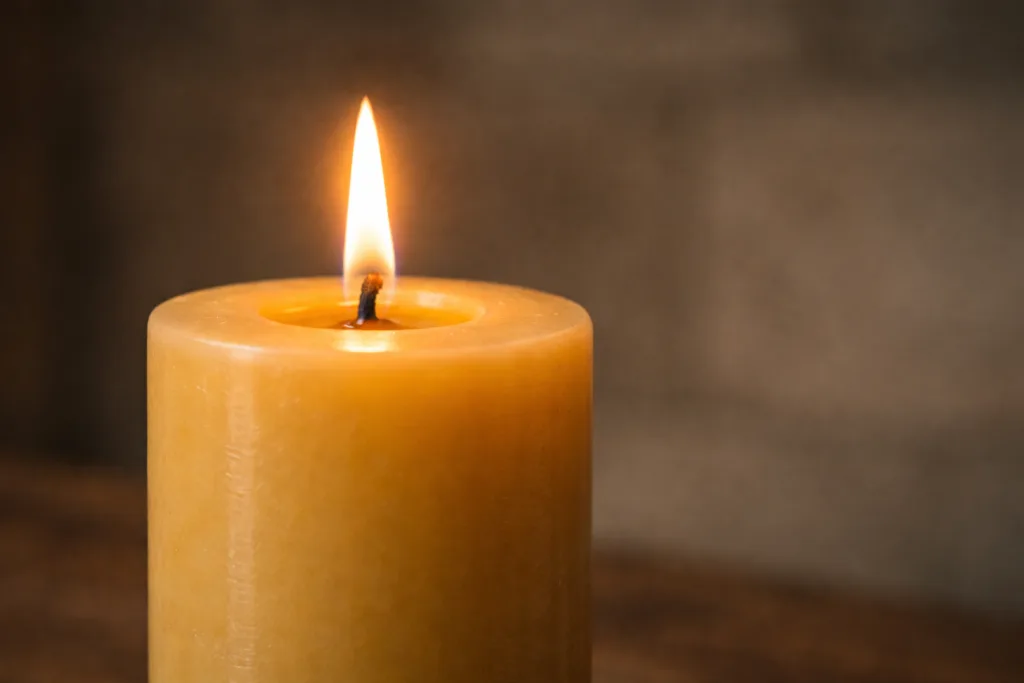 Churches are enclosed environments. Air circulation is often limited. Smoke and residue accumulate over time.
When procurement teams evaluate candles, clean burning is not a feature — it is a requirement.
2.1 Smoke and Soot Concerns
Low‑quality candles create:
- Black soot on walls and ceilings
- Smoke odor lingering after services
- Increased cleaning and maintenance costs
Pure beeswax pillar candles, when properly wicked and sized, burn with:
- Minimal visible smoke
- Lower soot output
- A steady flame that does not flicker excessively
2.2 Impact on Maintenance Costs
Over a year, candle choice directly affects:
- Altar cloth replacement frequency
- Wall cleaning schedules
- Ventilation system maintenance
Many churches that switch to beeswax do so not because of price, but because it reduces hidden downstream costs.
3. Unscented by Design: Respecting the Ceremony
Most churches prefer unscented candles. This is not an aesthetic preference — it is a functional one.
3.1 Avoiding Sensory Conflict
Ceremonial spaces may already contain:
- Incense
- Flowers
- Natural wood or stone aromas
Artificial fragrance interferes with these elements and can cause discomfort for sensitive individuals.
3.2 Natural Beeswax Aroma
High‑quality beeswax has a very subtle, natural honey‑like note — not a fragrance, but a background material presence.
This is generally acceptable and often preferred over completely neutral petroleum‑based waxes.
For procurement teams, the key takeaway is:
- Choose unscented or naturally scented beeswax only
- Avoid added fragrance oils entirely
4. Choosing the Right Pillar Candle Size for Church Use
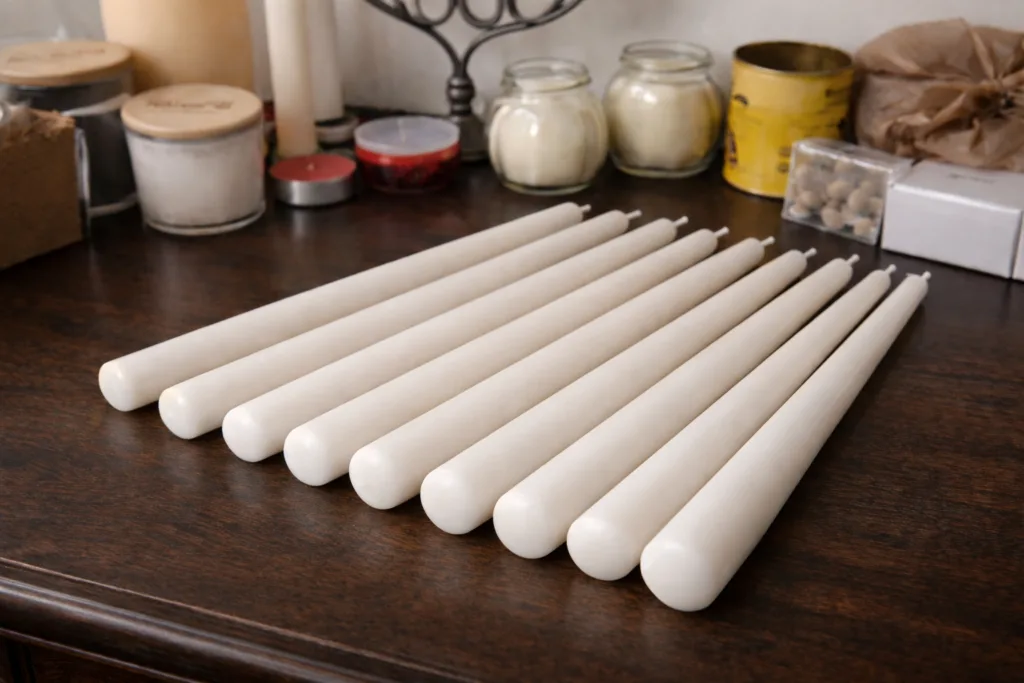
One of the most common purchasing mistakes is selecting candle size based on appearance alone.
In church and ceremonial use, size determines performance.
4.1 Common Church Applications
Different spaces require different proportions:
- Altar candles: Tall, stable pillars with long burn time
- Aisle or memorial candles: Medium height, consistent batch appearance
- Side chapels or prayer areas: Smaller pillars with controlled flame
4.2 Key Sizing Considerations
When evaluating beeswax pillar candle dimensions, procurement teams should assess:
- Height vs. burn duration
- Diameter vs. flame stability
- Weight consistency across batches
Standardizing sizes across orders ensures:
- Visual uniformity
- Predictable replacement schedules
- Simplified reordering
Custom sizing is often recommended for churches with specific altar dimensions.
5. Color Consistency: Natural Yellow vs White Beeswax
Color is not decorative in religious settings — it is symbolic.
5.1 Natural Beeswax (Soft Yellow)
- Traditional appearance
- Warm flame tone
- Often preferred for everyday services
5.2 White Beeswax
- Filtered or naturally light beeswax
- Used for weddings, memorials, and special ceremonies
- Requires stricter quality control to maintain consistency
From a supply perspective, it is important to:
- Specify acceptable color tolerance
- Request batch consistency
- Confirm long‑term availability of the chosen color
6. Cost Logic: Looking Beyond Unit Price
Beeswax pillar candles are not the lowest‑cost option upfront. Churches that purchase them successfully do so with a long‑term cost lens.
6.1 Burn Time vs Price
Beeswax candles typically burn longer per unit weight compared to paraffin.
This means:
- Fewer replacements
- More predictable annual consumption
- Lower disruption to services
6.2 Stable Annual Budgeting
Many churches establish:
- Annual or semi‑annual candle procurement plans
- Standing orders with consistent specifications
This stabilizes pricing and supply, avoiding last‑minute sourcing or substitutions.
7. Why Long‑Term Supply Matters More Than One‑Time Orders
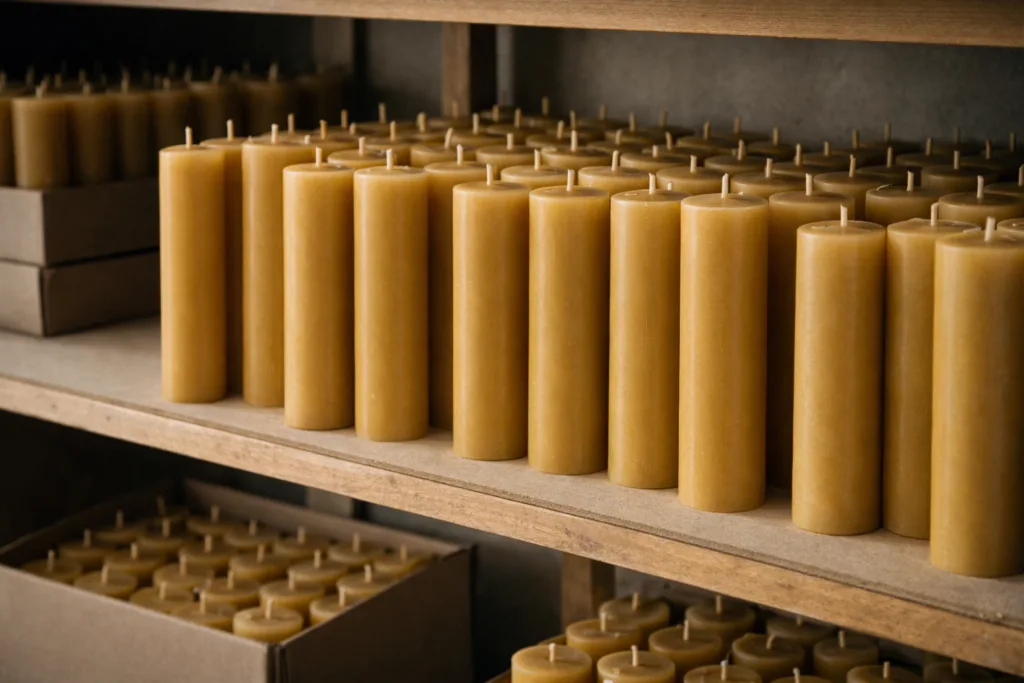 Church procurement is not transactional. It is ongoing.
A reliable beeswax pillar candle supplier should provide:
- Consistent material sourcing
- Repeatable manufacturing standards
- Stable wick and formulation choices
Changing suppliers frequently introduces:
- Visual inconsistency
- Burn performance variation
- Administrative friction
This is why many churches choose to work directly with manufacturers rather than rotating distributors.
8. Private Label, No‑Label, and Institutional Supply Options
Most churches do not require branding. In fact, many prefer no visible labels at all.
Manufacturing‑side options typically include:
- Plain, unbranded pillar candles
- Discreet batch markings for internal tracking
- Custom packaging for storage and transport
For procurement teams, this reduces visual clutter and simplifies storage.
9. Common Mistakes to Avoid When Purchasing Beeswax Pillar Candles
Based on manufacturer feedback, these are the most frequent issues:
- Choosing beeswax blends without verifying purity
- Ignoring wick specifications
- Ordering inconsistent sizes across batches
- Selecting fragrance‑added candles
- Focusing only on unit price
Avoiding these mistakes improves both performance and budget predictability.
10. Building a Sustainable, Repeatable Candle Supply
A successful church candle procurement strategy focuses on:
- Material integrity
- Burn performance
- Visual consistency
- Long‑term supplier reliability
When these elements are aligned, candles stop being a problem to manage — they become a dependable part of the ritual environment.
At Circe Home, we work with churches and ceremonial buyers from a manufacturing perspective, focusing on stable beeswax sourcing, controlled production, and repeatable specifications suitable for long‑term supply.
If your church or institution is evaluating a more reliable beeswax pillar candle solution, the first step is not price — it is clarity.
Conclusion: Choosing Candles That Respect the Space
Beeswax pillar candles remain the standard for churches and ceremonial spaces not because of tradition alone, but because they work.
They burn cleanly. They last longer. They do not distract.
For procurement teams, choosing the right beeswax pillar candle is not about aesthetics — it is about supporting the purpose of the space, week after week, year after year.
When selected correctly and supplied consistently, beeswax candles become invisible — and that is exactly what they should be.
Frequently Asked Questions (FAQ)
1. How can we confirm that the beeswax pillar candles are made from pure beeswax and not blended wax?
From a procurement perspective, this is one of the most important questions to clarify before placing an order. Pure beeswax pillar candles should be produced using 100% refined beeswax without paraffin, soy, or synthetic additives.
Reputable manufacturers should be able to:
- Clearly state the wax composition
- Explain their refining and filtration process
- Provide consistent burn performance across batches
For long-term church use, blended waxes often lead to inconsistent flame behavior and visual differences over time, which is why many institutions specify pure beeswax only.
2. How long do beeswax pillar candles typically burn compared to paraffin candles?
Beeswax pillar candles generally burn longer per unit weight than paraffin candles due to their higher melting point and denser structure.
In practical terms, this means:
- Fewer replacements during services
- More predictable annual consumption planning
- Reduced interruptions during ceremonies
Exact burn time depends on candle diameter, height, and wick specification, which is why churches often standardize one or two core sizes for all regular use.
3. Are beeswax pillar candles suitable for weekly and daily church services, or only special ceremonies?
Beeswax pillar candles are suitable for both daily services and special ceremonies. Many churches use natural beeswax pillars for regular worship and reserve white beeswax pillars for weddings, memorials, and major religious events.
From a supply standpoint, this approach allows institutions to:
- Maintain visual consistency
- Simplify inventory management
- Build predictable reordering cycles
Long-term users often find that beeswax becomes more economical over time due to reduced waste and longer burn duration.
4. What information should a church provide when requesting a quote for beeswax pillar candles?
To receive an accurate and repeatable quotation, procurement teams are encouraged to prepare the following information:
- Required candle dimensions (height and diameter)
- Preferred color (natural beeswax or white)
- Estimated annual quantity or order frequency
- Intended use (altar, aisle, memorial, or mixed)
Providing clear specifications upfront helps ensure stable pricing, consistent production, and smoother repeat orders over the long term.