
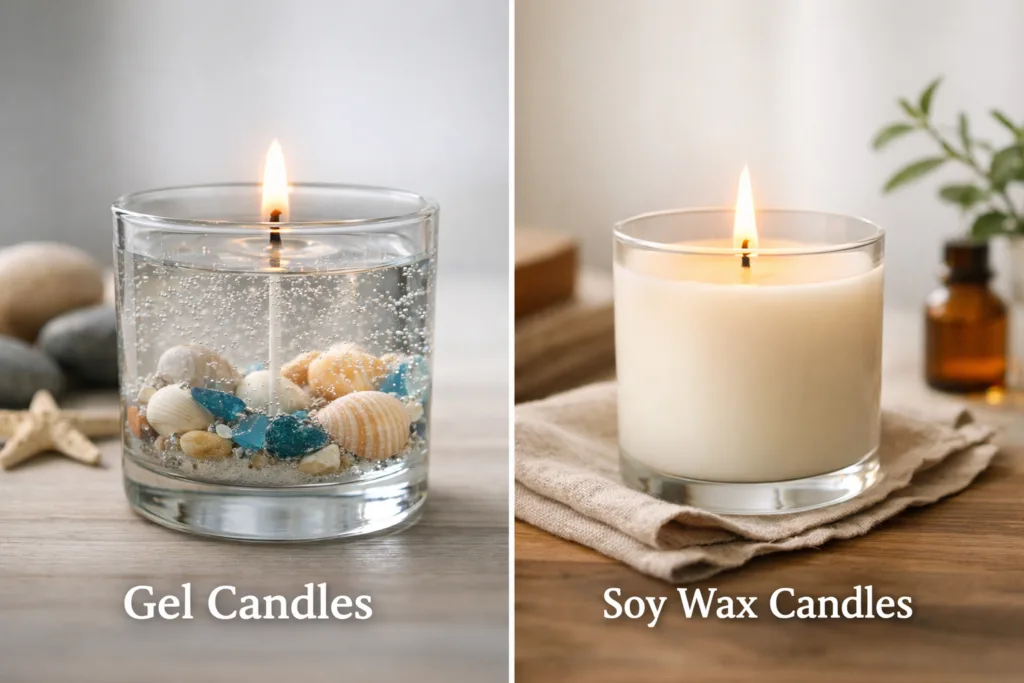
Introduction: Why Retail Buyers Are Questioning Gel Candles
As sustainability becomes a deciding factor in consumer purchasing behavior, retail buyers are under increasing pressure to reassess traditional candle categories. Gel candles, once popular for their crystal-clear appearance and decorative appeal, are now facing scrutiny.
At Circe Home, we work closely with global retailers, private-label brands, and distributors. One question appears again and again: Are gel candles eco-friendly enough for modern retail?
This article provides a clear, fact-based answer—without greenwashing, and with retail profitability and brand trust in mind.
What Exactly Are Gel Candles Made Of?
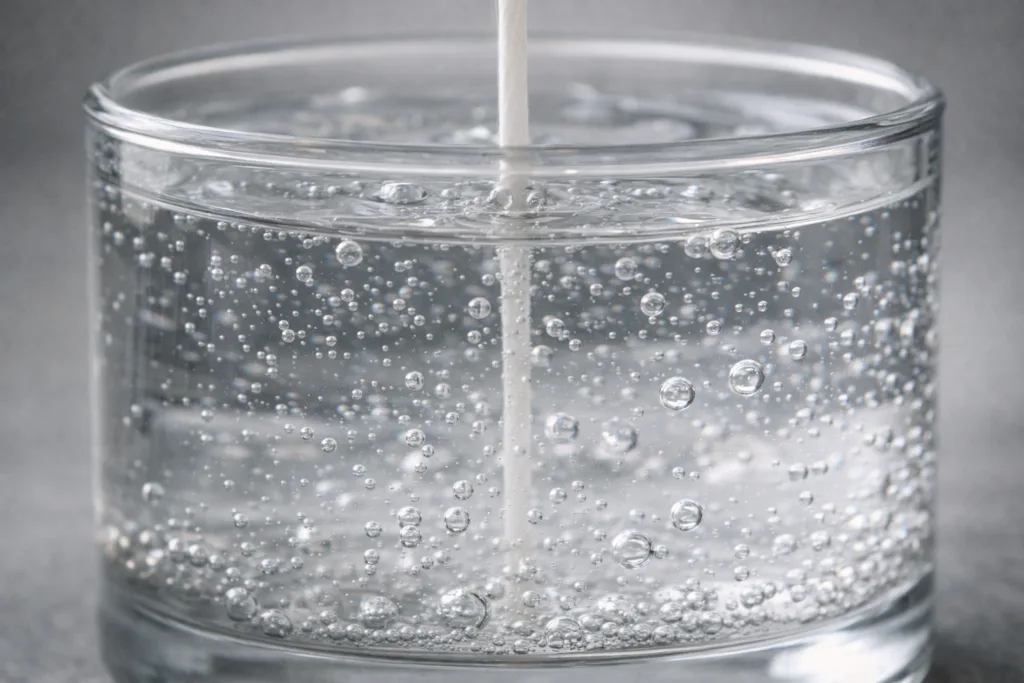 Gel candles are primarily produced using mineral oil combined with polymer resins. These materials are derived from petroleum, making gel wax a non-renewable resource.
- Fossil-fuel origin
- High transparency
- High melting and burning temperature
- Long shelf life, but poor environmental breakdown
From a sustainability perspective, gel wax is structurally closer to paraffin wax than to natural waxes like soy or beeswax.
Are Gel Candles Eco-Friendly? The Short Answer
No—most gel candles are not eco-friendly.
While visually attractive, they fail to meet modern environmental standards due to non-renewable sourcing, lack of biodegradability, and higher emission risks during burning.
For retailers positioning themselves as eco-conscious, wellness-oriented, or premium lifestyle brands, gel candles present a clear mismatch.
Environmental Impact of Gel Candles
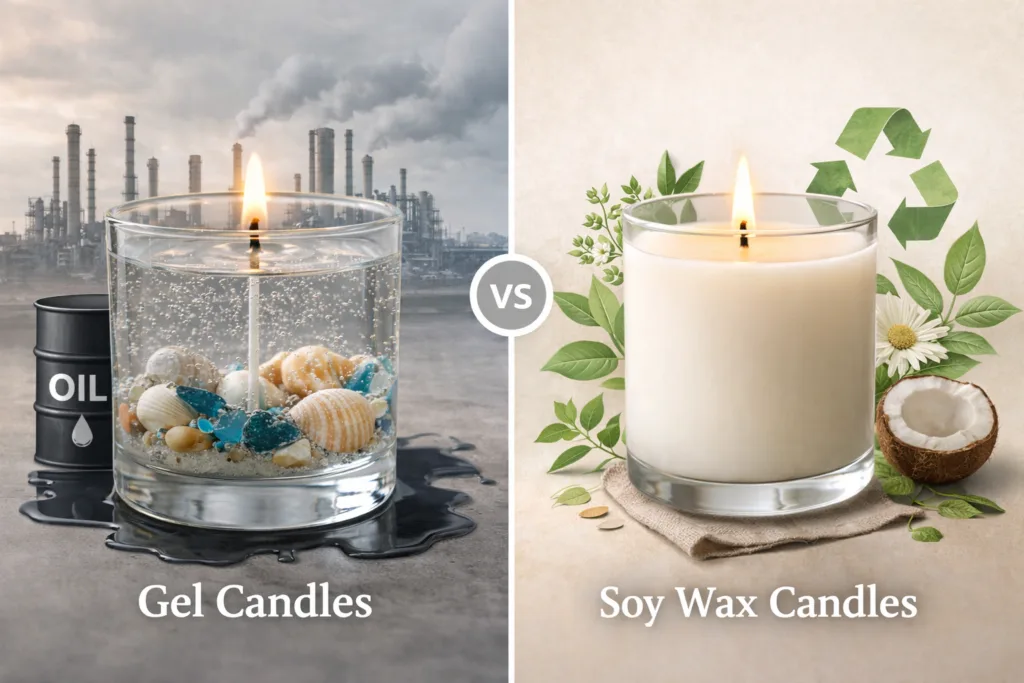
1. Raw Material Sustainability
Mineral oil is a petroleum byproduct. Its extraction and refinement contribute to carbon emissions and environmental degradation. Unlike soy or coconut wax, gel wax cannot be regenerated through agriculture.
2. Biodegradability & Waste
Gel wax does not naturally decompose. Improper disposal leads to long-term landfill accumulation, which conflicts with circular economy principles increasingly adopted by retailers.
3. Burning Emissions
When burned, gel candles may release volatile organic compounds (VOCs), especially when combined with synthetic fragrances or dyes. This raises concerns for indoor air quality.
Safety Risks Retailers Cannot Ignore
Beyond environmental impact, gel candles introduce safety and liability issues:
- Burn significantly hotter than soy or beeswax candles
- Higher risk of glass container cracking
- Decorative embeds (shells, stones, plastics) can become fire hazards
- Not ideal for households with children or pets
These risks often translate into higher return rates and customer complaints—an overlooked cost in retail operations.
Can Gel Candles Ever Be “Eco”?
Some suppliers market so-called “bio-gel” or “plant-based gel” candles. However, in most cases:
- The formulation is only partially plant-derived
- Petroleum-based stabilizers are still used
- Certifications are often missing or vague
Retail buyers should demand full material disclosure, MSDS documentation, and third-party certifications before accepting such claims.
Gel Candles vs Natural Wax Candles: Retail Comparison
| Factor | Gel Candles | Soy Wax Candles |
|---|---|---|
| Renewable | No | Yes |
| Biodegradable | No | Yes |
| Burn Temperature | High | Low |
| Premium Pricing Power | Low | High |
| Repeat Purchase Rate | Low | High |
| Sustainability Fit | Weak | Strong |
The data is clear: natural wax candles significantly outperform gel candles across key retail metrics.
What Today’s Consumers Really Want
Modern candle buyers prioritize:
- Clean-burning natural waxes
- Transparent ingredient lists
- Eco-friendly packaging
- Wellness and emotional value
Gel candles are increasingly viewed as novelty or decorative items rather than daily-use or gift-worthy products.
Strategic Advice for Retail Buyers
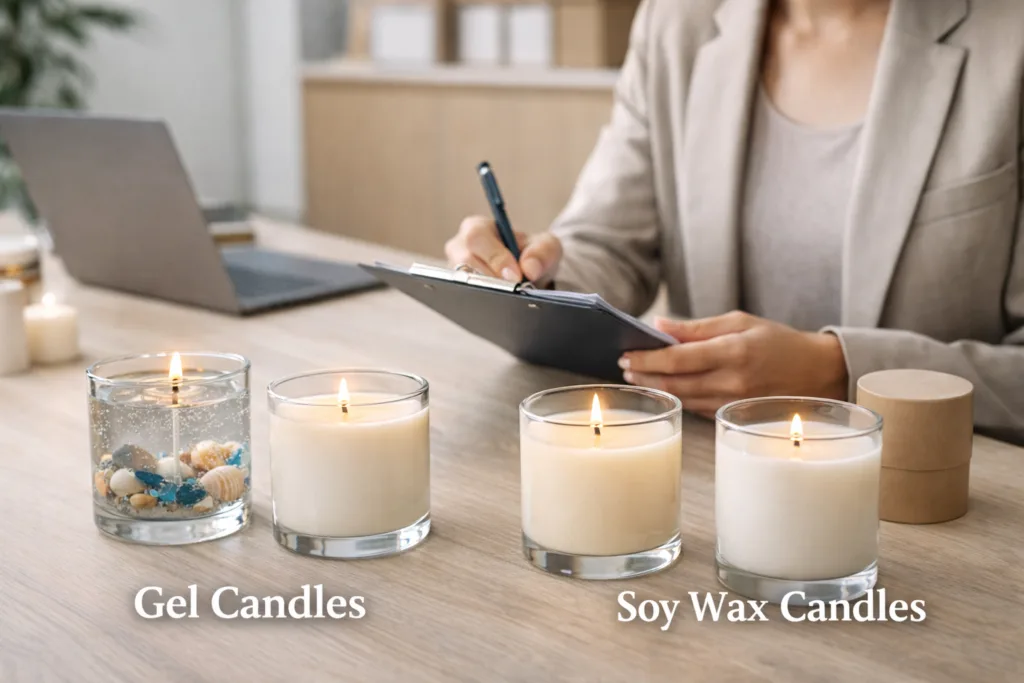
When Gel Candles Still Make Sense
- Short-term seasonal décor
- Non-burning display items
- Low-price impulse SKUs
When Gel Candles Should Be Avoided
- Core product lines
- Eco-friendly or wellness brands
- Subscription or refill programs
- Premium gift collections
For long-term brand equity, gel candles should never be hero products.
Circe Home’s Professional Recommendation
At Circe Home, we advise retail partners to prioritize soy wax, coconut wax, and beeswax candles for sustainable growth. These materials align with ESG standards, support higher margins, and build long-term consumer trust.
Gel candles may still exist—but only at the margins of modern retail strategy.
FAQ: Retail Buyers Ask
1. Are gel candles biodegradable?
No. Gel wax does not naturally decompose.
2. Do gel candles burn longer than soy candles?
They may appear to, but higher burn temperatures reduce usable burn quality.
3. Are gel candles safe for home use?
They require stricter safety controls and are not ideal for long burns.
4. Can gel candles be marketed as eco-friendly?
Only with full transparency—and even then, claims are limited.
5. Why are soy candles preferred by eco-conscious buyers?
They are renewable, biodegradable, and cleaner burning.
6. What candle type delivers the best retail margins?
Soy and coconut wax candles consistently outperform gel candles.
Conclusion
Gel candles may look attractive, but in today’s retail landscape, appearance alone is not enough. Sustainability, safety, and brand trust now define success.
Circe Home supports retailers in transitioning from outdated candle categories to future-proof, eco-conscious solutions.