
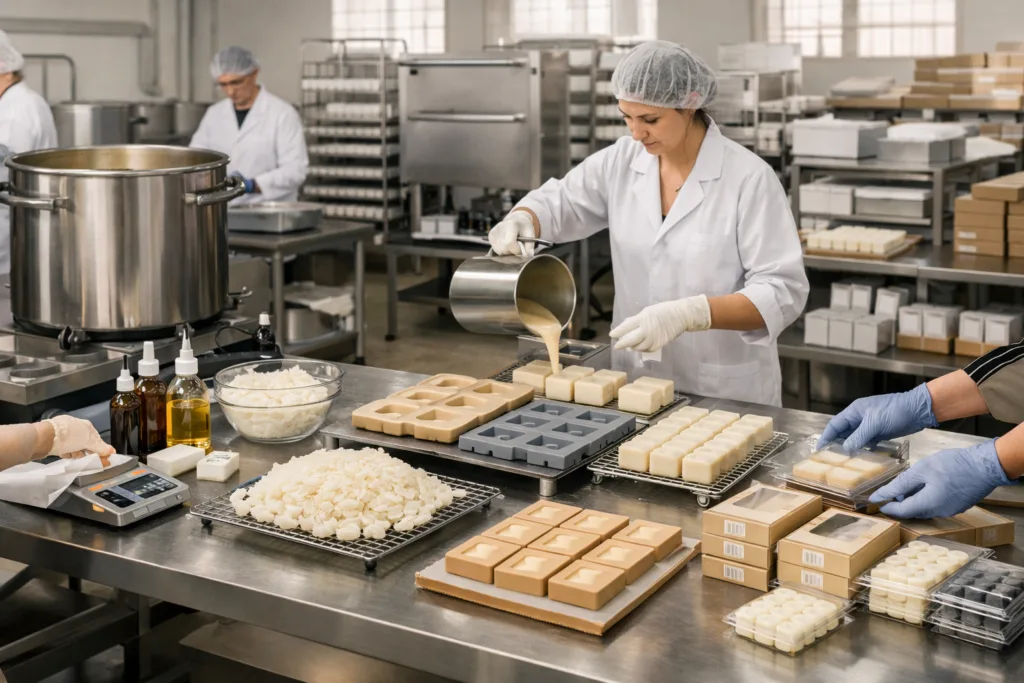
 Custom wax melts have become one of the fastest-growing segments in the home fragrance industry. For brands like Circe Home, custom wax melt manufacturing is not just about melting wax and adding fragrance—it is a refined process that blends material science, scent artistry, sustainability, and branding into one seamless workflow.
This in-depth guide walks you through the entire custom wax melt manufacturing process, from mold selection to final packaging, explaining how, why, and what matters at every step. Whether you are a brand owner, wholesaler, or private-label buyer, this article will help you understand how high-quality wax melts are truly made.
📊 Manufacturing Structure Overview
| Section Level | Topic |
|---|---|
| H1 | Custom Wax Melt Manufacturing Process |
| H2 | Understanding Custom Wax Melts |
| H2 | Wax Selection for Custom Wax Melts |
| H2 | Mold Design and Customization |
| H2 | Fragrance Oil Development |
| H2 | Wax Melting and Temperature Control |
| H2 | Color and Additive Integration |
| H2 | Pouring Techniques and Precision |
| H2 | Cooling and Curing Process |
| H2 | De-molding and Shape Integrity |
| H2 | Surface Finishing and Detailing |
| H2 | Batch Coding and Traceability |
| H2 | Quality Control and Testing |
| H2 | Sustainable Manufacturing Practices |
| H2 | Custom Packaging Design |
| H2 | Labeling and Compliance |
| H2 | Storage and Logistics Preparation |
| H2 | Why Circe Home’s Process Stands Out |
Understanding Custom Wax Melts
Custom wax melts are flameless fragrance products designed to release scent when gently heated in a wax warmer. Unlike traditional candles, they do not require a wick, which allows manufacturers to focus entirely on scent throw, wax performance, and aesthetic design.
From a manufacturing perspective, wax melts offer greater freedom in mold shapes, higher fragrance load capacity, lower combustion-related risk, and faster production cycles. At Circe Home, custom wax melt manufacturing is treated as a precision fragrance craft, where consistency, safety, and sensory performance are equally important.
Wax Selection for Custom Wax Melts
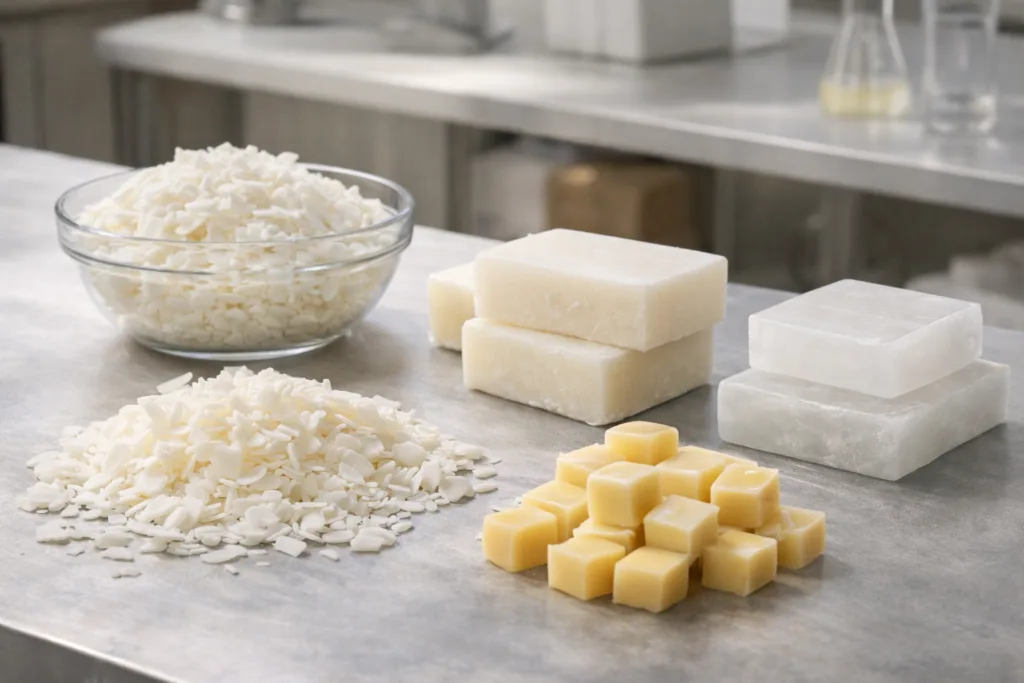 The foundation of every wax melt is the wax itself. Choosing the right wax determines melt rate, scent throw, texture, and environmental footprint.
Common wax types include soy wax, coconut wax, beeswax, and paraffin wax. Circe Home prioritizes eco-conscious wax blends, often combining soy and coconut wax to achieve lower melting points, smooth surface finishes, and long-lasting fragrance release. Each wax batch is tested for hardness, oil absorption, and thermal stability before use.
Mold Design and Customization
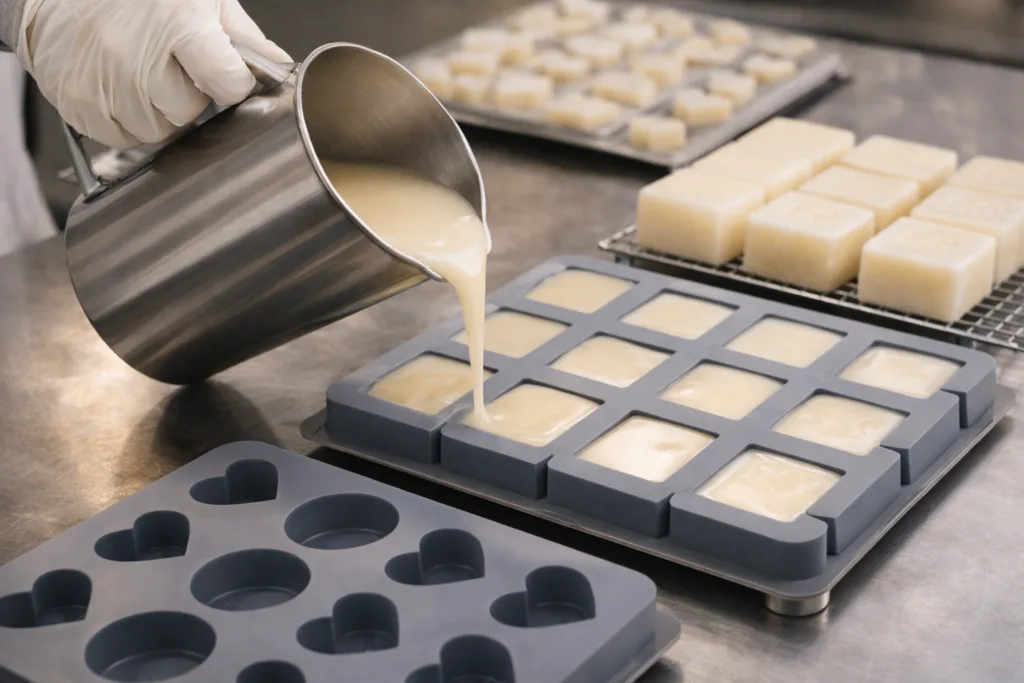 Molds define both function and branding. In custom manufacturing, molds are not generic tools—they are brand assets. Manufacturers typically use food-grade silicone molds, polycarbonate molds, or custom metal molds for large-scale production.
Design considerations include melt portion size, ease of release, detail sharpness, and compatibility with packaging. Custom molds allow brands to create signature shapes such as logos, florals, or themed collections that reinforce brand identity.
Fragrance Oil Development
Fragrance is the emotional core of wax melts. A well-designed scent must perform under heat without degrading or becoming overpowering. Key criteria include heat stability, regulatory compliance, compatibility with wax, and balanced scent structure.
Circe Home works with professional perfumers and uses phthalate-free fragrance oils to ensure safety, consistency, and a refined olfactory experience.
Wax Melting and Temperature Control
Wax melting is a critical technical stage. Overheating can damage wax structure, while underheating leads to poor fragrance binding. Industrial melting tanks with precise temperature control ensure uniform heat distribution.
Different wax types require different temperature ranges, and maintaining these parameters is essential for product consistency and performance.
Color and Additive Integration
Color transforms wax melts into visual experiences. Manufacturers use liquid dyes or dye chips, and sometimes minimal additives such as UV stabilizers. Circe Home avoids heavy additives that could interfere with fragrance performance or clean melting.
Pouring Techniques and Precision
Precision pouring ensures uniform weight, consistent appearance, and even cooling. Depending on order volume, manufacturers may use hand-pouring, semi-automatic dispensers, or fully automated filling lines. Each cavity is filled within strict tolerances.
Cooling and Curing Process
Cooling is carefully controlled to prevent sinkholes and surface defects. After cooling, wax melts undergo curing, typically lasting 24–72 hours, allowing fragrance molecules to fully bind with the wax matrix.
De-molding and Shape Integrity
Once cured, wax melts are gently released from molds. Each piece is inspected for cracks, warping, or surface flaws. Imperfect products are recycled, reducing material waste.
Surface Finishing and Detailing
Some custom wax melts require additional finishing such as edge trimming or decorative detailing. This step enhances the premium, gift-ready appearance of the final product.
Batch Coding and Traceability
Each production batch receives a unique code to track raw materials, fragrance lots, production dates, and inspection records. This system ensures accountability and quality assurance.
Quality Control and Testing
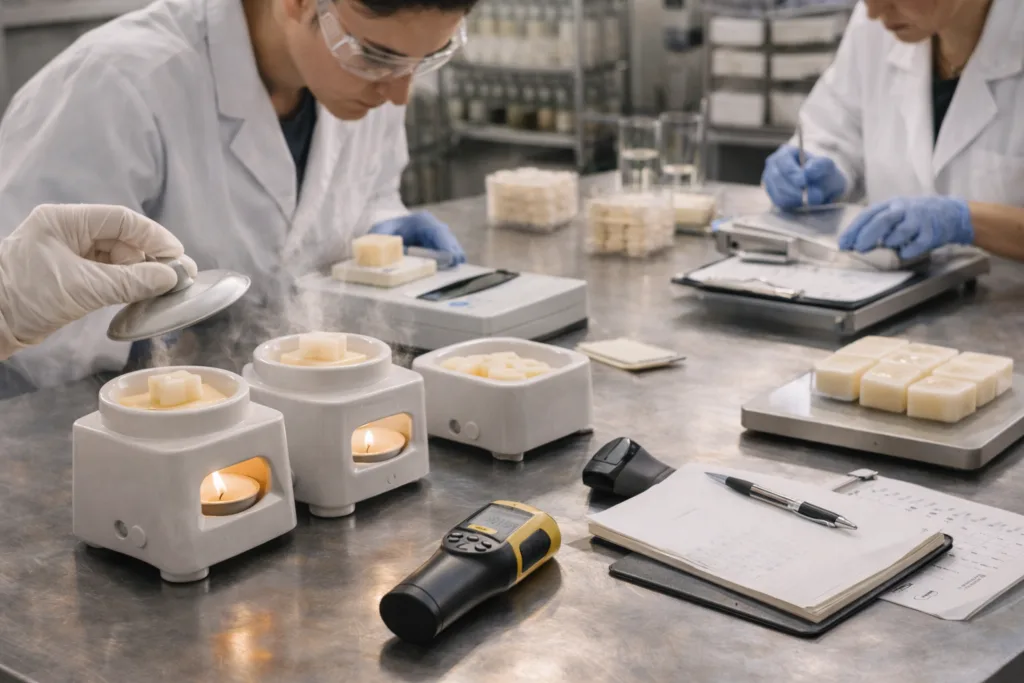 Quality testing includes cold throw evaluation, hot throw testing in wax warmers, melt pool behavior assessment, and visual inspection. Only batches that meet internal standards proceed to packaging.
Sustainable Manufacturing Practices
Sustainability is integrated throughout the manufacturing process. Circe Home emphasizes renewable waxes, recycled excess material, reduced water usage, and low-impact colorants.
Custom Packaging Design
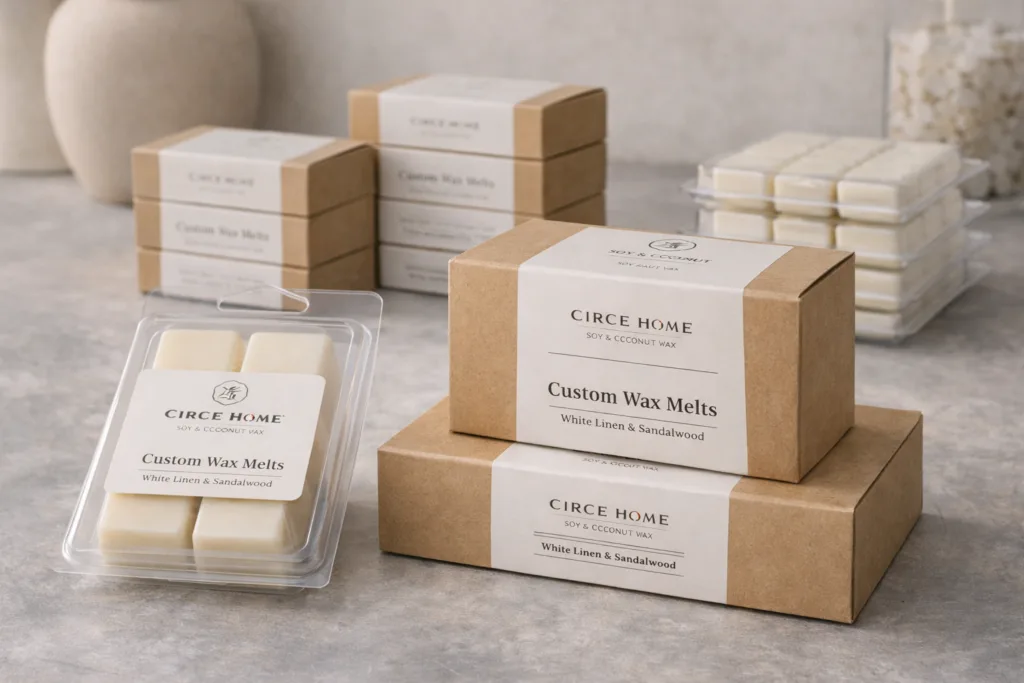
Packaging protects the product while communicating brand value. Popular formats include clamshells, kraft boxes, glass containers, and compostable pouches. Custom inserts and storytelling elements elevate perceived value.
Labeling and Compliance
Labels typically include product name, net weight, ingredient information, safety instructions, and brand details. Compliance with regional regulations ensures smooth market entry.
Storage and Logistics Preparation
Finished wax melts are stored in temperature-controlled, low-humidity environments to preserve fragrance integrity and shape before shipment.
Why Circe Home’s Process Stands Out
Circe Home combines artisan craftsmanship with industrial precision and sustainable values. Each wax melt reflects quality, safety, and emotional connection, helping brands succeed in competitive markets.
❓ Frequently Asked Questions
How long do wax melts last?
Proper storage allows wax melts to retain fragrance for 12–24 months.
Are wax melts safer than candles?
Yes, they are flameless and reduce fire risk.
Can shape, color, and scent be customized together?
Yes, full customization is possible in professional manufacturing.
Which wax offers the strongest scent throw?
Paraffin has strong throw, while soy-coconut blends balance performance and sustainability.
How long does production take?
Typically 3–6 weeks depending on complexity and volume.
Are custom wax melts eco-friendly?
Yes, when made with plant-based waxes and recyclable packaging.
 ✨ Conclusion
From mold design to packaging finesse, the custom wax melt manufacturing process is a sophisticated journey that blends science, scent, and storytelling.