
This guide blends expert manufacturing insight with practical comparisons—spotlighting cotton, wooden, and dual-wick solutions. You’ll uncover how wick type, size, and sourcing (including wooden wick wholesale and cotton wick selection strategies) interact with different wax systems and impact cold/hot throw, burn profile, and compliance.
Understanding Candle Wick Basics
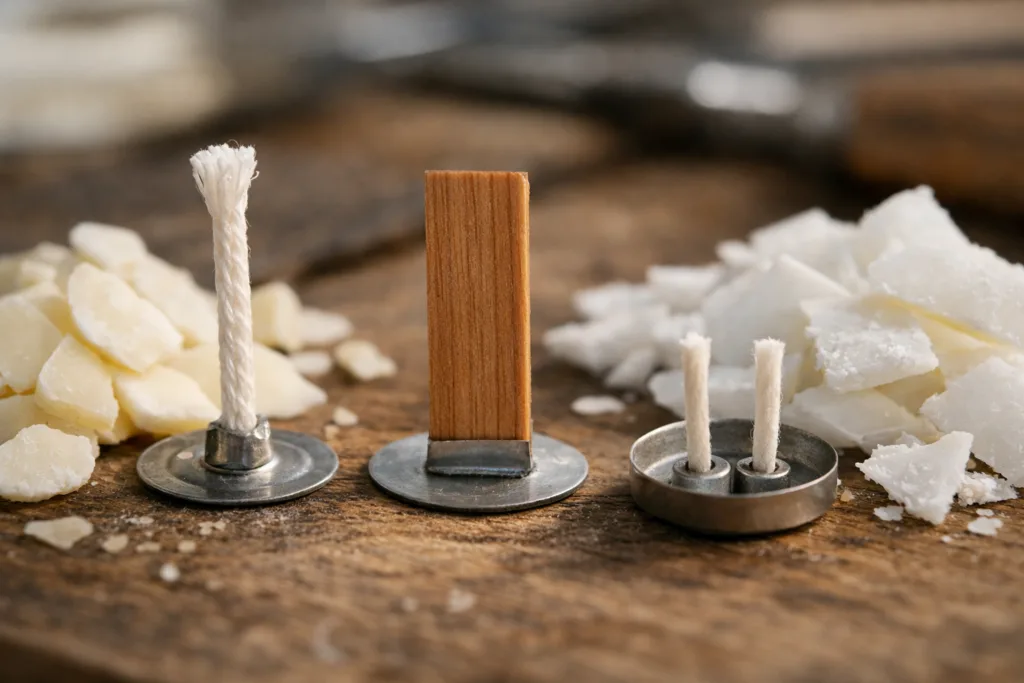
Candle wicks are more than just a lightable thread—they’re engineered conduits that regulate heat, fuel delivery, and fragrance release with precision. The ideal wick:
- Melts wax at the right rate for clean, even burning
- Supports optimal scent throw for the selected wax blend
- Limits soot, mushrooming, or tunneling
- Ensures safety and container compatibility
Core options include:
- Cotton wicks (flat, braided, paper-core, or HTP reinforced)
- Wooden wicks (straight, dual-layer, or crackling)
- Dual wicks (paired cotton, cotton + wood, or double wooden for wider vessels or dramatic effects)
Cotton Wick Selection: Pros, Cons, and Scent Diffusion
Favored for their clean burn, wide compatibility, and precise size gradations, cotton wicks remain the default for luxury scented candles. A quality cotton wick balances capillary action and rigidity—supporting smooth, soot-free fragrance delivery using soy, coconut, rapeseed, or refined beeswax blends.
- Excellent for essential oil-rich or high-fragrance-load blends, thanks to steady melt pools.
- HTP and paper-core variants offer extra rigidity and strong scent throws in heavier waxes.
- Require careful sizing to avoid tunneling or mushrooming, especially in oversized jars.
When to Custom-Order Cotton Wicks
For brand-specific aesthetics and performance, many private-label partners request candle wick custom production. This enables optimal sizing for unique jar diameters, blend viscosities, or fragrance compliance targets. Circe Home routinely guides partners through tailored cotton wick selection, ensuring every scent—spicy, floral, gourmand—has a wick tuned for both cold and hot throw, and a burn profile exceeding market benchmarks.
Wooden Wicks: The Modern Artisan Choice
Wooden wicks have inspired a renaissance in candle design, offering visual drama, soft crackling ambiance, and a unique approach to scent diffusion. Sourced via wooden wick wholesale partners, these wicks are crafted from FSC-certified woods (birch, maple, cherry) and laser-cut for consistency.
- Best paired with high-clarity wax blends (coconut, soy, or coconut/rapeseed fusions)
- Excellent for modern minimalist, spa, or wellness candles seeking a signature burn experience
- Require careful pre-trimming and container fit to avoid uneven burning
Optimizing Wooden Wick Performance
Wooden wicks excel at diffusing top notes quickly during first bloom but may require double-layer formats for tall or wide jars. Circe Home’s production team performs QC checks on each wooden wick shipment—testing for even burn, soot-free performance, and fragrance load compatibility with both essential oil and synthetically enhanced blends.
Dual Wick Systems: Impact on Scent and Ambiance
For bold containers or high-throw luxury lines, dual-wick set-ups can transform a candle’s performance:
- Double cotton: Dramatically enhances melt pool size, supporting diffusion in low-porosity waxes (beeswax, palm)
- Wood + cotton: Fuses crackling ambiance with the melt consistency of cotton, perfect for designer spa lines
- Twin wooden: Delivers broad, even heat, suited for oval or XL designer vessels
Precision spacing and vessel diameter matching are vital; over-wicking risks fragrance fade, soot, or safety issues.
Comparing Wick Types: Performance Table
Below is a technical comparison of popular wick systems as they relate to luxurious fragrance delivery and custom-scented candle design:
| Wick Type | Best For Wax | Scent Throw | Burn Time (200g) | Visual Experience | Soot Risk |
|---|---|---|---|---|---|
| Cotton (Standard/HTP) | Soy, coconut, rapeseed, beeswax blends | Balanced cold & hot throw | 36-50 hrs | Classic, invisible flame | Low (with right sizing) |
| Wooden (Single/Double) | Soy, coconut, blends with low melt points | Fast hot throw, crisp top notes | 34-44 hrs | Crackling, modern | Moderate (needs QC) |
| Dual/Wide Wick | Beeswax, large-diameter vessels | Intense throw, fast surface melt | 28-42 hrs | Bolder flame, wide melt pool | Higher (if misaligned) |
Matching Wicks to Wax Blends
Each wax type demands a different wick specification for optimal scent release and burn quality.

- Soy wax: Medium/large cotton or single wooden, adjusted for curing time and fragrance load
- Coconut wax: Fine or crackling wooden wicks, maximizing rapid melt and cold/hot throw
- Rapeseed wax: Tight-braided cotton for clean, sustained diffusion
- Beeswax blends: Wide or dual-wick to compensate for higher melt viscosity
Circe Home Lab Insight: “Testing is key. Even small shifts in wax type or fragrance chemistry can change the ideal wick—so each blend is prototyped and QC-checked before scale-up. We dial both burn time and scent projection to the brand’s signature.”
Candle Wick Custom Sizing & Sourcing Advice
The right vendor enables true wick customization. For brands scaling up, wooden wick wholesale programs offer batch consistency, while cotton wick selection from reputable manufacturers provides diameter, length, and core customization for unique vessels and fragrance compositions.
- Send vessel specs, target burn profile, and wax composition to your supplier
- Request both technical data sheets and trial samples (test all major blends)
- Run QC burns measuring melt pool size, scent transition, soot, and glass wall residue
- Document trimming needs and recommended customer use instructions
- Ensure all components meet IFRA and CLP labeling requirements
Circe Home regularly supports full-spectrum candle wick custom requests—from single prototypes to large OEM/ODM runs—helping brand partners maintain compliance, safety, and distinct aromatic impact.
How Wick Type Affects Fragrance Diffusion
Scent throw is a function of melt pool width, wax temp, and wick type. Choose a wick that complements both fragrance chemistry and wax blend for:
- Broad, fast-opening melt pools (wooden wicks) for citrus, herbal, or top-note-centric scents
- Steady scent build (cotton wicks) ideal for complex, layered or gourmand fragrances
- Powerful, even diffusion in large luxury vessels (dual wicks)—balanced for safety and longevity
Remember: Testing cold throw during cure and hot throw after 7-10 days is essential. Not all wicks play well with every fragrance, especially with high essential oil content or unusual wax additives.
Application Examples: Vessel and Aesthetic Considerations
Wick choice also shapes the customer’s visual and tactile experience:
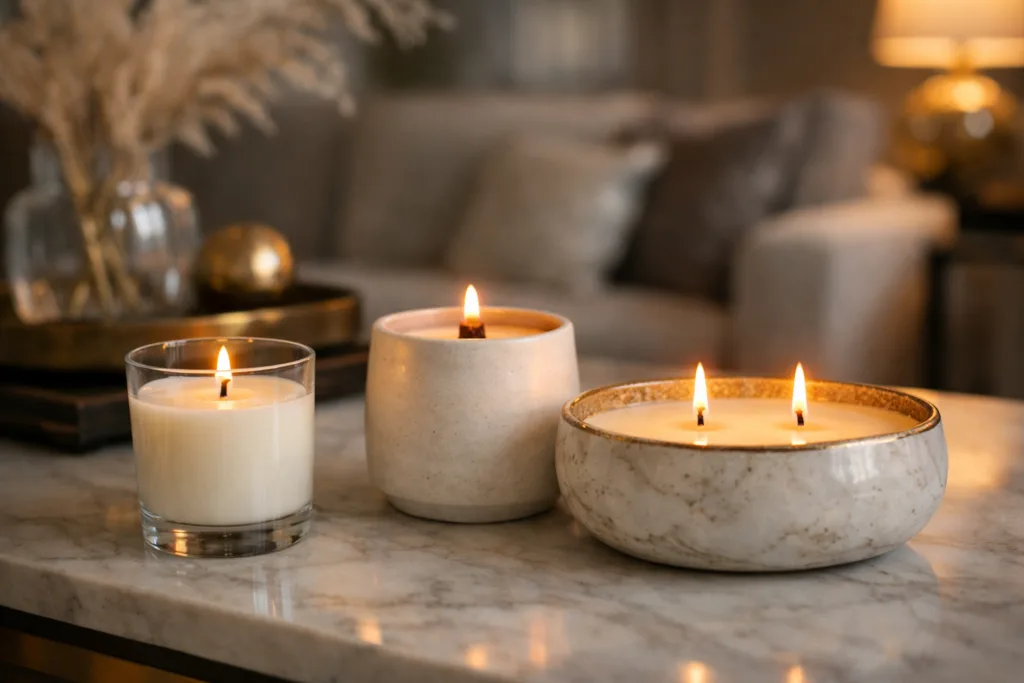
- Minimalist glass tumblers: Thin crackling or invisible cotton wicks for unobstructed design, as seen in minimalist home décor lines
- Luxe ceramic/jar collections: Double or wide wicks for maximal aroma in designer hotel, spa, or gifting candles
- Eco-conscious packaging: FSC-certified wood and organic wick choices align with sustainable messaging and refillable programs
Quality, Compliance, and Sustainability Checks
True luxury candle manufacturing always validates wick, wax, and fragrance integration to ensure safety and consistent customer experience. Key QC points include:
- Burn time validation (targeting >35hr for 200g candles)
- Wick centering and stability (to prevent container cracking or smoking)
- Documentation of IFRA 51st and EU CLP compliance
- Use of biodegradable, FSC, or naturally sourced wick and packaging options
Brands committed to excellence—such as Circe Home—integrate QC outcomes into packaging, use instructions, and digital assets, ensuring every candle performs as beautifully as it looks.
Frequently Asked Questions
How do I choose between cotton, wooden, or dual wicks for custom candles?
Select cotton for versatility and clean burn, wooden for ambiance and fast scent diffusion, and dual wicks for larger vessels or enhanced fragrance projection. Match wick type to wax, vessel size, and scent profile for best results.
Does the wick affect cold and hot throw in scented candles?
Absolutely. Wick sizing and material regulate the melt pool and heat, which determine both cold (unlit) and hot (burning) throw. The right combination maximizes fragrance diffusion and burn quality.
Which wax types pair best with wooden wicks?
Wooden wicks excel with soy, coconut, or hybrid blends that have lower melt points. They encourage rapid melt pools and highlight crisp or top-note-heavy scent compositions.
When is a dual (double) wick recommended?
Dual wicks are ideal for wide vessels (over 9cm) or wax systems that require larger surface melt pools. They increase scent throw but require precise spacing to avoid overheating or sooting.
What QC tests should be performed on new candle wick custom orders?
Key tests include burn time measurement, melt pool analysis, soot assessment, center stability, and fragrance throw evaluation for each wax and scent formulation. Always check IFRA and CLP compliance.
Can I customize wick size and type for private-label scented candles?
Yes. Leading OEM/ODM partners like Circe Home offer tailored wick sizing, material selection, and private-label options matched exactly to your vessel, wax, and fragrance blend requirements.