
Top Mistakes to Avoid When Ordering Custom Candles
Custom candles represent a blend of scent artistry and sophisticated design—ideal for brands seeking a memorable, elevated experience. Yet ordering bespoke candles comes with hidden complexities and costly mistakes. Whether you’re launching a private-label collection or refining your spa gifts, avoiding common pitfalls is essential for budget control, brand impact, and consistent product quality. This comprehensive guide lays out the main mistakes to avoid when ordering custom candles, from fragrance overload to overlooked MOQ issues, container selection, and packaging over-investment. Featuring insights from Circe Home—renowned for luxury OEM/ODM candle production—discover how to navigate sourcing with confidence and avoid expensive missteps.
Choosing Too Many Fragrances: How Over-selection Hurts Your Line
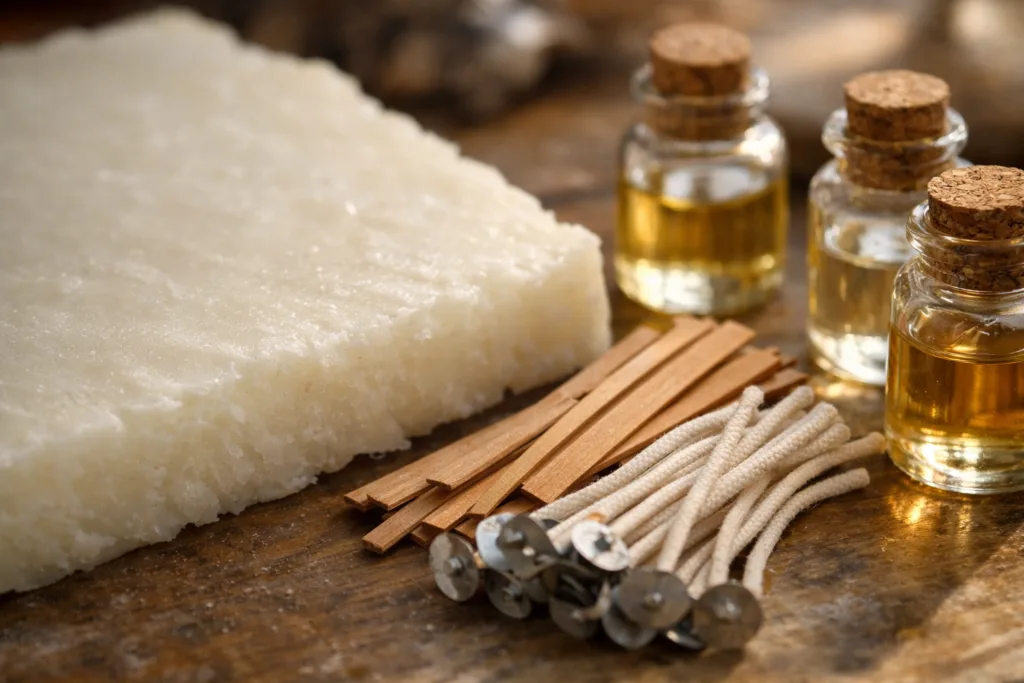
When creating a custom candle range, brands often get swept up in the allure of broad fragrance variety. But sourcing too many scents for an initial order can dilute brand identity and introduce logistical hurdles.
Operational Complexity
Each additional fragrance means more development time, additional compliance steps (IFRA/CLP), and more inventory demands. Production slots, curing schedules, and quality assurance compound with every SKU.
Budget Blowouts
Ordering multiple fragrances increases minimum order quantity (MOQ) splits—resulting in lower per-fragrance volume and higher per-unit cost. For example, splitting a 3,000 unit MOQ among 6 scents yields 500 units per scent, often incurring surcharges. Wax blend compatibility also varies by fragrance load, which can trigger reformulation costs.
- Stick to 2–3 fragrance heroes for launch
- Build signature scent recognition before expanding
- Consult with the manufacturer (e.g., Circe Home) for scent load compatibility
Fragrance Performance Risks
Testing every fragrance to ensure optimal cold and hot throw takes time. Over-selecting scents without sufficient R&D risks poor olfactory performance, uneven burn, and customer disappointment.
Packaging Budget Pitfalls: Overspending Where It Doesn’t Count
Elegant packaging is key to luxury candles, yet allocating too much budget here can undermine core product quality. Premium vessels, custom boxes, and elaborate label finishes come with setup costs, especially for intricate designs.
Hidden Setup Costs
Bespoke containers (glass, ceramic, concrete) and foil-embossed boxes typically require MOQs anywhere from 1,000–5,000 units, with mold fees and printing plate charges. Design complexity often leads to budget creep, leaving less for high-quality wax or fragrance oils.
ROI Focus
Always weigh the packaging spend against measurable brand impact. Luxury packaging should enhance—but not overshadow—the scent experience or wax formula integrity.
- Prioritize sustainable packaging materials first
- Opt for modular container shapes to simplify MOQ splits
- Invest in label artistry that amplifies scent storytelling (see Circe Home’s approach)
Circe Home Lab Insight: “Packaging should support the product, not drain the launch budget—especially if you’re testing new fragrance blends or markets.”
MOQ Mistakes: Ignoring Minimums Can Double Your Costs
Minimum order quantity (MOQ) is a critical driver of unit price, flexibility, and profitability for custom candles. Overlooking the details can result in budget blowouts or unmanageable stock.
How MOQ Impacts Sourcing
Manufacturers price on batch volume: the lower your unit count for each variant (scent, container, packaging), the higher your per-unit cost. Some wax blends or premium vessels may demand higher MOQs due to technical or sourcing constraints.
Budget and Storage Risks
Ordering below MOQ can trigger surcharges—or force you to buy more inventory than needed, tying up capital and storage.
- Check exact MOQ for every variant (scent, vessel, label)
- Consolidate variants to maximize batch efficiency
- Partner with manufacturers who offer flexible MOQ structures for custom blends
Comparative Table
| Wax Blend | Typical MOQ | Scent Throw | Burn Time (200g) |
|---|---|---|---|
| Soy Wax | 1,000 units | Medium-Strong | ~38 hours |
| Coconut-Rapeseed | 1,200 units | Clean, subtle | ~41 hours |
| Beeswax Blend | 900 units | Natural, light | ~35 hours |
| Paraffin | 2,000 units | Strong | ~39 hours |
Sourcing Pitfalls: Navigating Raw Materials, Fragrance Systems, and Vendor Choice
Sourcing error ranks among the most expensive custom candle mistakes. Selecting incompatible wax for fragrance load, or working with unvetted suppliers, risks performance failures.
Wax Type Compatibility
Not all waxes handle fragrance equally. Soy and coconut blends support high fragrance loads and offer clean burn profiles, while rapeseed and beeswax may mute scent throw. Manufacturer testing for cold and hot throw is essential.
Fragrance System Selection
Essential oils require different cure times, may impact burn stability, and sometimes aren’t IFRA-compliant. Fragrance oils are engineered for soft waxes; blending the two requires expert formulation.
Vendor Credentials
Only partner with experienced OEM/ODM manufacturers with documented compliance, proven burn profiling, and at-scale QC lab support. Circe Home’s expertise—in private-label fragrance development and sustainability—sets a quality benchmark for luxury custom orders.
Neglecting Quality Control: From Wick Sizing to Compliance
Skipping technical QC derails performance and brand reputation. Candle burn profile, wick centering, and fragrance dispersion must be validated for every batch.
Burn Profile & Soot Tests
Soot-free burn is essential for luxury positioning. Check for mushrooming, smoke output, and burn evenness across all container types.
Wick Sizing
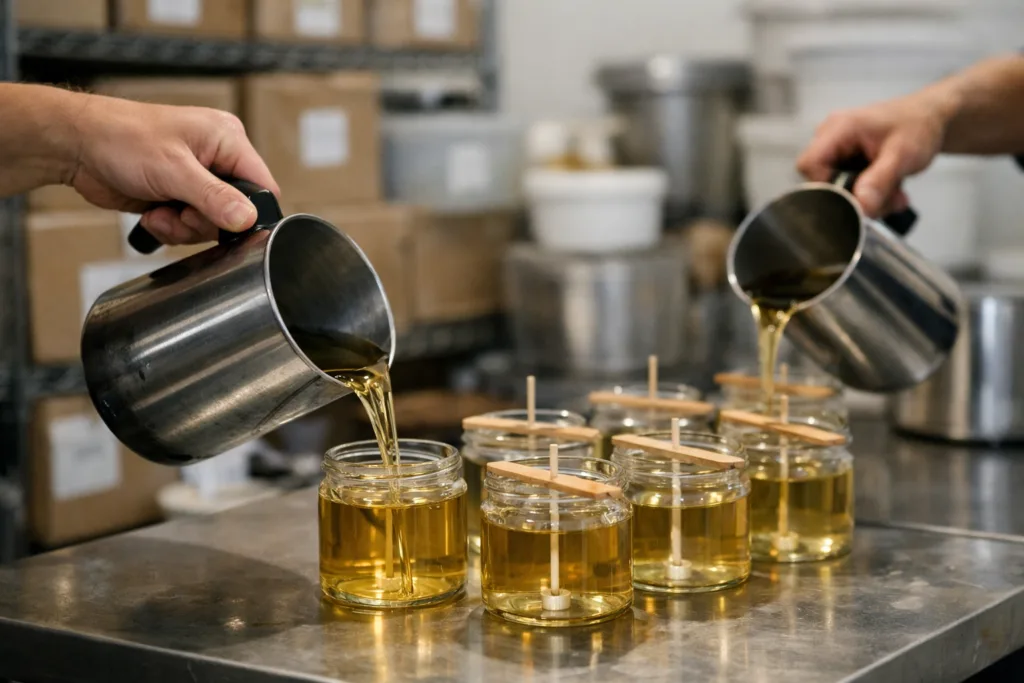
Candle diameter, wax blend, and fragrance load dictate wick width. Undersized wicks can tunnel; oversized wicks produce excess soot.
Compliance Checks
Labeling (IFRA, CLP), fragrance allergen declarations, batch traceability—these aren’t optional. QC steps should include:
- Burn test minimum: 35 hours for 200g candles
- Wick centering tolerance: ±2mm
- Fragrance dispersion consistency measurement
Ignoring Curing Time and Fragrance Load Science
Rushing candles to market or using incorrect fragrance load percentages risks poor scent throw and wax instability. Each wax and fragrance system needs adequate curing to reach full olfactory potential and clean burn.
Cure Timelines
Uncured candles suffer muted scent and uneven burn. Allow 7–14 days for soy and coconut waxes, 10+ days for beeswax blends. Testing for cold and hot throw is mandatory after cure.
Fragrance Load Percentage
Wax-specific maximums apply: typically 6–12% for soy, ~8% for coconut, 5–7% for beeswax. Exceeding these triggers sweating or poor burn; undercooking weakens scent experience. Manufacturers like Circe Home run fragrance compatibility tests to optimize formula.
Overlooking Container and Labeling Decisions
Container material and labeling formats shape brand presentation and compliance. Glass, ceramic, tin, and concrete vessels each convey a different luxury narrative and have technical implications for burn profile.
Container Type
Glass suits clean, modern lines; ceramic offers artisanal texture; tin is travel-friendly; concrete projects minimalism. Insist on heat-resistant coatings and check vessel diameter for correct wick fit.
Labeling & Packaging Formats
Scent names and outer packaging must comply with CLP for EU, with IFRA declarations. Consider:
- Embossed labels for tactile appeal
- Soy ink printing for sustainability
- FSC-certified carton board
Production Process Oversight: Each Step Counts
From raw wax melting to hand-pouring, exact process control underpins quality. Mishandling blend ratios or cooling times results in frosting, cracking, or scent loss.
Detailed Production Steps
- Pre-pour wick gluing and vessel prep
- Correct melt/cool cycles for wax integrity
- Precision fragrance incorporation (by temperature)
- Careful pouring and topping
- Boxing with shock-absorbing eco-packaging
Post-production QC
Final checks include visual inspection, burn tests, scent throw verification, and batch record matching.
Top Mistakes to Avoid When Ordering Custom Candles
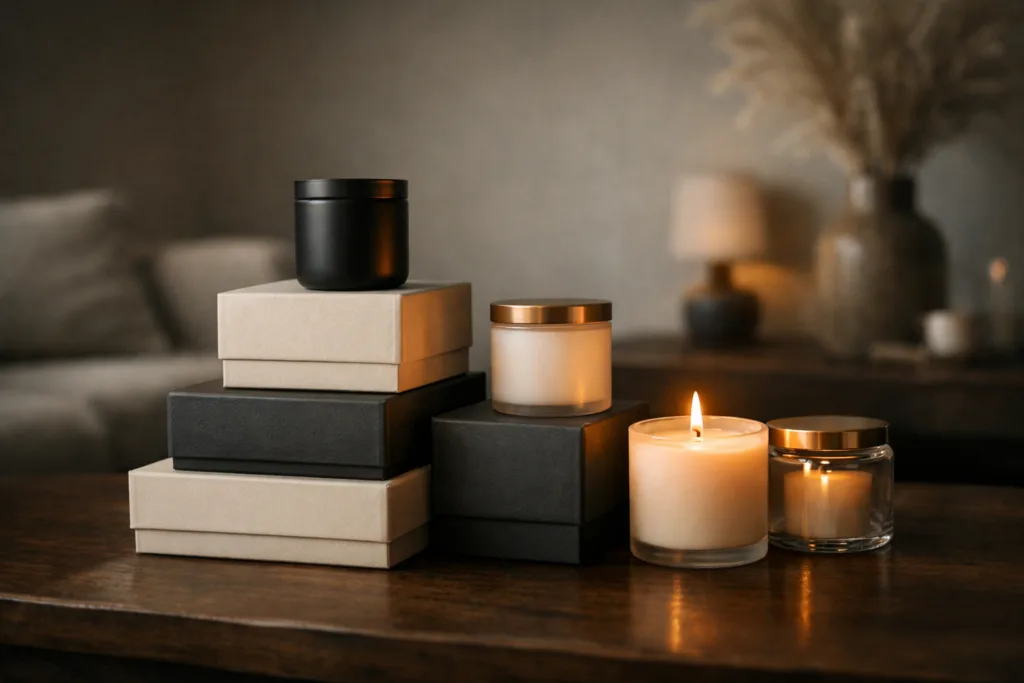
Ordering custom candles is as much art as science. Avoid these key mistakes:
- Selecting too many fragrances at launch
- Overspending on packaging before formula QA
- Ignoring supplier and variant MOQs
- Neglecting QC, cure times, and compliance
- Poor vessel and labeling choices
- Rushing production without technical process control
Partnering with expert manufacturers like Circe Home helps you steer clear of sourcing pitfalls and build a candle brand with integrity, performance, and sustainable luxury.
Frequently Asked Questions
How many fragrances should I launch with for my custom candle line?
For optimal brand focus and cost control, limit your initial range to two or three fragrance options. This allows for robust scent testing and stronger market positioning without diluting resources or stretching MOQ splits.
What are typical MOQ requirements for custom candle orders?
Most luxury candle manufacturers have MOQs between 900 and 2,000 units per scent or variant. Specialized vessels, custom boxes, and premium blends can require higher minimums. Always confirm per-variant MOQs before confirming orders.
How does packaging impact my custom candle budget?
Complex packaging—such as custom molds, foil finishes, or elaborate labels—quickly increases setup costs and MOQs. Prioritize essential functional packaging and reserve luxury upgrades for future production runs.
What QC tests should my candles pass?
Key quality checks include burn time exceeding 35 hours, clean/soot-free burn profile, proper wick centering, and fragrance dispersion consistency. Compliance labeling and batch traceability are also essential for safety and logistics.
How do I choose the right wax blend for fragrance performance?
Soy and coconut blends support stronger scent throw and clean burn, while beeswax and rapeseed offer natural aesthetic but more subtle aromas. Consider wax compatibility with essential oils and always verify fragrance load ceilings with your manufacturer.
What compliance standards are required for private-label candles?
International standards mandate IFRA compliance for fragrance safety, CLP labeling for the EU, proper allergen declarations, and fire safety warnings. Partner with manufacturers who assist with up-to-date regulatory support and batch documentation.