
Understanding Candle Cost Calculation for Custom Orders
Every scented candle begins with meticulous cost calculation. For brands seeking private-label or OEM production, understanding exactly how factories determine your custom order cost is vital. Key factors span materials, labor, equipment setup, packaging, and allowances for wastage. This transparent process enables strategic choices—balancing scent, vessel, packaging, and budget to create standout products with the desired margin and retail appeal.
How Candle Factories Calculate Your Custom Order Cost
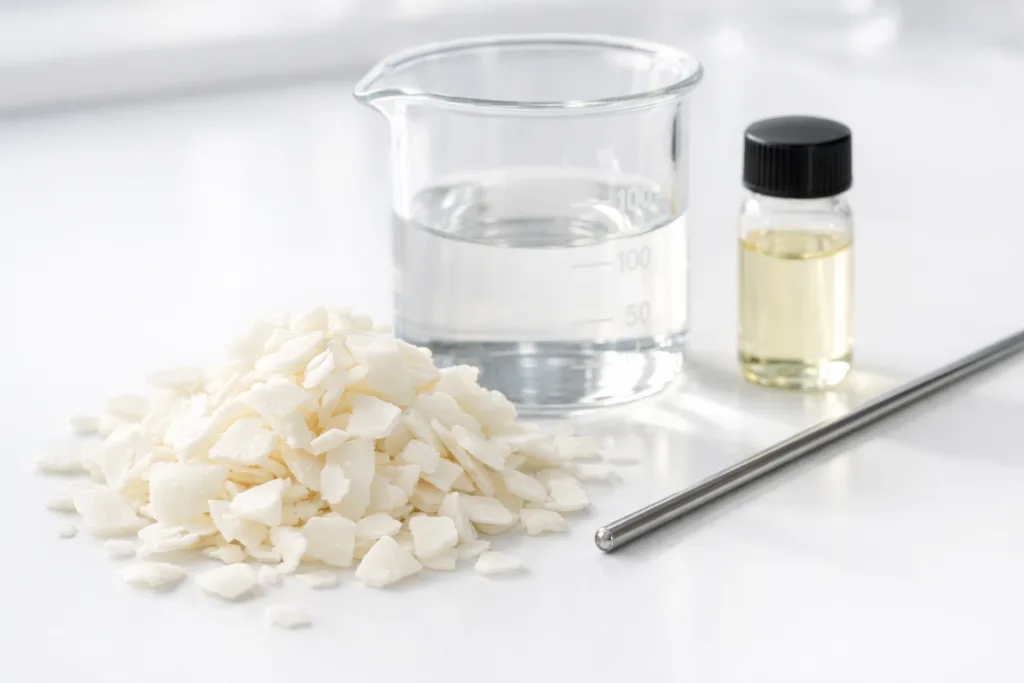
When you submit a candle concept to an OEM manufacturer like Circe Home, their costing team dissects the request through a proven analytical lens. Each core component—from wax type to fragrance system, wick, packaging, and labor—feeds into a detailed itemized quote. This section provides a deep look at the real-world calculations that underpin every custom candle proposal, helping you anticipate price movement, negotiate with confidence, and align expectations with premium production realities.
Materials Cost: Wax Blends, Fragrance & Vessels
Material selection forms the foundation of custom candle pricing. Factories begin with your chosen wax blend—soy, coconut, rapeseed, beeswax, or custom combinations—calculating cost per kilo and loss rate. Premium blends with higher natural content or specialist additives drive up price. Essential oil-based fragrances, IFRA-certified aromatic blends, and inclusions like colorants or botanicals are meticulously costed and loss-adjusted. Selection of vessel (glass, tin, ceramic) and finishing (color, embossing, coating) further influences the BOM (bill of materials) price.
| Wax Type | Max Fragrance Load (%) | Approx. Cost/kg | Average Burn Time (200g) |
|---|---|---|---|
| Soy | 8–10% | Medium | 40+ hrs |
| Coconut-Soy Blend | 10–12% | High | 35–38 hrs |
| Rapeseed | 8–9% | Medium-Low | 38+ hrs |
| Beeswax | 6–8% | High | 38–40 hrs |
| Paraffin | 12–15% | Low | 40+ hrs |
- Material wastage averaged at 1.5–4% depending on complexity
- Cost fluctuations for natural waxes subject to harvest yield
- Import duties, special pigment, and fragrance macro trends can impact input cost
Labor, Equipment Setup, and Production Run Costs
Labor is more than just man-hours—it’s skilled precision. Every batch calculation factors in master pourers, QC checks, and line workers, adjusted for regional wage rates and complexity. Equipment setup covers the process of cleaning, assembling, and calibrating melting tanks, dispensing heads, cooling tunnels, and labeling machines prior to each order. Factories often charge a fixed run fee per SKU, reflecting the necessity to retool for different vessels, wicks, or filling specs. The greater the customization, the more time and technical setup required—which translates into higher upfront cost but not always higher per-unit cost if the batch size is large.
- Staffing: Pouring, assembly, quality control, packing
- Operator training for custom fragrances or difficult waxes
- Equipment cleaning and setup
- Proofing period for first-run or high-complexity orders
For Circe Home, equipment setup also includes compliance validation to align with IFRA and CLP labeling mandates, ensuring each run meets international standards before release.
Packaging, Labeling & Accessories: Cost Structure Breakdown
Packaging cost is multi-layered: primary containers (glass, ceramic, metal), decorative finishes, custom closures or seals, plus secondary packaging (retail boxes, sleeves, gift bags) and logistics protection. Variables include container size, wall thickness, coating (matte, gloss, pearl), and decoration layers (printing, foil, emboss, deboss). Labels—especially with unique scent names or batch coding—add setup and print run cost.
- Primary: Jar/tin, wicks, dust covers, lids
- Secondary: Carton, outer box, protective foam, wrap
- Labeling: Paper type, foil, deboss, variable data print
- Accessories: Matches, scent cards, instructional inserts
Packaging selection not only shapes direct unit cost but also freight and handling fees—heavier or non-nested shapes carry premium handling through shipping and import phases.
Wastage, QC Allowance & Regulatory Compliance Costs
No production run is without yield loss. Factories include a wastage margin, accounting for wick off-centering, vessel defects, fragrance flash-off (especially with high essential oil loads), wax frosting or surface blemishes. Typical wastage ranges 2–4% for high-quality lines. Quality control involves additional sampling, extended curing for certain blends, and rigorous burn and safety tests: soot index, melt pool consistency, and fragrance throw stability across the batch.
Compliance overlays (IFRA, CLP) prompt ingredient review, allergen documentation, and test burning to validate safe, consistent burn—each with its administrative and testing cost. For brands like Circe Home, these steps are non-negotiable, ensuring a product that meets global standards for luxury and safety.
MOQ (Minimum Order Quantity) Impact on Custom Pricing
MOQ is pivotal—a lower quantity means setup and fixed tooling costs are absorbed over fewer units, raising your per-candle cost. Most premium OEMs set MOQ at 500 to 1,200 units, though highly customized runs with imported vessels or specialist fragrance can push this higher. Larger batches gain economies of scale not just on raw materials, but also on packaging and testing overhead.
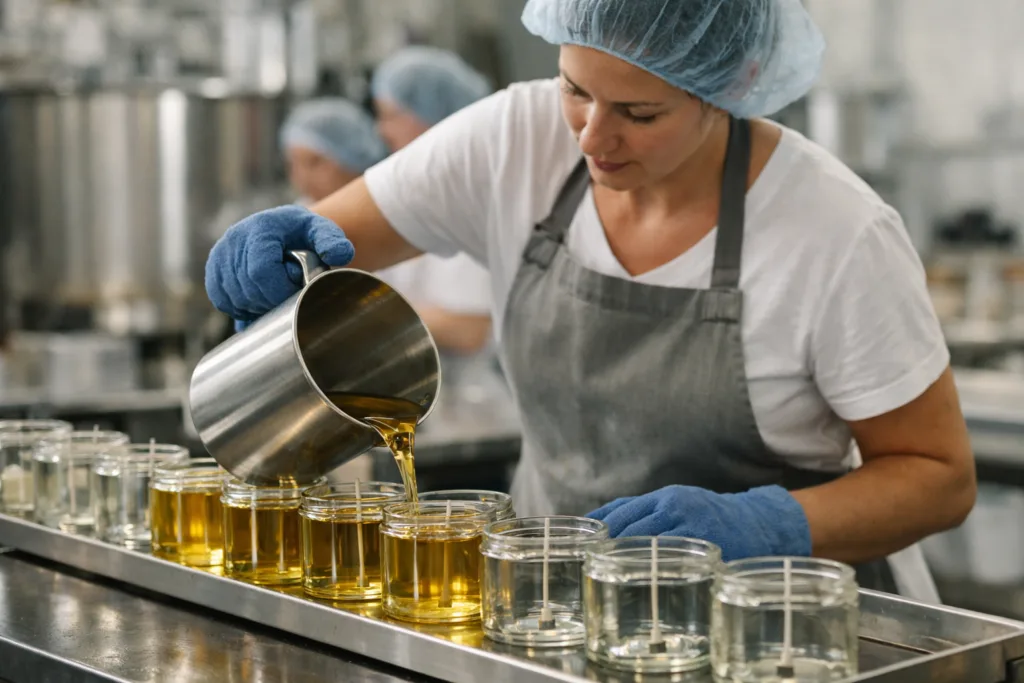
Circe Home Lab Insight: A batch of 500 bespoke coconut-rapeseed candles with imported Italian glassware might cost 35% more per unit than a 2,500-unit run due to setup, packaging breakage, and QC allocation.
Custom Fragrance Development: R&D and Compliance Fees
Unique scent profiles require up-front investment. The R&D process includes scent brief analysis, test blending, small-batch test burns for throw and stability, and independent allergen review, especially with natural essential oils. Fees may include: initial development, revision rounds, and one-off compliance submissions for IFRA/CLP certification and allergen declarations (if destined for EU markets).
- Fragrance R&D: Brief handling, test batch, client evaluation, revision
- Batch stability testing (hot and cold throw over 4–6 weeks curing)
- Documentation prep: IFRA, CLP, allergen & safety labeling
Case Example: End-to-End OEM Candle Pricing Breakdown
Let’s examine a real-world scenario for a 1,000-unit custom run by a luxury spa brand working with a leading manufacturer.
| Cost Component | Details | Unit Price (USD) |
|---|---|---|
| Wax Blend | 100% soy, IFRA compliant | 1.15 |
| Fragrance System | Custom blend (6% essential oil, 4% perfumer base) | 1.10 |
| Wicks/Wick Tabs | Paper-core, CLP compliant | 0.19 |
| Container | Frosted glass, silk-screen, metal lid | 1.10 |
| Primary Packaging | Custom rigid box, gold foil | 0.95 |
| Accessories | Instruction slip, dust cover | 0.10 |
| Labor & QC | Batch pouring, packing, testing | 0.85 |
| Equipment Setup | Batch run (setup amortized) | 0.18 |
| Wastage Allowance | 3.5% batch loss, QC retest | 0.13 |
| Regulatory Testing | Batch IFRA/CLP testing compliance | 0.09 |
| TOTAL (ex works) | 5.84 | |
This cost excludes ocean freight, duties, VAT, and last-mile delivery, which may add 15–35% depending on destination.
How to Control Your OEM Candle Pricing
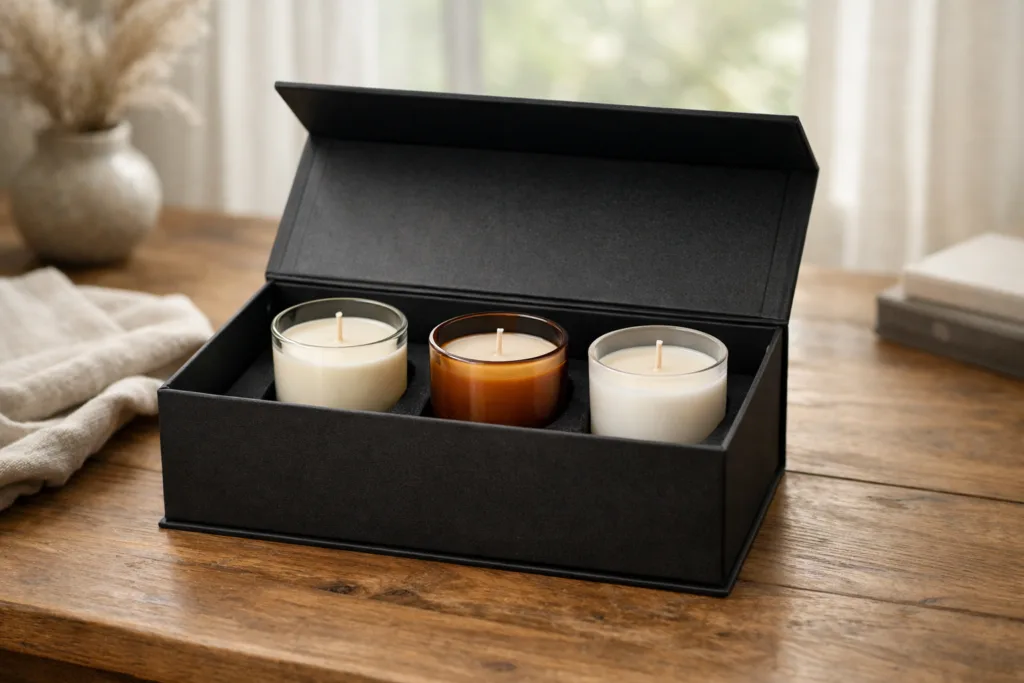
Understanding the key drivers enables partners to adjust specs for budget—such as using classic soy instead of coconut-blend, clear glass instead of specialty ceramics, or opting for in-house fragrance versus signature creations. Early, clear briefing with production teams ensures the right balance of technical requirements, cost, and brand identity.
- Clarify scent, burn time, and vessel requirements up-front
- Request detailed pricing breakdowns
- Assess cost impact of incremental features (foil, embossing, vessel color)
- Align batch size with MOQ price breaks
Leverage the expertise of leaders like Circe Home to model test runs and optimize packaging without sacrificing sensory or brand impact, maintaining a clean burn and premium finish throughout.
Frequently Asked Questions
How does material choice affect candle cost calculation?
Material pricing fluctuates by the type of wax, fragrance complexity, and vessel selected. Premium wax blends, high essential oil content, and special finish containers add to the unit price due to higher sourcing and wastage risks.
What is included in the equipment setup fee?
Setup fees cover cleaning, calibrating, and configuring equipment for each SKU, ensuring precise pouring, consistent burn, and regulatory compliance. Higher customization or frequent vessel changes can increase this fee.
How do packaging choices change OEM candle pricing?
Custom glass, ceramics, embossing, and foil details drive packaging cost. Complex designs and additional components raise per-unit price, while bulk runs can reduce marginal cost on standard options.
Why does wastage factor into production cost?
Wastage accounts for off-spec candles, material loss during pouring and cleanup, and batch retesting for quality control. This ensures only flawless, compliant product is delivered in each order.
Can MOQ impact my custom candle unit cost?
Lower MOQs result in higher per-unit costs since setup, testing, and QC fees are spread over fewer candles. Larger batches achieve economies of scale, reducing unit prices on both materials and labor.
What compliance costs are included in luxury OEM candles?
Compliance covers IFRA and CLP documentation, allergen verification, batch safety testing, and regulatory labeling. These steps guarantee international safety standards and premium brand credibility.