
Introduction: Why Most Candle Startups Spend Too Much Too Early
Starting a scented candle side business has become one of the most attractive low-barrier entrepreneurial paths in recent years. Candles sit at the intersection of lifestyle, emotion, and repeat consumption—making them ideal for independent brands, creators, and boutique retailers.
However, behind the beautifully styled photos and minimalist branding lies a reality many beginners underestimate: most candle startups fail not because of branding, but because of early cost misjudgments.
At Circe Home, we’ve worked with a wide range of small-batch founders and first-time brand owners. One pattern is consistent—many people invest heavily in full customization before they have validated demand.
If your goal is to test the market with limited risk, you don’t need perfection. You need a smart structure.
The Three Core Components of a Scented Candle
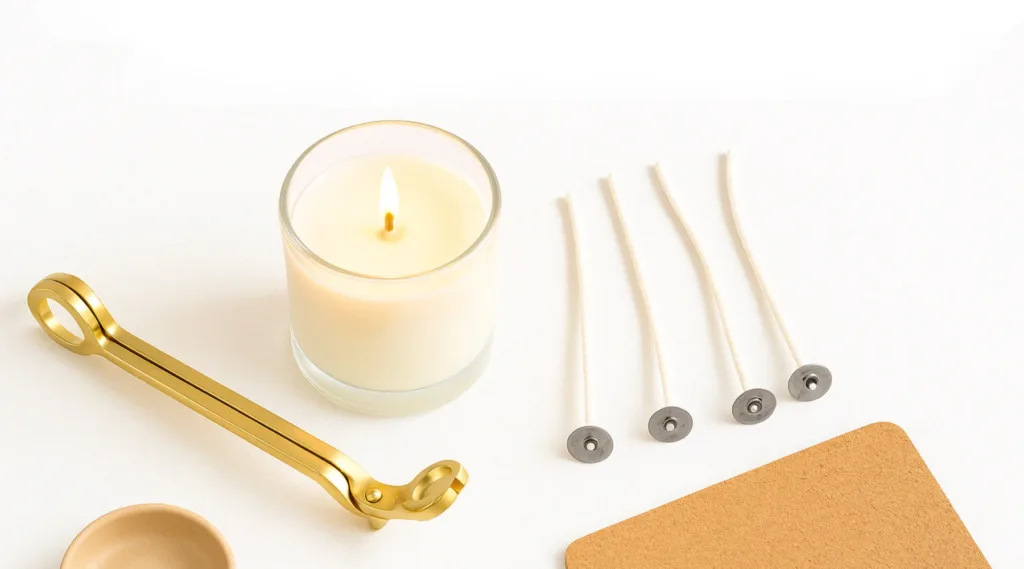 Every scented candle—regardless of price point or positioning—is built from three fundamental elements:
- The container (or vessel)
- The wax
- The fragrance
All three can be customized, but full customization dramatically increases costs, minimum order quantities, and lead times. For a side business or first launch, a better approach is to work with proven, standard components and apply creativity where it matters most.
Why Full Customization Is a Risk for Small-Batch Founders
Full customization often involves custom molds, exclusive fragrance development, and experimental wax formulas. While this sounds appealing, it usually results in:
- High minimum order quantities
- Tooling and development fees
- Long sampling cycles
- Limited flexibility if the product does not sell
For early-stage founders, this creates unnecessary financial pressure. A smarter strategy is controlled differentiation—using existing supply chain solutions while refining brand expression.
Choice #1: Use Standard Candle Containers and Focus on Branding
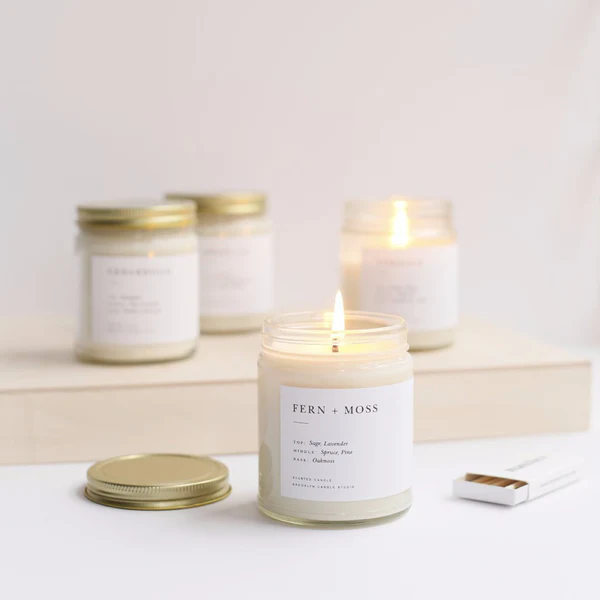 Containers are the most visible part of a candle, which is why many beginners believe they must be custom-made. In reality, standard glass or ceramic vessels are widely used by successful brands for good reason.
Why Standard Containers Work
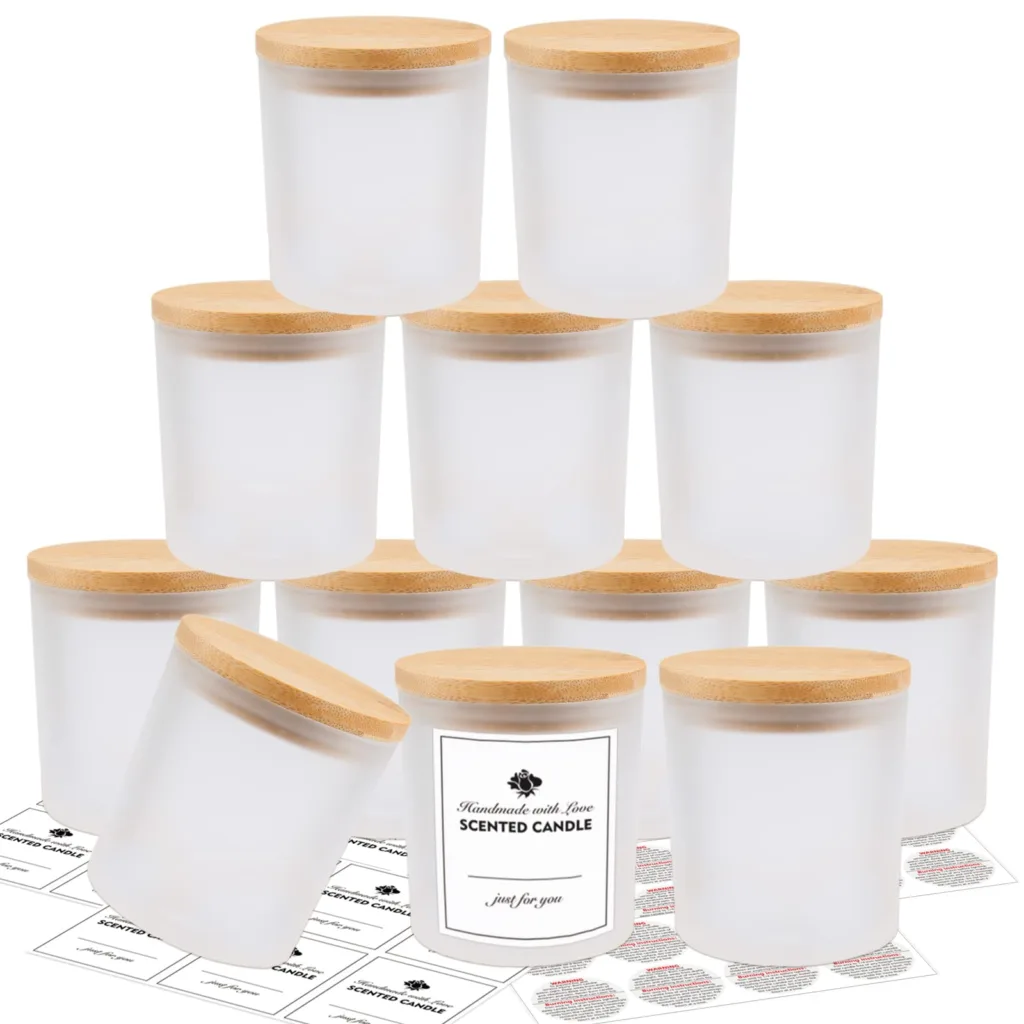
- Stable supply and predictable pricing
- Lower MOQs suitable for testing
- Proven compatibility with candle production
- Faster turnaround times
Using standard containers does not mean your brand will look generic. Consumers respond more strongly to visual storytelling than to the shape of a glass jar.
Where Differentiation Actually Happens
Instead of investing in custom molds, focus on:
- Label typography and layout
- Paper texture and finishes
- Color palette discipline
- Brand tone and narrative
Your label communicates far more brand value than a custom container ever will.
Choice #2: Select Existing Fragrance Oils Instead of Custom Perfume Development
 Fragrance is the emotional core of a candle—but it is also the most misunderstood cost area.
The Hidden Cost of Custom Fragrance
Custom fragrance development involves multiple testing rounds, formulation adjustments, and stability verification. For small batches, the cost per unit becomes disproportionately high.
A Smarter Alternative
Most successful small candle brands start with pre-developed fragrance oils from professional fragrance houses. These scents are:
- Optimized for candle performance
- Tested for scent throw and stability
- Cost-efficient for small quantities
- Easier to scale later
Using existing fragrance oils does not mean your brand lacks originality. The uniqueness comes from how you curate, name, and position your scents.
Choice #3: Start with Soy Wax for Reliability and Consistency
Wax selection can feel overwhelming, especially for beginners. While many options exist, soy wax remains the most practical choice for small-batch launches.
Why Soy Wax Is Ideal for Side Businesses
- Clean, even burn
- Strong market acceptance
- Good compatibility with most fragrance oils
- Lower technical failure rate
At the testing stage, consistency matters more than experimentation. A stable wax reduces production risk and helps ensure product quality.
The Real Goal of a Candle Side Business: Market Validation
A candle side business is not about launching a perfect product. It is about answering essential questions:
- Will customers buy this?
- Which scents perform best?
- What price point works?
- Does the branding resonate?
You do not need full customization to find these answers. You need speed, clarity, and manageable costs.
How Smart Candle Brands Scale After Testing
Once demand is proven and customer feedback is consistent, brands can gradually invest in deeper differentiation, such as:
- Custom vessels
- Exclusive fragrance development
- Advanced wax blends
The most sustainable brands follow a clear sequence: test first, refine second, customize last.
Final Thoughts: Build a Candle Brand That Can Grow
The scented candle industry rewards intention, discipline, and patience. If you are starting a candle side business, remember:
- You don’t need to customize everything at the beginning
- You don’t need large inventory to test the market
- You don’t need to look perfect on day one
You need a product that sells, performs reliably, and allows room to grow.
At Circe Home, we believe strong candle brands are built step by step—starting with smart decisions, not expensive ones.
Frequently Asked Questions (FAQ)
Do I need full customization to start a scented candle side business?
No. Full customization is not necessary when starting a scented candle side business. In fact, it often increases costs and risk at the testing stage. Many successful small brands begin with standard containers, existing fragrance oils, and proven wax types to validate demand before investing in custom development.
What is the best candle container for small-batch production?
Standard glass or ceramic candle containers are ideal for small-batch production. They offer lower minimum order quantities, stable supply, and predictable pricing. Differentiation can be achieved through label design, branding, and storytelling rather than custom molds.
Is it better to use custom fragrances or existing fragrance oils at the beginning?
For early-stage candle businesses, existing fragrance oils from professional fragrance houses are the better choice. They are cost-effective, performance-tested, and reliable for small runs. Custom fragrance development is better suited for brands that have already validated sales and demand.
Why is soy wax recommended for candle startups?
Soy wax is widely recommended for candle startups because it burns cleanly, works well with most fragrance oils, and has a lower technical failure rate. Its consistency and reliability make it especially suitable for small-batch testing and first-time production.
When should a candle brand consider full customization?
Full customization should be considered after a brand has proven market demand, established repeat sales, and collected customer feedback. Once a candle business has stable cash flow and clear positioning, investing in custom containers or exclusive fragrances becomes a strategic upgrade rather than a financial risk.