
Understanding Custom Candle Packaging and MOQ
Custom candle packaging plays a pivotal role in delivering not only the aesthetic allure but also the practical safety and compliance that today’s discerning candle buyers require. While the actual process of wax pouring allows for flexibility and lower Minimum Order Quantities (MOQ), the packaging side tells a different story. In fact, for brands aiming to launch private label or bespoke candle lines, the MOQ for custom packaging is often significantly higher—and can represent over half of the final landed cost per unit. Exploring the reasons behind these MOQ standards is essential for informed sourcing and successful product launches in the high-end scented candle market.
Why Custom Candle Packaging Requires Higher MOQ
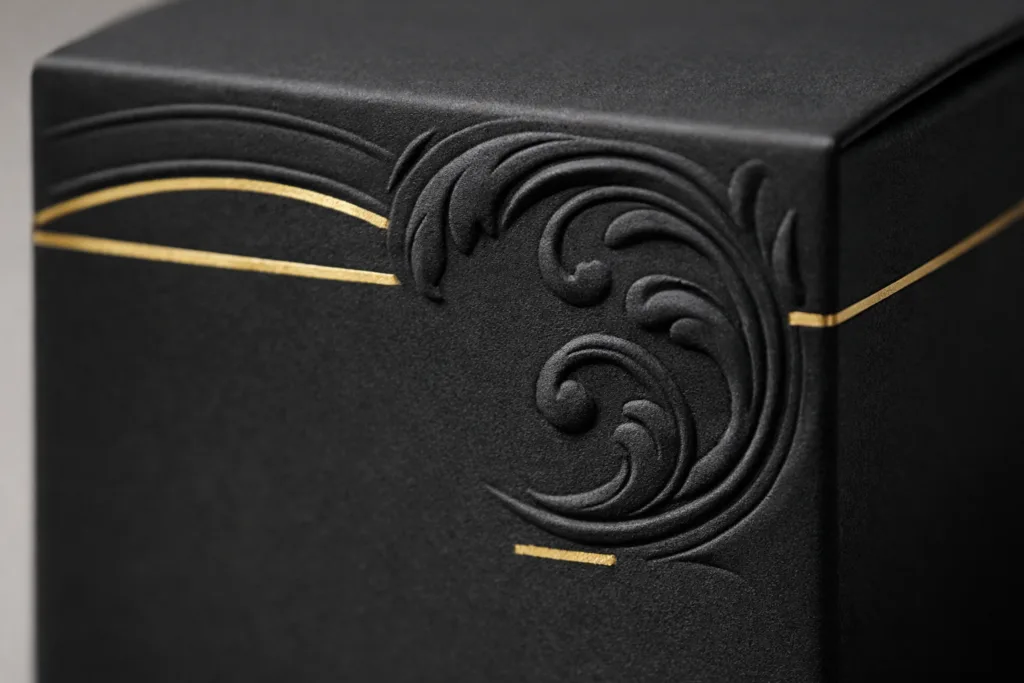
The core reason why custom candle packaging requires a higher MOQ lies in the economics of packaging production and the mechanics of the supply chain. While a manufacturer can hand-pour limited batches—tailoring wax blends, wick types or fragrances in increments as low as a few dozen units—the custom box or carton is subject to stringent setup, tooling, and raw material constraints. Most specialized printers and converters set higher thresholds to justify press calibration, die-cutting, color matching, lamination runs, and finishing processes. This balancing act is especially pronounced with advanced finish options like embossing, foil stamping, or rigid board construction so often specified for luxury candle brands.
The Fundamentals of MOQ in Candle Production
MOQ, or Minimum Order Quantity, reflects the lowest unit amount a supplier will produce or sell in a single order. For candle producers like Circe Home, who offer OEM/ODM services, the wax pouring itself—be it pure soy, coconut, rapeseed, or beeswax blends—can often be handled in small-batch runs. This is because wax melting and pouring involves minimal tooling and swift changeovers between fragrances or vessel types. However, packaging tells a more complex story.
- Wax production: Low MOQ due to batch flexibility and minimal waste
- Fragrance flexibility: Even unique scents can be made in small runs
- Packaging: Higher MOQ driven by print setup and material procurement
Cost Distribution in Candle Manufacturing
It’s not uncommon for packaging to account for 50% or more of the unit cost of a luxury scented candle. Savvy buyers must understand how this distribution shapes the economics of new product development:
| Component | Common Materials | MOQ | Unit Cost Impact (%) |
|---|---|---|---|
| Wax & Fragrance | Soy, coconut, rapeseed, beeswax, essential oils | 100–300 | 25–35 |
| Wick & Hardware | Cotton, wood, paper-core, sustainer | 100+ | 5–8 |
| Vessel | Glass, tin, ceramic, concrete | 100–500 | 20–30 |
| Packaging | Paperboard, rigid box, foil, labels | 500–2,000+ | 40–55 |
The Manufacturing Reality: Packaging vs. Wax MOQ
Why the difference? Custom candle packaging—whether rigid gift boxes, folding cartons, or custom sleeves—requires intricate pre-production. Steps such as CAD sample approvals, color proofing, die and mold creation, and specialized finishes make small runs uneconomical. High-speed print lines are optimized for volume, not for a few hundred units. On the contrary, bulk wax can be melted and poured into various vessels with minimal downtime.
“Circe Home Lab Insight: Packaging MOQ is dictated by substrate buying, press setup, and finishing process yields, while wax pouring flexibility allows us to serve small-batch innovators and established luxury brands alike.”
- Choose packaging substrate (FSC paper, rigid board, etc.)
- Approve print and finish (CMYK, foil, emboss, specialty lamination)
- Die-cut and convert to final shape
- Assemble with fitments if required
- Apply labels and compliance markings
Impact of Packaging on Total Unit Cost
For many private label clients, the realization that packaging often dominates the cost structure (vs. the candle itself) can be surprising. Custom finishes like hot-stamping, debossed logos, wraparound artwork, and magnet closures increase both material wastage and labor inputs. These premium options drive up the break-even MOQ thresholds demanded by packaging vendors. As a result, brands find they often need to commit to 500, 1,000, or even more cartons to get unit costs in line for commercial-scale launches.
Design Complexity and MOQ
The more intricate the packaging—UV spot finish, heavy-weight board, multi-piece boxes—the higher the MOQ. Conversely, simple folding cartons with single-color printing have lower thresholds, sometimes as few as 300–500 pieces per SKU. However, minimalist packaging doesn’t always communicate the luxury positioning many brands seek.
Custom Candle Packaging: Key Features & Variations
Luxury candle packaging is defined by details. Wax fills might be similar; what distinguishes premium products is the tactile and visual experience delivered by the outer package.
- Material choices: FSC-certified board, recycled content
- Finishes: Soft-touch, foil, spot UV, letterpress
- Construction: Drawer box, two-piece lids, magnetic closures
- Fitments: EVA foam, plush wrap, rigid dividers
- Compliance labeling: CLP, IFRA, consumer warnings
Comparing MOQ by Packaging Type
| Packaging Type | Common MOQ | Luxury Features |
|---|---|---|
| Simple Folding Carton | 300–500 | Single-color print, gloss/matte |
| Rigid Gift Box | 800–1,500 | Emboss, foil, soft-touch, magnetic lid |
| Drawer/Slide Box | 1,000–2,000 | Custom fitments, foil, heavy board |
| Outer Sleeve & Box Set | 1,000–3,000 | Multi-piece assembly, die-cut windows |
Packaging as a Reflection of Brand Value
For Circe Home and other premium manufacturers, the decision to invest in high-MOQ packaging isn’t just about unit price—it’s about aligning sensory cues with the refined scent experience inside the vessel. Clean embossing, tight construction, and velvet-soft touch surfaces signal that what’s inside is equally considered. This is why bespoke packaging, while demanding higher MOQ, anchors candle brand identity and perceived value in luxury and retail channels.

Production Process: Wax vs. Packaging MOQ Timeline
The wax batching, pouring, and curing process can be completed in flexible quantities and just-in-time for launch. Here’s how the timelines compare:
- Wax blending: As little as 1 week for new scents
- Fragrance compliance (IFRA, CLP): 2–5 days for documentation
- Box production: 3–5 weeks due to tooling, printing, and drying
- Final assembly: 1–2 weeks coordinating candle and box readiness
Verification Steps in Packaging Quality Control
- Dimensional checks for vessel fit and transit safety
- Rub testing on foil and soft-touch surfaces
- Drop testing for shipping durability
- Barcode/label scan accuracy validation
- Batch tracking for compliance recall capability
Reducing MOQ Impact: Smart Sourcing Strategies
How can private label buyers or boutique candle brands manage the often-daunting packaging MOQ? Consider grouping SKUs that share dimensions or structures, simplify finishes for test launches, or opt for plain stock outer boxes while investing in premium labels or sleeves as a stopgap. Some partners—such as Circe Home—offer solutions like modular packaging lines or multi-SKU run programs that can help reduce inventory risk for growing brands while still achieving unique visual impact.
Compliance, Sustainability, and MOQ Trends
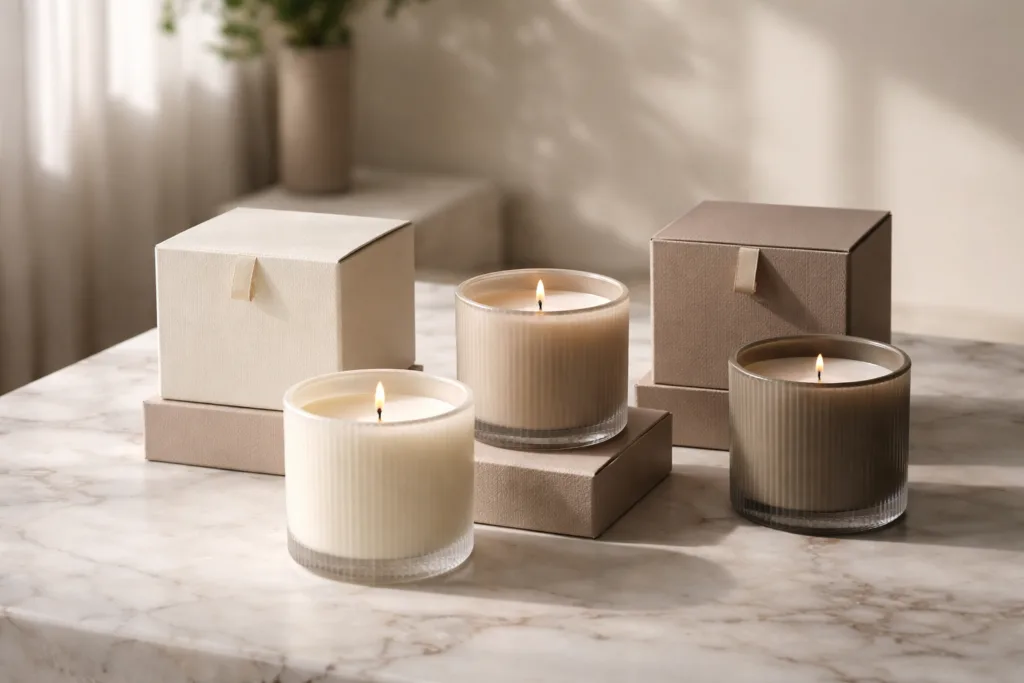
Stricter compliance (e.g., IFRA standards, CLP labeling for the EU) and consumer demand for sustainable packaging are shaping MOQ calculations. Recycled board, soy-based inks, and third-party certifications drive up base raw material requirements, making short runs challenging. Still, manufacturers continue to innovate with compostable trays, FSC-certification, and refillable options tailored to luxury markets—always with close MOQ management.
Frequently Asked Questions
Why is candle packaging MOQ usually higher than wax production MOQ?
Packaging production requires setup for printing, die-cutting, and finishing, making small runs cost-inefficient. Wax pouring is more flexible and can be done in smaller batches.
Can I order custom scented candles with very low MOQ if I use stock packaging?
Yes, using stock or generic packaging allows for lower MOQ on candle production. Fully custom packaging will still require meeting printer MOQ thresholds.
What are practical ways to reduce packaging MOQ when launching a new candle line?
Share packaging dimensions across multiple SKUs, use standard box structures, or focus on custom labels instead of fully bespoke boxes for initial launch stages.
Does package finish (like gold foil or embossing) impact MOQ?
Yes, added finishes increase both material and process steps, pushing up the required MOQ due to minimum run sizes for specialized machinery.
What share of my total candle cost should I expect packaging to occupy?
Packaging often accounts for 40–55% of the total unit cost in luxury candle production, especially with advanced decorative finishes and rigid box construction.
Are there eco-friendly packaging options for luxury candles, and do they affect MOQ?
Eco-friendly substrates like FSC-certified board and soy ink are available but tend to have higher MOQ and longer lead times due to material sourcing and process requirements.