
What Is Candle MOQ? Defining the Term in Manufacturing
MOQ stands for Minimum Order Quantity, the smallest number of units a bespoke candle factory will accept per production run. In the world of candle manufacturing, especially for custom and private-label projects, the MOQ protects both the maker and client by balancing efficiency, cost, and quality. For instance, a supplier like Circe Home typically sets MOQs based on wax type, vessel, fragrance system, and packaging complexity.
How Candle MOQ Differs by Factory and Project
- Standard branded candles: often 500–1,000 units/vessel
- Ultra-custom or artisanal runs: 100–500 units
- Luxury gift sets: 300–800 sets (depends on design)
These minimums reflect not only raw material constraints but also the logistics of refined fragrance blending, wick centering, vessel handling, and box assembly.
Why Small Orders Cost More Per Candle

Clients are often surprised by higher unit prices in low-volume or small-batch runs. The reason is rooted in how fixed costs and variables scale in candle manufacturing. Each customized element—fragrance blending, custom jars, compliance paperwork—has a setup and operational cost, regardless of order size.
Major Cost Drivers for Small-Batch Production
- Setup fees: Formulation, lab trials, paperwork, and procurement occur before a single candle is poured.
- Material minimums: Suppliers have minimums on wax blends, wicks, vessels, and custom packaging, often measured in kilograms or thousands of units.
- Labor intensity: Hand-pouring, vessel prepping, and custom labeling do not drop with smaller runs.
- Quality control: Testing, compliance, and documentation (like IFRA compliance) are as thorough for 100 units as for 10,000 units.
Circe Home Lab Insight: “Scent development, burn testing, and compliance checks each require the same care and resources, whether you produce 200 or 2,000 units. The cost to formulate and validate a new coconut wax blend, for example, does not change with order size.”
Cost Structure: Small vs. Large Candle Orders
Understanding the economics of scale reveals why pricing improves at higher MOQs. Review the comparative table below:
| Factor | 100 Units | 1,000 Units |
|---|---|---|
| Wax procurement (soy blend) | Min bulk buy; excess or waste | Full batch, no waste |
| Scent development | $450 (flat, not scalable) | $450 (spread thinner) |
| Jar & packaging | High per-piece cost (custom MOQ) | Better bulk price per pc |
| Fragrance compliance | IFRA/CLP docs, same cost | Paperwork cost/unit drops |
| Labor | Same hours, less amortized | Spread over more units |
| Unit price (est.) | $14.50 | $7.10 |
Note: For luxury, multi-step candles, differences widen further due to greater setup complexity and ingredient sourcing.
How MOQ Varies by Candle Type and Customization
Certain luxury waxes and packaging drive up MOQs. For example, custom-colored glass or sandblasted ceramic vessels often require 1,000+ units per colorway. Scented blends with exotic essential oils, clean-burning vegan waxes, or intricate boxwork may have minimums set by specialty suppliers.
Common Candle Types and Usual MOQ Ranges
- Soy-coconut blend in glass: 300–500 units
- Rapeseed or beeswax luxe blend: 500–750 units
- Custom ceramic containers: 1,000+ units
- Private-label (existing jars): 100–200 units
Wax Blend, Fragrance, Wick Sizing & MOQ Interplay
Each component in a luxury candle influences feasible MOQs. For instance, a high-performance wax (like a coconut-rapeseed blend) must be procured as a batch from the refinery. If only 100 candles are made, the remaining wax may need to be stored—a cost the factory recoups. Similarly, fragrance systems require minimum drum orders, and manufacturers like Circe Home maintain allergen records and safety datasheets for every custom scent. Wick types (wood, paper-core, triple-braid) also present supply chain minimums depending on vessel diameter and burn profile requirements.
Production Steps—and Their Effect on Small Orders
From melt and blend to final boxing, manufacturing steps remain fixed whether pouring 100 or 5,000 units:
- Pre-pour preparation and vessel cleaning
- Wick gluing and alignment
- Wax melting to precise temperatures
- Fragrance incorporation, checking load % by wax type
- Pouring and controlled cooling (to prevent frosting/warping)
- Curing, cold throw/hot throw sensory testing
- Topping and surface finish
- Labeling (outer and warning CLP/IFRA), boxing
Quality assurance—including burn tests (e.g., minimum 35h for a 200g jar), soot checks, and wick centering—doesn’t scale down with smaller orders.
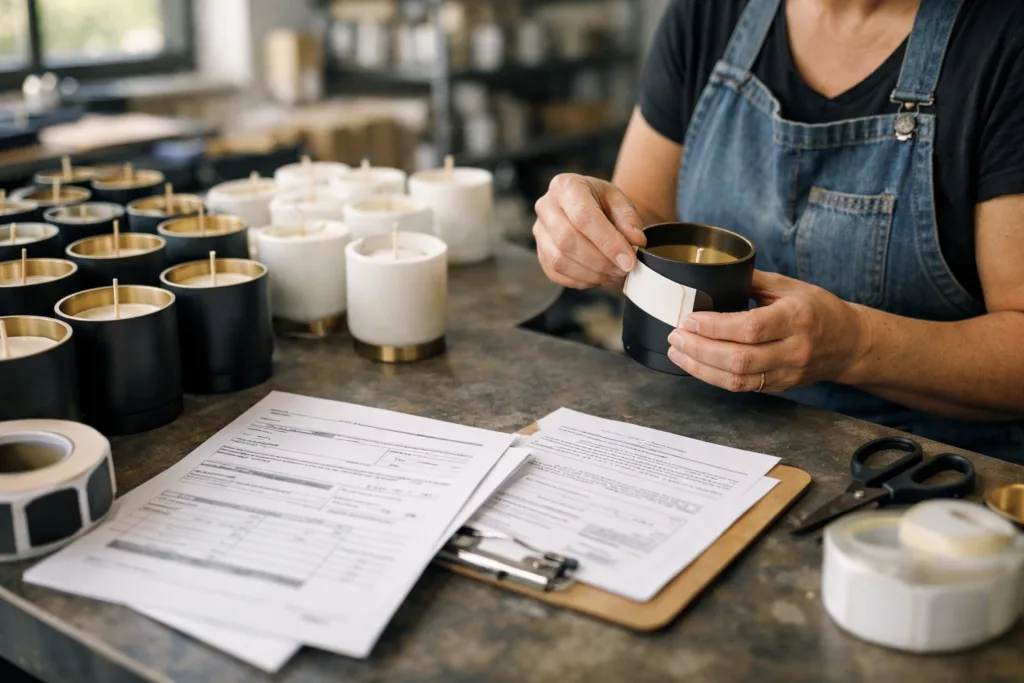
Regulatory Compliance & Documentation: Fixed Costs at Any Volume
Compliance documentation such as IFRA certificates, CLP labeling (for the EU), and allergen declarations must be created for every unique scent and wax blend, regardless of batch size. This process involves lab tests, supplier statements, and often legal review to ensure global market access. For boutique buyers and startups, it’s key to factor in these fixed obligations early when calculating costs for small-batch launches.
Candle MOQ Explained: Why Small Orders Have Higher Prices
Ultimately, the minimum order quantity is not an arbitrary barrier, but a reflection of real manufacturing economics, labor, and compliance realities. Small orders carry higher prices per candle because setup labor, material minimums, and regulatory compliance represent largely fixed costs—no matter if you order 100 or 10,000. By understanding Candle MOQ, buyers can better plan launches, negotiate with factories, and scale as demand grows. For those seeking custom luxury candles with flexible MOQs, Circe Home and its peers can help advise on efficient formulations, local vessel sourcing, and cost-optimized batch strategies suited to both small and large brands.
Strategies to Optimize MOQ and Lower Costs
To get the most value from your MOQ spend, consider:
- Selecting from a factory’s standard vessels or wax blends to avoid specialty sourcing
- Consolidating fragrance choices to streamline IFRA/CLP paperwork
- Batching print runs for boxwork and labeling across multiple SKUs
- Partnering with manufacturers offering lower MOQ on private-label lines
- Exploring eco-packaging that leverages existing supply
Conclusion: Plan Ahead for MOQ Success
Knowledge of MOQ empowers candle buyers to make strategic sourcing decisions. By understanding how small-order economics shape per-unit costs, and how manufacturing realities—from wax to regulatory paperwork—impact production, brands can plan launches with fewer headaches and stronger profit margins. Start conversations early with your manufacturing partner, ask about their MOQ structure, and remember: in luxury candle-making, quality and true customization often begin at scale.
Frequently Asked Questions
What does MOQ mean in candle manufacturing?
MOQ, or Minimum Order Quantity, refers to the lowest number of candles a manufacturer will accept per production run. This ensures batch efficiency and cost-effectiveness in sourcing materials and labor, particularly in custom or luxury candle projects.
Why are small-order candles more expensive?
Small orders are pricier per unit because setup fees, material minimums, and compliance paperwork remain the same regardless of order size. Costs don’t scale down, making each candle more expensive in smaller batches.
Can I order luxury candles with a low MOQ?
Some manufacturers, like Circe Home, offer flexible MOQs for select collections or private-label lines. However, ultra-custom projects may require higher minimums due to vessel sourcing and scent development needs.
How does vessel choice affect MOQ?
Custom or imported vessels such as colored glass or ceramics often have high supplier minimums, which push up factory MOQs. Choosing standard vessels can lower required quantities and per-unit costs.
Is compliance testing included with small orders?
Yes. IFRA certificates, CLP labeling, and allergen declarations are created for every unique scent or blend, no matter the batch size. These fixed compliance costs factor into higher small-order pricing.
What are the best ways to reduce candle MOQ costs?
Buyers can lower costs by choosing standard wax blends, consolidating fragrance choices, batching packaging across SKUs, and partnering with manufacturers offering lower MOQs on core lines.