
What Is Candle MOQ?
The Minimum Order Quantity (MOQ) is the smallest number of finished candles a manufacturer will accept for a production run. Typical MOQs range from 500 to 2,000 pieces per SKU, depending on vessel type, fragrance complexity, and decoration level. For luxury soy, coconut, rapeseed, or beeswax blends, this figure reflects an equilibrium between efficient production and setup costs versus quality.
Core Drivers of Candle MOQ
- Material batch sizing: Wax, fragrance oils, and wicks are ordered, melted, and mixed in industrial scales.
- Equipment efficiency: Melters, pouring lines, and curing racks favor larger batch cycles.
- Labor and setup: Each production run requires machine changeover, cleaning, and prepping.
- Consistency and compliance: Maintaining strict QC and IFRA/CLP labeling across every candle demands standardized runs.
Why Candle MOQ Can’t Be Too Low: Real Production Costs You Should Know
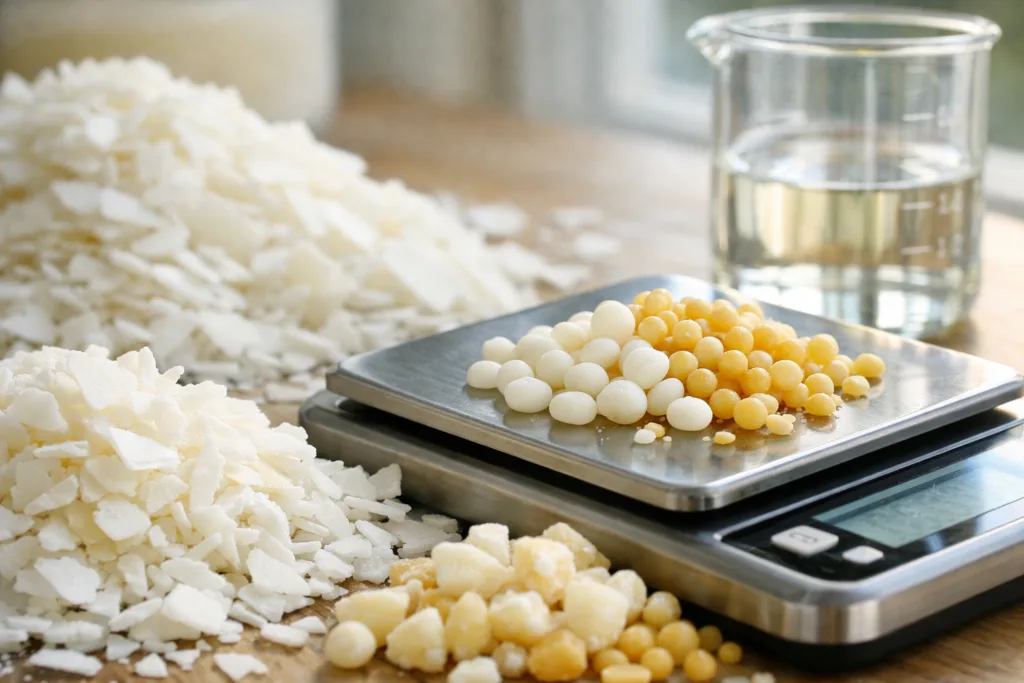
Many first-time buyers are surprised by high Candle MOQ requirements—especially when envisioning limited-edition runs. However, costs per unit increase dramatically if MOQs are pushed too low. Here’s why true manufacturing can’t operate at artisanal scales without trade-offs:
- Material utilization and wastage skyrocket with micro-batches, pushing per-candle wax and fragrance costs up by 35–80%.
- Custom jar or box procurement typically means purchasing minimums (1,000+ units) from upstream suppliers, regardless of the candle count.
- Equipment such as large-capacity melters and automated lines require sufficient input volume for safe, efficient operation.
- Quality testing—like burn profile, cold/hot scent throw, and IFRA compliance—must be conducted per fragrance, per batch. Small runs fragment QC resources and introduce risk.
Circe Home Lab Insight
Candle batch sizes are always a balancing act. Our lab at Circe Home can test fragrance load and burn quality on pilot runs, but true performance standards require meaningful batch sizes to replicate end-user results. Setting MOQ is about ensuring each candle meets the intent of a luxury private label.
How Material Costs and Sourcing Impact Candle MOQ
Core wax types—soy, coconut, rapeseed, and beeswax—are typically supplied in bulk. Even small-batch orders must absorb the price of entire sacks or drums. The same holds for fine fragrance compounds, with minimum order thresholds and shelf life limits adding complexity.
| Wax Blend | Minimum Batch Size (kg) | Max Fragrance Load (%) | Batch Waste Rate | Cost Efficiency |
|---|---|---|---|---|
| Soy | 20 | 8–10 | Low | High in >500 units |
| Coconut Blend | 25 | 10–12 | Medium (soft texture) | Efficient for 1,000 units+ |
| Beeswax | 10 | 6–8 | Very Low | Best at 1,500 units+ |
| Paraffin | 30 | 8 | Low | Low below 2,000 units |
Fragrance Oil Ordering
Fine fragrances often have strict minimum order sizes (5–20 kg), and custom blends involve costly R&D. Ordering just enough for 100 candles is rarely feasible—leftover scents may age or go off-standard, undermining the cold and hot throw expected of luxury candles.
The Production Process: Why Efficiency Depends on MOQ
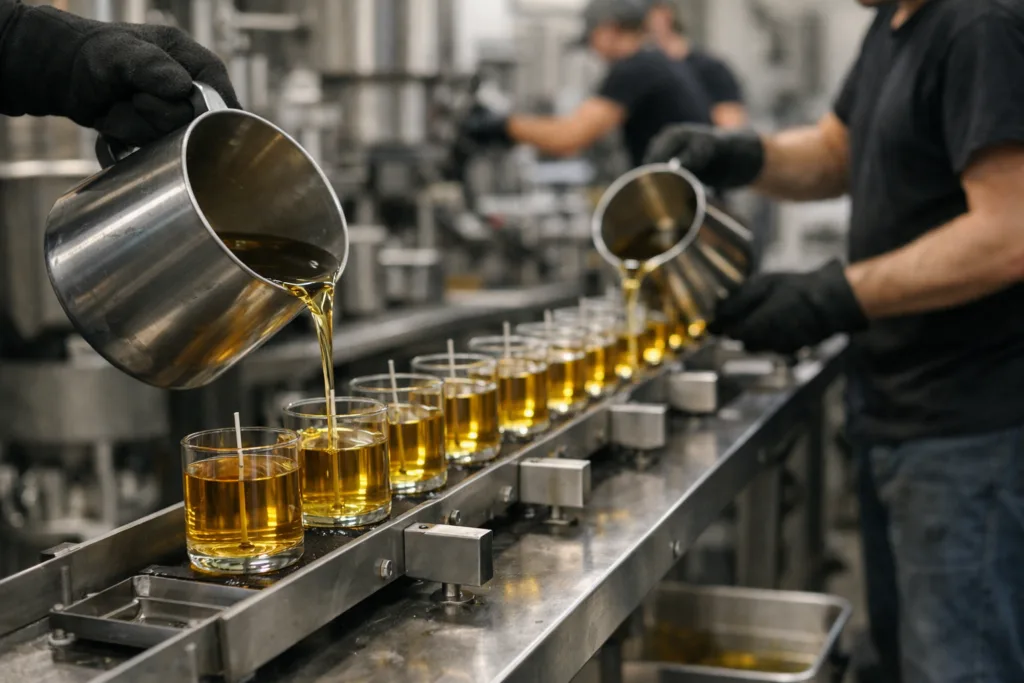
From melting and blending to pouring, cooling, and curing, every stage of the process is optimized for specific batch sizes. Going below the MOQ triggers a cascade of inefficiencies:
- Machine changeovers and cleaning occur as frequently as with large runs, but cost is spread over fewer units.
- Fragrance integration and wax homogenization are less controllable in micro-batches, risking fragmentary scent throw.
- Cooling racks, curing rooms, and packaging areas are occupied for the same timeline, slowing other orders.
Wicking, Pouring, and Curing: Detail Counts
Even small batch runs require full setup—wick gluing (centered for clean, soot-free burns), container prepping, and QC checks after pour and cure. Cutting corners to meet very low MOQs can mean:
- Wicks not sized for vessel diameter or wax blend, leading to tunneling or sooting.
- Poor adhesion or bloom in decorative containers.
- Inconsistent burn profile, with wide variance in actual burn hours.
The MOQ Impact on Decoration and Packaging
Decoration steps—frosted glass, foil embossing, color sprays, laser etching—demand significant setup and reject-rate allowances. Print shops and finishers typically enforce MOQs of their own, starting from 500 vessels/boxes per design. Smaller quantities inflate per-piece cost and may compromise quality if temporary alternatives (stickers, hand-labels) are used instead.
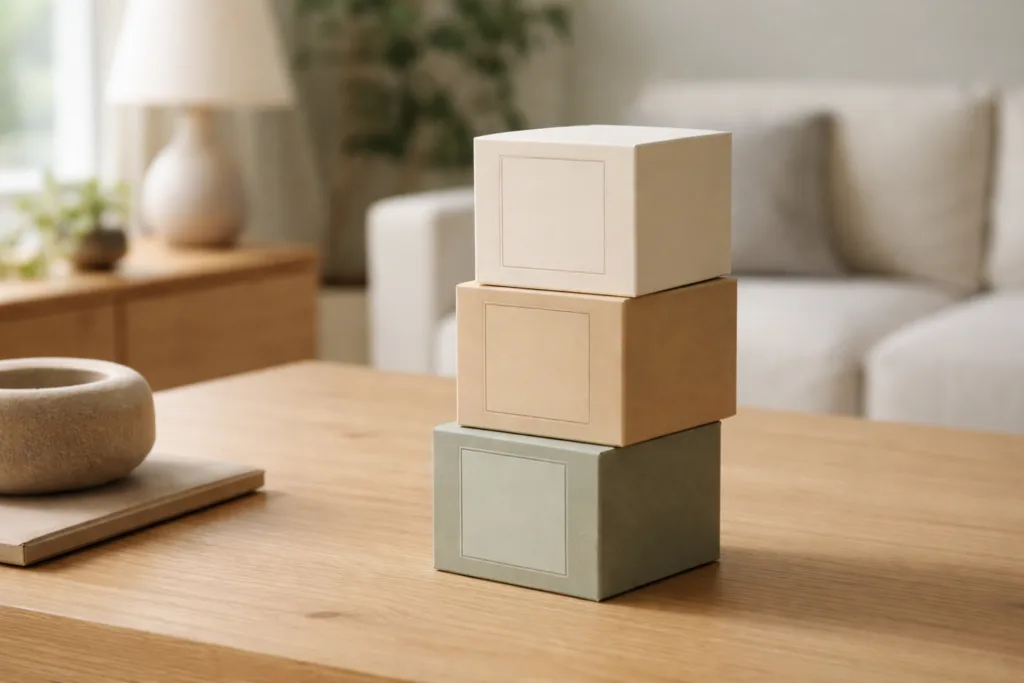
Outer Box and Labeling Options
- FSC-certified cartons have set MOQs to secure sheet cost and die cutting.
- Custom scent naming, warning labels, and IFRA/CLP-compliant details require pre-press proofing and scale.
- Soy ink, foil stamping, and hand-finished touches add complexity and only amortize at standard batch sizes.
Quality Assurance and Safe Compliance: Not Optional
Each QC step, from vessel integrity to wick trim length and proper fragrance load, costs the same for 100 candles as for 1,000. Regulatory compliance (CLP for Europe, IFRA standards for global markets) also demands batch tickets and documentation per run. Sub-MOQ production splits resources—raising the chance of error or non-compliance.
Quality Control Checklist
- Check batch for even wax appearance and scent uniformity
- Monitor wick centering and cut for correct burn profile
- Test for sooting, mushrooming, or fragrance loss
- Verify proper IFRA sheet and CLP labeling per batch
Sustainability, Eco-Packaging, and MOQ
Eco-friendly packaging—soy inks, refill programs, FSC materials—are highly sensitive to MOQ due to material sourcing and machinery setup. For genuinely responsible candle lines, batch sizes ensure minimal waste and proper separation/recycling of by-products. Circe Home, for example, has built sustainable options into its process, but still aligns MOQs with responsible production, rather than overproducing excess packaging.
Applications and Use Scenarios: When MOQ Matters Most
Small-batch candles may seem ideal for exclusive gifting, minimalist décor lines, hotel amenities, or pilot launches. However, luxury private-label programs, spa/retail chains, and well-differentiated wellness blends depend on batch consistency and supply chain efficiency that only scale can provide.
Matching Your Vision to the Right MOQ
- Tip: When evaluating a partner for your luxury candle line, ensure their MOQ aligns with your design ambitions, compliance needs, and go-to-market plan. True manufacturers, like Circe Home, help balance these elements for a premium result—never compromising on ingredient standards or regulatory detail.
Frequently Asked Questions
What is Candle MOQ and why is it important?
Candle MOQ (Minimum Order Quantity) is the smallest number of products a manufacturer will produce per batch. It ensures efficient use of materials, stable quality, and compliance with production standards.
How do raw material costs affect candle MOQs?
Since wax, fragrance oils, and packaging must be sourced in supplier-defined minimums, smaller orders drive up per-candle costs and can waste ingredients or packaging materials.
Is it possible to make custom candles below the MOQ?
Very limited batches are sometimes possible but usually at a high unit cost and reduced customization options; many manufacturers reserve this for sampling only, not production orders.
How does lower MOQ impact candle quality?
Low MOQs can undermine essential QC: smaller batches risk inconsistent scent throw, improper wicking, and rushed compliance checks, all affecting performance and safety.
Can sustainable packaging or refill programs work with low MOQ?
Eco-packaging and refill solutions typically require setup-intensive processes and bulk material orders, making them unviable at very low MOQs due to cost and logistics.
What should I do if my order doesn’t meet the manufacturer’s MOQ?
Consider aggregating SKUs or adjusting packaging specifications to meet MOQ, or work with your partner on pilot/sample programs before moving to standard batch sizes.