
Candle Vessels: Function, Form, and First Impressions
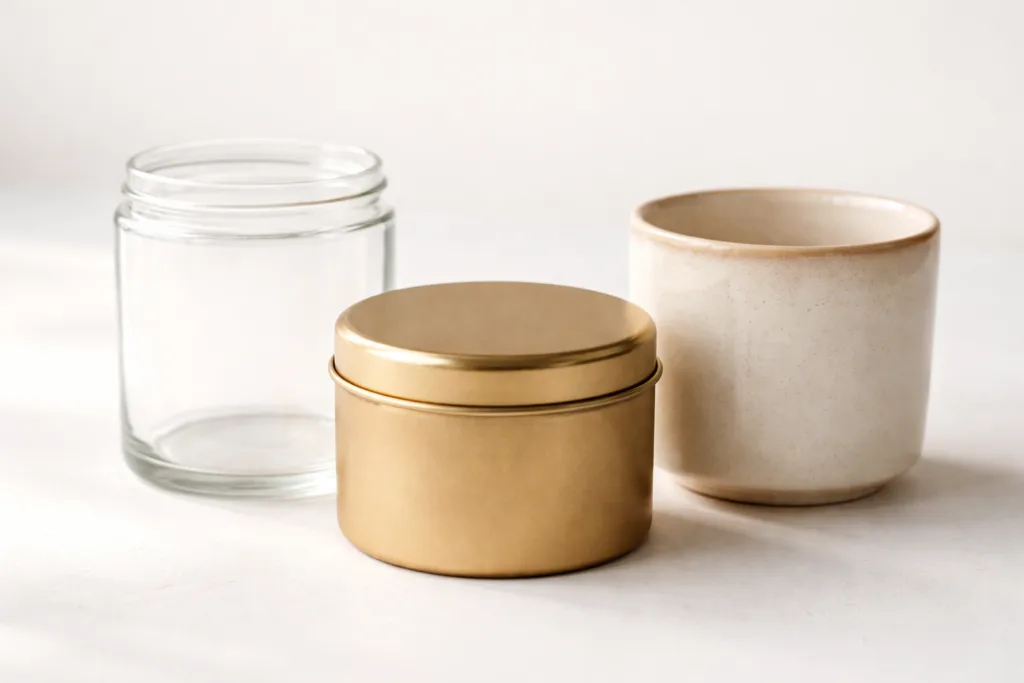
The vessel is more than a container. It protects the wax, influences burn quality, and shapes fragrance throw. Visuals signal brand intent—from minimalist glass for clean lines, practical tins for travel, to luxurious ceramics that elevate unboxing. The right candle jar or cup directly reflects your brand’s values and target audience, while technical factors like heat tolerance, fragrance compatibility, and safety can’t be overlooked.
Glass Jars: Classic Versatility on a Budget
Glass candle jars remain a staple for both artisanal creators and large-scale manufacturers. They’re cost-effective, widely available, and compatible with popular wax blends like soy, coconut, rapeseed, or paraffin. Transparency lets you showcase colored or layered waxes, botanicals, or creative texturing. Standard diameters (e.g., 2.5-3 inches) allow for consistent wick sizing and predictable burn profiles, crucial for compliance and safety. Coatings offer further branding—a frosted finish for a soft glow, or amber glass for a premium apothecary feel.
- Affordability: Low MOQ, rapid scaling
- Production: Tolerate rapid filling lines, easy labeling
- Recyclability: Glass is 100% recyclable and food safe
- Customization: Embossing, paint, or screen-print options
Circe Home Lab Insight: “Optimizing wick diameter by wax blend is critical for uniform burns in glass jars, minimizing tunneling and soot.”
When to Choose Glass Jars
Choose glass for collections prioritizing value, simplicity, and speed to market—private label spa lines, first-time launches, or eco-forward concepts leveraging recycled glass stock.
Tins: Lightweight and Travel-Friendly
Metal candle tins, especially double-lidded or gold options, offer compactness and safety for on-the-go use. Their lower cost per unit appeals to entry-level brands, event favors, or those offering sample-size fragrances. Seamless construction reduces wax seepage and offers maximum surface for labeling. However, heat conductivity means careful wax selection (avoid high-fragrance loads in bulkier tins; watch for over-heating and sinkholes.) Scent diffusion can be strong due to rapid heat-up, especially with soy and coconut blends.
- Portability: Ultra-light, durable for shipping
- Customization: Gold/silver, colored lacquers, embossable lids
- Functional: Snap-fit, screw-top, or hinged options available
When to Choose Tins
Tins are ideal for limited-edition launches, sampler packs, or as lower-budget souvenirs—where safe transport and a lower cost per fill are priorities. Great for pop-ups, hotel amenities, or brands embracing utilitarian minimalism.
Ceramic: The Pinnacle of Candle Vessel Luxury
When brand positioning calls for visual distinction and tactile delight, ceramic candle cups stand unmatched. Their weight, glaze effects, and infinite form factor flexibility (think sculptural, Hand-thrown finishes) create a powerful first impression—core for heritage, luxury, or boutique lines. Ceramics can be layered with color gradients, glossy metallics, or subtle matte washes, with laser-etching or gold foil for branded details. Handmade runs allow for exclusivity, but also mean higher MOQs and lengthier lead times. Heat retention is excellent but vessel heating is slower—protecting delicate wax blends and offering a prolonged burn time with less wick mushrooming.
- Customization: Shapes, glaze, debossed logos, hand-finishing options
- Premium Perception: Heft and tactile surface signal high-end
- Longevity: Doubles as keepsake or reusable decor
- Sustainability: Compostable or refillable programs possible
Circe Home Lab Insight: “For luxury ceramics, compliance testing (IFRA, CLP) and batch-level wick calibration are non-negotiable for a clean, even, soot-free burn.”
When to Choose Ceramic
Ceramic vessels are the signature choice for high-concept launches—flagship hotel lines, wellness gift sets, or scent stories demanding a collectible object. Their higher initial cost is offset by premium pricing and brand affinity long after the candle is finished.
Glass Jars vs. Tins vs. Ceramic: Key Technical Comparisons
Beyond cost and appearance, technical suitability and production factors can shape your vessel decision. Reference the table below for a snapshot of critical differences.
| Vessel Type | Wax Blend Compatibility | Scent Throw | Burn Time (200g) | MOQ/Unit Cost | Customization Level |
|---|---|---|---|---|---|
| Glass Jar | Soy, coconut, beeswax, paraffin, blends | Excellent cold & hot; shows layered wax | 35-40 hrs | Low/$$ | Medium-high (coatings, emboss, paint) |
| Tin | Soy, coconut, paraffin | Good hot throw; rapid diffusion | 30-35 hrs | Very low/$ | High (color, lid shape, embossing) |
| Ceramic | All waxes (excellent heat shielding) | Excellent; extended, refined scent release | 40-45 hrs | High/$$$ | Unlimited (shape, glaze, texture, art) |
Budget Guidance: Vessel Selection for Every Brand
A clear-eyed approach to vessel selection can preserve margin, safeguard performance, and define your brand’s look in a crowded market. For brands focused on fast-turnaround, event favors, or sampler packs, glass jars and tins offer minimum order quantities (MOQs) as low as 100 units, with speed and supply chain resilience. For high-touch gifting or luxury collections, ceramics justify their cost with exclusivity, weight, and design distinction—which support premium pricing and deeper story-telling at shelf or online.
- Low-budget: Start with colored glass jars, or branded tins for sampling/mini sizes
- Mid-tier: Upgrade glass with custom coatings, or dual-layered tins with unique lid finishes
- High-budget: Commission bespoke ceramics, hand-thrown shapes, museum-quality glazes, or multi-fragrance ‘ritual’ sets
Production Process and Scent Performance in Different Vessels
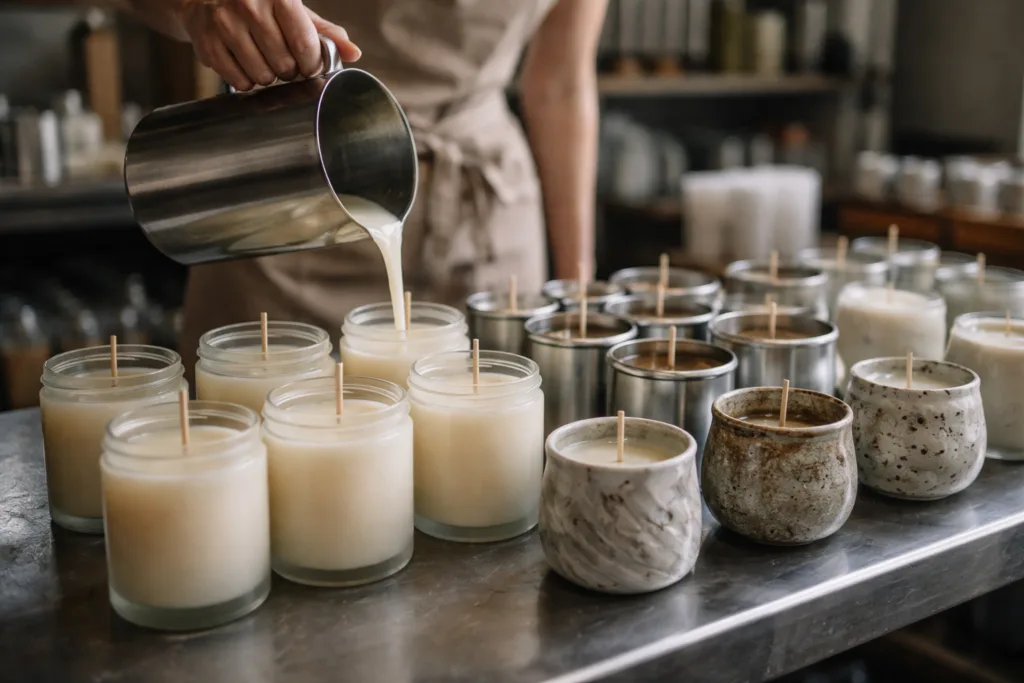
The vessel type impacts pour temperature, cooling rate, and fragrance retention. Glass handles fast filling and high-temperature blends, but thermal shock risk means gradual cooling is best. Tin, with high heat conductivity, can introduce sinkholes or rapid scent evaporation—avoid exceeding 8-10% fragrance load and favor quick-cure waxes. Ceramics, with their insulating properties, support rich essential oil blends and longer curing cycles, enhancing scent diffusion and burn time. All must be batch-tested for IFRA compliance and soot index, with CLP labeling for EU standards.
Essential Oil Compatibility
Vessel material can influence fragrance acceptance—for example, unglazed ceramics may absorb scent oils and affect future refills or reuse. Always verify essential oil and vessel compatibility with your filler and supplier.
Quality Control and Compliance for Candle Vessels
Every vessel type brings its own QC (Quality Control) measures:
- Glass Jars: Inspect for chips, cracks, wall uniformity
- Tins: Assess seam integrity, rust resistance, and lid fit
- Ceramic: Check glaze completeness, thermal shock resilience, food safety coatings where required
All vessels must pass batch-level burn, wick centering tolerance (<5% off-center), soot index tests, and label adhesion. Confirm fragrance load stays below vessel’s safe flash point and containers don’t overheat on long burns (>2 hours).
Sustainability and Packaging Considerations
Eco-conscious customers increasingly evaluate vessels as much as wax or packaging. Glass is endlessly recyclable; tins can be upcycled or collected; high-end ceramics support refill programs and encourage multi-use (e.g., plant pots, decor). Circe Home leads by championing FSC-certified cartons, soy ink labels, and custom outer boxes that balance luxury with compliance for IFRA 51st and EU CLP.
The Power of Vessel Choice in Brand Storytelling
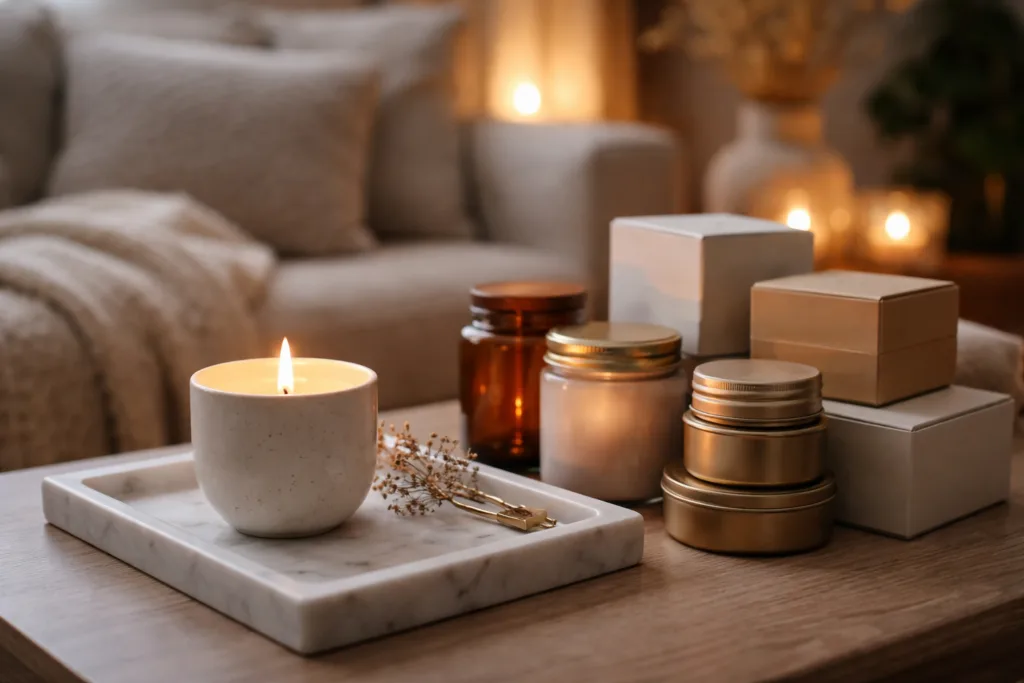
Your vessel is your first handshake with the customer. Glass evokes transparency and trust; tins whisper practicality and discovery; ceramics shout distinction and craftsmanship. The right vessel not only stewards burn profile and fragrance expression, but also sets expectation for the fullness of the scent journey—whether for luxe gifting, spa serenity, or everyday ambiance.
Frequently Asked Questions
Which vessel is best for a low-budget candle line?
Glass jars and metal tins are cost-effective choices that offer reliable performance and easy scaling for first-time launches or event-focused lines.
Are ceramic candles safe for home use?
High-quality, food-safe glazed ceramics with tested burn profiles are exceptionally safe and often used for luxury home decor and wellness lines.
How do I maximize scent throw in different vessels?
Align wax blend, fragrance load, and wick size with your vessel and always carry out small-batch burn tests for optimal hot and cold throw.
What’s the most eco-friendly candle vessel?
Glass and ceramic are both highly reusable; glass is readily recycled, while premium ceramics suit refill programs or extended reuse as decor pieces.
Why do some glass jars develop soot or tunnel?
Improper wick sizing, fragrance overload, or too-short burns can lead to tunneling and soot. Use appropriate wick size and burn each time to the edge.
Can I custom design the shape and look of my candle vessel?
Ceramic vessels offer unlimited shape and finish options, while glass and tins allow for color, coating, texturing, and branded labeling for distinctiveness.