
Why Start a Candle Business on a Budget?
Low minimum order quantities (MOQs) open the doors for first-time candle brand founders. Rather than commit to thousands of units, making or commissioning 100–300 handmade candles enables affordable market testing, creative experimentation, and swift pivots. You control your cash flow and stay agile.
- Lower startup risk by ordering small production runs
- Test multiple fragrances or packaging styles without heavy commitment
- Gather early customer feedback to refine your offering
- Build a visually compelling pilot collection for retail, gifting, or home décor markets
How to Start a Candle Business on a Budget (Start with Only 100–300 Units handmande candles)
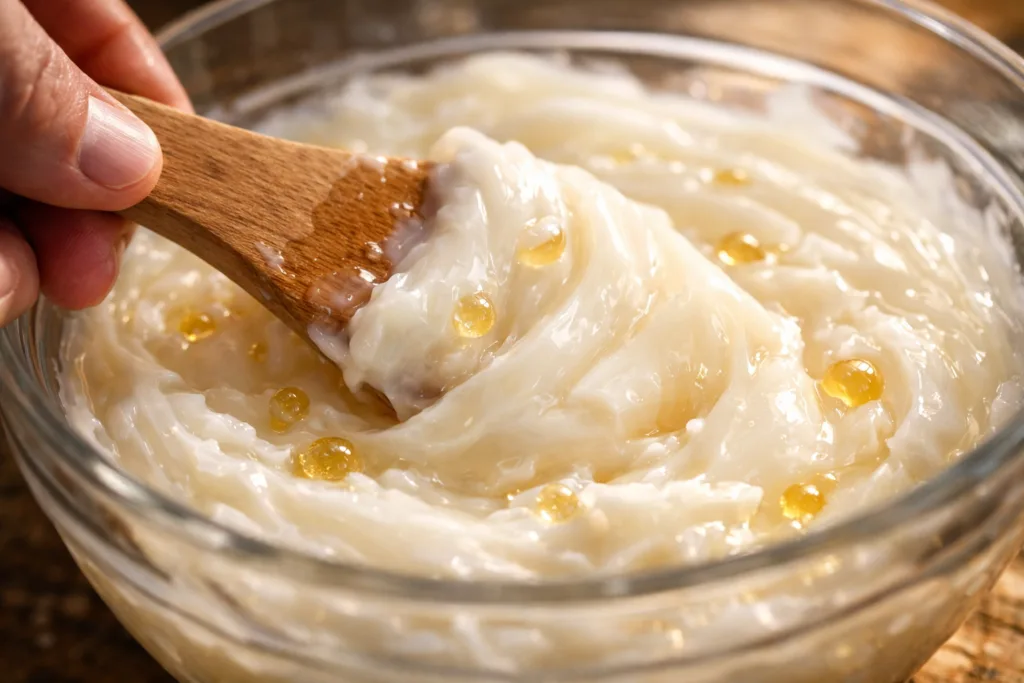
Before you invest, map your candle concept: audience, scent story, budget parameters, and desired production methods.
Circe Home Lab Insight: “Pre-planning your target wax blend, fragrance system, and packaging streamlines production and helps avoid expensive sourcing mistakes.”
- Set budget boundaries: Calculate per-unit costs for materials, packaging, and design
- Choose a product positioning: affordable elegance, minimalist home décor, luxury gifting
- Decide: Will you hand-pour in-house, or commission a low-MOQ OEM partner?
Core Materials for Budget-Friendly Candle Startups
Balancing cost, scent throw, and aesthetics is crucial. Selecting the right wax blend is the foundation of your product’s performance and market appeal:
| Wax Type | Scent Throw | Burn Time | Visuals | Best For |
|---|---|---|---|---|
| Soy Wax | Strong cold & hot | Long (soot-free) | Creamy, smooth | Eco, all-purpose |
| Coconut-Soy Blend | Excellent | Extended | Glossy, luxurious | Luxury gifting |
| Beeswax | Subtle, natural | Longest | Honeyed, golden | Premium/natural lines |
| Paraffin | Intense | Shorter | Bright colors | Budget-focused |
| Rapeseed | Moderate | Moderate | Pale, smooth | Sustainable markets |
Wax Selection Tips
- Soy and coconut blends are trending for clean burn and premium appeal
- Choose waxes with good cold and hot throw properties (including fragrance load tolerance of 8–12%)
- Factor curing timeline: Soy and coconut blends typically cure in 1–2 weeks for optimal scent
Fragrance Design & Scent Loading for Handmade Candles
Your scent portfolio sets your candle business apart. Focus on fragrances that evoke emotion, seasonal moods, or wellness themes:
Fragrance Sourcing
- Test essential oil or IFRA-compliant fragrance oil blends for both cold and hot throw
- Assess oil compatibility with your wax base—some fragrances perform poorly in soy but excel in coconut blends
Key Formulation Insights
Maximum fragrance load depends on wax type. For soy, most suppliers advise a max of 10–12%. Overloading can cause sweating, poor glass adhesion, or reduced burn quality. Always perform small-batch tests before scaling to 100+ units.
Handmade Candle Production Process (100–300 Units)
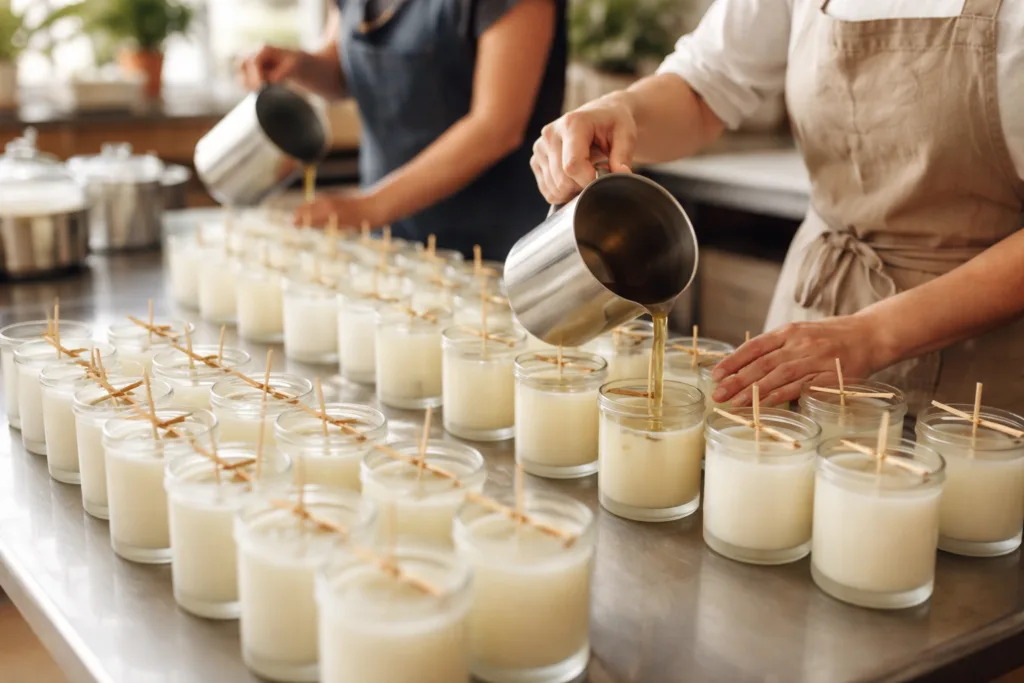
Hand-poured candles allow tighter quality control and easy small-batch scaling. Here’s the key workflow:
- Prepare work area: Sanitize surfaces, organize containers, pre-glue wicks
- Melt and combine wax: Monitor melt temperature for best scent retention (usually 65–75°C/150–167°F)
- Add fragrance: Stir gently at optimal temperature to maximize scent diffusion without loss by evaporation
- Pour into vessels: Center wicks, avoid trapped air bubbles, pour at controlled temp
- Cooling and curing: Allow to set slowly at room temperature for even tops; cure sealed candles for 7–14 days
- Trim wicks and finish: Remove wick holders, trim to 0.5 cm (approx 1/4in), apply labels
Choosing Candle Vessels and Aesthetics on a Budget
Your candle container is brand-defining. For budget startups, consider:
- Recyclable glass jars (amber, clear, black frosted): classic and cost-efficient for 100–300 units
- Simple tins or ceramic pots: minimal branding but tactile
- Custom labeling: Enhance with textured papers, hot foil, or minimalist embossed stickers for elevated look
For inspiration, Circe Home offers design support and can apply private-label packaging options—even for low MOQs—to help your collection stand out.
Wick Selection & Burn Profile Considerations
Wick type and sizing are critical to clean, soot-free burns. For soy and coconut blends in containers, best practice involves testing cotton or wooden wicks matched to vessel diameter and wax type. Double-wicking can help in larger vessels (>7cm diameter). Always test for mushrooming, tunneling, and unintended smoke.
Quality Control and Compliance for Small Handmade Batches
Building brand trust starts with consistency and safety:
- Weigh and document wax and fragrance in every batch
- Track curing and burn results to minimize wet spots, sink holes, and scent drop-off
- Check wick centering and adherence for every unit
For the EU and UK, label per CLP requirements and ensure all fragrances meet IFRA standards (always request compliance sheets from suppliers). Provide clear safety warnings and burning instructions on label or swing tag.
Packaging, Branding & Delivery for Budget Candle Startups
Distilled, elegant branding can be achieved without custom-molded boxes at low MOQs. Options include:
- Kraft or FSC-certified cartons with minimal graphics
- Luxury tissue or glassine paper wraps for individual candles
- Custom labels with scent name, burn time, and production batch info
Gifting-ready presentation boosts value perception. Circe Home’s production team recommends selecting outer packaging that fits tightly to minimize shipping breakage on small runs.
Cost Breakdown and Profit Calculation for 100–300 Handmade Candles
Keeping a keen eye on cost structure helps you achieve profitability even at a 100–300 unit scale. Here is a typical per-unit cost example for a 200g soy candle:
| Component | Cost (USD) |
|---|---|
| Soy Wax + Fragrance Oil | $1.30 |
| Glass Jar + Lid | $1.10 |
| Wick | $0.18 |
| Label + Packaging | $0.45 |
| Labor/Production | $1.30 |
| Total | $4.33 |
Candles in this range typically retail for $18–$32 depending on fragrance, vessel, and packaging choices—leaving room for healthy margins and reinvestment as sales scale up.
Marketing and Launch Strategies for Budget Candle Businesses
Gain traction without a large ad spend by leveraging content-driven outreach:
- Build anticipation on Instagram and Pinterest with behind-the-scenes production photos and scent stories
- Gift samples to micro-influencers or interior stylists to generate early reviews and styling content
- Partner with local boutiques for in-store pilots with low-volume exclusive batches
- Collect early feedback via QR codes or online forms to sharpen your second collection
Scaling Up: When MOQ and Custom OEM/ODM Comes In
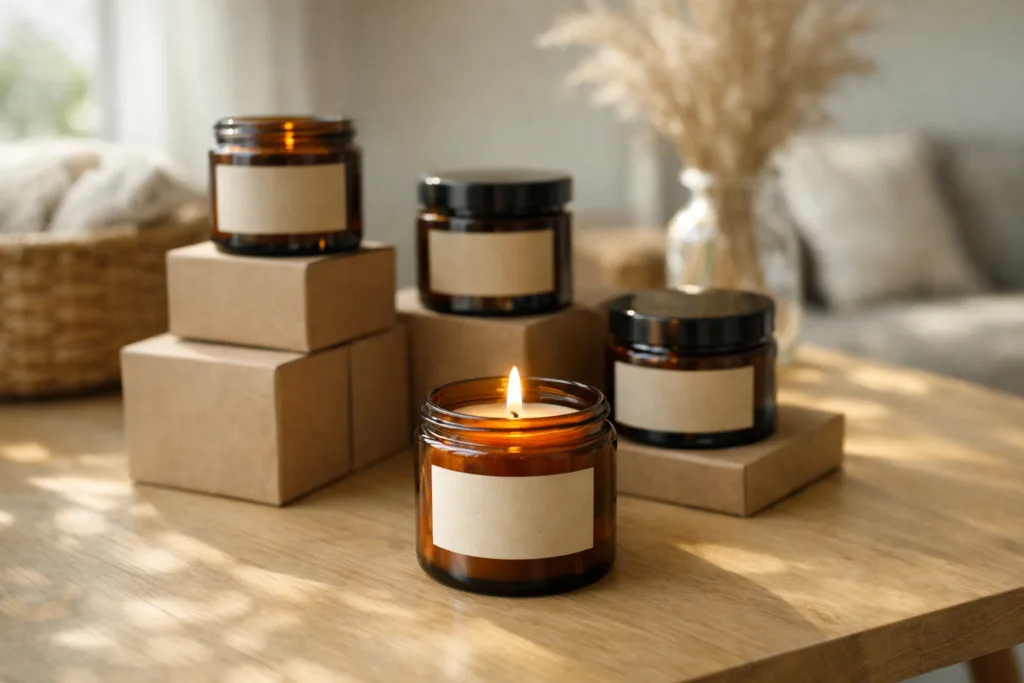
Once you reach consistent demand for your first 300 candles, next steps might include working with experienced OEM partners like Circe Home for batch increases, exclusive fragrances, and bespoke vessel molds. Strategic growth means you can still run micro-editions for seasonal launches while keeping costs rational—a proven way to build brand authority in the crowded candle sector.
Frequently Asked Questions
What is the minimum budget to start a handmade candle business?
You can launch with as little as $650–$1,300, focusing on a single scent and vessel style for 100–300 candles. Costs depend on ingredient quality, vessel selection, and packaging design.
How do I select the best wax blend for a small candle business?
Soy and coconut blends are recommended for clean burn, good scent throw, and eco appeal. Test each blend for fragrance compatibility and aesthetic results before scaling up.
Do I need special certification for fragrance oils?
Always ensure your fragrance oils are IFRA certified. Request allergen declarations and CLP labeling documents for EU and UK compliance to guarantee product safety and customer trust.
How can I make my handmade candles look more premium on a tight budget?
Select classy glass or tin vessels, use well-designed labels, and wrap each candle in tissue or kraft paper. Minimalist, consistent branding shines at small volumes and conveys luxury.
What are the common sizing and wick mistakes to avoid?
Avoid using wicks that are too thin (causing tunneling) or too thick (leading to soot and mushrooming). Test burn every batch using the vessel and wax system you’ll sell.
When should I move from handmade to OEM or contract manufacturing?
Once monthly demand regularly exceeds 300–500 units, outsourcing to a specialized OEM like Circe Home improves efficiency, quality control, and customization options for your candle line.