
How to Start a Candle Business from Home: Step-by-Step Setup & Cost Breakdown
If you’ve ever been captivated by the scent and ambience a premium candle brings to a room—and wondered how to turn that passion into your first business venture—you’re in the right place. Entering the candle business from home blends creative satisfaction with low barriers of entry, and with the right planning, your brand can distinguish itself through quality, design, and memorable fragrances. This in-depth guide provides a step-by-step approach to launching your own candle line at home, with a sharp focus on real-world cost breakdowns and essential technical know-how for first-time founders.
Understanding the Candle Business Landscape
Candle Business Models
Most candle startups begin with either home-based production, working with specialized manufacturers like Circe Home, or a hybrid approach. Your model directly affects scale, margins, and overhead.
- Handcrafted Home Studio: Maximum DIY control, best for small batches and custom blends.
- OEM/ODM Partnerships: Large scale, custom design options, consistent quality (e.g., Circe Home for private-label luxury lines).
- White Label: Sell established products under your brand—low development, lower uniqueness.
Key Candle Market Trends
Today’s consumers expect eco-friendly waxes (soy, coconut, rapeseed), clean burn profiles, strong fragrance throw, elegant packaging, and safe, fully compliant labeling. Minimalist and luxury gifting lines are especially in demand among home décor brands.
Essential Equipment and Materials for a Home Candle Workshop
Wax Choices
Start with small batches and explore premium blends. Common options include soy, coconut, rapeseed, and beeswax—each with unique melt points, visual attributes, and fragrance compatibility.
| Wax Type | Scent Throw | Burn Time | Eco Profile |
|---|---|---|---|
| Soy | Strong | Long (>35 hrs/200g) | Biodegradable |
| Coconut | Very Strong | Medium-Long | Highly Renewable |
| Rapeseed | Good (sensitive to scent load) | Medium | Low-impact European farming |
| Beeswax | Natural, subtle (won’t overpower) | Longest | Sustainable if sourced carefully |
Other Materials and Tools
- High-temperature digital thermometer
- Double boiler or wax melter
- Glassware, tins, or ceramic vessels (food-grade preferred)
- Pre-tabbed cotton or wood wicks (size varies by wax and jar diameter)
- Scale for accurate mixing
- Stirring implements (stainless steel or silicone)
- Labels, warning stickers, and packaging materials
Step-by-Step Candle Making Process for First-Time Entrepreneurs
Pre-Pour Preparation
Thoroughly clean all vessels and tools to prevent contamination. Center and glue wicks before pouring for consistent burn profiles. Prepare your workspace for safety and efficiency.
Formulating and Melting
- Accurately weigh wax and fragrance.
- Typical luxury lines use a fragrance load of 7-12%. Increase with caution: exceeding the blend’s max load risks separation or poor burn.
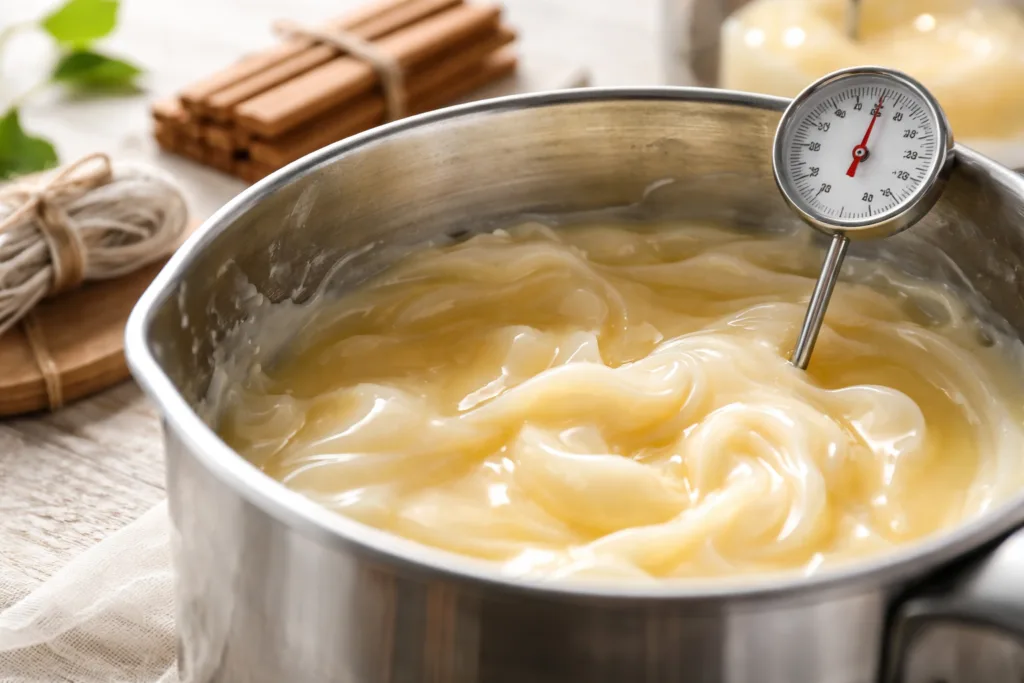
- Melt wax using a double boiler until it reaches its optimal pouring temperature (usually 65°C–75°C for soy/coconut blends).
- Allow wax to cool slightly before adding fragrance oils/essential oils. Stir in for full dispersion; proper mixing boosts hot and cold throw.
Pouring, Cooling, and Curing
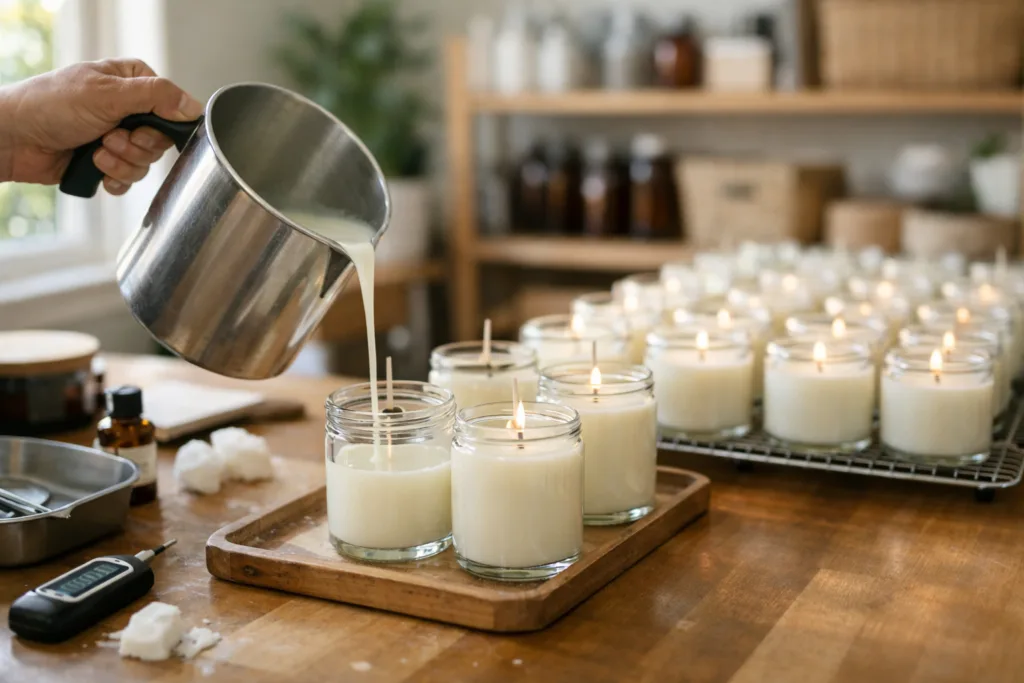
Pour wax slowly into vessels to minimize air bubbles. Cool at room temperature away from drafts and sunlight. Curing time for optimal scent throw is generally 5–14 days for soy blends—mark your batches and keep notes on curing profiles.
Finishing and QC Checks
- Trim wicks to 5 mm (prevents mushrooming and soot).
- Check wick centering; off-center wicks can cause unsafe glass heating or tunneling.
- Clean vessel exteriors and apply CLP/EU-compliant labels.
- Box and record batch data for traceability.
Circe Home Lab Insight: “Precision in fragrance weighing and curing determines final throw. Always validate against your target market’s preferences.”
Detailed Cost Breakdown for Launching Your Home Candle Brand
Understanding all startup and recurring costs is critical to sustainable pricing and growth. Below is a practical cost anatomy based on a small-batch home setup (100 luxury candles):
- Wax (soy/coconut): 12–14 kg × $7–$11/kg ≈ $110-150
- Fragrance Oils: 1.2 kg × $43–$80/kg ≈ $52-96
- Wicks: 100 pcs × $0.20 ≈ $20
- Glass Jars (custom-finish): 100 × $1.50–$2.20 ≈ $150-220
- Labels/Packaging: $1.40/candle × 100 ≈ $140
- Equipment (initial): Melter, scale, thermometer, tools ≈ $120 (one-off, spread over batches)
- Compliance & Safety Testing: $85–$300 (if outsourced; some QCs done in-house for cost-saving)
- Utilities & Miscellaneous: $45–$80
Typical Unit Cost Estimate
For handcrafted small batches, your average cost per 200g candle is $4.80–$7.80, depending on finish level, materials, and market positioning. Factoring in retail pricing ($19–$39/candle), gross margin potential is strong for quality-focused lines.
Fragrance Systems: Maximizing Scent Impact and Compliance
The candle business’s soul is fragrance. A well-designed scent system not only delights but ensures your brand is remembered after unboxing. Choose supply partners capable of custom development, allergen declarations, and compliance guidance.
Essential Oils vs. Fragrance Oils
- Essential Oils: 100% natural, but limited cold/hot throw, compatibility issues with some waxes, higher cost.
- Fragrance Oils: Advanced molecules, greater throw, flexible blending, lower allergen risk, always review IFRA conformity.
Scent Load and Curing
Test cure each new recipe for at least 7 days, sampling scent throw at intervals. Keep fragrance at 8–10% for soy or coconut, lower for beeswax.
Regulatory Checklist
- IFRA 51st amendment compliance for global safety
- CLP (EU), Prop 65 (US-West) for label warnings
- List all sensitizers on packaging when required
Wick Selection & Burn Profile for Clean, Safe Luxury Candles
Wick choice influences burn time, safety, and elegance. Candle testers verify clean, soot-free performance and stable flames.
Main Wick Materials
- Cotton: Versatile, easy to trim, works well with all waxes
- Wood: Offers crackle sound, modern look—sizing critical for full melt pool
- Paper-core: For larger diameters or paraffin blends
Performance & Testing Tips
- Match wick size to vessel diameter and wax blend. Undersized wicks cause tunneling; oversize increases soot risk.
- Test burn for at least two hours to assess melt pool and smoke.
- Consistently trim wicks to 5 mm; train customers via packaging or QR video prompts.
Packaging, Labeling, and Branding for Candle Businesses
Your container and packaging complete the user’s sensory journey. The right finish conveys luxury, eco values, and instills trust.
Advanced Vessel Options
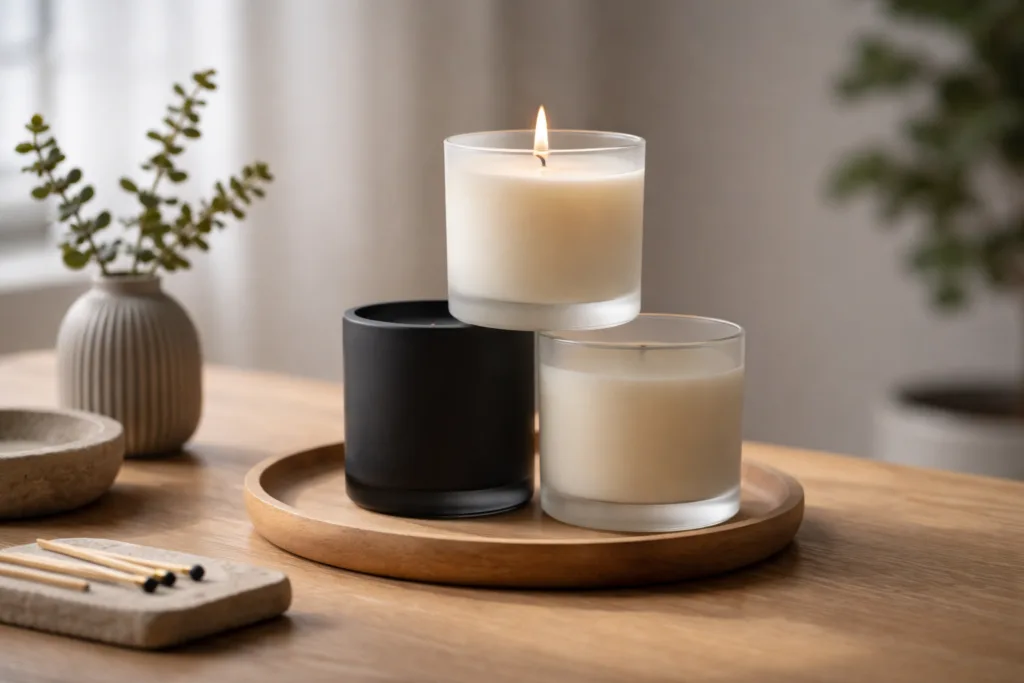
- Clear or frosted glass jars (slick, minimalist or luxury looks)
- Ceramic or concrete (tactile, artisan value)
- Aluminum tins (lightweight, durable, perfect for travel lines)
- Optional: custom coatings, embossing, foil caps for high-end gifting lines (often seen in Circe Home’s private-label projects)
Label & Safety Considerations
- CLP/IFRA-compliant labelling for fragrance allergens
- Clear burning instructions and safety pictograms
- Eco badges (soy, vegan, FSC carton, etc.) as appropriate
- Batch tracking—essential for quality assurance
Quality Control & Compliance: Making Safe, Reliable Candles
Sell confidence, not just candles. A robust QC system protects both your customers and your brand’s reputation.
Key QC Steps for Every Batch
- Visual inspection for frosting, cracks, or sinking
- Weigh and center-check each finished candle
- Test burn (random batch sampling over >35 hr target for 200g jars)
- Soot index and smoke test
- Document all results for traceability and improvement
Compliance & Sustainability
Align with IFRA 51st amendment, use FSC-certified packaging where possible, and review options for soy ink or compostable finishes. For EU/UK, CLP labeling is law. Some home brands explore refill programs to boost eco credentials.
How to Start a Candle Business from Home: Step-by-Step Setup & Cost Breakdown
Launching a home-based candle business merges creative intent with technical demands. Prioritize premium waxes, visible compliance, and user safety in every scent and vessel. Invest early in formulating deep-scented, clean-burning candles—whether you scale through meticulous DIY batches or partner with advanced manufacturers like Circe Home. Above all, cultivate a storytelling brand capable of standing out on both digital shelves and coffee tables.
Frequently Asked Questions
How much does it cost to start a small home candle business?
A realistic budget for 100 luxury candles is $650–$960 including equipment, materials, and compliance. Cost per candle ranges $4.80–$7.80.
Which wax is best for beginners in luxury scented candles?
Soy and coconut blends offer a balance of clean burn, strong scent throw, and ease of handling—perfect for newcomers seeking quality and safety.
How can I boost fragrance throw in home-poured candles?
Carefully control temperature when blending, stay within recommended fragrance load limits (7–12%), and allow at least 7–14 days curing for maximum strength.
Do I need a business license to sell home-made candles?
Check local and online marketplace requirements. Most areas require business registration and compliance with safety labeling regulations for retail/craft sales.
What safety standards apply to candles in the EU/US?
Follow IFRA guidelines, CLP (EU) or ASTM (US) labeling for fragrance allergens, safety instructions, and compliant packaging, even for small-batch sales.
How do I differentiate my candle line from competitors?
Emphasize unique scent profiles, premium eco waxes, elegant packaging, story-driven branding, and proof of quality testing to build trust and return customers.