
Introduction
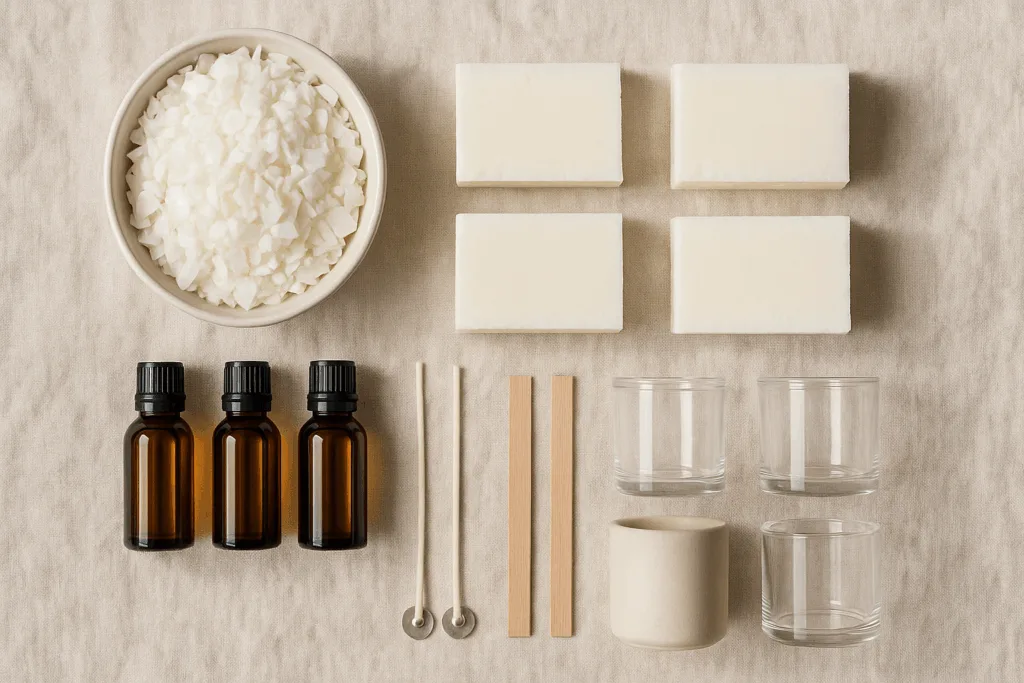
Private label candles have become one of the fastest-growing product categories in the home fragrance and lifestyle market. As more boutique brands, retailers, spas, and concept stores enter the space, the demand for high-quality OEM/ODM candle manufacturing is increasing at an unprecedented pace. Yet, one question consistently appears in every buyer’s inbox:
“What affects my wholesale cost?”
The truth is that private label candle pricing is not a single formula. Instead, it is influenced by a series of material, production, customization, and operational factors that shape the final per‑unit cost. Understanding these variables will help you plan budgets, design products strategically, and negotiate confidently with manufacturers.
This comprehensive guide breaks down every major driver of private label candle pricing—offering clarity, transparency, and actionable insights for brands of all sizes.
1. Container Cost: The Foundation of Your Candle Price
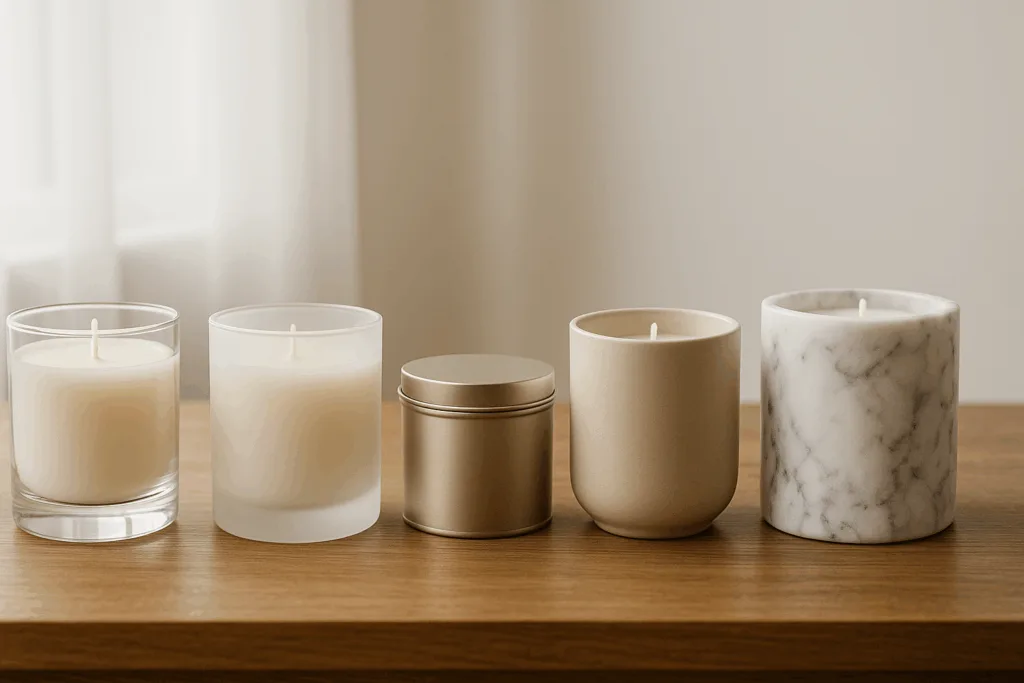
The candle vessel is the single largest cost component in most private label projects. Different containers carry dramatically different price structures, influenced by material, complexity, finish, and availability.
1.1 Glass Jars
Glass jars are the most common option due to their versatility and mid-range pricing. Factors that affect cost include:
- Thickness: Thick-bottom or premium-weight glass is significantly more expensive.
- Finish: Frosted, matte, gradient, sprayed, electroplated, embossed, and engraved finishes add cost.
- Color: Clear glass is cheapest; opaque and custom Pantone colors cost more.
- Shape: Standard straight-sided jars are economical; unique shapes raise the mold and unit cost.
1.2 Tin Containers
Tin is cost-efficient and travel-friendly. Price variables include:
- Coating quality (matte, metallic, glossy)
- Printing methods (CMYK, UV, embossing)
- Double lid or single lid construction
1.3 Ceramic Vessels
Ceramics are heavier, artisanal, and higher cost. Influencing factors:
- Hand-glazed finishes
- Kiln-fired color consistency
- Mold complexity
- Production loss/wastage rate (higher compared to glass)
1.4 Stone, Marble, and Luxury Containers
These premium vessels dramatically elevate brand positioning but come with higher:
- Raw material cost
- Carving/finishing labor
- Weight (leading to high shipping costs)
Key insight:
The vessel often represents anywhere from 30% to 60% of your total candle cost.
2. Wax and Fragrance: The Heart of the Candle
The next major price driver is the candle fill—specifically the wax type and fragrance load.
2.1 Wax Type Affects Cost Structure Significantly
Common wax options include:
- Soy wax: Affordable, clean-burning, globally popular.
- Coconut wax: Premium, slower-burning, more expensive.
- Beeswax: Luxury, natural, highest cost.
- Soy–coconut blends: Balanced performance with mid-high pricing.
Wax pricing varies based on:
- Source/origin
- Purity
- Blend formulation
- Quantity (bulk orders reduce cost)
2.2 Fragrance Oil: Quality Matters
Fragrance oils come in different grades and cost tiers. Influencers include:
- IFRA-certified fragrance quality
- Essential oil percentage in the formula
- Complexity of scent composition
- Oil strength (higher fragrance load = more cost)
2.3 Higher Fragrance Load = Higher Cost
Most candles use 6–10% fragrance. Premium brands may use up to 12%, which increases:
- Raw fragrance expenditure
- Performance testing requirements
3. Wick Selection: Small Component, Big Impact
Wicks appear simple, but they influence burn performance, testing cost, and unit cost.
3.1 Wick Types
- Cotton wick: Standard and economical.
- Wood wick: Aesthetic, crackling sound, higher price.
- Dual wood wicks: Best for large-diameter jars, 2–3× cost of cotton wicks.
3.2 Why Wick Choice Affects Cost
- High-end wicks require more testing.
- Wooden wicks often need metal wick clips.
- Larger jars may require double or triple wicks, multiplying cost.
4. Labels and Branding: The Identity of Your Candle
Your candle’s visual identity plays a key role in pricing.
4.1 Label Material and Finish
- Paper labels: economical
- Waterproof labels: mid-range
- Foil-stamped labels: premium
- Clear labels: modern but pricier
4.2 Jar Printing & Decoration
Decoration options include:
- Screen printing
- UV printing
- Hot stamping
- Full-wrap decal
These methods involve setup fees, color charges, and higher MOQs.
4.3 Lid Options
Lids significantly impact unit cost. Options include:
- Wooden lids (premium), bamboo lids, or cork lids
- Metal lids (gold, rose gold, matte black, glossy silver)
- Custom embossed logos
5. Customization Level: The More Unique, The More Expensive
Customization sits at the core of private label development.
5.1 OEM vs. ODM Cost Differences
- OEM (your design, factory produces) requires molds, artwork, sampling.
- ODM (factory catalog) is cheaper with ready-made options.
5.2 Mold Development Cost
If you need a unique shaped vessel:
- Mold fee can range from $800 to $3,000+
- Minimum order quantity (MOQ) increases
5.3 Custom Packaging
Rigid boxes, magnetic boxes, drawer boxes, and luxury gift sets increase:
- Production time
- Unit cost
- Shipping weight
6. MOQ (Minimum Order Quantity): The Pricing Lever
MOQ is one of the strongest cost indicators in candle production.
6.1 Why Small Quantities Are Expensive
Factories operate on efficiency. When a brand orders fewer than 500–1000 units:
- Setup costs are spread over fewer candles
- Material purchases are not optimized
- Production line must be adjusted for small runs
As a result, small MOQs (100–300 pcs) can have 20–40% higher unit costs.
6.2 Larger Orders Reduce Cost Dramatically
Quantities like 3000–5000 units allow:
- Bulk material pricing
- Higher production efficiency
- Lower labor cost per piece
7. Production Labor: A Hidden Cost With Big Impact
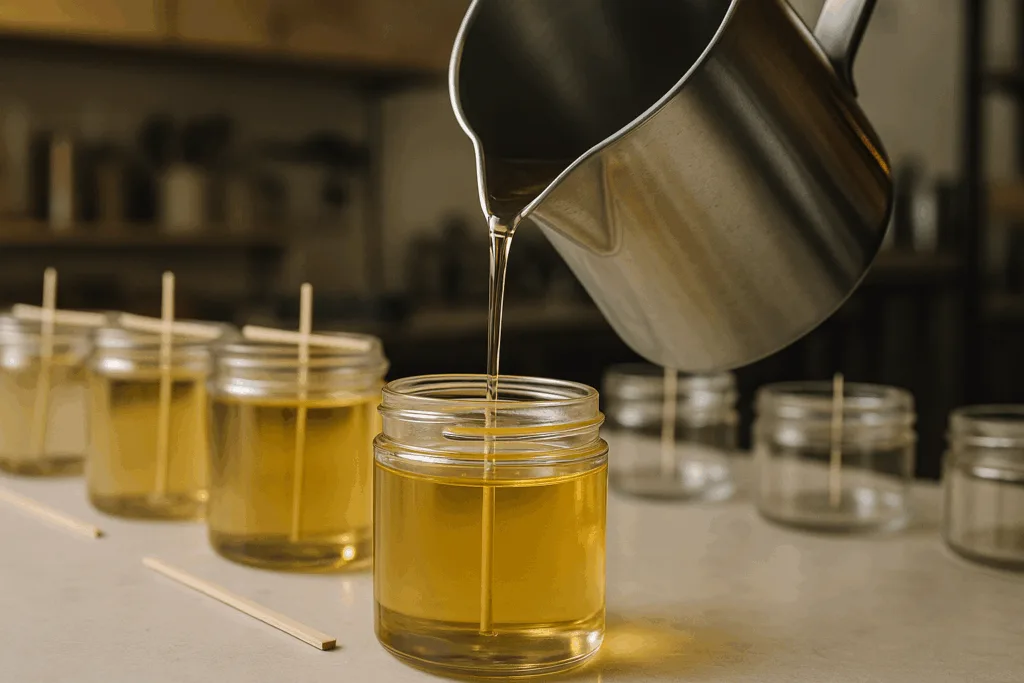
Candle making involves multiple production steps.
7.1 Manual vs. Automated Production
- Hand-pouring: Ideal for small quantities; labor-intensive.
- Machine-pouring: Lower cost per unit but requires higher MOQs.
7.2 Complex Candle Styles Require More Labor
Examples:
- Two-tone or layered candles
- Embedded botanicals
- Scented sculptures or shaped candles
More steps = higher labor cost.
8. Packaging: More Than Just a Box
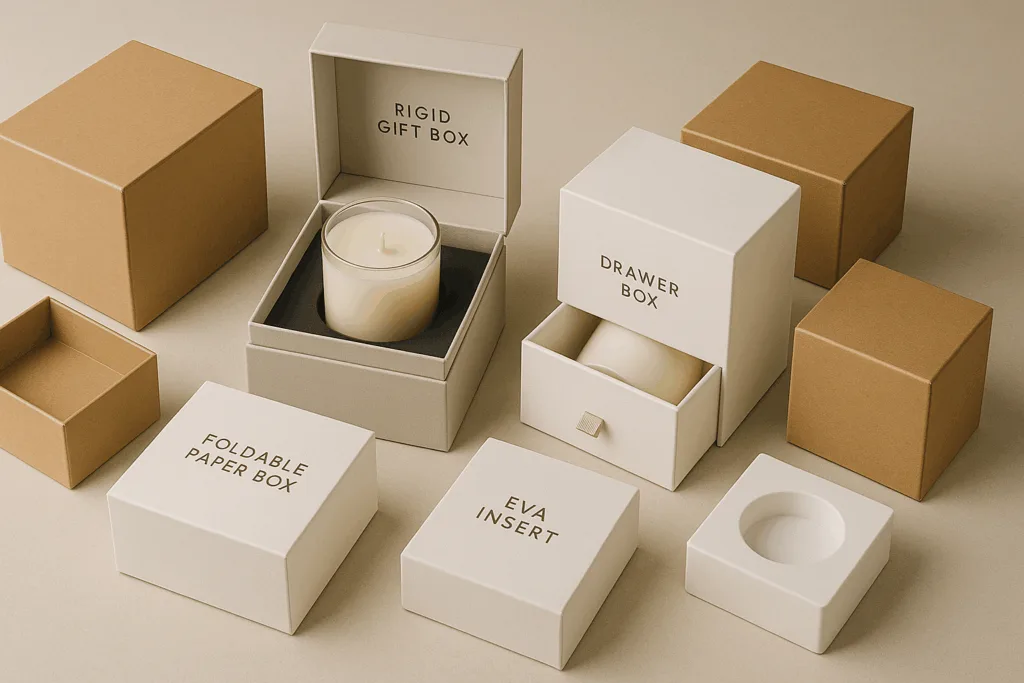
Packaging is one of the most underestimated cost drivers.
8.1 Types of Candle Boxes
- Foldable paper box: economical
- Drawer box: mid-tier
- Magnetic closure box: high-tier
- Rigid gift box: luxury
8.2 Inserts and Protection
EVA foam, molded pulp, and cardboard inserts affect:
- Material cost
- Production time
- Shipping weight
9. Certifications and Compliance Costs
For brands targeting the US, UK, EU, or Australia, compliance influences cost.
9.1 Labeling Requirements
- CLP labels
- Warning labels
- Ingredient disclosures
9.2 Documentation
- SDS (Safety Data Sheet)
- IFRA certificates
- CPSR (EU compliance)
Some factories provide these for free; others charge.
10. Shipping & Logistics: Often Equal to or Greater Than Product Cost
Many new brands underestimate logistics.
10.1 Candle Shipping Is Expensive
Reasons include:
- Candles are heavy
- Glass is fragile
- Packaging volume is large
10.2 Air vs. Sea Freight
- Air freight: Faster, significantly more expensive
- Sea freight: Economical for large orders, slower
10.3 Distance Matters
Shipping cost varies by destination—North America, Europe, and Oceania differ widely.
11. Quality Control and Testing
Premium brands invest heavily in testing, which impacts cost.
11.1 Burn Testing
Each vessel and wax-fragrance combination requires:
- Wick testing
- Stability testing
- Hot throw and cold throw testing
11.2 Quality Inspection Costs
Some brands request:
- Third-party QA services
- Drop tests
- Packaging inspections
12. Hidden Costs Most Buyers Miss
Even experienced buyers may overlook costs such as:
- Higher wastage rates in colored or frosted containers
- Label misalignment discard rate
- Seasonal labor fluctuations
- Short-run production surcharges
13. Brand Positioning Ultimately Determines What You Should Pay
Your pricing strategy should be aligned with your brand tier:
- Entry-level: Tin candles, basic labels, foldable box
- Mid-tier: Premium glass jars, wood lids, screen printing
- Luxury: Ceramic/marble vessels, rigid boxes, high fragrance load
Conclusion
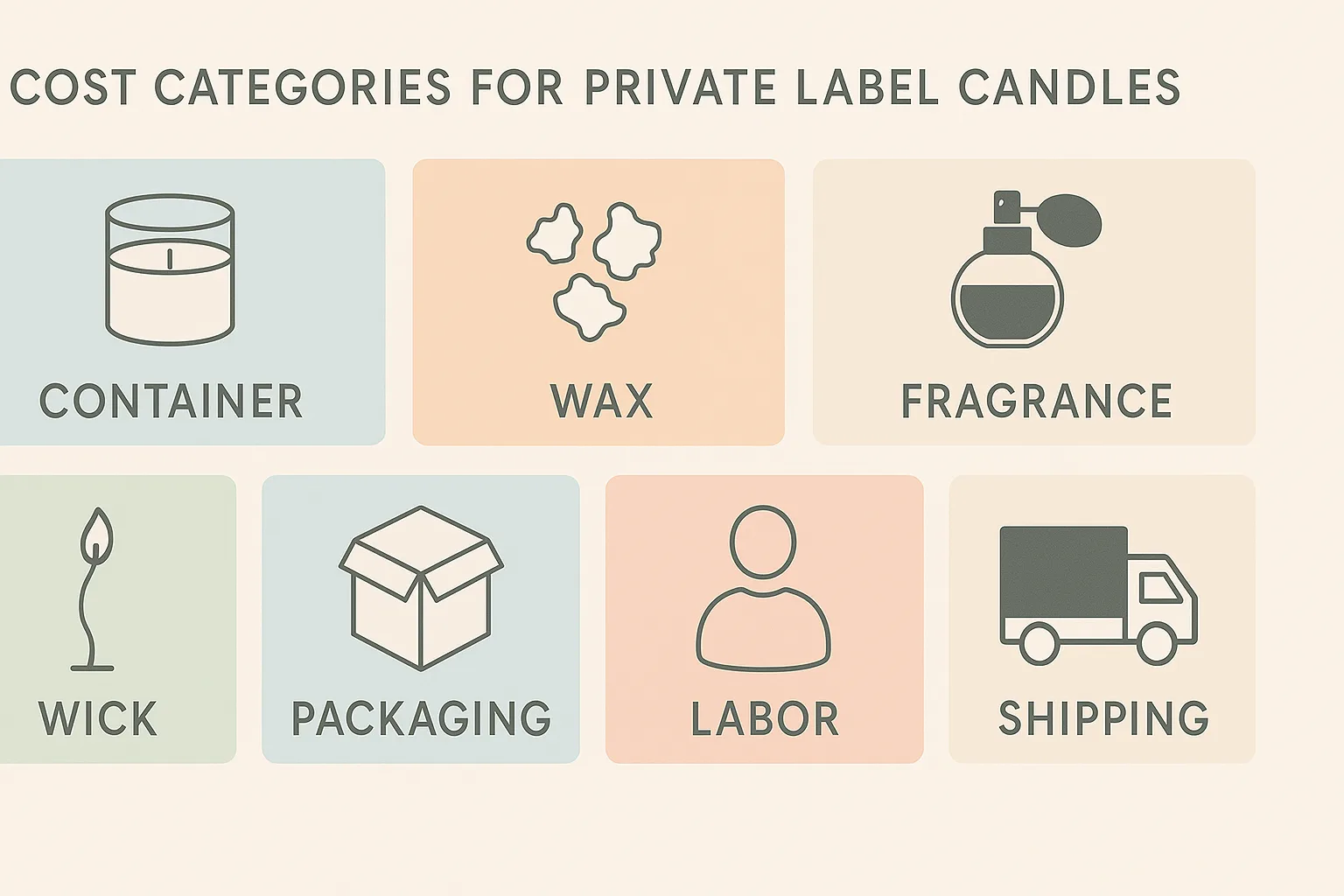
Private label candle pricing is a complex interplay of materials, production methods, MOQ, labor, customization, compliance, and logistics. Understanding these components empowers you to make informed decisions, avoid hidden costs, and build a profitable product line that reflects your brand’s vision.
By mastering these pricing variables, you set the foundation for a successful, scalable, and high-margin candle business—one that delights customers and stands out in a competitive global marketplace.
FAQs
1. Why do candle factories require a minimum order quantity (MOQ)?
Factories set MOQs because candle production involves fixed setup costs such as preparing wax, fragrance, wicks, and production lines. When orders are small, these fixed costs are spread over fewer units, resulting in higher per-unit pricing.
2. What is the typical wholesale price range for private label candles?
Wholesale pricing generally ranges from $3 to $12 per unit depending on vessel material, fragrance load, customization level, wick type, and order quantity. Luxury containers like stone or marble may exceed $15 per unit.
3. Does higher fragrance load increase my candle cost?
Yes. Using a 10–12% fragrance load requires more raw materials, additional burn testing, and sometimes a specific wick setup. This directly increases material and labor costs.
4. How can I reduce the overall cost of my private label candles?
You can lower costs by choosing standard glass jars, simplifying packaging, selecting cotton wicks, ordering in higher quantities, or using the factory’s existing fragrance library instead of custom formulations.
5. Why is shipping so expensive for candles?
Candles are heavy, fragile, and require substantial protective packaging. This increases both weight and volume, resulting in higher freight costs—especially for air shipping.
6. What is the difference between OEM and ODM pricing in candle manufacturing?
ODM uses existing factory designs and is more cost-efficient with no mold fees. OEM involves custom vessel molds, bespoke packaging, and unique formulations, which increases development and production cost.